.svg)

The Pen Test Automation Paradox
You signed the contract for Vanta because the sales pitch was appealing: "Automate your SOC 2 from day one." You connected AWS, GitHub, and Slack. Green checkmarks started popping up everywhere. It felt like magic - and naturally, you assume Vanta's pen testing services would work just as seamlessly as everything else.
Then you hit Control CC 4.1: Penetration Testing. The automation stops dead.
Suddenly, you may not find yourself dealing with a swift API integration anymore. Maybe you aren't dealing with APIs at all. Instead, you're staring at a marketplace of third-party vendors, a confusing menu of different logos in segmented boxes, and quotes ranging from $0 to $20,000 - all under the banner of Vanta's pen testing services.
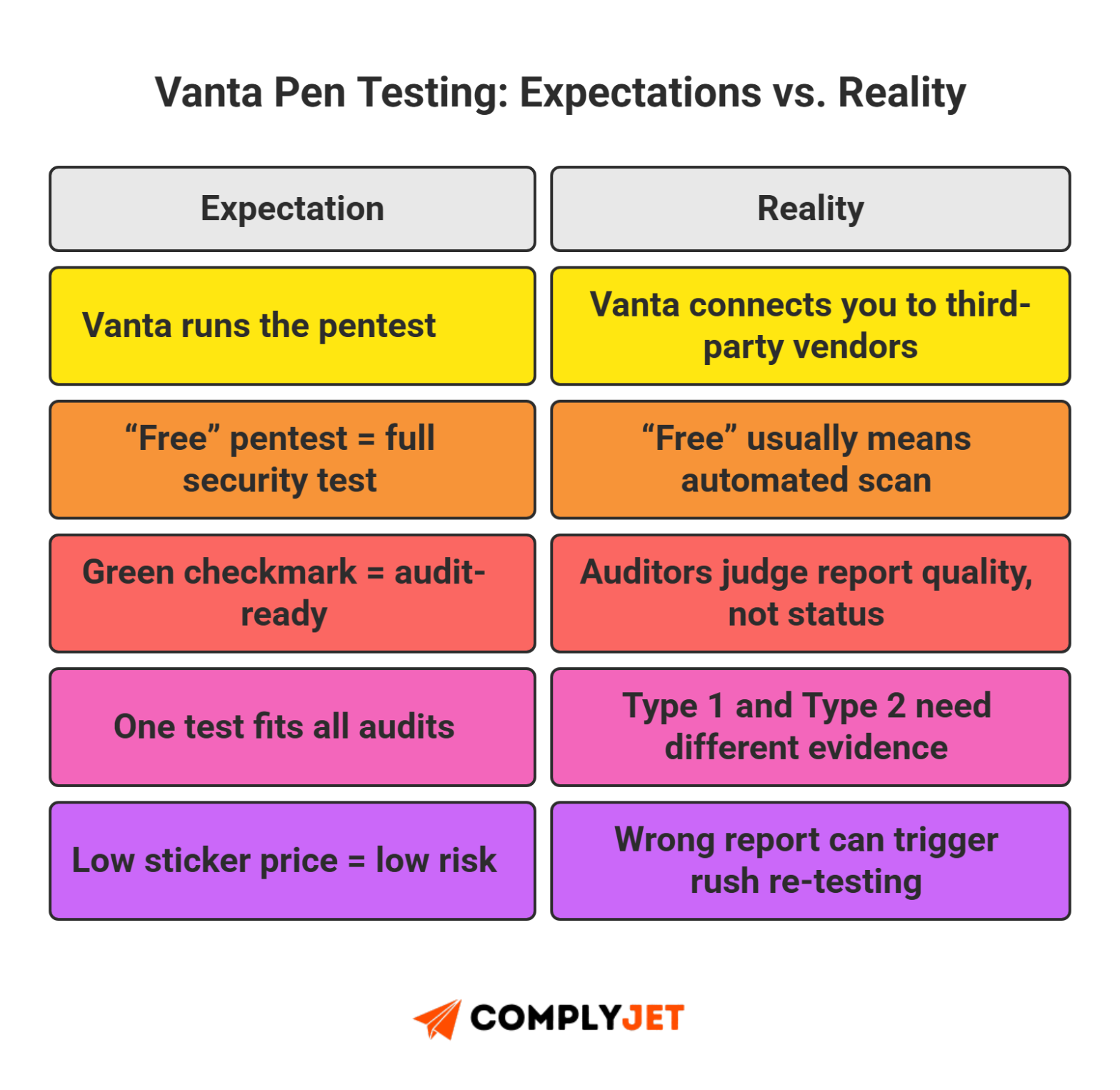
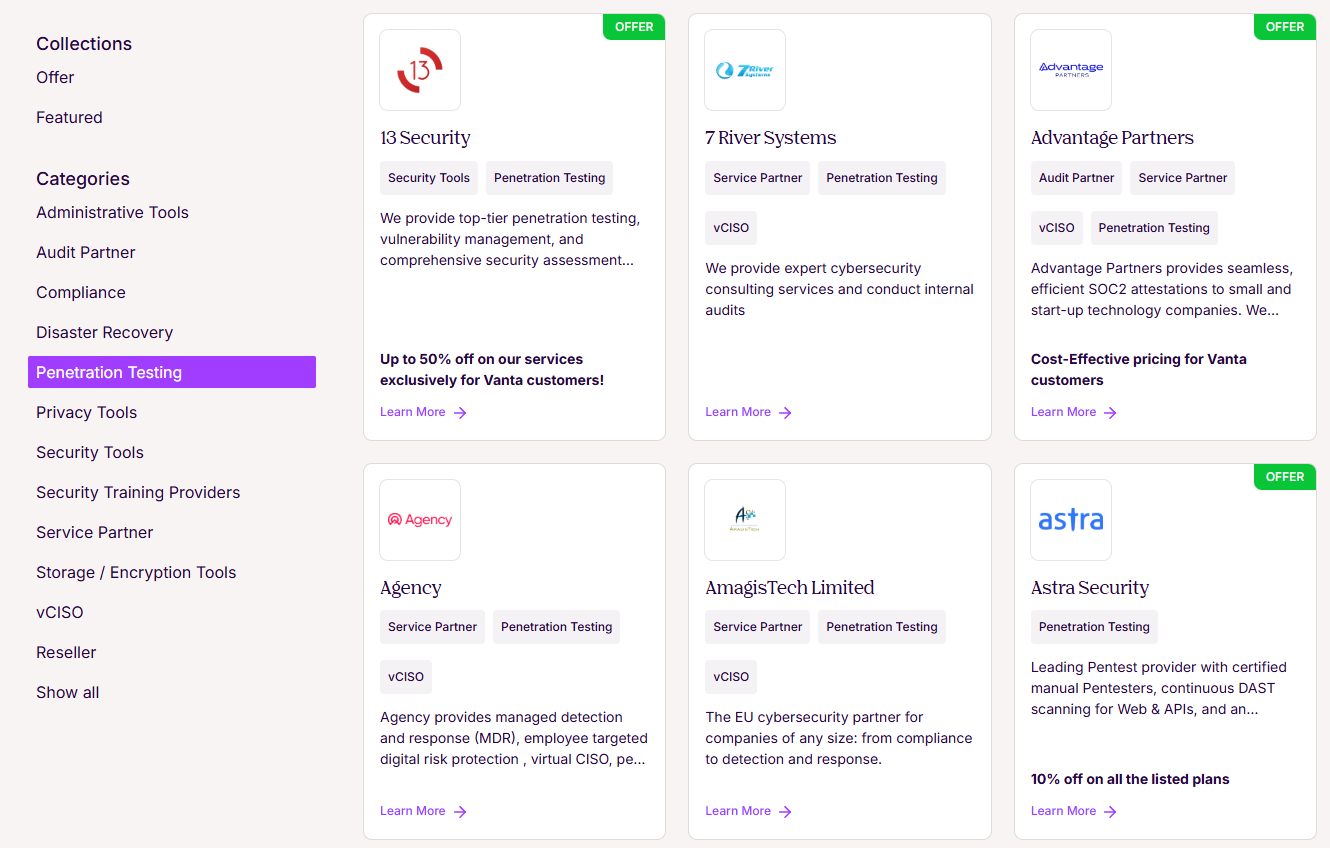
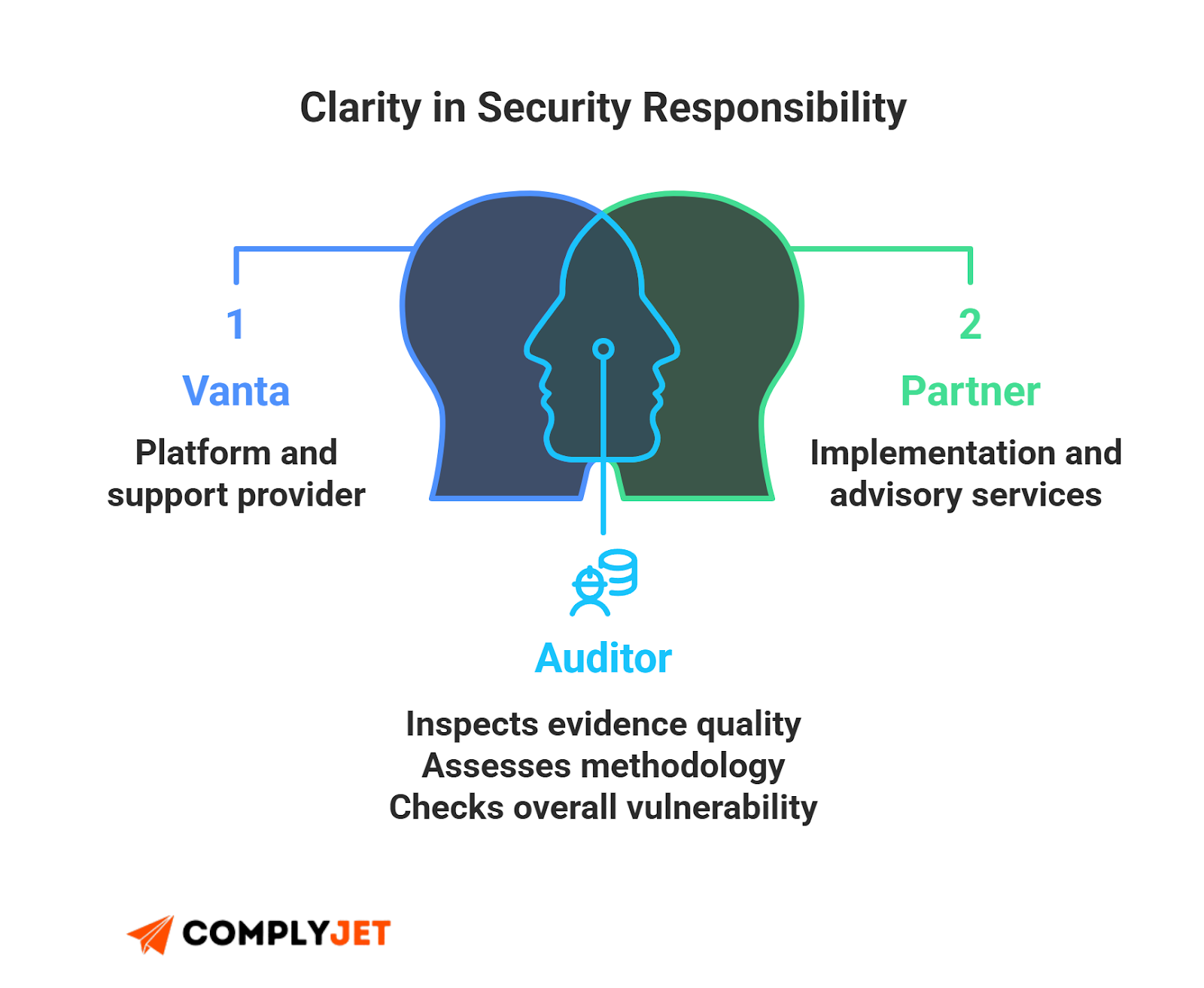
Here is the simple truth: Vanta's pen testing services do not exist in the way most founders think. Vanta is a compliance automation platform, not a security testing firm. They don't employ the hackers; they just introduce you to them. When you click "Request a Pentest" in the dashboard, you aren't buying a native Vanta feature. You are buying a service contract with an external partner like Cobalt or 13 Security, routed through Vanta's third-party pen testing offerings.
Founder's Tip: Think of Vanta as the frame, and the penetration test as the painting. Vanta can frame anything you give it, but it's up to you to ensure the painting is high-quality enough to satisfy the art critic (your auditor).
This distinction matters. If you buy the wrong service for your needs, you aren't just wasting money - you risk handing your auditor a report they cannot accept. This guide cuts through the marketing fluff to decode Vanta's pen testing process, explain the real basics of Vanta's pen testing, uncover why "complimentary" tests are often more complicated than they seem, and highlight the hidden costs of retesting - all without burning your runway.
For a detailed review of Vanta's compliance offerings, check out our recent blog.
The "Free" Myth: Automated Scans vs. Manual Pentests
One of the most alluring perks you'll encounter in the Vanta pen testing marketplace is the "complimentary" or "bundled" penetration test. For a bootstrapped founder staring at a $50,000 compliance budget, getting a test for free feels like finding money on the sidewalk - especially when it's presented as part of Vanta's pen testing services on their higher-tier plans.
But it almost always needs a closer look.
Often, these lower-tier "free" offers are actually Vanta partners' automated pen testing - glorified vulnerability scans - rather than the comprehensive manual penetration tests your auditors may expect. They are frequently bundled into Vanta's pen testing services as a low-friction entry point. The problem isn't that they exist - it's that many teams don't realize where their limits are until much later.
To be fair, Vanta has always maintained that its complimentary third-party pen test offerings are vulnerability scans - and yet there's a lot of confusion around the subject. This guide will attempt to clarify the differences between them and let you decide which works best for your security needs.
There's no denying that Vanta has done a respectable job lowering the barrier to entry for compliance, and there's value to be found in Vanta's complimentary pen testing services, at least for budding start-ups. For a Seed-stage startup needing a quick SOC 2 Type 1 to unblock early sales, these automated options inside Vanta's pen testing services are often a perfect fit. They check the compliance box efficiently, turn your dashboard green, and get you across the starting line without draining your runway or immediately increasing pen testing costs when choosing Vanta.
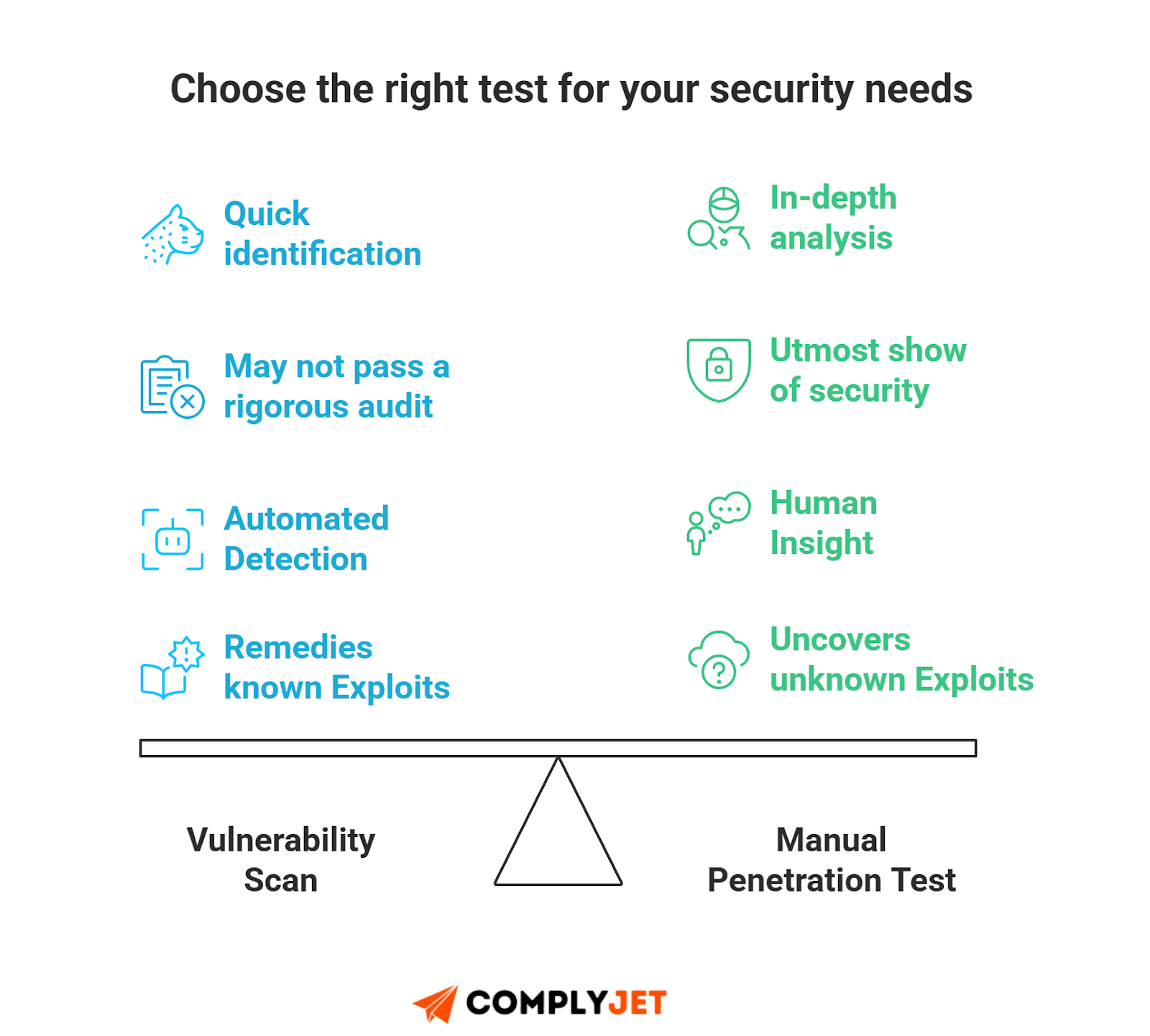
Vulnerability Scans vs. Manual Pen Tests
To the unseasoned eye, the reports look similar: a PDF list of security issues. But to a technical auditor, the difference between vulnerability scans and a manual pen test is very apparent. And you knowing about Vanta's pen testing basics in detail, is crucial for deciding which is more appropriate for your security needs.
Not sure which pentest actually satisfies your auditor? Get a quick second opinion from ComplyJet before you commit.
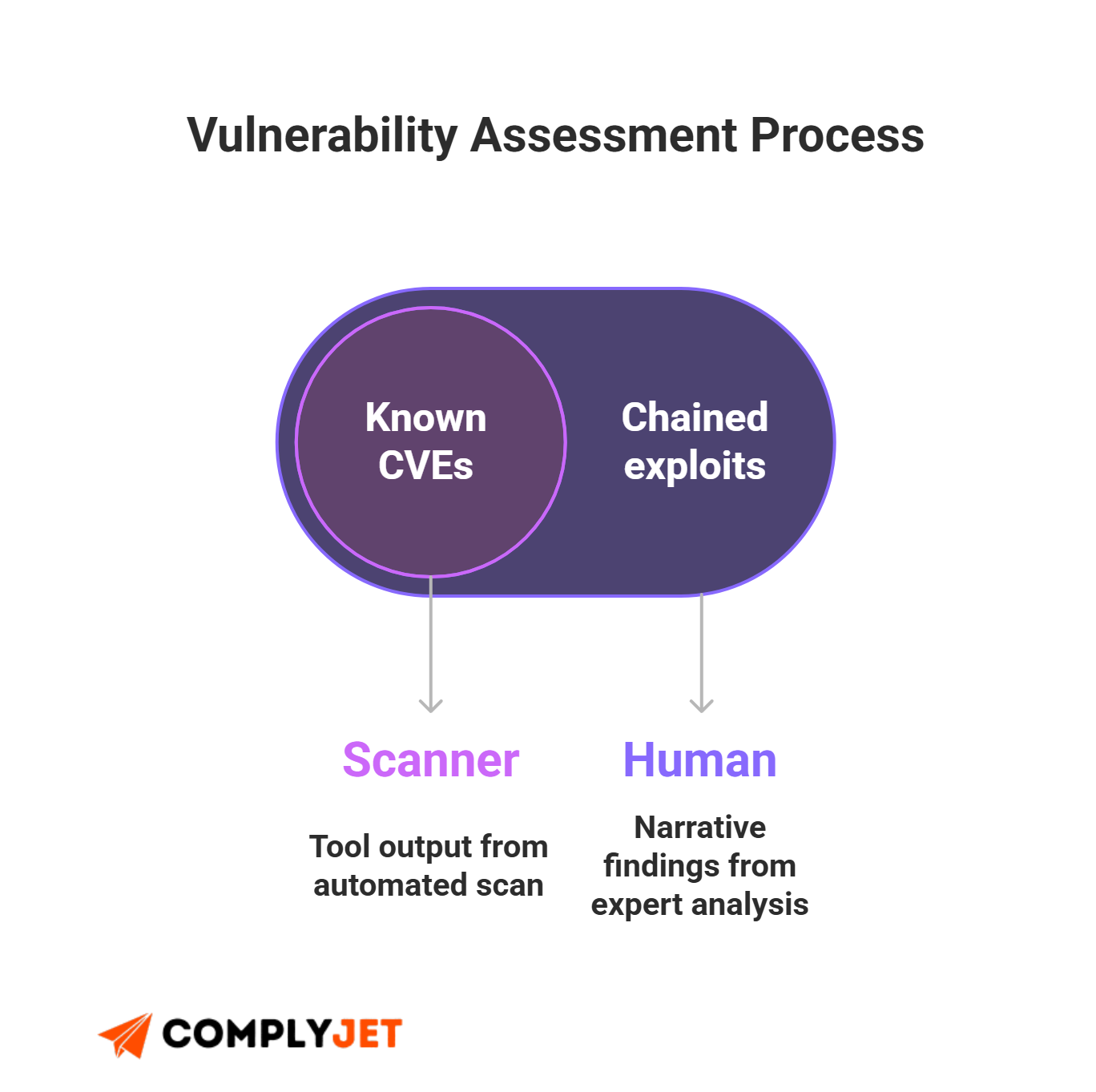
- Vulnerability Scan:
Automated vulnerability scanners like Nessus excel at quickly identifying known CVEs and outdated SSL certificates. However, if you need evidence of real-world exploitability or adversarial testing, a manual penetration test is still required.
- Manual Penetration Test:
A human hacker actively attempts to chain minor faults into a major breach. They test for business logic flaws - like manipulating a URL ID to view a competitor's invoice - which automated scripts simply cannot detect.
The Aggregator Reality
This distinction is crucial. When a user buys a "Vanta Pentest," they are technically purchasing a service contract with a third-party vendor (such as Cobalt, 13 Security, or Cognisys) that has been negotiated and integrated by Vanta.
Vanta's role is facilitation and evidence storage, not execution. You are relying on the partner's methodology - not Vanta's software - to find the bugs, even though the experience is often seen as being a part of Vanta's pen testing services.
The Audit Trap
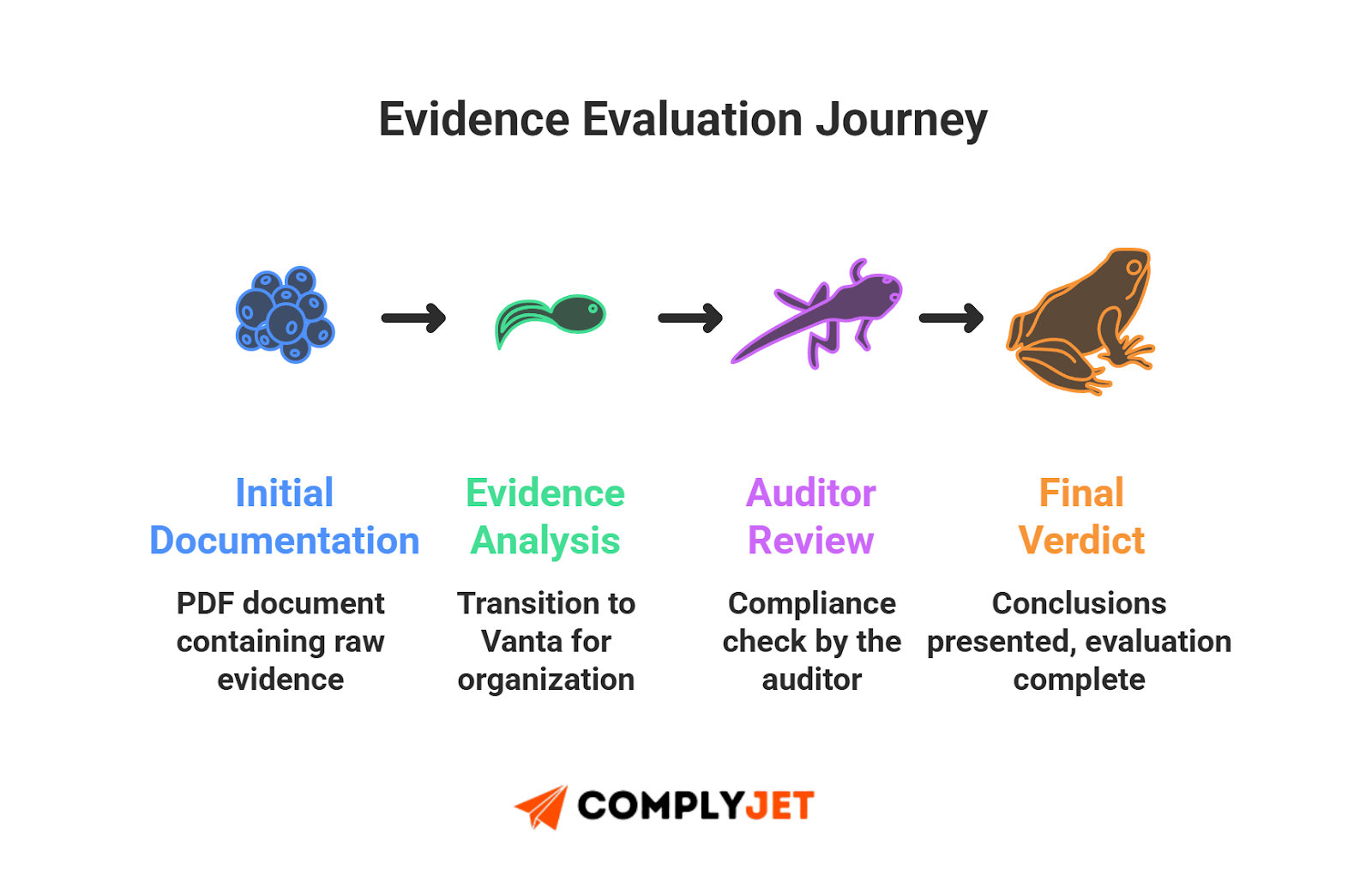
Here is the tricky part: Vanta's risk management platform reflects complex security judgment by a small set of completion states. Vanta uses a state-based gating model, where uploading a qualifying artifact advances the control toward completion. If you upload a Vanta partner-provided pen test report to the dashboard, the checkmark turns green. You think you are audit-ready.
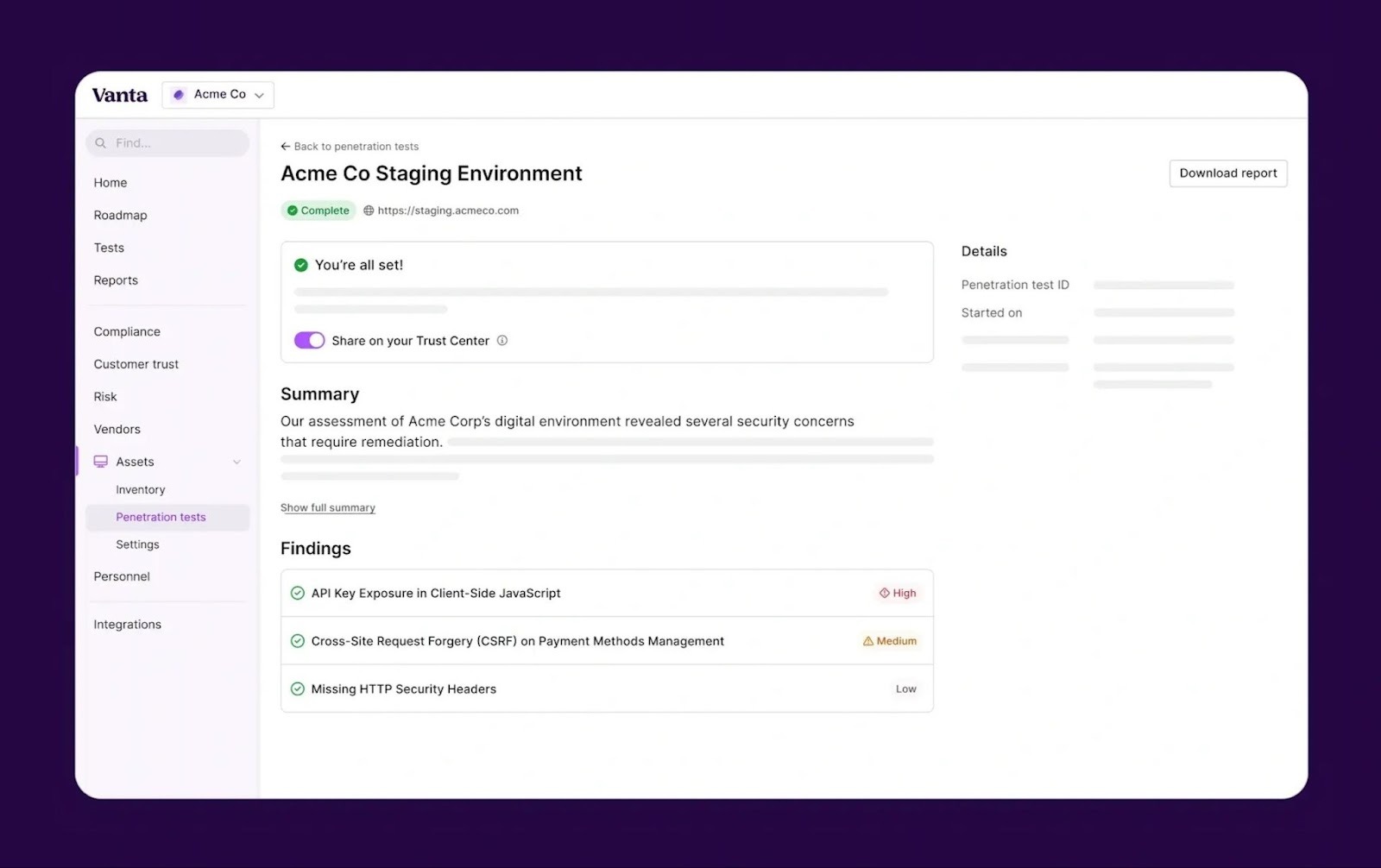
Source: LinkedIn
But the dashboard is not the auditor.
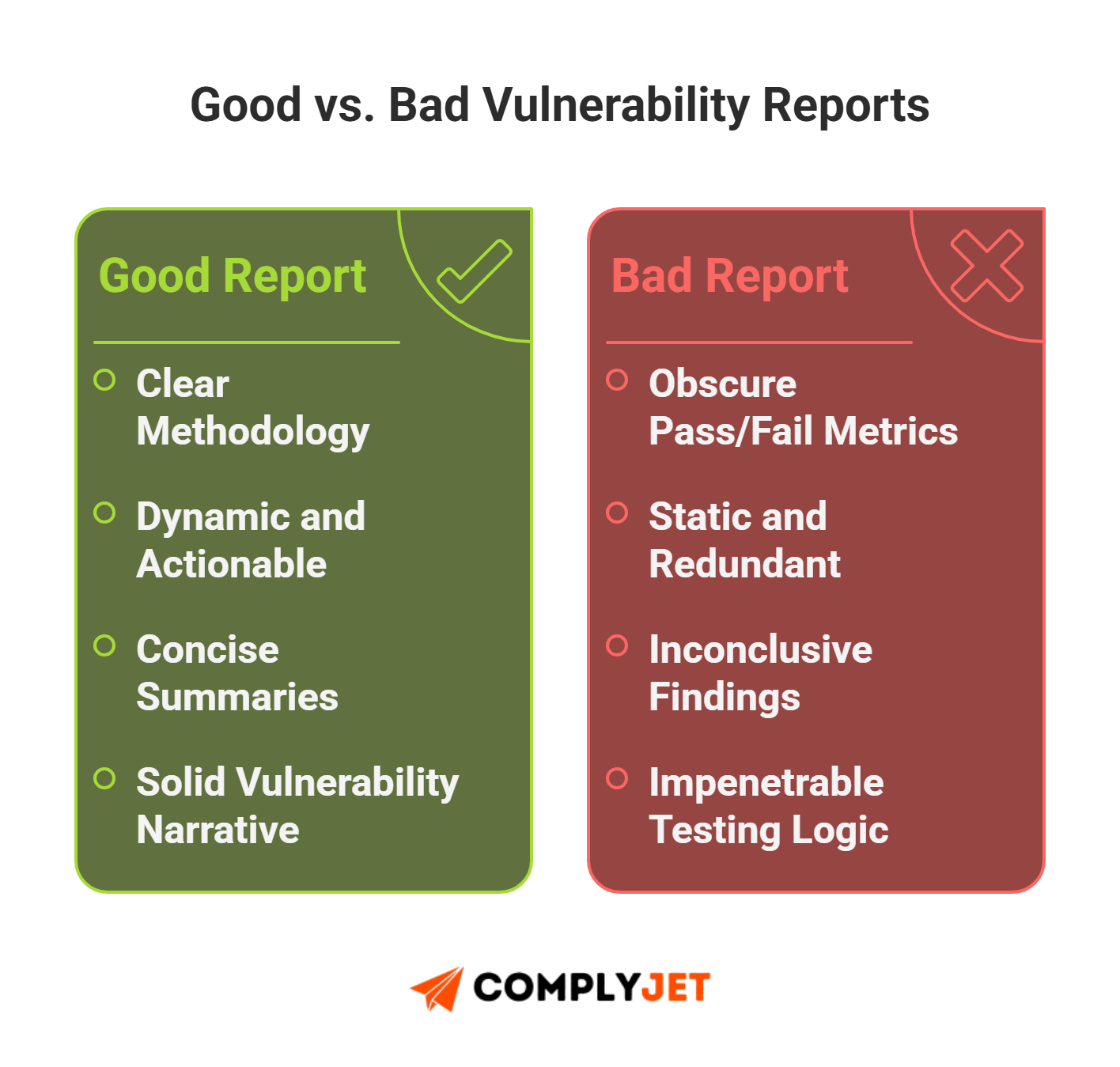
For frameworks like SOC 2 Type 2 or HIPAA, auditors inspect evidence quality, not dashboard status. They look for a methodology section detailing security vulnerability and a narrative of the attack path. If they open your evidence and see a generic scanner output, they may reject it outright.
Before you upload that report, sanity-check it. ComplyJet helps teams validate pentest evidence before auditors see it.
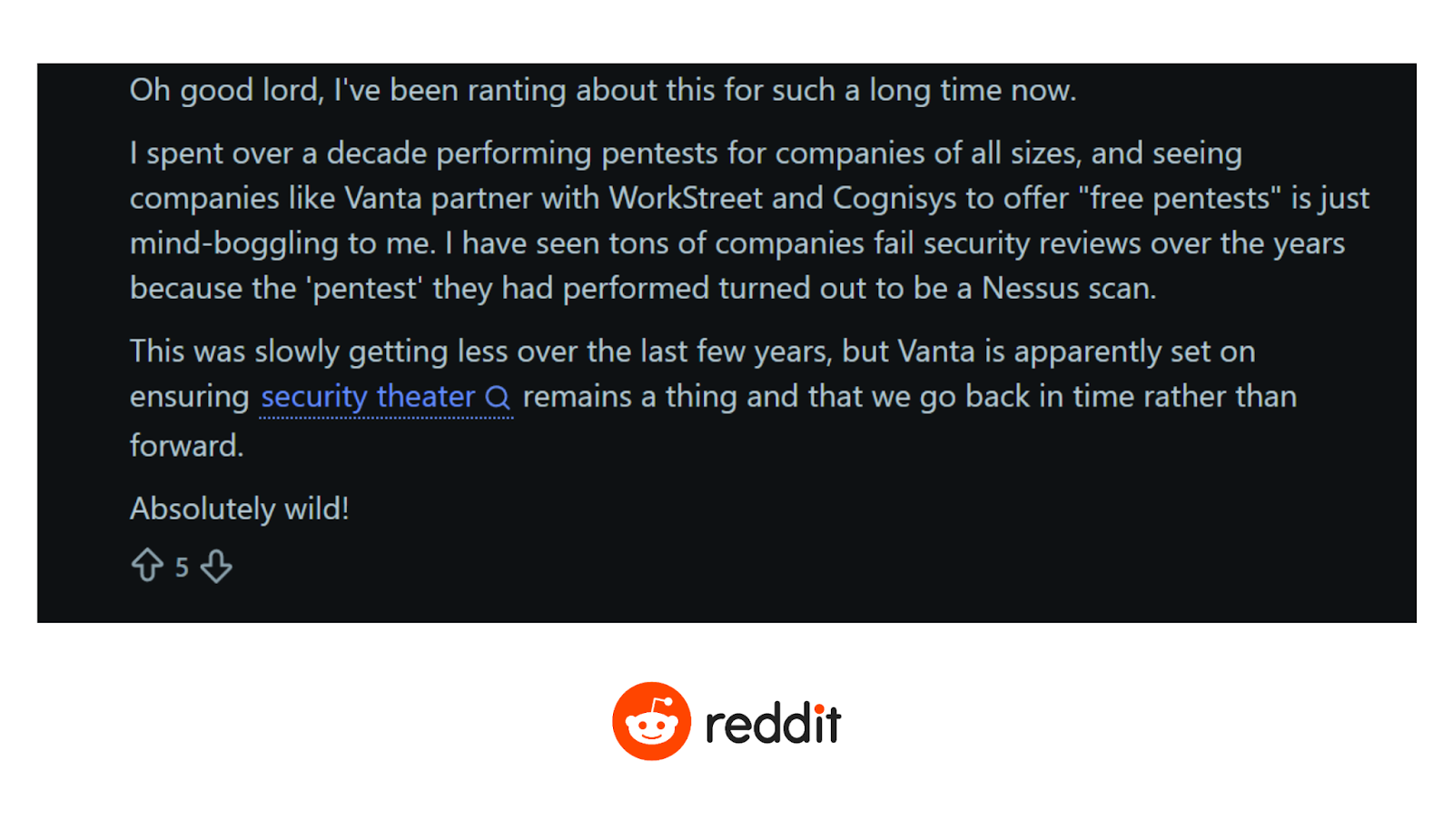
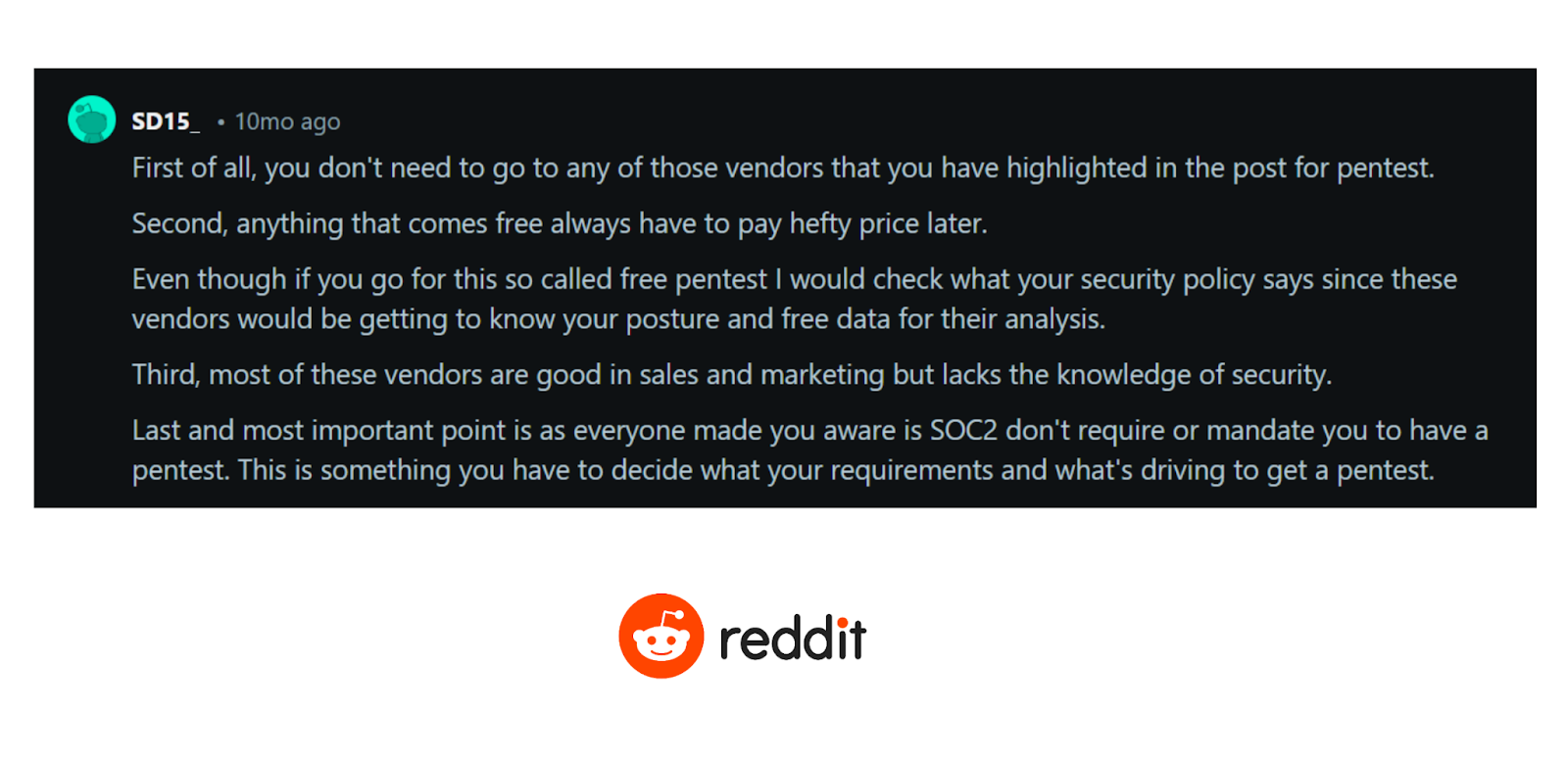
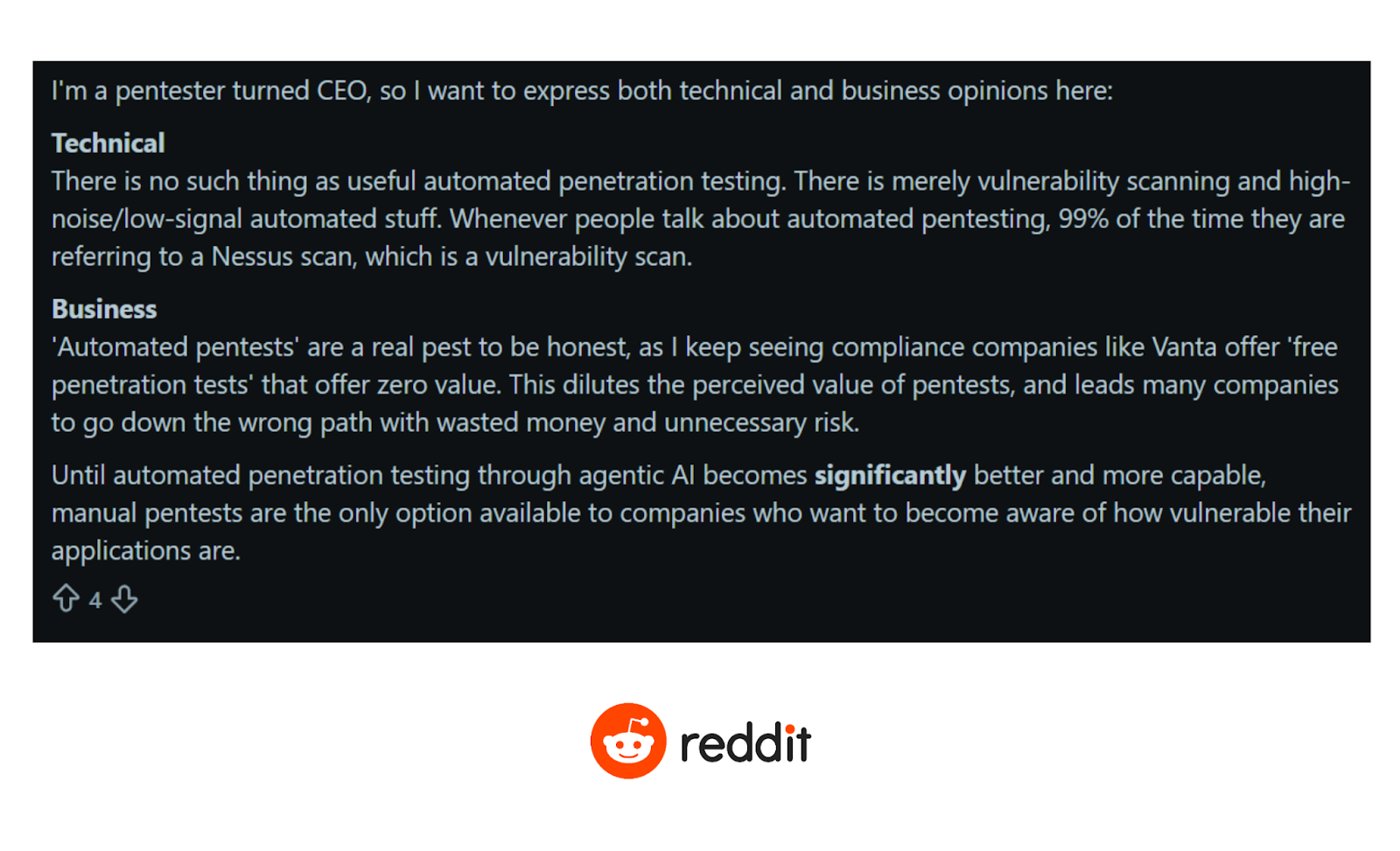
Vanta pen testing reviews on forums like Reddit frequently warn that teams misunderstand the scope of the “free” report, only realizing late in the audit process that additional third-party penetration testing is required.
Founder's Tip: Don't mistake Vanta's green checkmark for auditor approval. The platform validates that a qualifying file exists; your auditor validates that the file matters. A passing grade in the dashboard effectively means nothing if the methodology inside the PDF is weak relative to your audit requirements.
When scoping Vanta's pen testing offerings, ask a simple question: "Is there a human behind the keyboard?" If the answer is no, it is not a pentest. Note that most audits do not need a thorough manual pen test; however, it's critical that a prospective founder knows which is which.
Stat Check: Automated vulnerability scans typically cost $1,000–$5,000, while manual penetration tests from reputable providers run for $5,000-$50,000+. If a “free” test is bundled, it's worth noting which one you're actually getting.
The Auditor's Red Flag Checklist
Before you drag-and-drop that PDF into Vanta's dashboard, pause. Uploading evidence may advance the platform's control status - but your auditor will independently evaluate whether that evidence is sufficient.
Use this checklist to verify whether your Vanta pen testing provider actually delivered a real pentest - or a simple scan that might get flagged during fieldwork. These checks mirror the implicit pen testing basics auditors expect to see reflected in the evidence, even if Vanta as a platform itself does not enforce them.
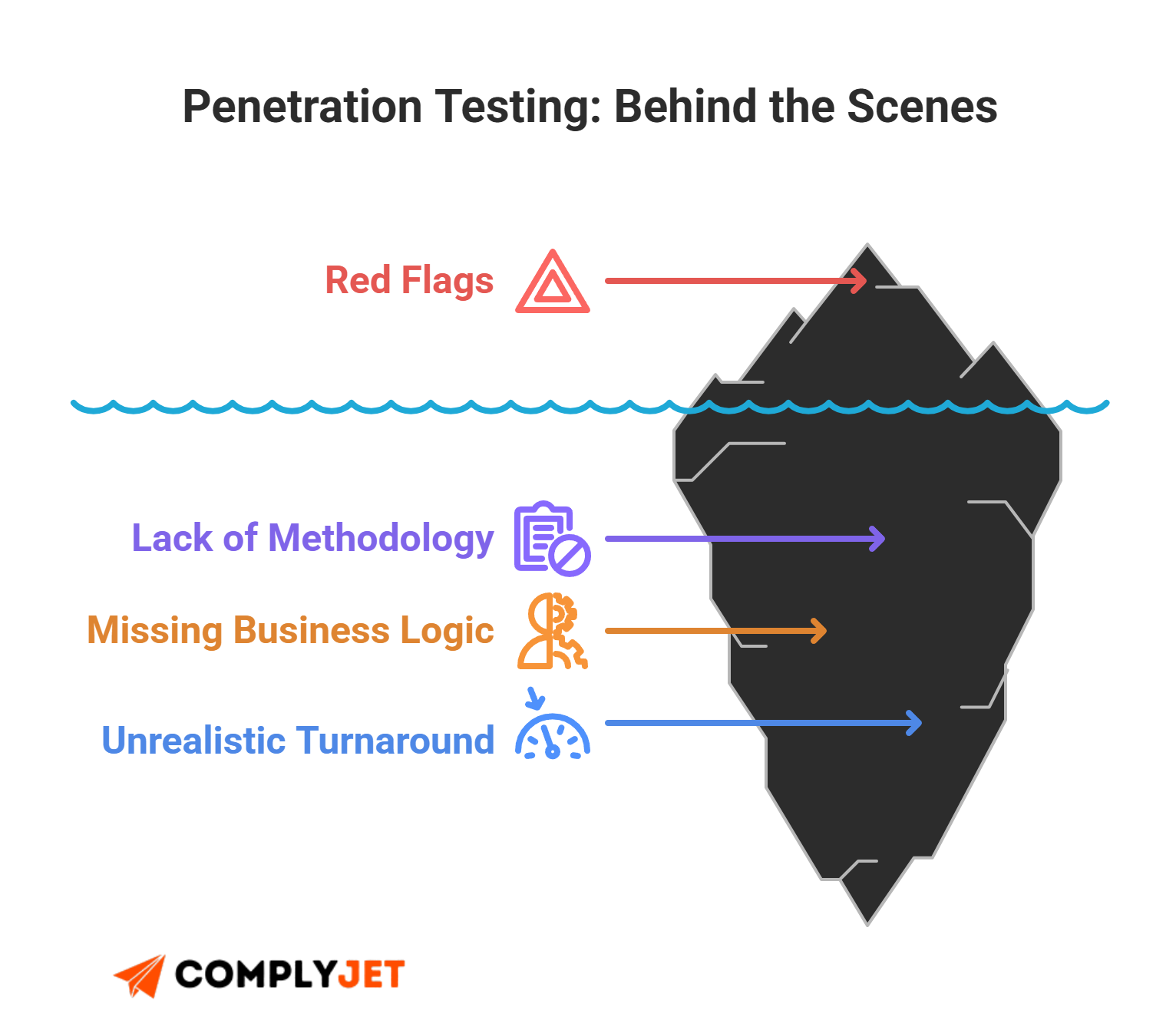
Red Flag 1: No "Methodology" Section
A credible report should cite industry standards like OSSTMM (Open Source Security Testing Methodology Manual) or PTES (Penetration Testing Execution Standard). If the methodology section is missing, vague, or only lists automated tools (e.g., Nessus, Burp Suite) without mentioning manual validation, it is high-risk evidence and may not satisfy your auditor.
Red Flag 2: Zero "Business Logic" Findings
Automated scanners find missing patches; humans test workflows. If your report lists dozens of issues, but they are all SSL warnings or missing headers, that's a problem. A real pentest documents attempts to break your application logic - even when those attempts fail - as part of a legitimate pen testing process.
Red Flag 3: The "24-Hour" Turnaround
Real pentesting requires reconnaissance, manual exploitation, and false-positive removal. If you requested a test on Monday and received the final report on Tuesday, it was almost certainly automated.
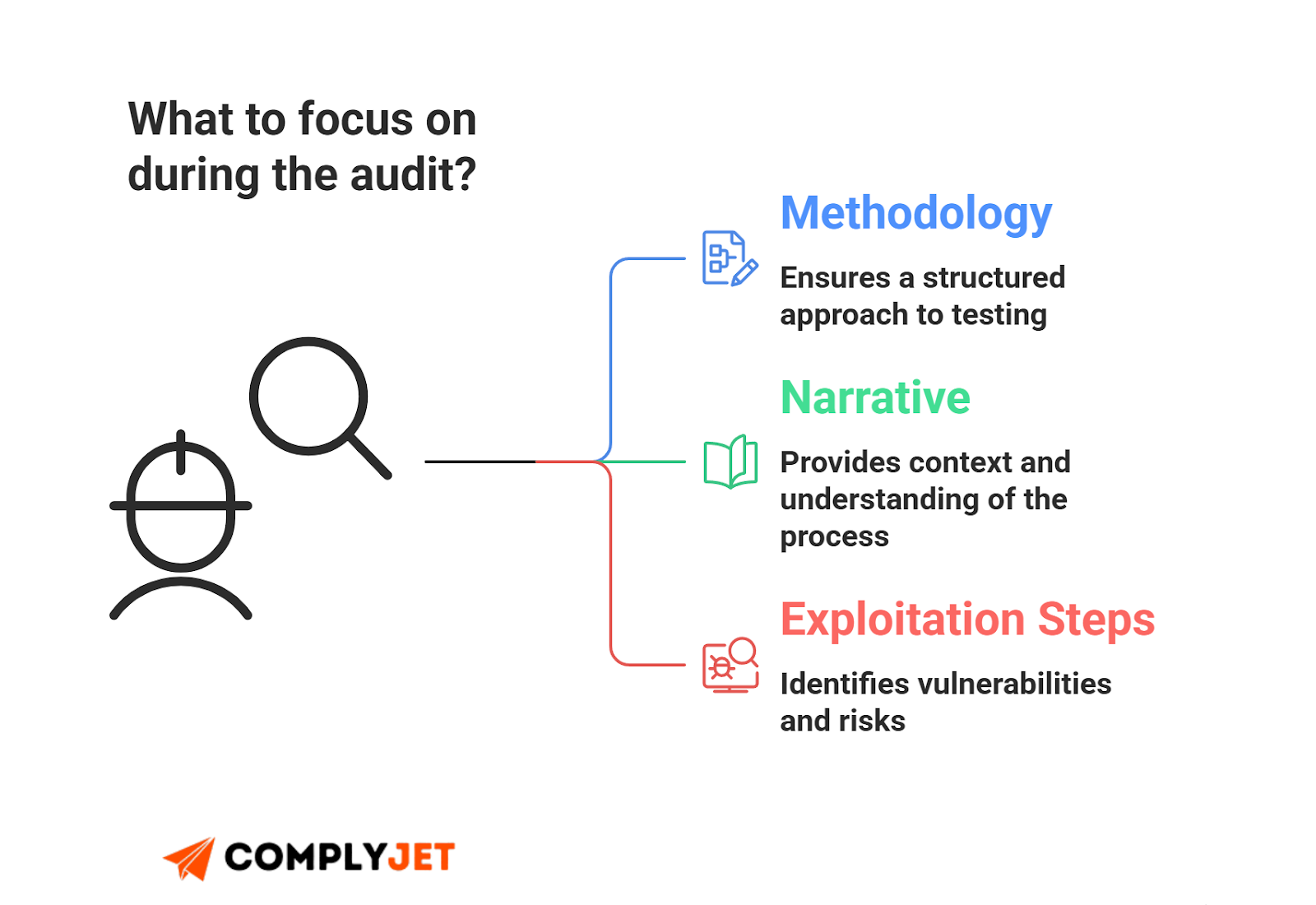
Founder's Tip: Open the PDF and search for the word "Narrative." If the report doesn't describe how the tester moved through your system, it may not be thorough. Auditors trust methodologies, not raw tables.
Vanta's Pen Testing Services: SOC 2 Type 1 vs. Type 2 Requirements
While Vanta supports multiple frameworks, most founders are probably here for SOC 2. One of the more dangerous misconceptions regarding Vanta's pen testing services is assuming what passes Type 1 will also pass Type 2. This misunderstanding sits at the heart of many painful audit surprises and reflects a shaky grasp of the basics of Vanta's pen testing services.
The CC 4.1 Grey Area
Strictly speaking, the AICPA does not explicitly require a "manual penetration test." Control CC 4.1 calls for "ongoing and/or separate evaluations" to verify security effectiveness. It is a Risk Management control, and whether penetration testing is required under it depends on the audit type, scope, and risk profile being assessed.
In practice, nearly all reputable auditors expect some kind of vulnerability report. Vanta's dashboard satisfies the software layer of Vanta's pen testing/risk management requirements. But the auditor satisfies the standard.

Founder's Tip: Schedule your pentest at least 4 weeks before your audit window ends. You need buffer time to fix the bugs and run the retest. Auditors hate seeing 'Open' critical tickets during their review.
SOC 2 Type 1
Type 1 evaluates security design at a single point in time.
- Audit reality: Many founders pass Type 1 using an upper-tier automated partner or a high-quality vulnerability scan.
- Why it passes: The auditor is verifying the existence of a testing process, not measuring its resilience over time. This approach keeps Vanta's pen testing cost low and is often sufficient for early-stage compliance goals.
SOC 2 Type 2
Type 2 evaluates operating effectiveness over 6-12 months.
- The risk: Uploading a shallow scan may be flagged as insufficient evidence. Auditors expect testing for business logic flaws - issues that scanners cannot surface.
- The consequence: If rejected, you may be forced into a rush manual pentest at premium pricing to cure the gap before the audit window closes.
Founder's Tip: For Type 1, save your resources. For Type 2, upgrade to a manual Vanta partnered pen test. Don't risk a "qualified opinion" (which basically means a "not satisfactory" grade) to save a few grand.
The Vanta Pen Testing Process: API Sync vs. PDF Upload
Once you have your report, how it integrates into Vanta matters more than most founders expect. This operational detail is a core part of Vanta's pen testing services, even though it's often treated as an afterthought.
The Legacy Workflow: PDF Upload
This is the traditional route used by most budget-tier options in the list of Vanta's pentest partners. You receive a static PDF report, and you manually upload it to Vanta's "Documents" tab, the checkmark flashes green, and that's that. You're safe and secure and prepared for the upcoming audit, right? Not so fast.
- The Pro: It is simple. Upload the Report file, and the specific control turns green.
- The Con: Manual PDF uploads meet the auditor's request for evidence, but they don't integrate findings into Vanta's continuous monitoring or provide ongoing insight beyond a point-in-time report.
If you fix a bug next week, the PDF doesn't change; you must request a new attestation letter and re-upload it, limiting the real value of Vanta's complimentary pen testing services.
The Modern Workflow: API Integration
Premium list of Vanta's pentest partners like Cobalt and Pentest-Tools.com utilize Vanta's API to push findings directly into your Risk Register. This transforms a static document into dynamic data and is where Vanta and its integrations with partners like Xbow become especially valuable in practice.
- Why it's better:
Vulnerabilities are mapped to as many as 32 specific tests within Vanta. If a "High" severity SQL injection is found, it can automatically fail related controls (like Secure Coding Standards), giving you a real-time view of your compliance posture.
- The Sync:
The value of this workflow depends entirely on the evidence sync frequency:
- Cobalt: Syncs assets and findings every 6 hours.
- Pentest-Tools.com: Syncs findings automatically every day at 05:00 UTC.

Founder's Tip: Be careful what you wish for. If you use the manual PDF upload, Vanta won't bug you about fixing findings in the dashboard. If you use the API, every 'High' severity bug will turn your Vanta tests red until you actually fix them. The API forces honesty; the PDF allows for procrastination. There's no objective answer; the right option for you depends entirely upon your enterprises' needs.
Vanta Pentest Partners: The Good, the Affordable, and the Accredited
The quality of your security testing depends entirely on which vendor you select from the marketplace. This choice directly shapes the outcomes you get from Vanta's pen testing services. Below is a granular breakdown of the most prominent options to help you navigate the list of Vanta's pentest partners with clarity and intent.
Cobalt (Premium)
Often considered the gold standard for high-growth startups and enterprises, Cobalt operates as PTaaS (Penetration Testing as a Service), meaning you get an ongoing platform, not just a static PDF report.
- Best for: Companies selling to enterprise customers who will closely scrutinise security evidence.
- Integration: Deep, bidirectional Vanta integration syncing users, assets, and findings so the Risk Register reflects real security posture.
- Retesting: Free retests are the key differentiator - 6 months (Standard), 12 months (Premium) - letting teams fix issues without extra fees, a major advantage within Vanta's pen testing services.
13 Security (Budget)
A cost-effective option frequently mentioned in Vanta pen testing reviews, especially for early-stage startups focused on checking off the compliance box.
- Best for: Seed-stage companies needing a fast SOC 2 Type 1.
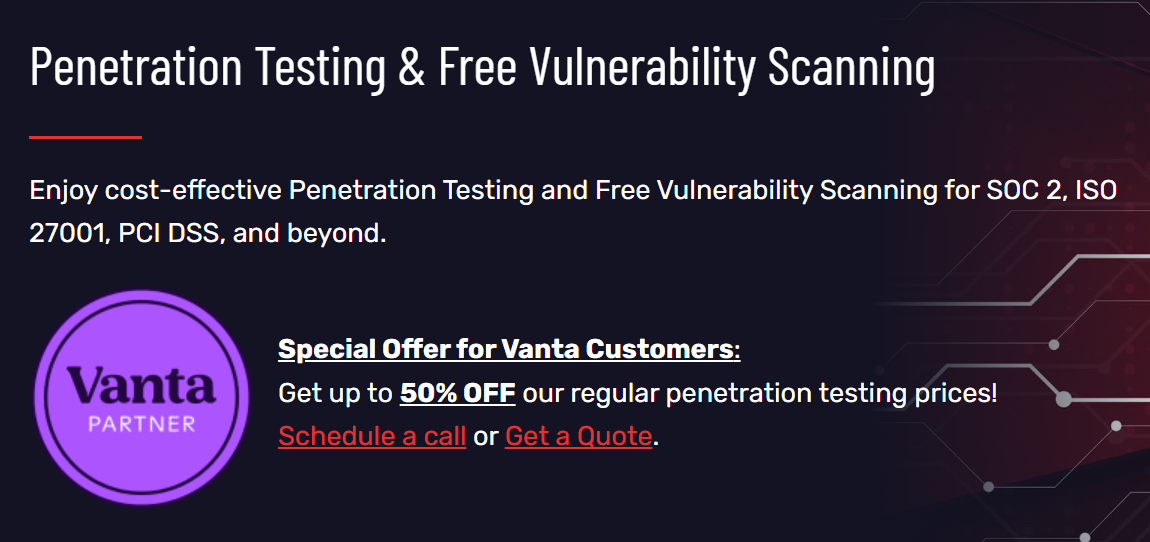
- Pricing: Often offers up to 50% discounts for Vanta customers, making it far cheaper than boutique firms.
- Caveat: Scope matters; if you need thorough pen testing - confirm your tier includes manual exploitation, not just the bundled free vulnerability scanner.
Cognisys (Accredited)
Distinguished by being CREST accredited, which carries strong credibility in the UK, EU, and financial sectors.
- Best for: Companies selling into the UK/EU or operating in regulated industries like FinTech.
- Transparency: Explicit about the scan vs. test difference and openly warns that "free" offers are usually vulnerability scans, not manual pentests.
Pentest-Tools.com (DIY)
Offers a strong integration that maps findings to 32 Vanta tests, making it useful for internal security checks.
- Best for: Technical founders or engineering teams running preliminary self-assessments before engaging a third-party auditor.
- Limitation: Self-scans generally do not meet the independent third-party requirement for formal audits.
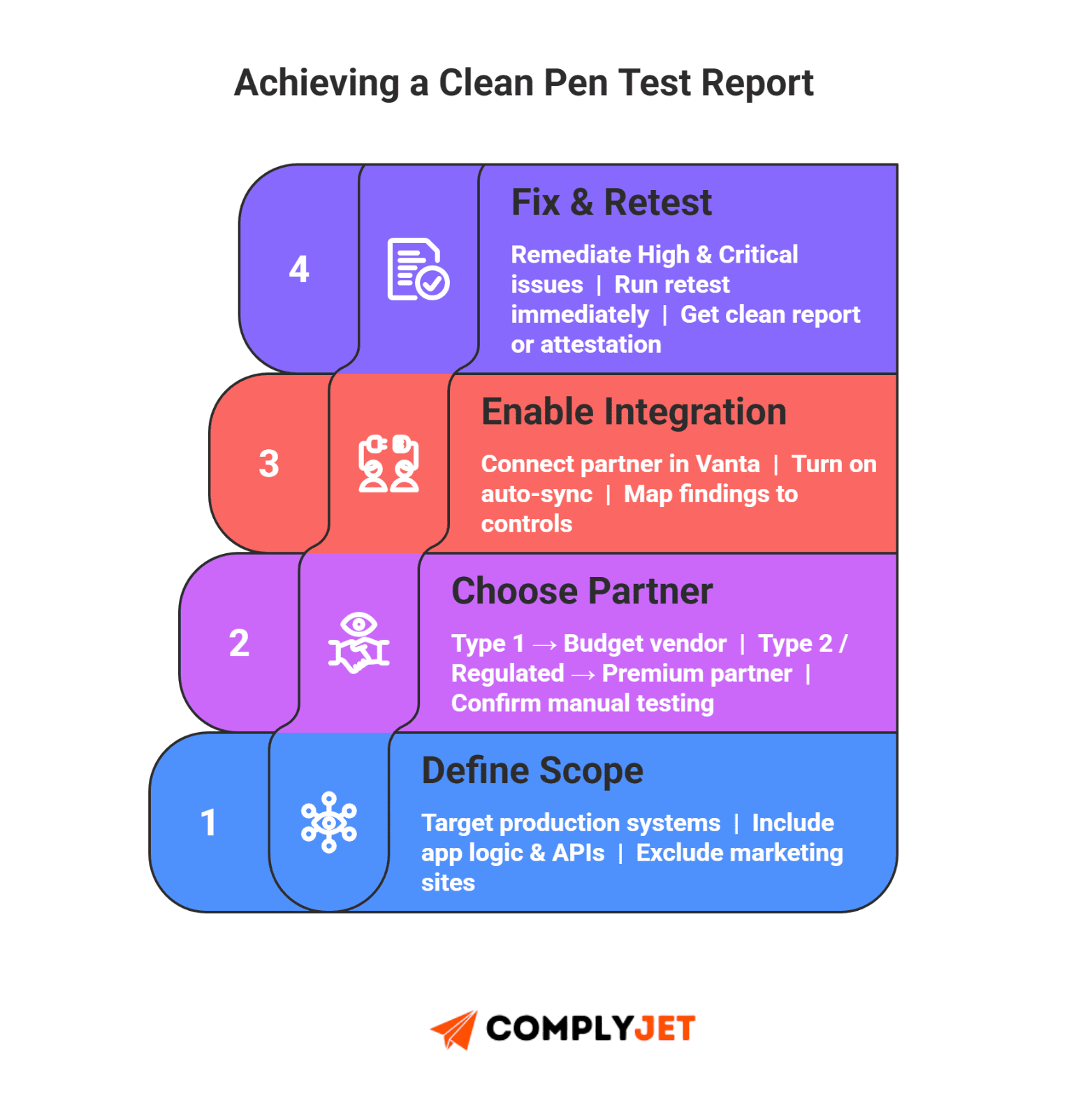
Founder's Tip: Don't pick a partner based on the logo in the Vanta dashboard. Pick one based on your retest requirements. If you fail the first test (and you just might), will they charge you $1,000 to verify the fix? Cobalt includes it; budget partners often bill hourly for round two.
The True Cost Breakdown of Vanta's Pen Testing Services
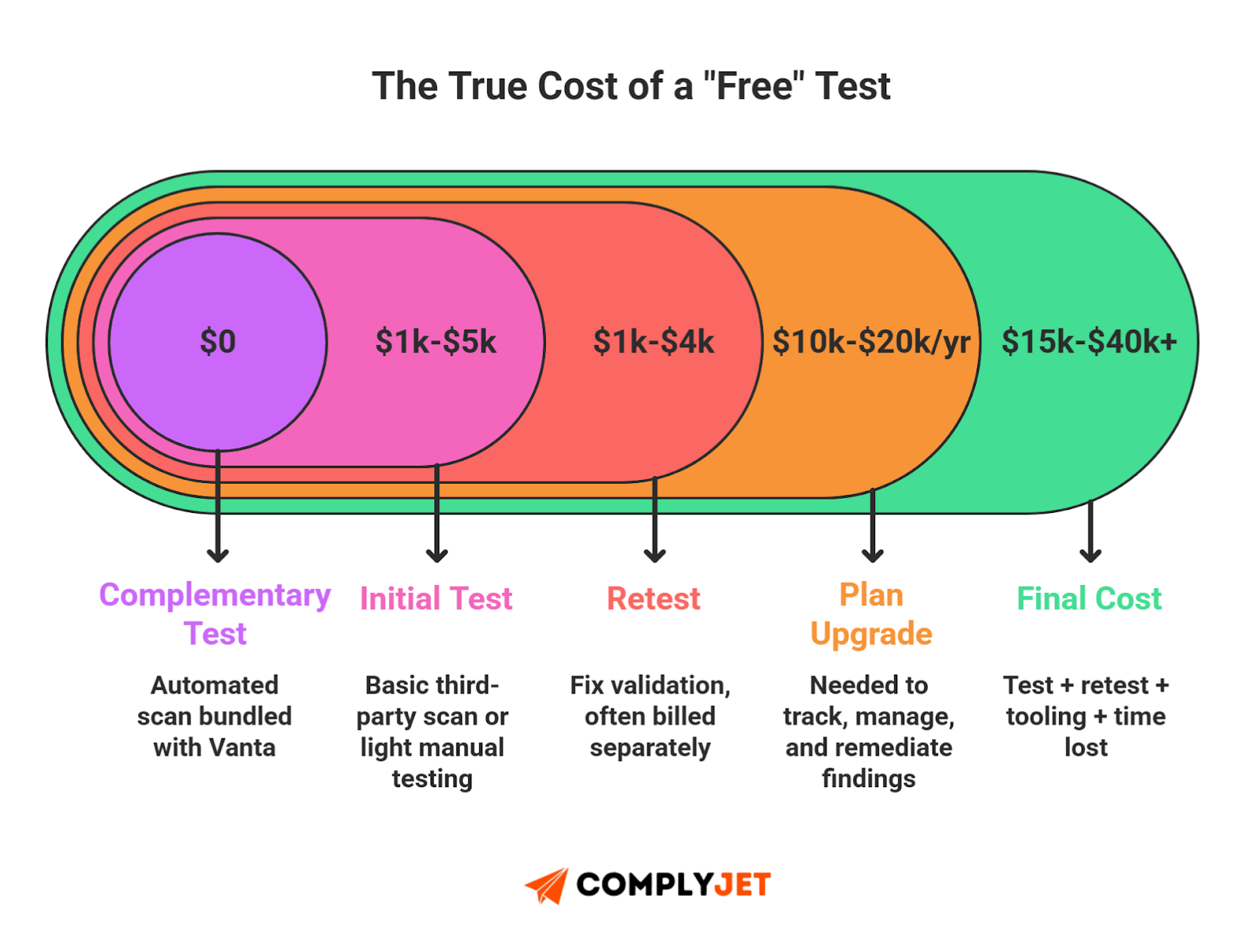
Vanta's pen testing cost ranges from "free" to $20,000+, but the sticker price rarely tells the full story. Depending on your choice of vendor, actual Vanta pen testing costs may end up including the initial test, the retest, and the Vanta plan required to properly manage findings generated by Vanta's pen testing service partners.
The Price Tiers
Seen in isolation, these tiers can make Vanta's pen testing cost appear flexible. In practice, the follow-on fees are where most founders get burned if they don't account for their specific needs, and the policy nuances of their particular pentest partner.
Hidden Fee #1: The "Growth" Plan Upsell
Here is the "gotcha" most founders miss. You buy Vanta's pen testing services to find bugs. But to actually manage those bugs using Vanta's advanced "Vulnerability Management" features - like automatically tracking remediation SLAs or integrating deeply with Jira - you often need to upgrade your Vanta subscription.
- Core Plan: Starts at ~$10,000/year
- Growth Plan: Starts at ~$30,000/year
If your budget-friendly pentest forces you to upgrade your software subscription just to effectively handle findings, your total Vanta pen testing cost may have effectively tripled.
Planning a pentest for SOC 2 Type 2? ComplyJet can help scope it right the first time - no rework, no rush fees. Start your free trial now.
Hidden Fee #2: The "Failed Retest" Bill
Budget providers operate on thin margins. They typically include exactly one retest. If you patch Vanta's pen test finding but the fix fails (which is common with complex bugs like XSS), you pay out-of-pocket for the third round.
At $250/hour (standard industry rate in 2025), fixing three stubborn tickets can cost more than the original test, quietly inflating Vanta's pen testing cost again.
Stat Check: Budget at least $4,500 for a quality manual test. Automated tests are usually enough to pass an audit - but if your operational niche demands manual testing, vulnerability scans probably won't cut it.
Founders' Most Asked Questions
Does Vanta do the penetration test themselves?
No. Vanta is a compliance platform, not a testing firm. They act as a marketplace to connect you with third-party vendors like Cobalt or 13 Security. The quality of your report depends entirely on the partner you choose, not Vanta.
Is the "free" Vanta test enough for SOC 2?
It may be sufficient for some organizations, but it’s important to evaluate it carefully - especially if you’re preparing for a SOC 2 Type 2 audit. The “free” option included in some bundles is often an automated vulnerability scan, which may not align with every auditor’s expectations or every company’s risk profile. Depending on your product complexity, data sensitivity, and operational niche, a manual penetration test performed by a human expert may be more appropriate.
How much should I budget for a Vanta-integrated pen test?
Costs vary based on the vendor tier. Basic compliance checks often start in the mid-thousands. Comprehensive "Pentest as a Service" engagements can run into the five figures. Be careful with budget options; they may look cheap upfront, but can cost more if you need retesting.
Will a green checkmark on Vanta satisfy my auditor?
For basic compliance needs, the green checkmark is usually enough to get the job done. However, if you serve enterprise clients, auditors often dig deeper. They look at the quality of the report, not just the status light. It is best to verify your documents are thorough, even if the dashboard says you passed.
Do I need the Vanta Growth plan to manage vulnerabilities?
Likely, yes. The entry-level Core plan usually handles simple document uploads. To automatically sync security findings with Jira or track remediation deadlines in real-time, Vanta typically requires an upgrade to the more expensive Growth plan.
What happens if we fail the first penetration test?
This is a common hidden cost. Premium partners usually include a window of free retesting to verify your fixes. Budget vendors often bill hourly for this service. If you have complex bugs to fix, a "cheap" vendor can quickly become expensive.
Final Takeaway
Vanta has undeniably changed the compliance landscape, turning a once painful sprawl of spreadsheets into a streamlined, automated workflow. The platform has gone a long way toward making governance accessible to companies that previously couldn't afford a full-time CISO or a heavyweight GRC stack.
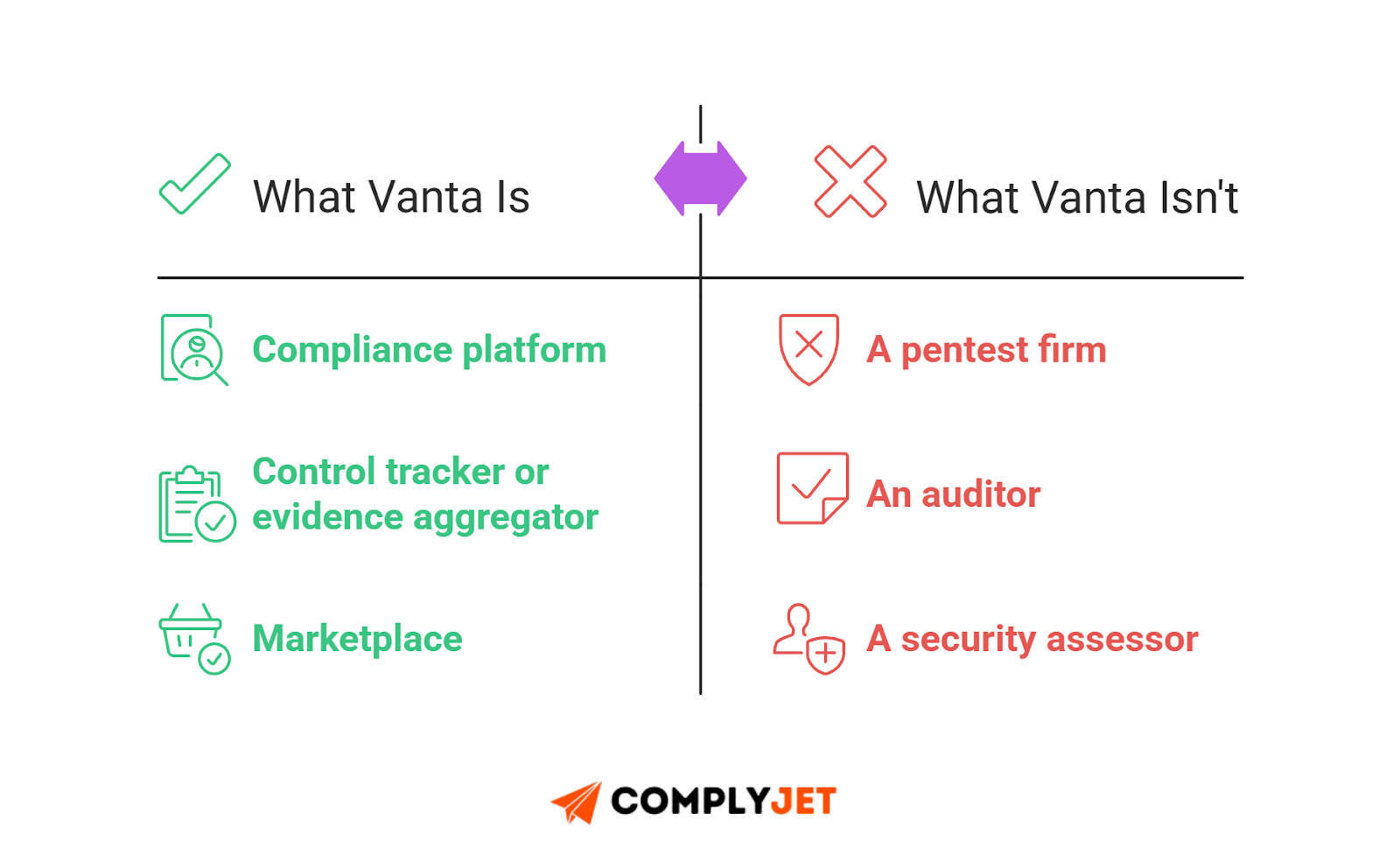
However, it is vital to remember that Vanta's pen testing services are a marketplace of options, not a one-size-fits-all magic button. For a Seed-stage startup with no sensitive data, a budget-friendly partner may be sufficient.
But for a growth-stage company handling health records or financial data, relying on a "check-the-box" scan is a gamble - one that can easily backfire during a diligent audit and dramatically increase Vanta's pen testing cost at the worst possible time.
Ultimately, this guide exists to help you perform your own due diligence when using Vanta's pen testing services. Read the SOWs, scrutinise scopes, and check Vanta pen testing reviews to understand how different partners perform in real audit scenarios. Vanta can automate the evidence collection, but only you can ensure the evidence itself is credible and defensible.
Final Thought: Don't let a $1500 scan ruin a $20,000 audit. The cost of a failed report - in auditor fees, delayed deals, and lost reputation - is always higher than the cost of doing it right the first time. Many teams avoid that risk by validating their approach with ComplyJet ahead of time. Book a demo now and earn that peace of mind.