.svg)

The Moment You Think You're Safe... You are not.
You have just completed your audit. Your dashboard is green. Everyone is resting comfortably. Then a minor change occurs. A permit. An API. A log. There's no warning. There's no visibility. It's just a risk. This is where most SaaS founders get caught off guard.
And that’s where this comprehensive guide on compliance reporting comes into the picture. So be ready for utmost clarity with accurate insights. Automated regulatory compliance is not only a protection. But also a proof. And proof is a fleeting phenomenon.
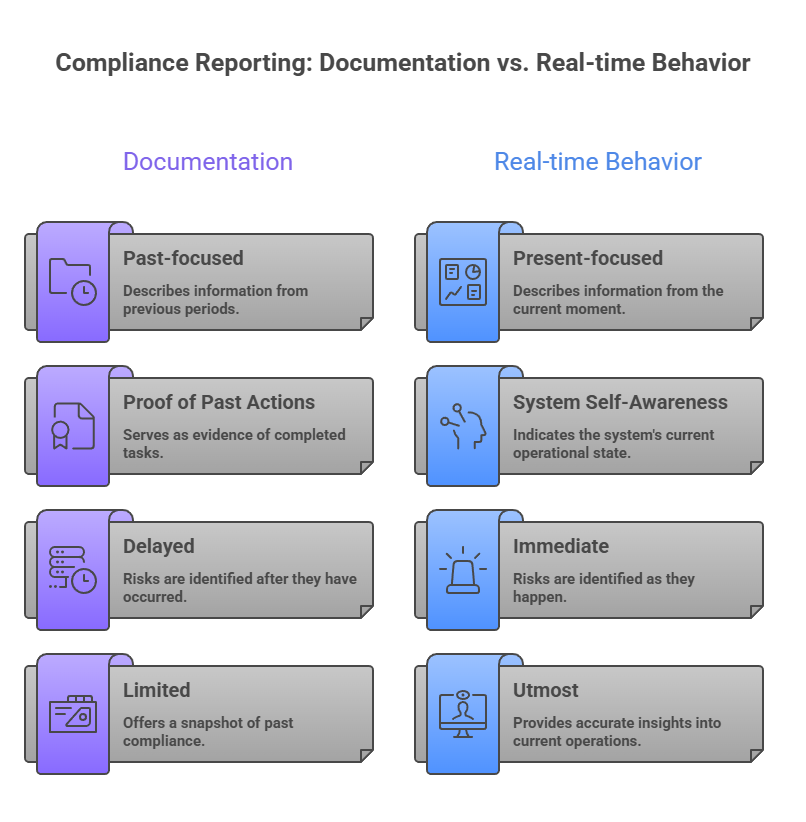
If you think you understand regulatory compliance reporting requirements, get ready for some surprises! But why isn't compliance reporting what you think it is? You have been informed that compliance reporting is documentation. It isn't. It is your system's way of saying, "Here is exactly how I am behaving right now." Not last quarter. Not the last audit. But right now.
What about the danger? It fails silently. No alarms. No headlines. Just gradual exposure building beneath your systems. By the time you notice, the damage has already been done, and recovery is much more expensive and painful. If you miss that, you will not be compliant. You're simply unaware.
That’s where you can use automated compliance software like ComplyJet to make your compliance journey easier.
If your compliance reporting is still based on snapshots, ComplyJet can help you transition to real-time visibility, so you never have to guess your risk posture. Start your free trial today!
Compliance Reporting & The Illusion of the "One-and-Done" Audit
You receive SOC 2. You think you're done. Wrong! Regulatory compliance reporting is continuous.
Your product changes daily. Your risks grow silently if you ignore adaptability. A report is a snapshot. Risk is a live stream.
Beyond the Snapshot: What Compliance Reporting Really Means
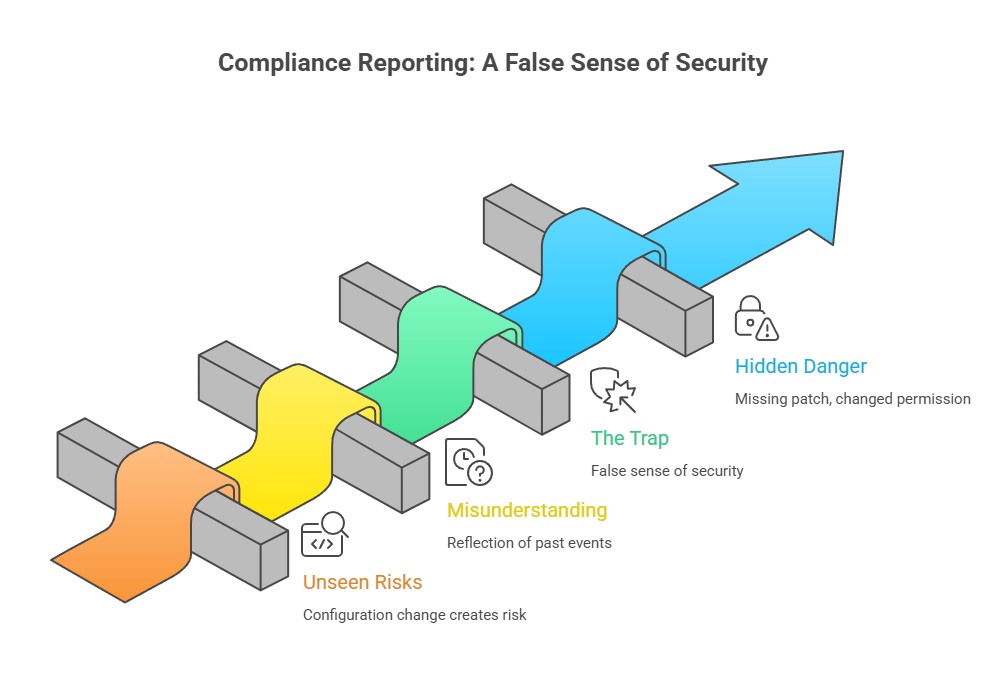
The Risk You Do Not See: You passed the audit last month. Today, a small configuration change puts you at risk. That is the problem. Compliance reporting is not a static snapshot; rather, it is a dynamic signal.
The Misunderstanding: The vast majority of people believe that compliance reporting solutions present a reflection of previous events. They are wrong.
The Trap: A SOC 2 or ISO report provides you with a sense of security, as if you are protected by a shield. You are not. You are looking at a photograph.
The Hidden Danger: A missing patch, a changed permission, and a silent threat that has been building for months.
From Snapshot Compliance to Real-Time Control Visibility
The Most Important Shift: Switch to Continuous Control Monitoring (CCM). Change is monitored in real time.
Professional Insight: The key is the "delta," what has changed since your last safe state. That is where accurate insights are needed using a good compliance reporting software.
The Data Point: The point-in-time audit fails to identify "configuration drift." Access increases. Controls erode. Nobody knows until disaster strikes.
That’s why founders these days are using automated compliance reporting solutions for their B2B SaaS startups.
The shift: Switch to Continuous Control Monitoring (CCM). A compliance reporting software can help you achieve that.
Founder Tip: "An audit reveals where you were." A compliance reporting tool demonstrates where you are.
Identifying "Compliance Debt": The Silent ROI Killer
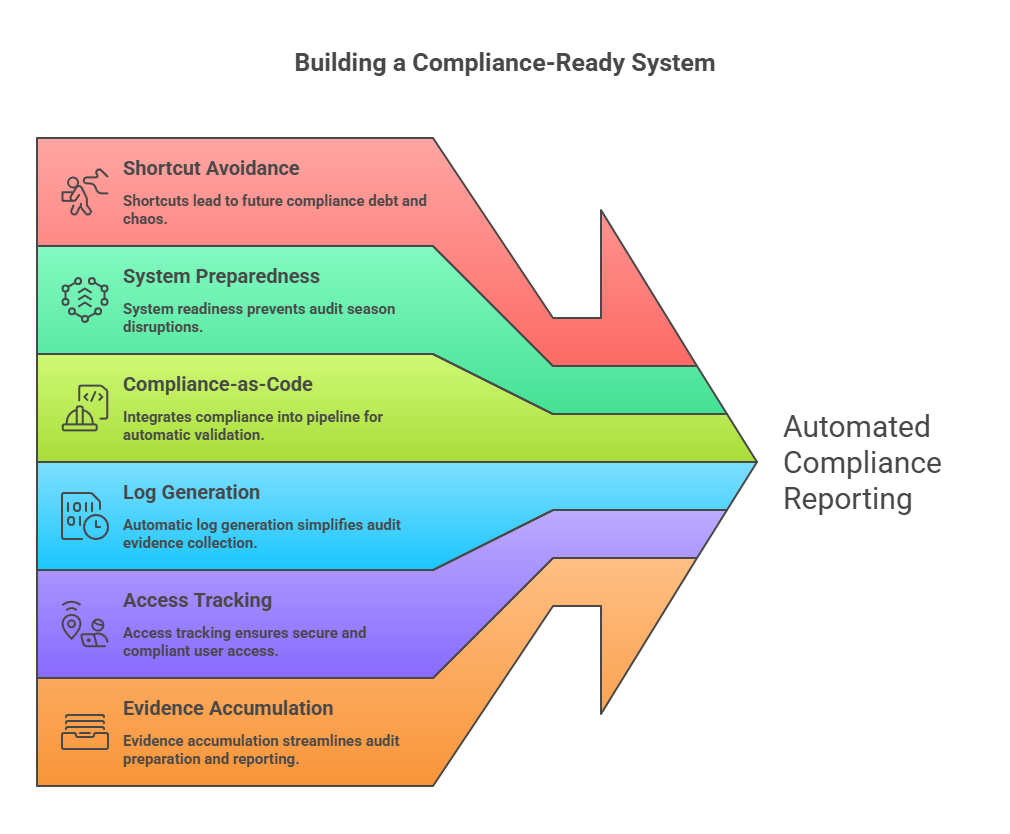
You avoid logging. You skip the permissions cleanup. You rush the features. Nothing breaks. So you move on. Until auditing season arrives. Chaos ensues. This is a compliance debt.
You ship quickly. Skip the logs. Delay the cleanup. Nothing breaks. So you move on. Until auditing season arrives. Chaos ensues. This is a compliance debt.
Every shortcut you take today will result in more work tomorrow. Your team is not inefficient. Rather, your system is unprepared. But a flexible compliance reporting tool like ComplyJet can save the day!
During audit season, engineers discontinue shipping. They begin searching for logs and capturing screenshots. 20 to 30% of the bandwidth disappears. Poof.
From Audit Chaos to Automated Compliance Reporting
The Transition to Automated Compliance Reporting: Everything is tracked in real-time. There is no scrambling. There's no guesswork.
A Smarter Move: Integrate compliance as code into your pipeline. Everything gets validated automatically.
The ROI reality: Automated compliance reporting is not a cost. It is how you invest in speed, focus, and expansion.
The Real Cost: Audits take up a significant amount of engineering time. Not because your team moves slowly. Because your system isn't ready.
The Strategy: Compliance-as-Code. Logs are automatically generated. Access is tracked. Evidence is accumulated.
Key Insight: "Good compliance reporting is nice. Poor compliance is exhausting.
Founder Tip: If compliance is treated as a project rather than a process, you will accumulate debt.
Key Elements of Automated Compliance Reporting Software
You will use a compliance reporting software. It looks stunning on the dashboard. However, the audit remains painful.
That's because tools aren't the issue. Design is. Your solution represents a single source of truth. All controls. All logs. Always current. No silos. There's no guessing.
Your cloud, HR, and coding tools communicate with one another. One viewpoint. It's all risk. That is compliance reporting.
AI features of an automated compliance reporting software also require tracking. Bias. Decisions. Data privacy. You cannot report something unless you can explain it.
Your vendors and financial controls are equally important. If one fails, the whole chain fails. Continuous monitoring. Not every year. Daily.
So, be careful while choosing an automated compliance monitoring platform, and verify if its framework properly adheres to the compliance checklist of that specific framework.
If you want the best balance of both worlds, reliability, collaboration, and long-term dependability, then ComplyJet provides the best compliance reporting services to remove your audit pain and transform it into your strength.
Building a Resilient Compliance Core: Security, Access & Control
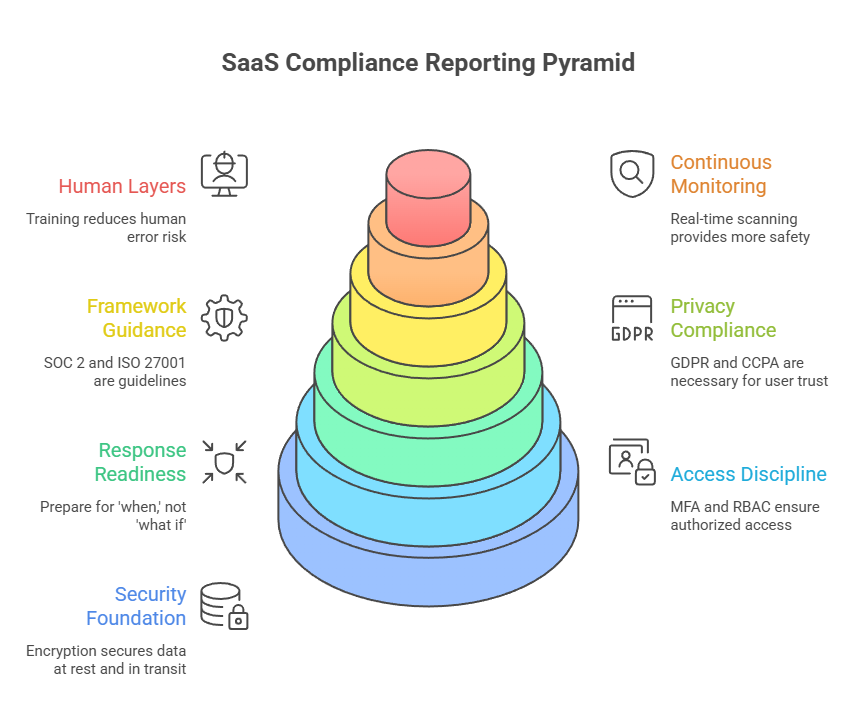
Security Foundation: Encryption secures data at rest and in transit.
Access Discipline: MFA and RBAC ensure that only authorized users have access to information.
Response Readiness: You do not plan for 'what if.' You prepare for 'when.'
Privacy Compliance: GDPR and CCPA are not recommendations. They are necessary for how you manage user trust.
Framework Guidance: SOC 2 and ISO 27001 are the guidelines. However, they do not ensure safety.
Continuous Monitoring: Real-time scanning is superior to surprises and provides more safety.
Human Layers: Training reduces human error, the most significant risk factor.
Key Insight: "Great compliance reporting does not save data. It demonstrates control, live.
Key Types of Compliance Reports
You think that compliance reporting services provide a single report. It is not. It has several levels, each of which addresses a different risk.
Demonstrate your adherence to regulations like GDPR and PCI DSS. However, regulations do not always align. Your reports need to address those issues, not just check boxes.
Make your reports transparent in accordance with SOX and accounting standards. It isn't just displaying numbers. It shows that your system generates those numbers correctly.
That is your true audit trail. These reports are your digital audit trail, demonstrating that your revenue is integrated into your ERP system, reducing errors.
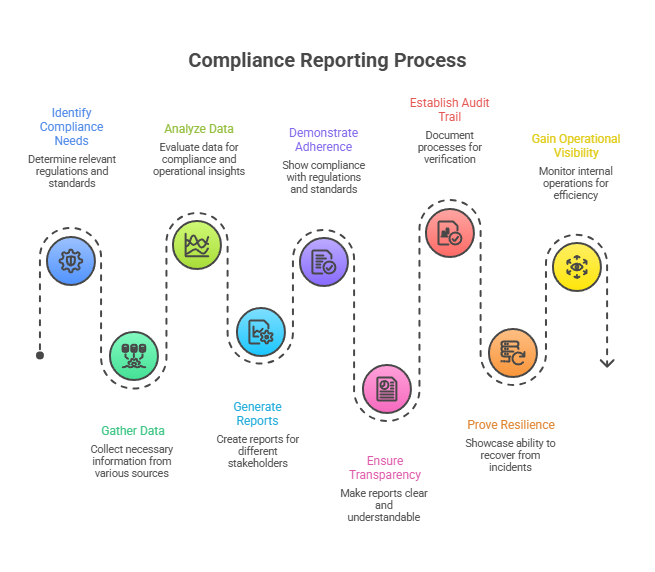
From Security Metrics to Operational Visibility: Proving Real Resilience
IT and Security Proof: It is not about SOC 2 or ISO. It is not about achieving compliance. It is about how quickly you can solve problems.
It's all about how quickly you can patch. That reflects your level of resilience. Prove your data security and resilience.
New generation security reporting includes information on MTTR (Mean Time to Repair) and patch speed. Demonstrate your ability to fight threats in real time.
Operations Insight: Your internal reports provide information about where your operations are slowing down. Your internal reports aren't boring.
Your internal reports are efficiency maps. Monitor your internal operations, safety, and quality. QMS (Quality Management Systems) allows you to monitor everything.
Key Insight: "Compliance reporting is not a single report. It's your business, and it's fully visible. That's where the power lies. "That is where the growth is." A compliance reporting dashboard can change the entire fate of your business.
The Real Challenges Founders Face
Every day, rules change. Your SaaS stack is riddled with hidden risks. Laws change frequently. Your technology does not. The gap is what separates your compliance reports.
Regulations change every week. Your reports show data from the previous quarter. That's called compliance lag. Your data is constantly moving around. One incorrect link. The entire report is broken.
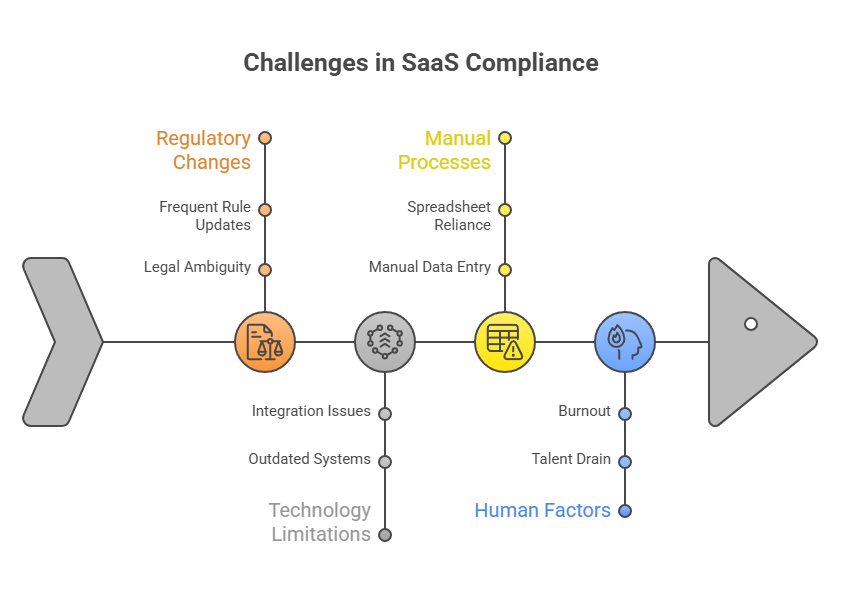
The Hidden Risks of Manual Compliance: Errors, Burnout & Blind Spots
The Spreadsheet Trap: You rely on spreadsheets. One incorrect equation. Your "accurate" report turns into a fairy tale.
The Talent Drain: Engineers stop innovating. They begin reporting. Burnout causes mistakes.
Identity Problem: Who has access to what, right now? Cannot answer that question on the spot? You are vulnerable.
The Fix: Automate identity tracking. Integrate systems.
Manual Overload: Spreadsheets simply cannot scale.
Key Insight: "Slow compliance reporting doesn't just lag, it lies."
Why Compliance Reporting Matters More Than You Think
You see problems as they occur. By then, the damage has been done. That is reactive compliance reporting, which is costly.
Today, compliance reporting detects early warning signs. Delays in patching. Unexpected access. Minor signs precede major failures.
You don't just report risk; you forecast it. Clear and transparent reporting builds credibility quickly. Buyers believe facts over lies.
This speeds up the sales process. Compliance reporting also exposes flaws in processes. Manual processes. Redundant work. Correcting them lowers costs.
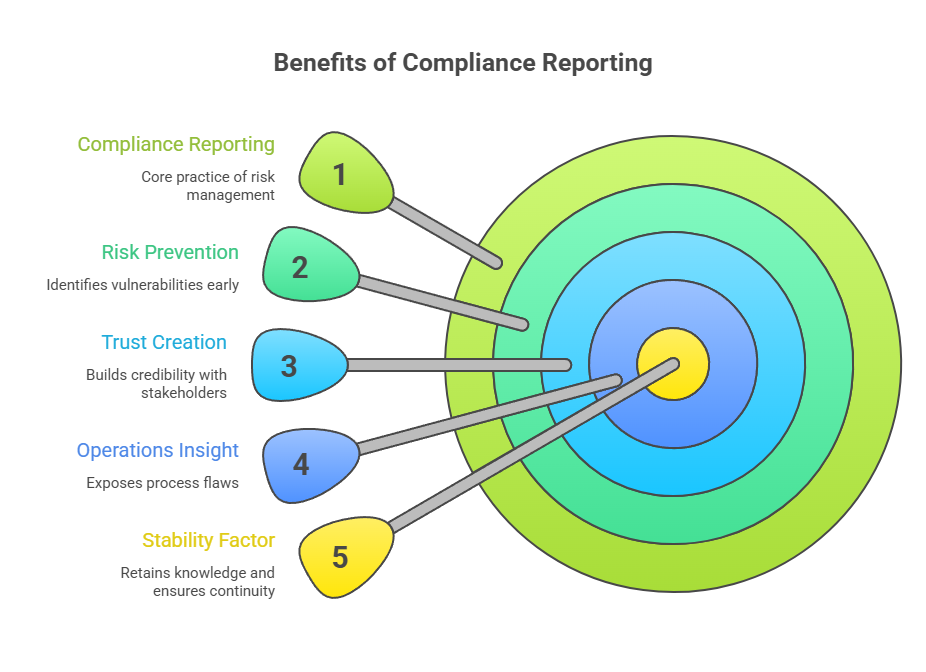
The True Value of Compliance Reporting
Stability Factor: Good reporting generates a playbook. Even after people leave, their knowledge is retained.
Risk Prevention: You identify vulnerabilities early.
Trust Creation: Your customers and partners trust you because you are honest.
Operations Insight: Broken processes are now visible and fixable.
Key Insight: "Great compliance reporting doesn't just protect, it predicts, proves, and improves."
The Myth of Secure Third-Party Integration
Your compliance is only as strong as its weakest vendor. There is one vulnerable API. One vulnerable tool. And your entire compliance program crumbles.
The majority of compliance reports completely ignore "Shadow IT." Tools are deployed under the radar. Permissions are unmanaged.
You've secured your product. You completed your compliance report. However, a vendor API has leaked sensitive information. Your compliance report fails.
The majority of systems focus solely on what is inside. However, risk exists outside, in the tools that your team uses every day.
SaaS attacks now target vendors, not just you. One faulty integration, and your entire chain fails. You must go beyond the basic yes/no vendor validation. Determine the depth of each tool's access.
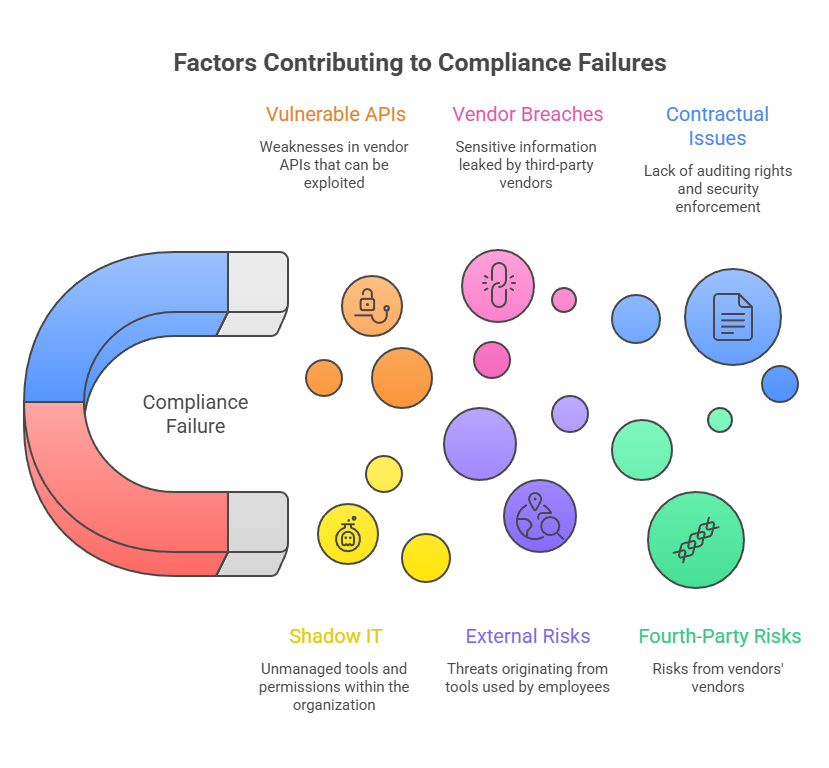
Beyond Vendors: Closing Hidden Gaps with Fourth-Party Risk Visibility
The Contract Layer: Enforce auditing rights. Make sure vendors keep up with your security.
The Missing Piece: Implement fourth-party risk management. Monitor your vendors' vendors.
The Hidden Gap: Shadow IT and small tools cause large risks.
The Fix: Adopt Fourth-Party Risk Management. Keep track of your vendors. Audit integration. Continue to monitor.
Key Insight: Can your compliance reports include all integrations? If not, can it identify your risks?
If you are looking for a tool to automate data privacy compliance, here’s what you can try!
ComplyJet's centralized vendor visibility provides you with a better view of your vendors. With our solution, compliance reporting extends beyond your borders to your entire ecosystem! Schedule a demo today!
Data Sovereignty vs Residency: The Legal Trap
You keep data in one place. But who has legal control over it? That is data sovereignty. When you cross borders, you encounter a legal conflict.
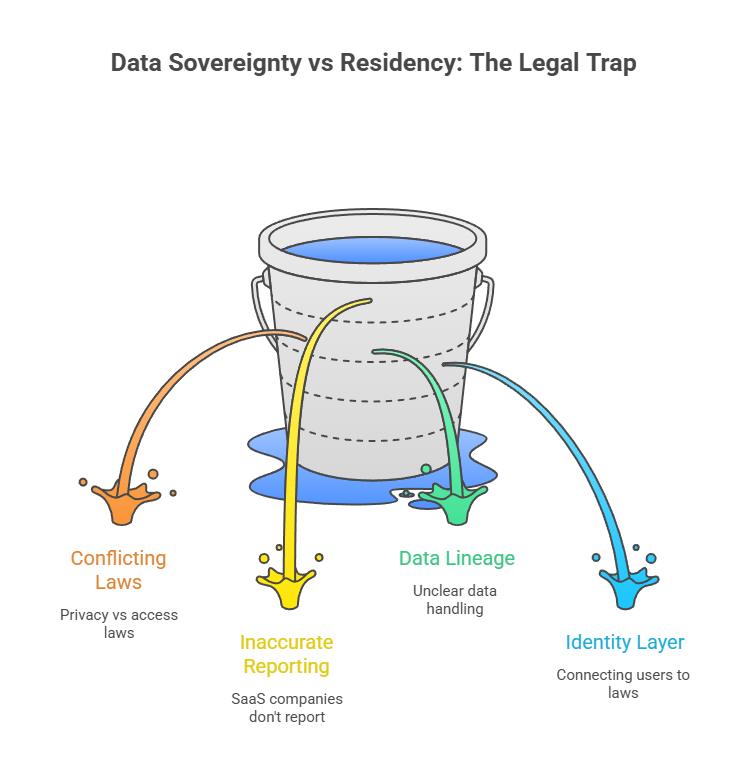
GDPR states one thing. The CLOUD Act says something else. Most SaaS companies do not accurately report this.
You store data in Europe, so you are safe. However, there is a law in another country that protects your data. This is where data compliance reporting fails.
Data residency refers to the location of your data. Data sovereignty refers to who has control over your data. They are distinct concepts.
Navigating Data Sovereignty: From Location to Legal Control
The Risk: Laws conflict. One concerns data privacy. The other concerns data access. You must follow both laws when reporting for compliance. Or it does not function at all.
Shift That Works: Implement systems that respect geopolitical boundaries by design. Data stays where it should be.
The real insight: Understand the data's lineage. Know where the data is going. Who handles it? What law applies?
The identity layer: Connect users' access to regional laws. One system. Multiple outputs.
The Solution: Use region-based reporting. Automate localization.
Data Points: Where data lives is less important than who governs it.
Founder Tip: "If you can't prove jurisdiction, your compliance reporting isn't complete."
Compliance Reporting for Brands: From Checkbox to Trust Engine
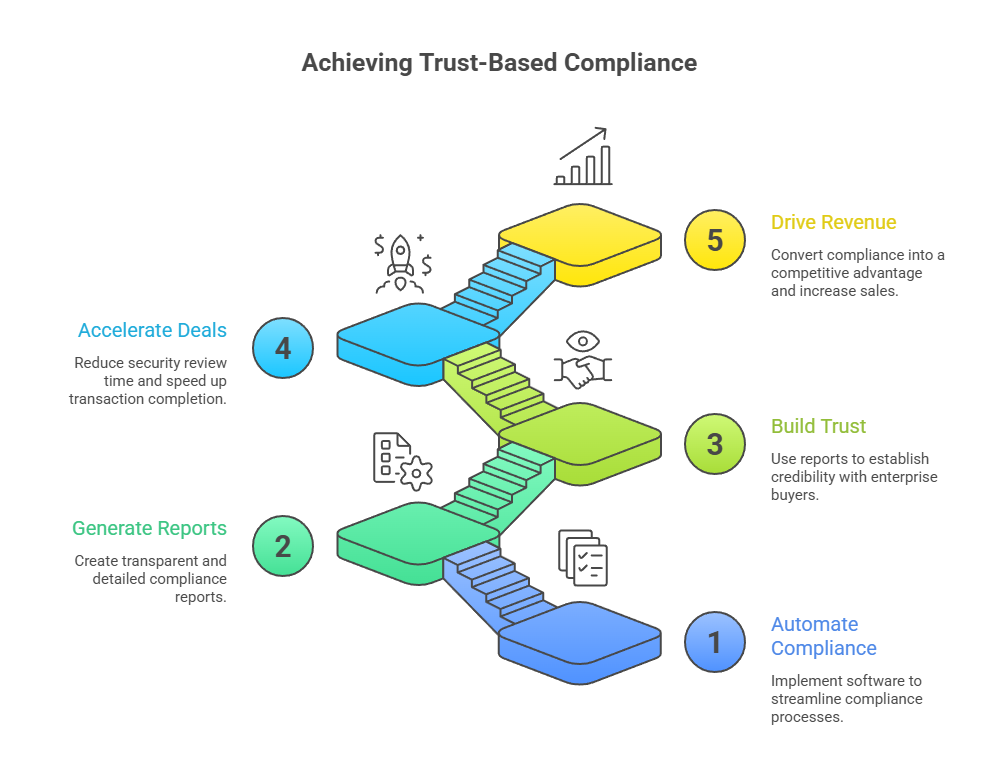
You use a compliance automation software. You report to pass audits. Use compliance reporting to win business. Enterprise buyers value trust.
Messy compliance reporting causes friction. Clean reporting facilitates the completion of transactions. Messy reporting kills them.
You pass compliance. You display compliance certificates. However, enterprise deals take forever. This is because enterprise buyers distrust compliance reporting.
They value proof. Compliance reporting is no longer simply a legal requirement. It is a trust-based driver.
Old way: "We passed our audit." "Here's our compliance posture."
That's a game-changer.
From Compliance Cost to Revenue Driver: Turning Trust into Deals
The Sales Edge: Transparent compliance reports can cut security reviews by up to 90%. Less back and forth. Faster approvals.
The Real Play: Convert reports into assets. Dashboards. Real-time insights. There is clear visibility.
Insight: "Compliance does not win deals. Trusted compliance works."
What is the ROI? Better reporting indicates faster growth. Less friction. Increased credibility.
The end goal: "There is one system. One truth. Used for audits and closing your largest customers."
The shift: "From defensive compliance to offensive trust-building." "If your compliance doesn't speed up deals, it's just overhead."
Hidden Costs of Manual vs Automated Reporting
Manual compliance reporting costs almost three times more. Not just money. Time. Energy. Focus. Manual compliance reporting saves money. It does not. It spends it.
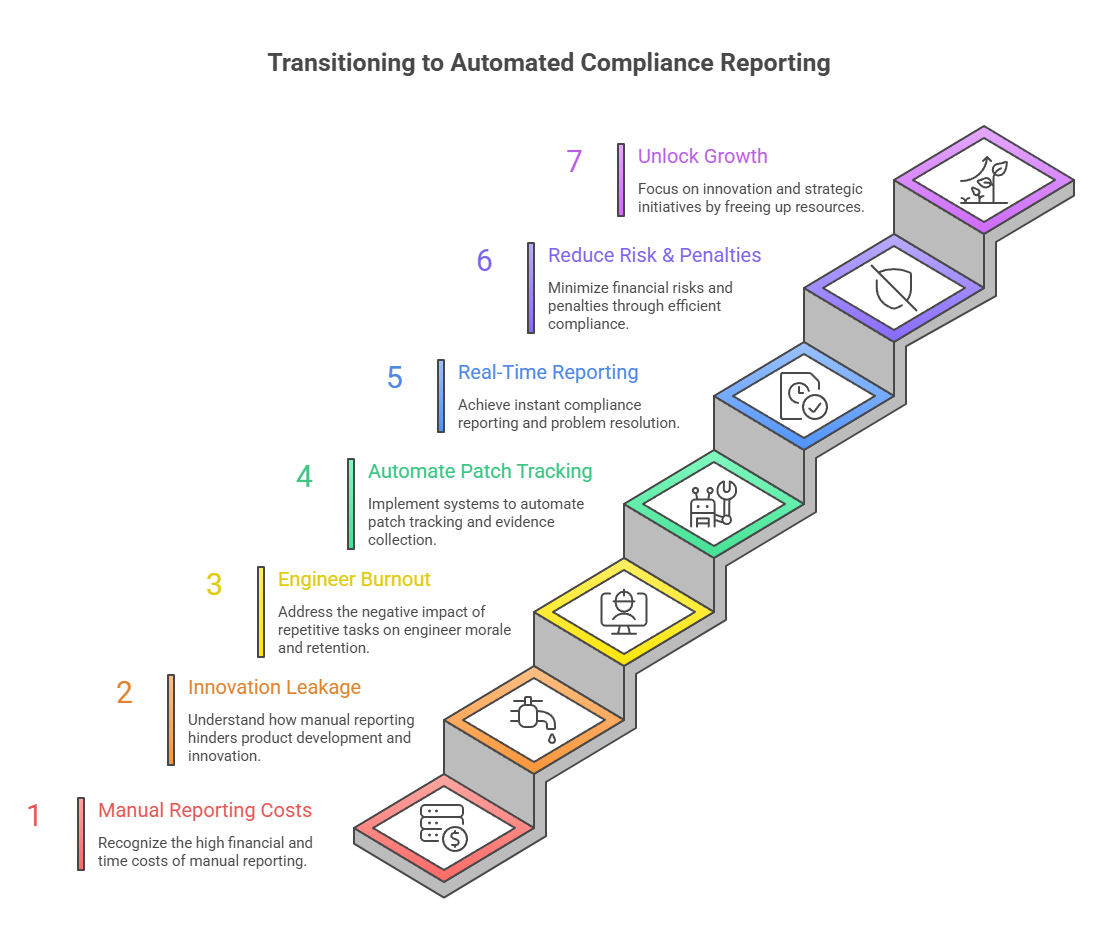
Manual labor costs nearly three times more. Not just compliance automation tools. However, engineers spend a significant amount of time documenting.
Every hour spent on spreadsheets takes time away from your product. Product launches take longer.
Roadmaps take longer. That's called innovation leakage. Your top engineers are not working on data entry. Repetitive work leads to burnout. And turnover.
From Manual Toil to Real-Time Remediation
A Smarter Move: Make patch tracking and evidence collection automated. Allow your systems to report in real-time.
The Advantage: You will solve problems instantly. Not months later.
Financial Impact: Risk windows are shrinking. There are fewer penalties.
The Hidden Loss: Every hour spent reporting is time wasted.
The Fix: Automate evidence collection. Allow systems to track compliance.
Key Insight: "Automation doesn't reduce compliance reporting, it unlocks growth."
Best Practices That Actually Work
There is no need for any manual effort. There are no errors. A single source of truth. There is no data scattered around. You search in Slack.
You perform a search in Jira. You search through emails. I'm still not finding evidence. That is not an effective compliance reporting process.
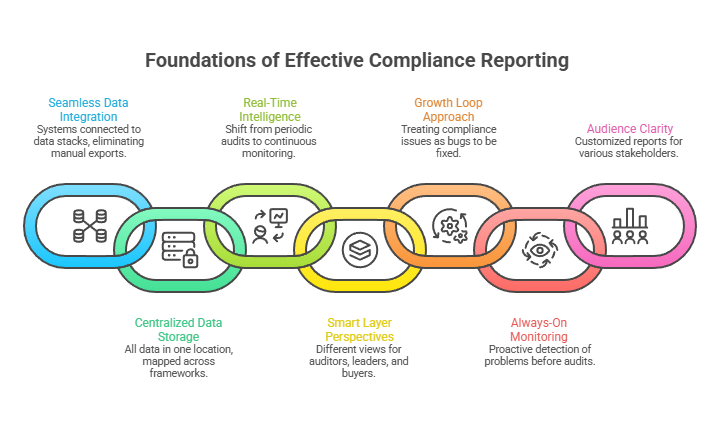
Our systems are now connected to your data stack. No manual data exports are required. No old data files. Only actual evidence.
All data is stored in one location. Data is mapped across several frameworks. One log. Multiple applications. There is no duplication.
From Periodic Audits to Always-On Intelligence
The shift that changes everything: From annual audits to real-time dashboards. Catch problems in hours, not months.
The Smart Layer: Different perspectives for different people. Auditors inspect logs. Leaders consider the risk impact.
The Growth Loop: Treat compliance issues as bugs. Fix them in your pipeline.
Always-on Monitoring: Do not wait for audits to reveal problems.
Audience Clarity: Create customized reports for auditors, executives, and buyers.
Key Insight: "Great compliance reporting doesn't just track issues, it fixes them automatically."
Multi-Framework Mapping: Ending Audit Fatigue
SOC 2, HIPAA, GDPR, and other audits. Eighty percent of the controls overlap. You prepare for SOC 2, HIPAA, and GDPR. Same work, but different names. This is the efficiency trap for compliance reporting.
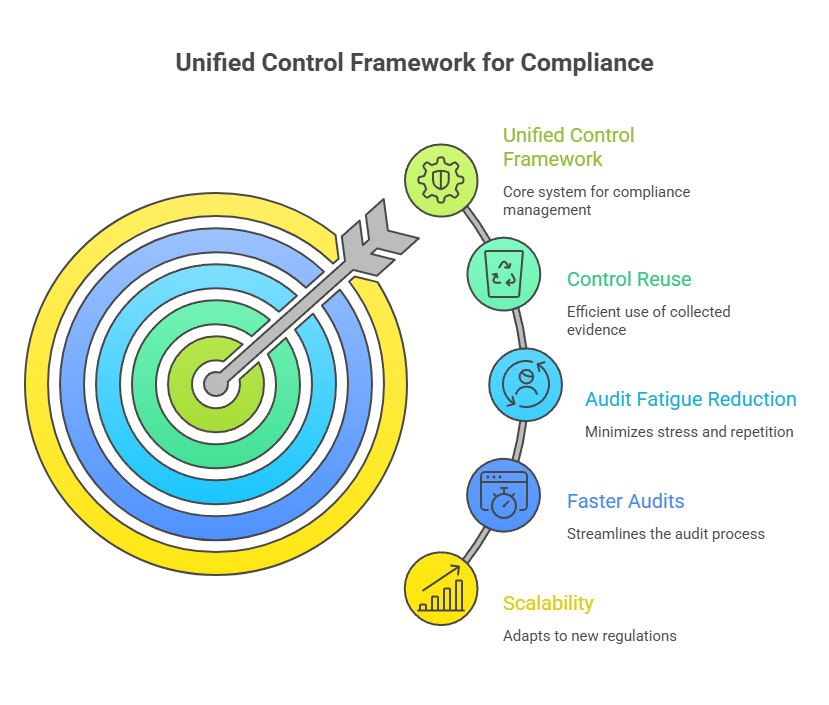
Eighty percent of compliance frameworks overlap. You test the same controls repeatedly. Prioritize controls over frameworks. This is where the Unified Control Framework excels.
Collect Once, Comply Everywhere: The Power of Unified Controls
The Breakthrough Idea: Collect evidence once. Use it anywhere. One firewall log. Multiple compliances are covered.
The Real Advantage: Less repetition. Audits can be completed faster. Reduces fatigue.
The Scale Factor: Add new regulations without rebuilding everything. Just map the existing controls.
The Strategy: Use the Unified Control Framework. Collect once. Maps are everywhere.
Pro Tip: Do not manage frameworks. Manage the controls.
Key Insight: "Great compliance reporting isn't more work, it's smarter reuse." That is how you convert compliance into speed, not slowdown.
AI Risk Management & Non-Human Identities
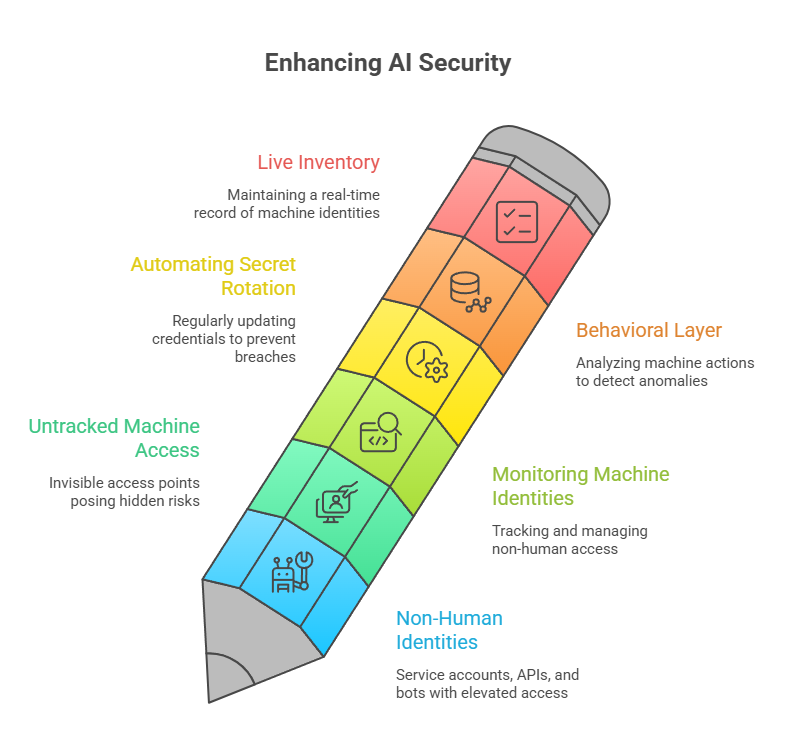
Service accounts, APIs, and bots have greater access than humans. Untracked machine access puts you at risk in ways you cannot see.
Monitor your non-human identities. Automate the secret rotation. You're monitoring your employees' access.
But do you track your bots, APIs, and service accounts? There are far more of them than there are humans, and the majority of your compliance reports are unaware of their presence.
More machines than humans are accessing your data, and they are invisible in your reports; this is your most significant hidden risk.
Beyond Human Access: Securing the Rise of Machine Identities
The New Realities (2026): You must keep track of all non-human identities. Who owns it? What resources can it access? When will it expire?
The Smart Move: Automate the rotation of secrets. Keep track of key changes. Demonstrate zero trust in action.
The Behavioral Layer: It's not just about access anymore. This is what machines do with data.
The Fix: Keep a live inventory of all machine identities. Quickly dispose of any that are no longer in use.
Key Insight: "If you don't track machines, your compliance reporting is incomplete."
Compliance Reporting Examples You Actually Use
PCI DSS, HIPAA, and GDPR compliance reports. SOX reports, tax returns, and AML monitoring. You only create reports once. Threats change every day. That is a problem.
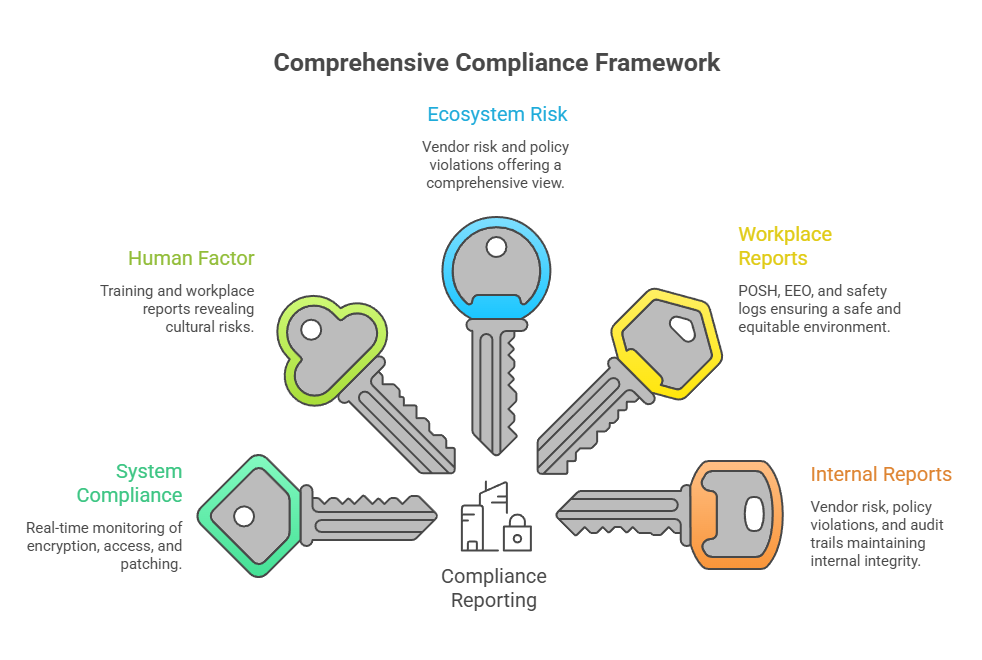
Today's reports feature live dashboards. They track encryption, access, and patching in real time, like a heartbeat for your safety. It's not about complying.
It's about having clean systems. Transactions, taxes, and controls are all automatically linked. No manual labor is required.
Beyond Systems: Mapping Human, Cultural & Ecosystem Risk
The human factor: Training and workplace reports reveal cultural risks. Not just numbers, but indicators of future problems.
The Bigger Picture: Vendor risk and policy violations offer a comprehensive view of your ecosystem. You can view the entire "blast radius" of risk.
The reality check: Compliance reporting is much more than mere documentation. It helps you achieve clear visibility through technology, finance, people, and partnerships.
Workplace Reports: POSH, EEO, and safety logs.
Internal reports: Vendor risk, policy violations, and audit trails.
Key Insight: "If you can see risks in real time, you can optimize vendor risk management in real time."
Top SaaS Compliance Reporting Tools
Most founders make mistakes when comparing regulatory compliance automation tools. You are comparing Vanta, Drata, and Secureframe.
All three promise automation. All three promise speed. Nonetheless, the process feels burdensome. That's because most tools only help you report compliance, not achieve it.
The Market Reality (What Others Do Well)
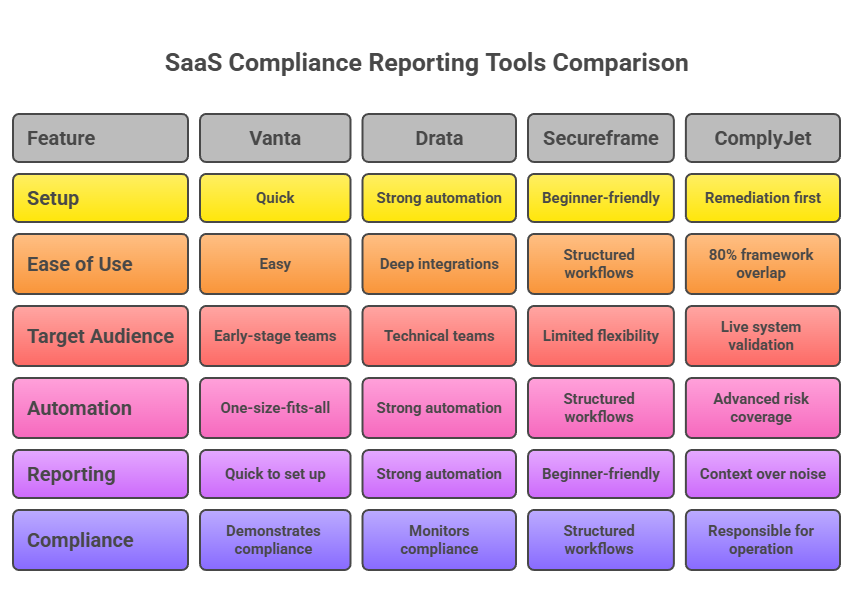
Vanta: Quick to set up. Easy to use. Ideal for early-stage teams. However, it frequently feels "one-size-fits-all" and lacks depth.
Drata: Strong automation and deep integrations. Built for technical teams that require control and visibility.
Secureframe: Beginner-friendly. Workflows are structured. However, it can feel limited in terms of flexibility and depth.
Common Limitation Across All: They all use automated evidence collection. However, it is ultimately up to you to interpret, resolve, and manage risk.
The Real Gap: Reporting vs Resolution: Most tools ask, "Are you compliant?" They do not answer the question, "What should you fix right now, and how?"
This is why teams continue to face audit fatigue, duplicate work, and manual decision-making.
From Reporting Compliance to Fixing It in Real Time
Remediation First Approach: Not just dashboards, but actionable fixes. You don't pursue issues. You resolve them fast.
80% Framework Overlap Mapping: Collect evidence just once. Use anywhere. There will be no repeat audits. There is no repeat work.
Context over Noise: Instead of alerts, you receive clarity. Why did something fail? What to do next?
True Continuous Compliance: Not a snapshot. You get Live system validation.
Advanced Risk Coverage: Tracks vendors, APIs, and non-human identities, which are all areas that most tools handle.
Key Insight: "Vanta demonstrates compliance. Drata monitors it. ComplyJet is responsible for its operation."
SaaS Compliance Reporting: 2026 Trends and Beyond
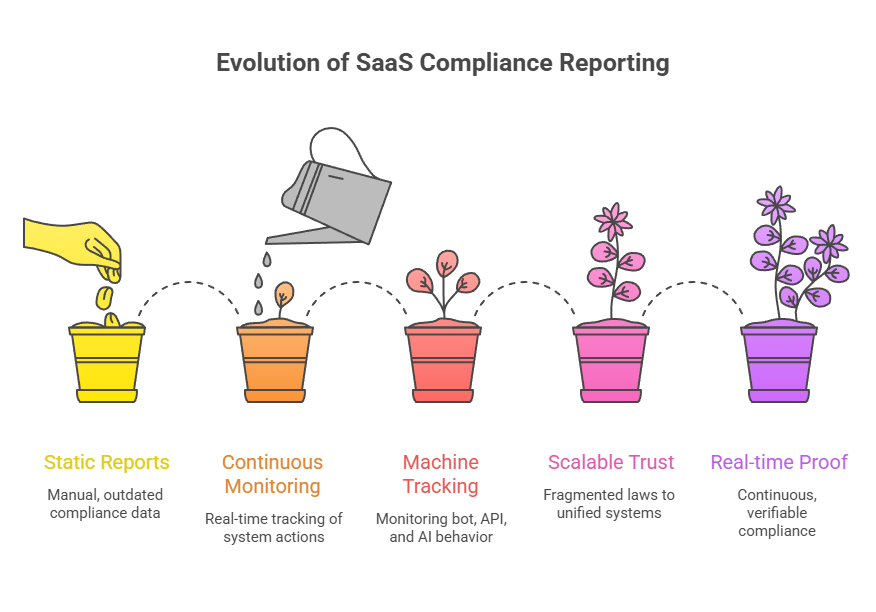
You rely on reports now. But tomorrow, reports will not suffice. Compliance reporting is changing rapidly. Static reports are becoming obsolete.
Continuous Control Monitoring is taking over. Your system must demonstrate compliance in real-time. It's not just about people anymore.
Bot, API, and AI actions must also be tracked. If you can't even track machine behavior, you're vulnerable.
From Fragmented Laws to Scalable Trust Systems
The Infrastructure Changes: Data laws are becoming increasingly fragmented. Sovereign systems will determine how you report globally.
The Smart Model: Evidence was collected once. Shared across systems. There is no duplication. Just scaling.
The real outcome: Compliance reporting promotes growth. More deals. Increased trust. Better valuation.
Founder Tip: "The future of compliance reporting isn't reporting, it's real-time proof of control."
FAQs: Straight Answers for Real Questions
Still Confused about Compliance Reporting? Get instant answers to your key concept, use case, and decision-making questions to help you confidently understand, implement, and scale compliance reporting.
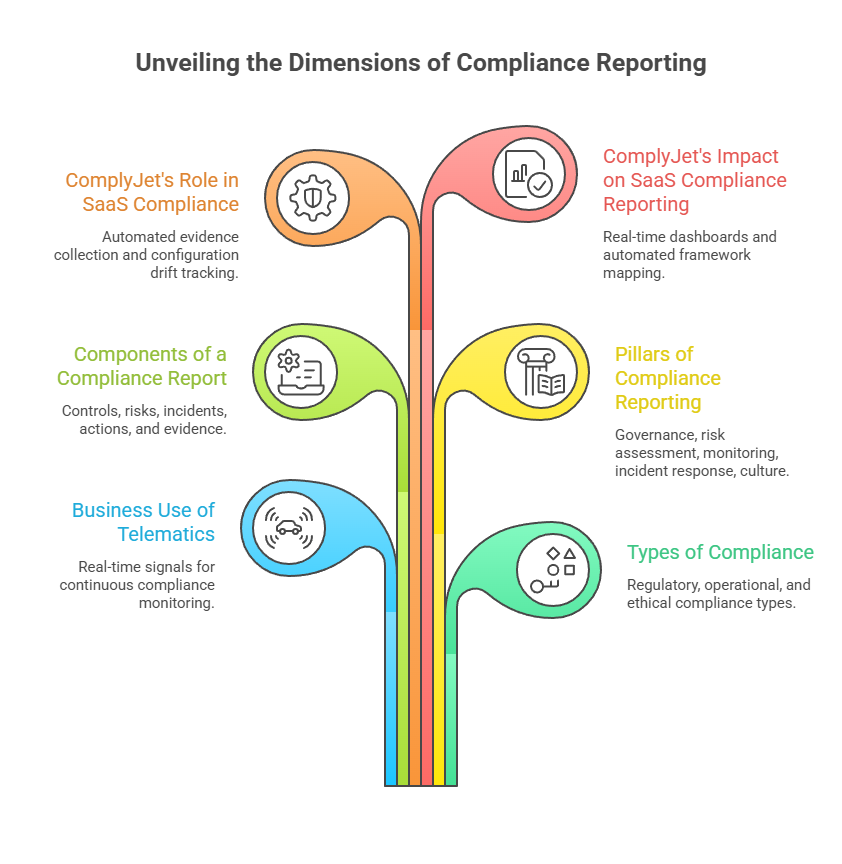
How do businesses use telematics for compliance reporting?
Businesses use telemarketing to obtain real-time system signals such as data flow, access, and encryption status.
This ensures accurate and continuous monitoring as a means of maintaining compliance integrity. It allows a company to detect risks early on and automatically generate a report without manually entering data.
What are the 3 types of compliance?
There are three types of compliance:
- Regulatory
- Operational
- Ethical compliance
These provide a comprehensive view of how a business operates. It covers regulatory compliance with laws like GDPR and HIPAA to operational compliance with standard operating procedures.
It also includes ethical compliance with issues like AI transparency and data fairness.
What should a compliance report include?
A compliance report consists of various components. A good report includes controls, risks, incidents, actions, and evidence.
A report will include real-time data, audit trails, and insights. The report will clearly show how the systems meet the regulations and requirements.
What are the 5 pillars of compliance reporting?
The 5 pillars of compliance are:
- Governance: Governance establishes rules
- Risk assessment: Risk assessment identifies risks
- Monitoring: Monitoring tracks activities
- Incident response: Incident response resolves issues promptly
- Culture: Culture ensures that everyone follows best practices
All of these pillars work together to create a strong compliance reporting framework.
How does ComplyJet help achieve SaaS compliance?
ComplyJet helps in achieving SaaS compliance through features such as automated evidence collection via APIs and real-time configuration drift tracking.
It incorporates compliance into workflows, which decreases manual efforts and ensures continuous monitoring. It allows for instant fixes, keeping systems audit-ready without affecting development pace or operational overheads.
How does ComplyJet help brands maintain better SaaS compliance reporting?
ComplyJet improves SaaS compliance reporting with features such as real-time, investor-grade dashboards and automated mapping of overlapping frameworks.
It aids in data centralization, eliminating redundant work, and providing actionable insights rather than reports. It allows brands to drive transparency, expand globally faster, and use compliance reporting as a competitive advantage.
Final Verdict: The Advantage Most Founders Miss
You pass the audit and feel secure. But your system will change tomorrow. Your compliance does not. That is where risk begins. This is the illusion that stifles your growth.
Compliance reporting is an ongoing process. It is the lifeblood of your company. Make it a checklist, and you'll miss the quiet drift. This is the reality shift.
Small gaps become compliance debt. Your debt causes decreased sales, slower growth, and a lower valuation. Yes, it's about hidden costs!
So, what is a better alternative? The better option is to use Continuous Control Monitoring. The better option is to use compliance-as-code. Now your system has proven itself.
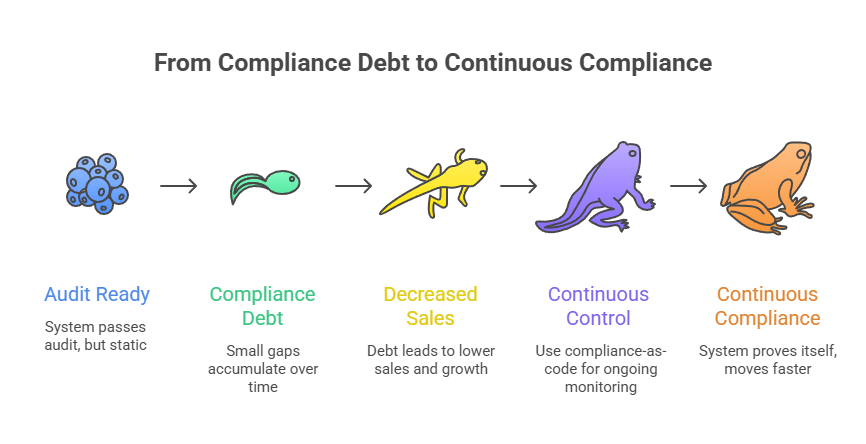
What's the real advantage? You don't simply prove yourself to auditors. You move faster, close more sales, and gain trust instantly.
What's the key insight? "Compliance reporting isn't protection; it's proof that must stay alive."
We hope this blog helps you gain the required insights before you get audit-ready.
And here’s the best tool for continuous compliance automation:
Do you want compliance reporting that helps you stay prepared, credible, and timely? ComplyJet helps you create a system that never falls behind! Check out our start-up-friendly pricing!