.svg)

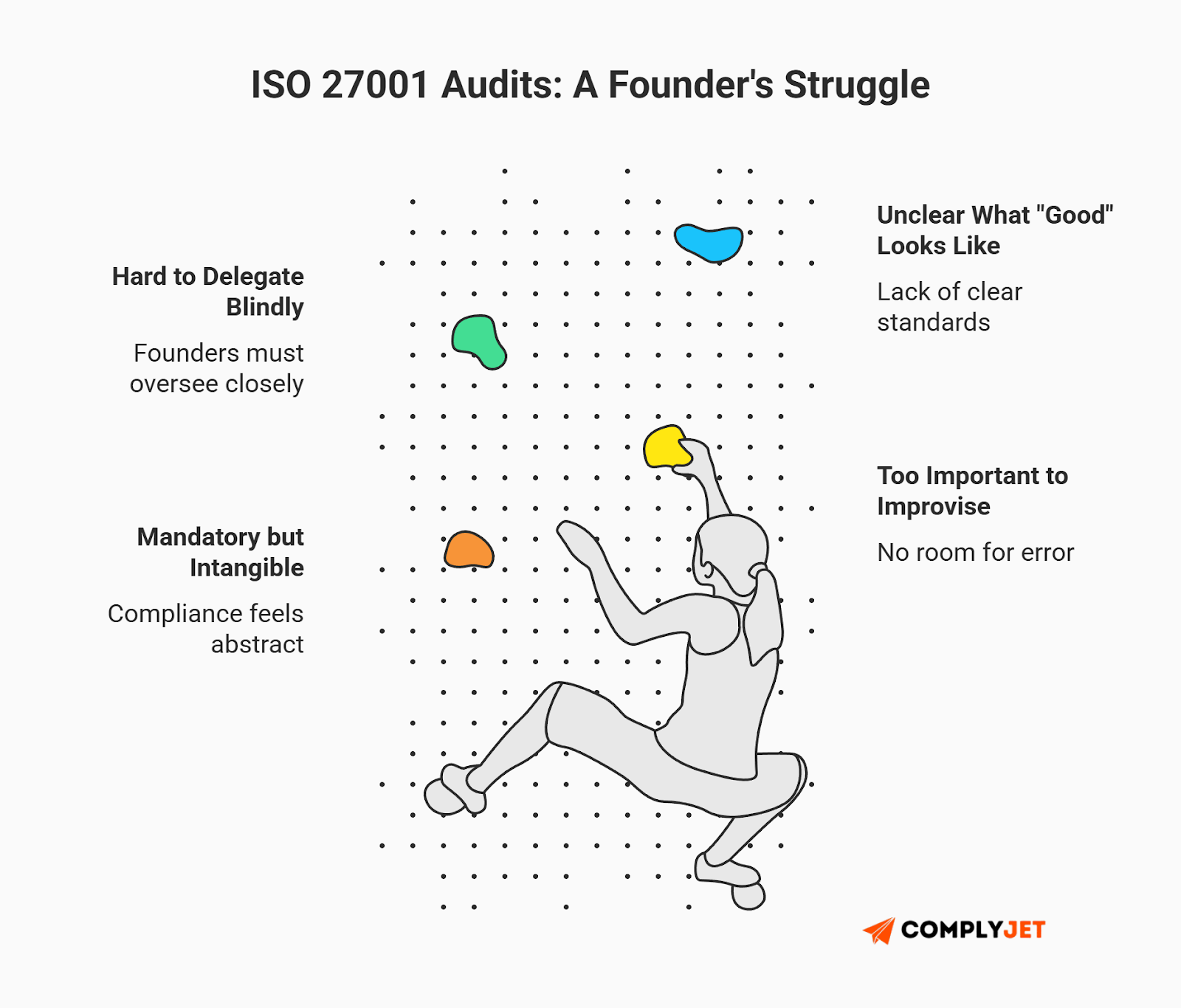
An internal audit is one of those tasks founders know they must do, but rarely feel confident doing well. It sits in an awkward space. It is not as tangible as an ISO 27001 certification, yet it is mandatory. It is not technical enough to hand off blindly, yet too important to improvise.
For startups, the challenge is rarely the effort, but clarity. What exactly needs to be checked? How deep should the review go? What counts as real evidence? And how do you run an internal audit without turning it into a six-week documentation exercise?
This guide is written for founders and early compliance owners who need to execute an ISO 27001 internal audit, not just understand it in theory. It focuses on preparation, audit steps, evidence, findings, and reporting, using a practical, startup-friendly approach.
No deep control dives. No checklist repetition. Just what you need to run the audit properly and move forward with confidence.
What Is an ISO 27001 Internal Audit and Why It's Important
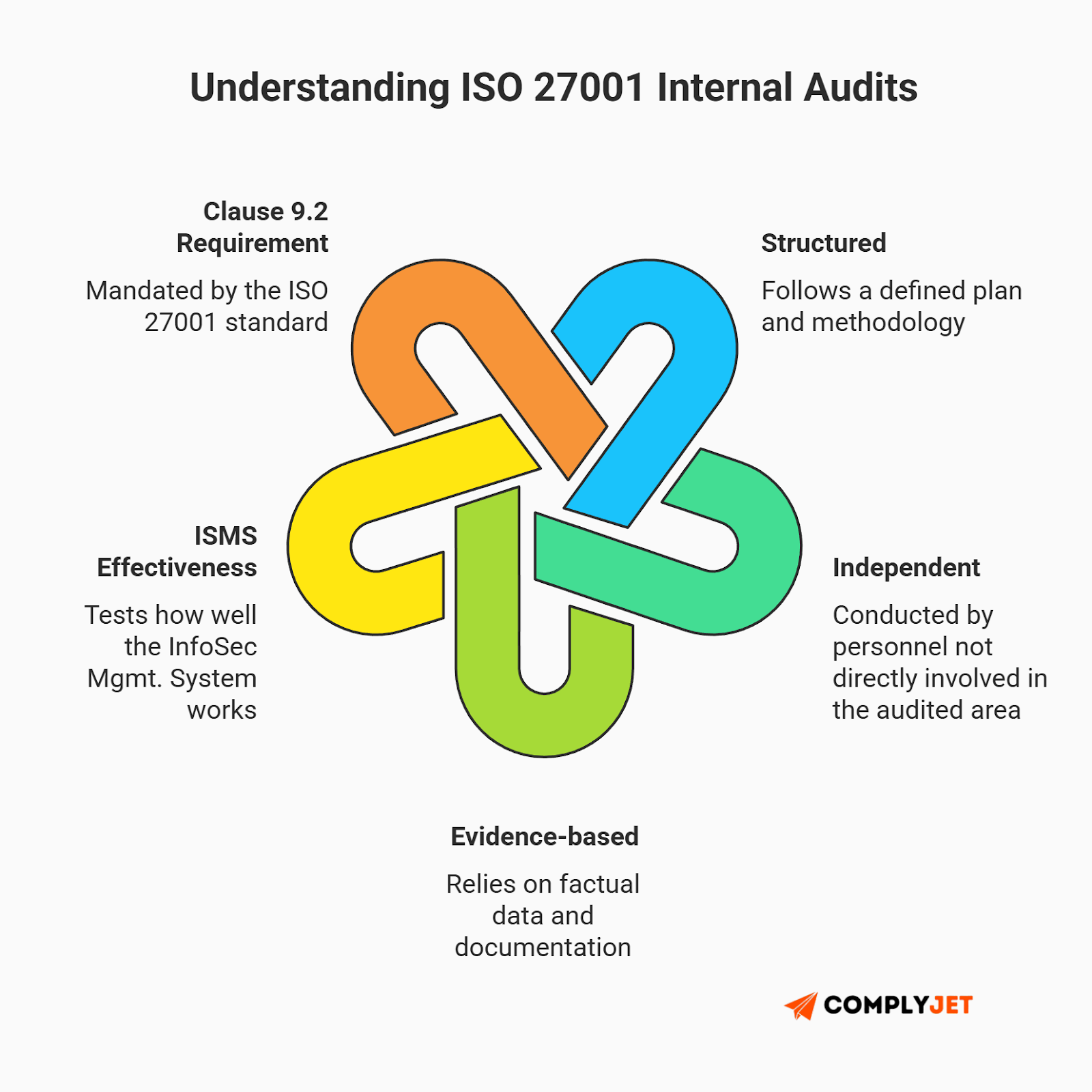
An ISO 27001 internal audit is a structured, independent review of your information security management system (ISMS). Its purpose is to confirm that your policies, processes, and controls are not only documented, but also working as intended. This requirement comes from ISO 27001 Clause 9.2, which obligates organisations to evaluate their ISMS at planned intervals.
What makes an internal audit different from an external audit is ownership. An external audit is conducted by a certification body and determines whether you pass or fail certification. An internal audit, on the other hand, is run by your organisation. It is meant to identify gaps early, before an external auditor does.
This requirement applies to startups just as much as large enterprises. If you claim alignment with ISO 27001, you are expected to plan and perform an internal audit satisfying ISO 27001 standards regularly. There are no size-based exemptions. The only flexibility ISO allows is how you scope and execute the audit.
For founders, the audit is not about proving perfection. It is about verifying that your ISMS is implemented, maintained, and improving. Done correctly, it becomes a control mechanism that protects your business rather than a compliance exercise you rush through once a year.
ISO 27001 Internal Audit Preparation
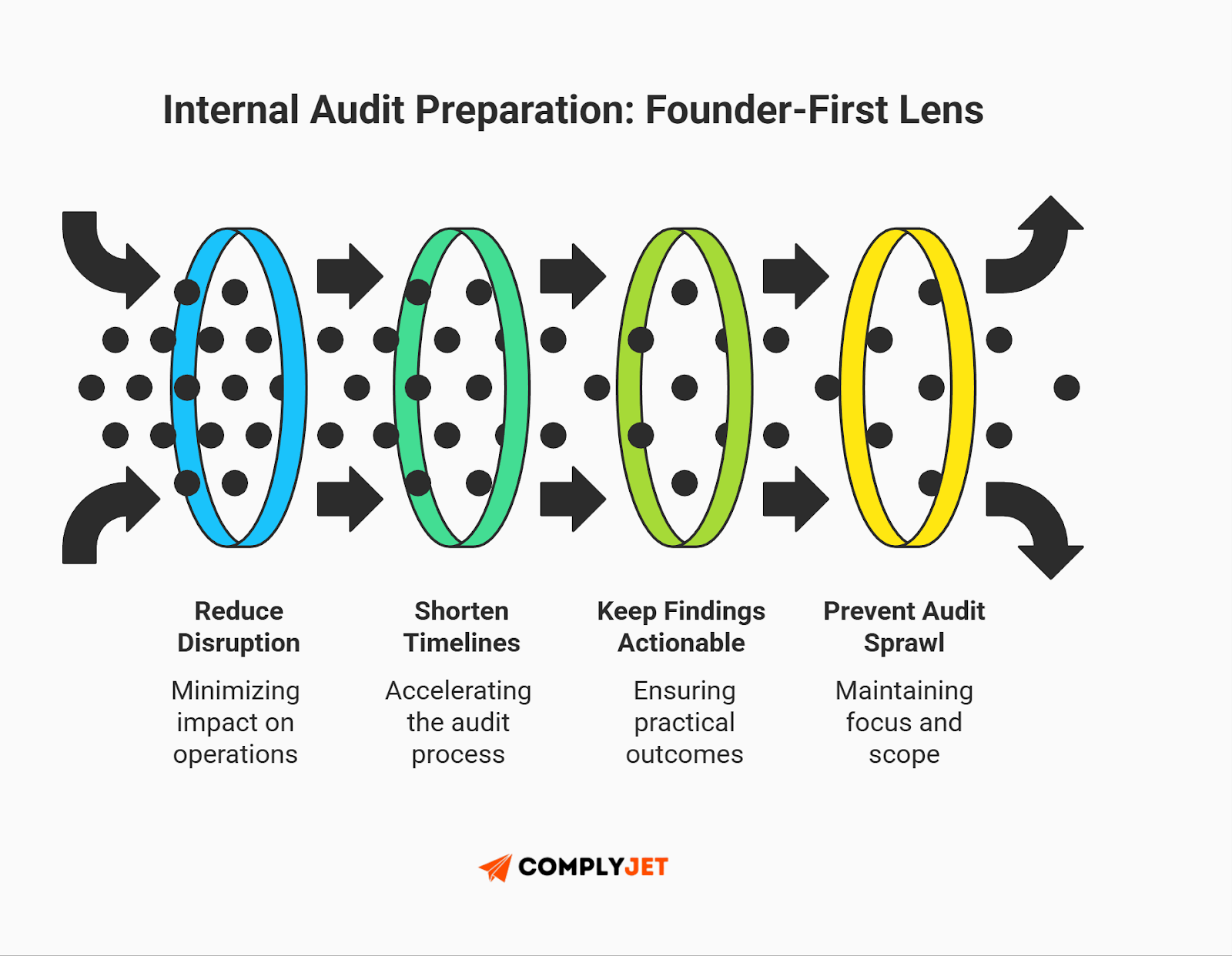
A well-planned ISO 27001 internal audit preparation is what separates an effortless certification from an exhausting one. For founders, preparation is not about building more documentation. It is about setting clear boundaries so the audit stays useful and manageable. A well-prepared audit reduces disruption, shortens timelines, and makes findings easier to act on.
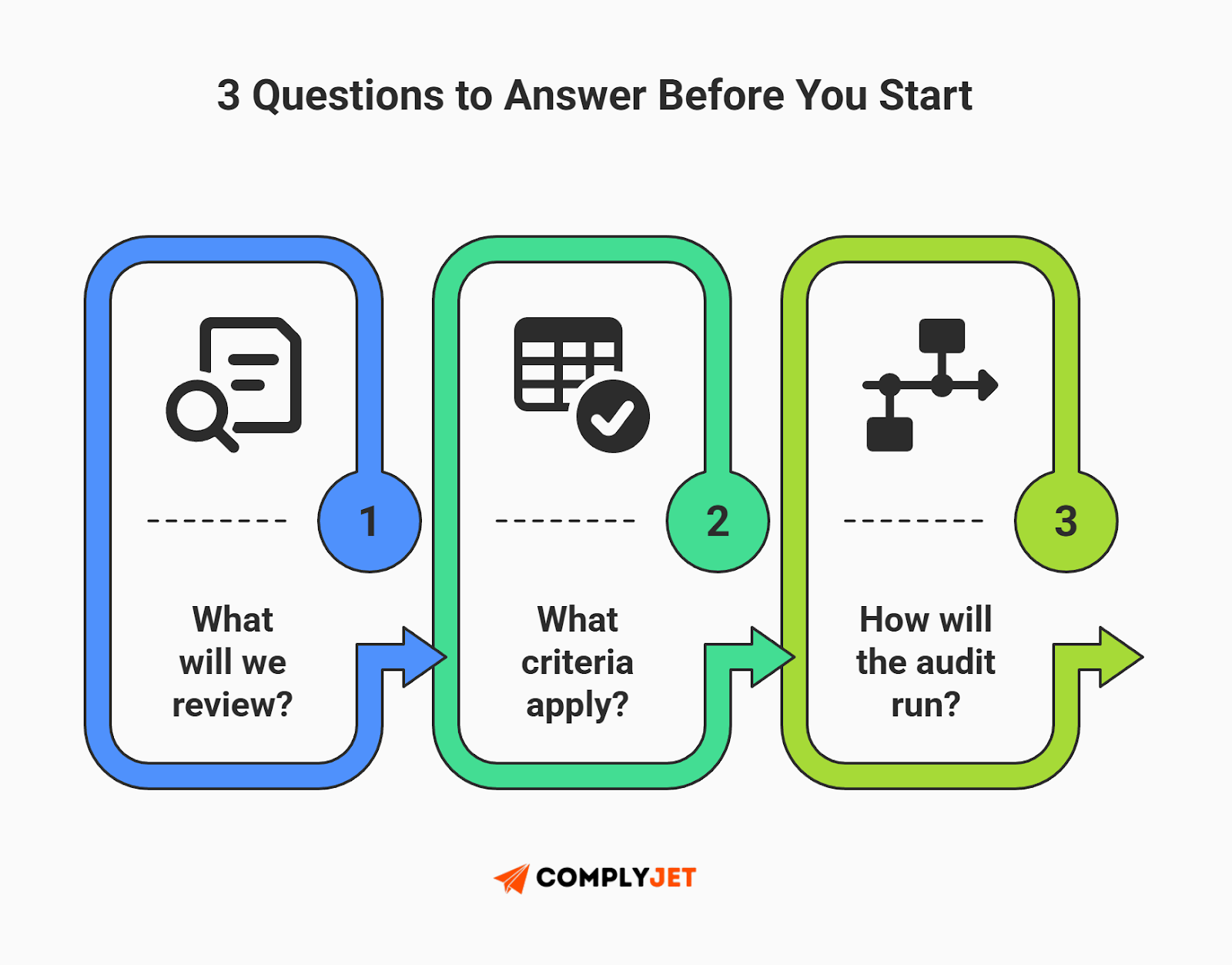
This phase should answer three questions before the audit begins. What will we review? What standards will we assess against? And how will the audit actually run? Getting these right upfront prevents the most common startup mistake: trying to audit everything at once and losing sight of real risk.
Before starting an internal audit, founders should ensure their baseline controls are defined using a thorough ISO 27001 checklist.
Define Audit Scope and Objectives
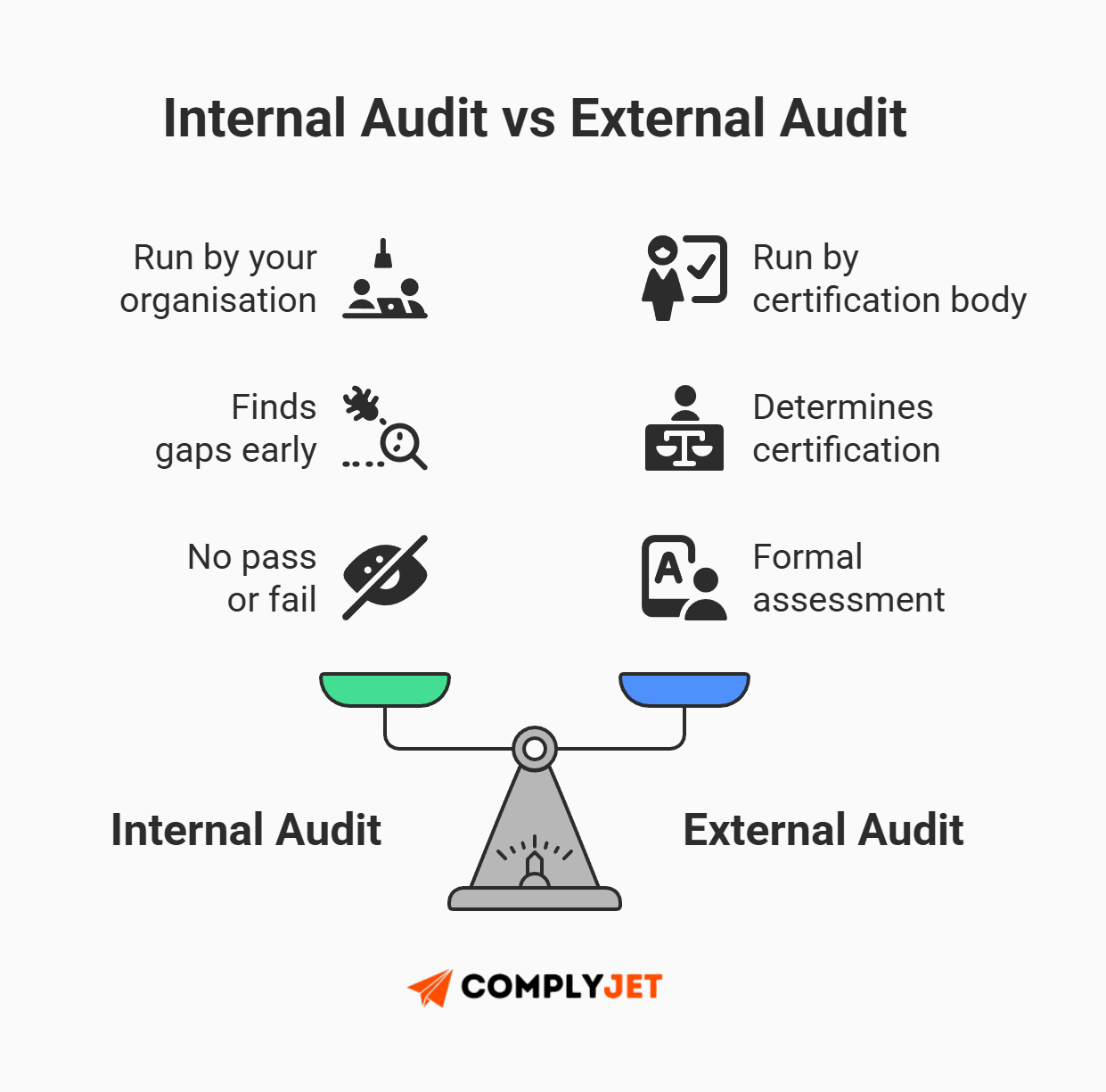
Start by defining a clear audit scope and objectives. Decide which parts of the ISMS you will audit and which you will exclude. For early-stage startups, this often means focusing on core systems, critical processes, and high-risk controls only.
Avoid auditing every policy or department in your first cycle. A narrow scope keeps the audit realistic and ensures findings are meaningful rather than overwhelming.
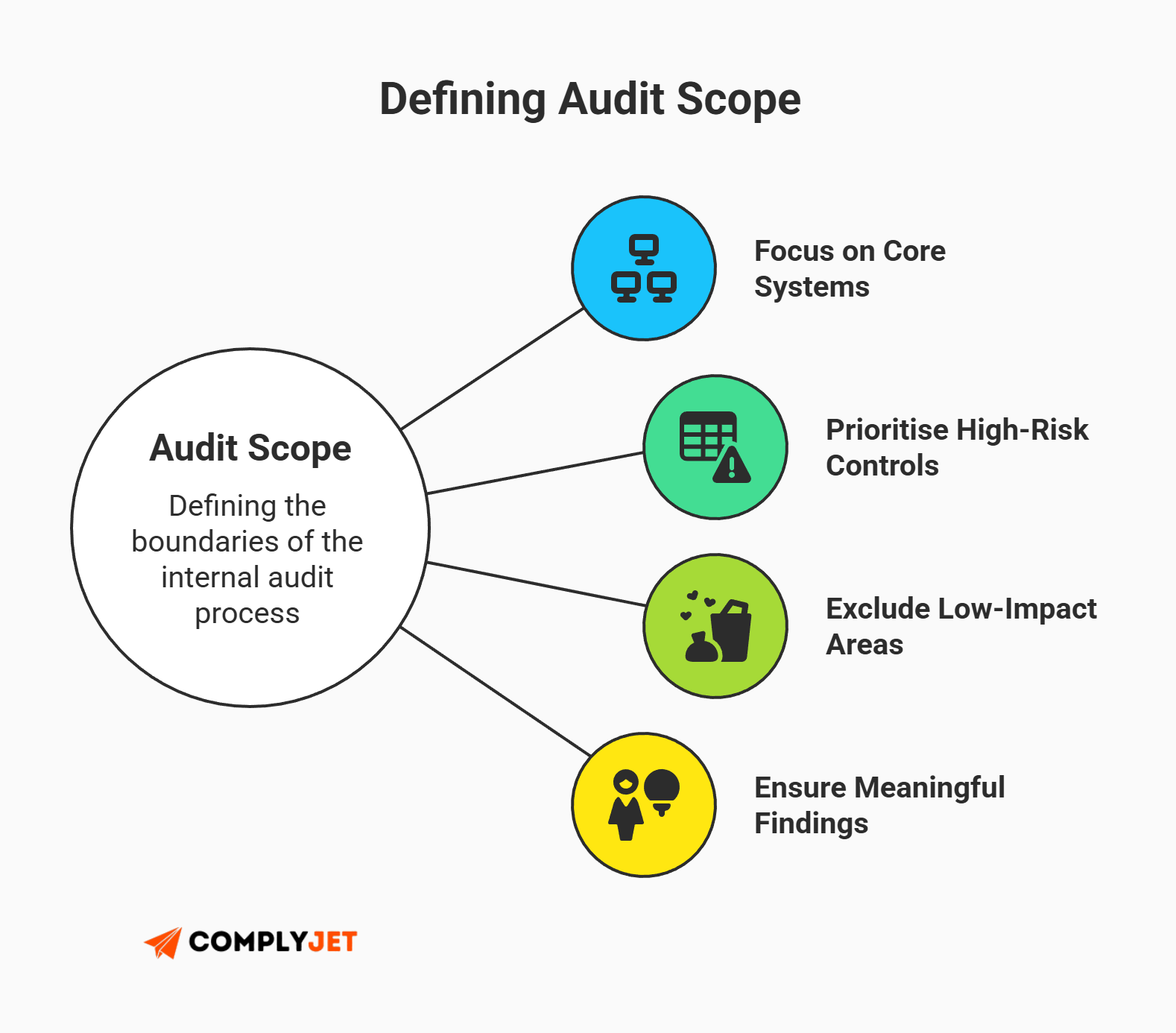
Founder Tip: Most internal audits that drag on, do so because the scope is too broad. Startups that limit scope to high-risk systems and core processes typically close findings faster and reduce follow-up work during certification.
Establish Audit Criteria
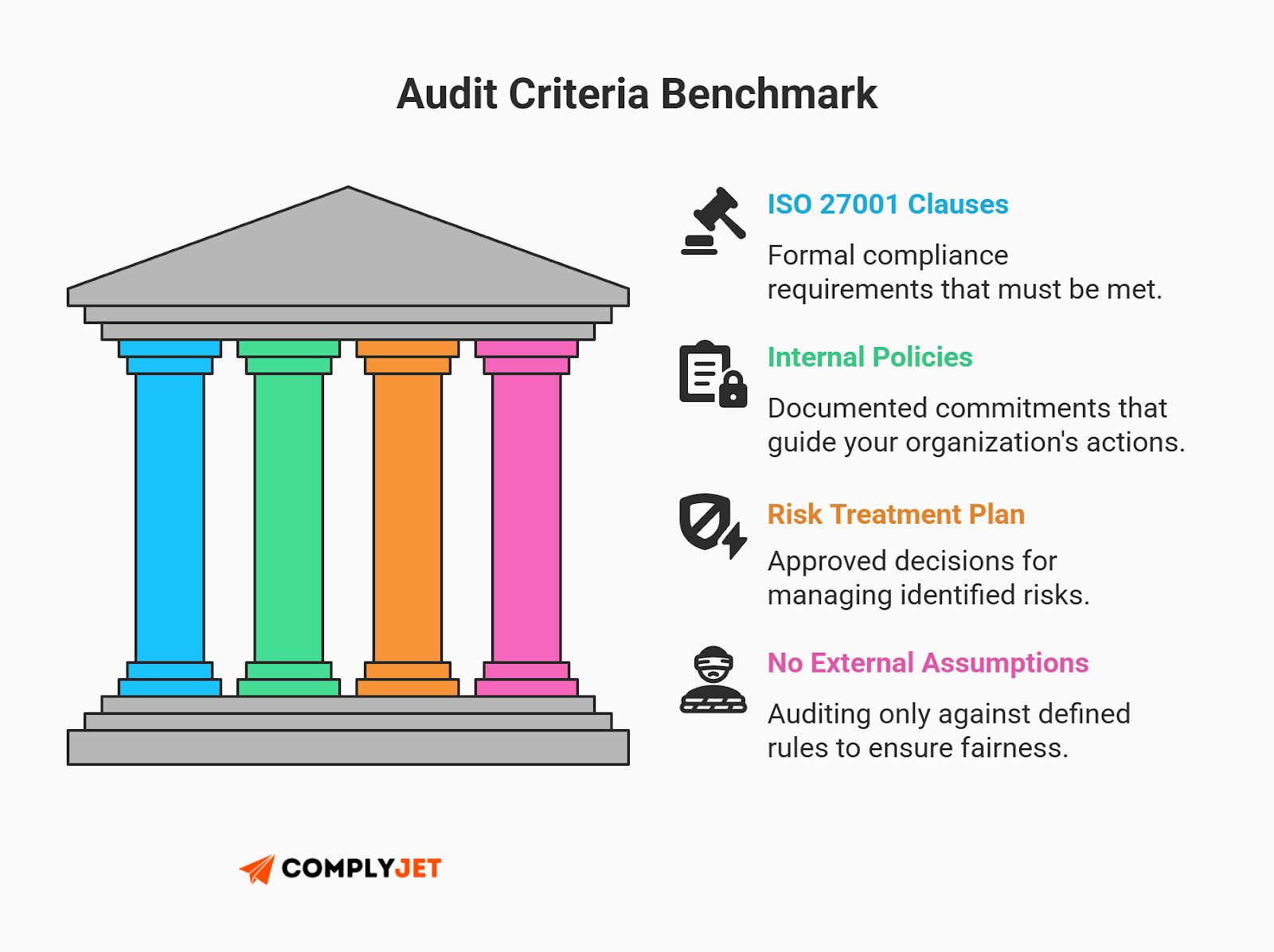
Next, set your audit criteria. This usually includes relevant ISO 27001 clauses, your internal policies, and your risk treatment plan. These criteria act as the benchmark for the audit. Auditors will compare what is happening in practice against these defined requirements, not against assumptions or best practices pulled from elsewhere.
Build a Simple Internal Audit Plan
Finally, document a simple internal audit plan. Define the audit timeline, assign responsibilities, and list the main evidence sources to be reviewed. The plan does not need to be complex. Its role is to create structure, align expectations, and keep the audit moving without unnecessary delays.
For small teams, over-engineering compliance early can slow audits more than it helps. Unlike other compliance tools. ComplyJet is designed to stay lightweight at the start and scale as audit scope grows, which often makes internal audits easier to manage without enterprise-level overhead. Begin your free trial now.
Internal Audit Steps for ISO 27001 Certification: Execution Phase
The execution phase is where an ISO 27001 internal audit becomes real. This is not a document exercise. These audit steps are designed to confirm whether your ISMS operates as defined, day to day.
For startup founders, the goal is simple: verify reality, not intent. Every conclusion must be supported by evidence that an independent auditor could review and accept.
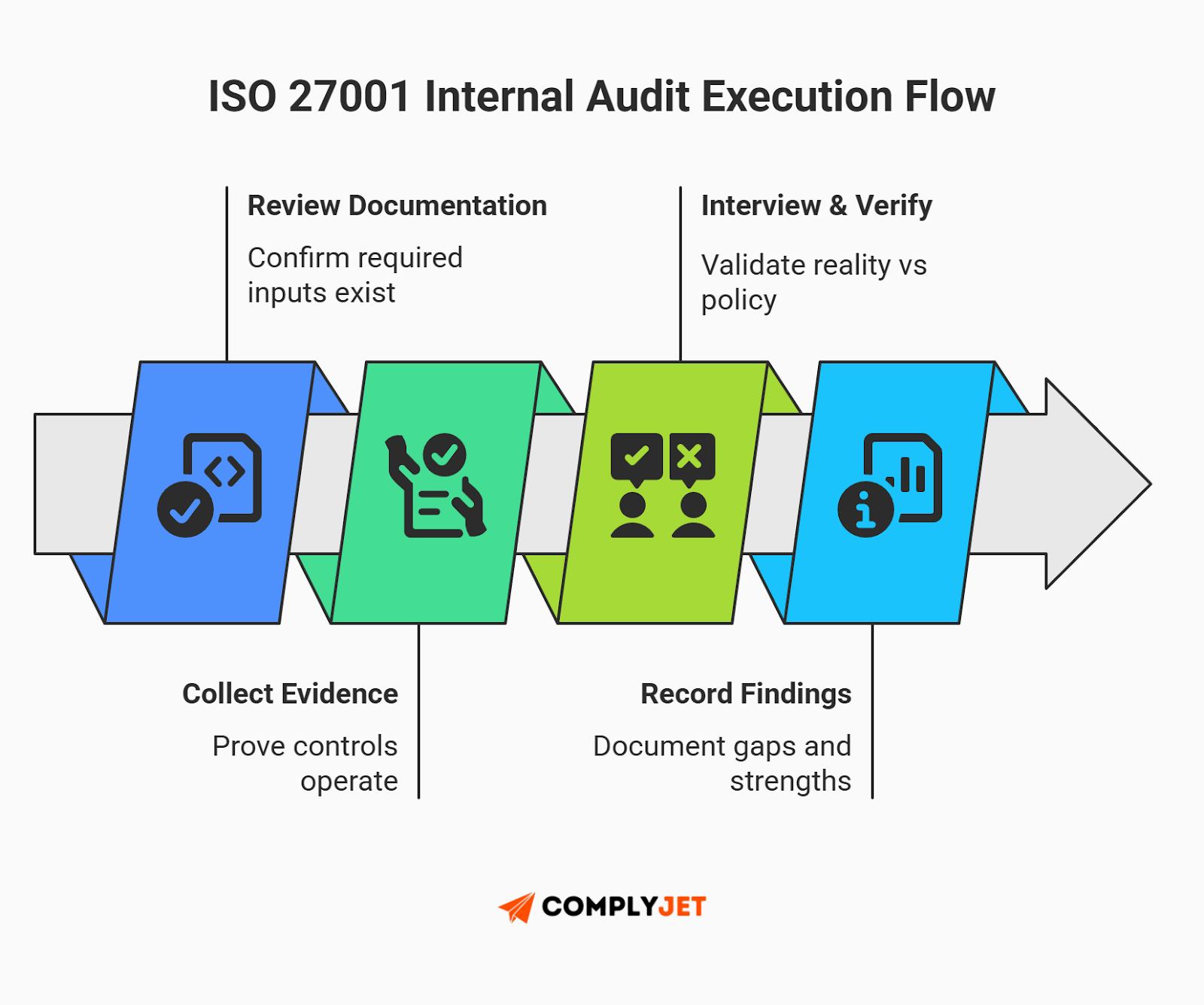
Execution should follow a consistent flow. You review what is supposed to exist, check what actually exists, and then validate how it works in practice. Skipping steps or relying on assumptions weakens the audit and creates avoidable findings later.
Step 1 - Document Review
Start with a focused document review. Limit this to core ISMS documentation only. This includes the ISMS scope statement, Statement of Applicability, risk assessment outputs, risk treatment plan, internal audit records, and any open corrective actions.
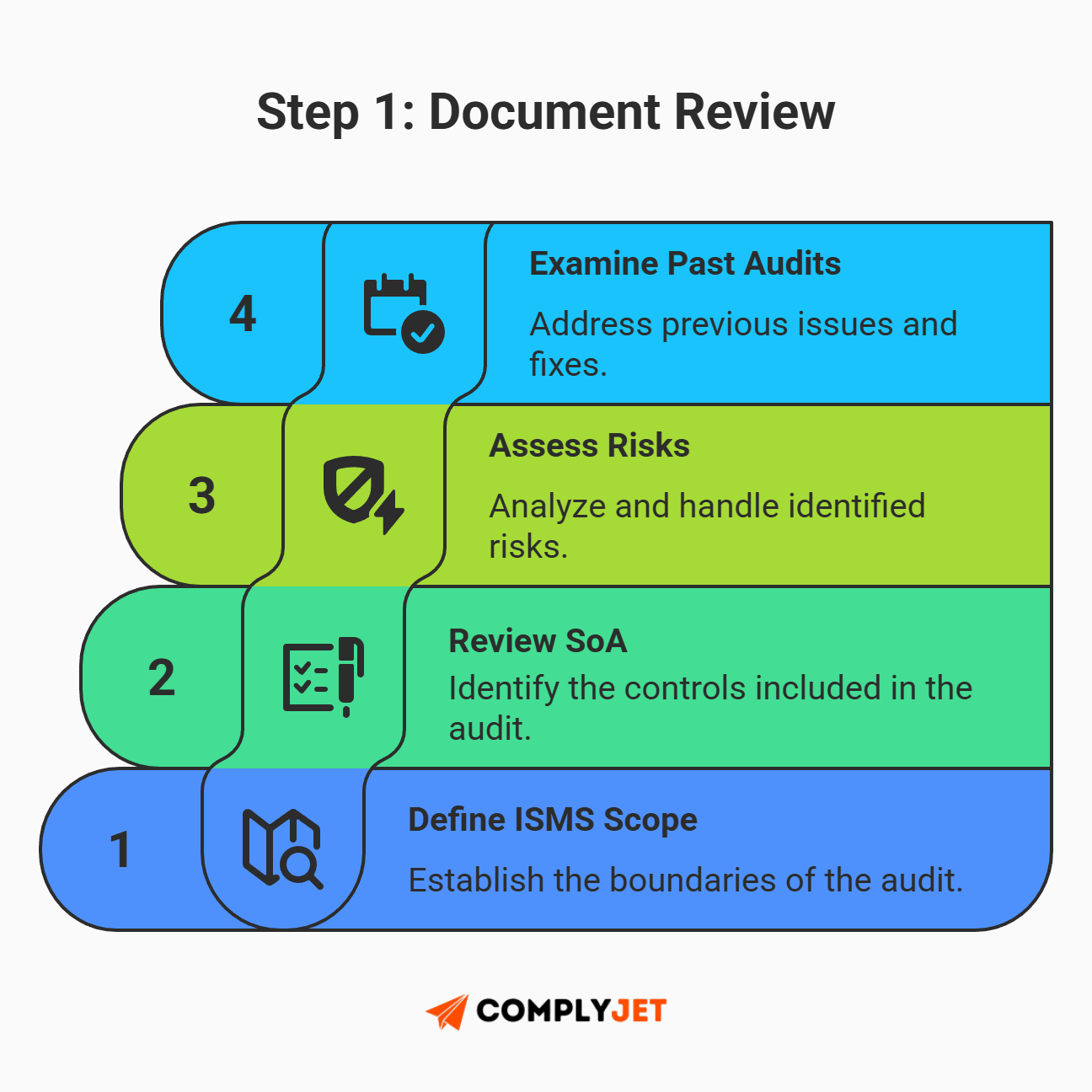
The aim is not to judge writing quality or policy detail. It is to confirm that required ISMS documents exist, are approved, and reflect the current operating environment.
Step 2 - Collect ISO 27001 Internal Audit Evidence
Once documents are reviewed, move on to collecting your ISO 27001 internal audit evidence. Evidence must show that controls operate as described. Valid examples include system logs, access records, monitoring outputs, training records, approvals, and change histories.
Screenshots and timestamps add clarity. Verbal assurances or undocumented practices do not qualify. Auditors will verify that required documents, such as a password policy, exist and are enforced as part of evidence collection. Poorly organised or outdated audit evidence and records are a common reason audits lose credibility.
Step 3 - Interviews and Control Verification
The final step is interviews and control verification. Use sampling rather than testing every instance. Ask relevant staff how processes work, then verify their answers against systems and records. This comparison between documentation and reality is where most meaningful audit findings emerge during an ISO 27001 internal audit.
Compliance automation can ensure your execution goes off without a hitch. Trouble is, the modern compliance scene is notorious for its opaque pricing. ComplyJet keeps pricing transparent, which helps founders plan audits, remediation, and certification timelines without unexpected cost trade-offs. Check out our Pricing page to find a plan right for you.
ISO 27001 Internal Audit Evidence: What Auditors Actually Expect
For many founders, evidence is the most stressful part of an ISO 27001 internal audit. The key thing to remember is that auditors are not looking for perfection. They are looking for consistency. Your ISO 27001 internal audit evidence should clearly show that your ISMS operates the way your documentation claims it does.
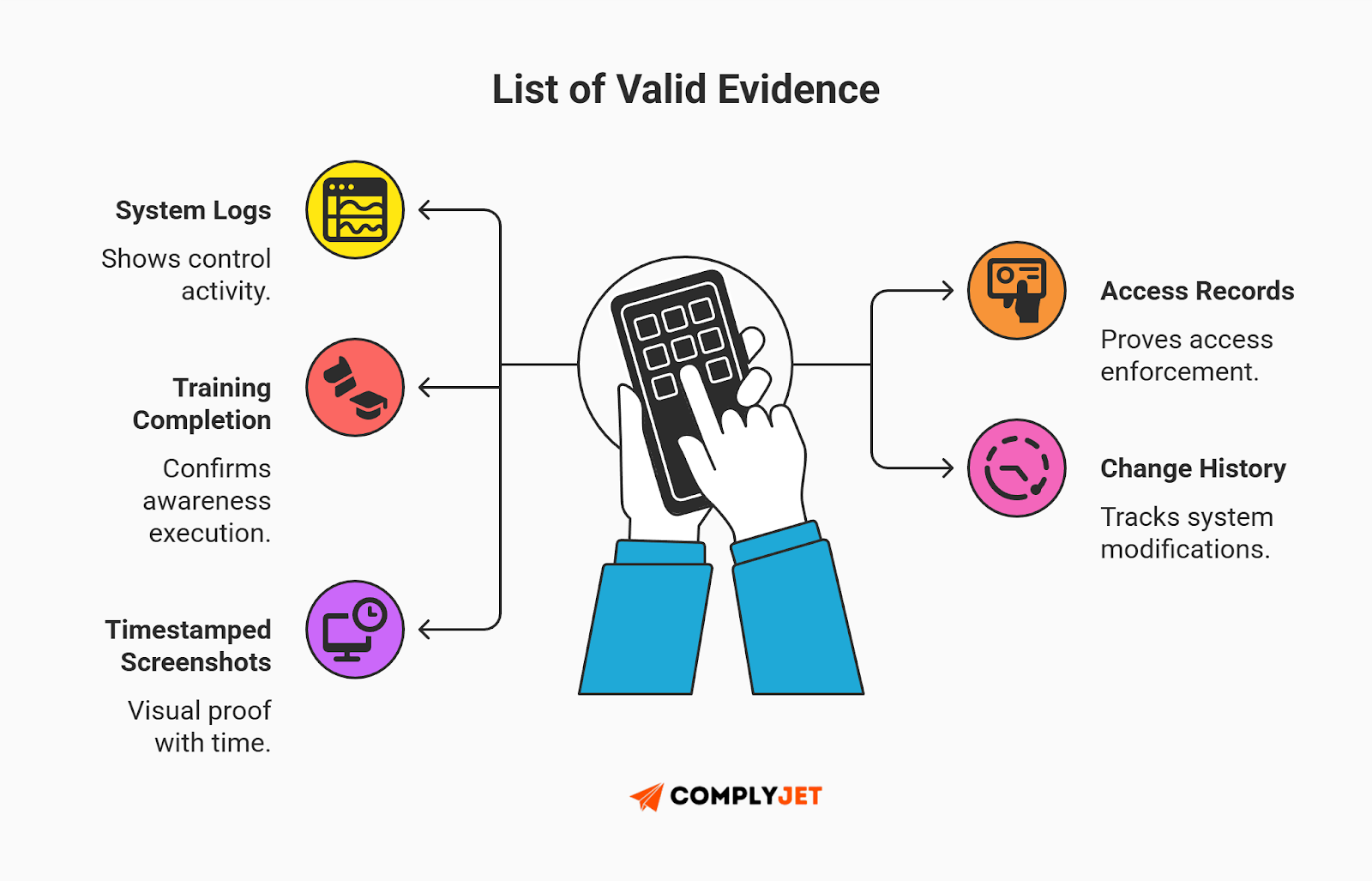
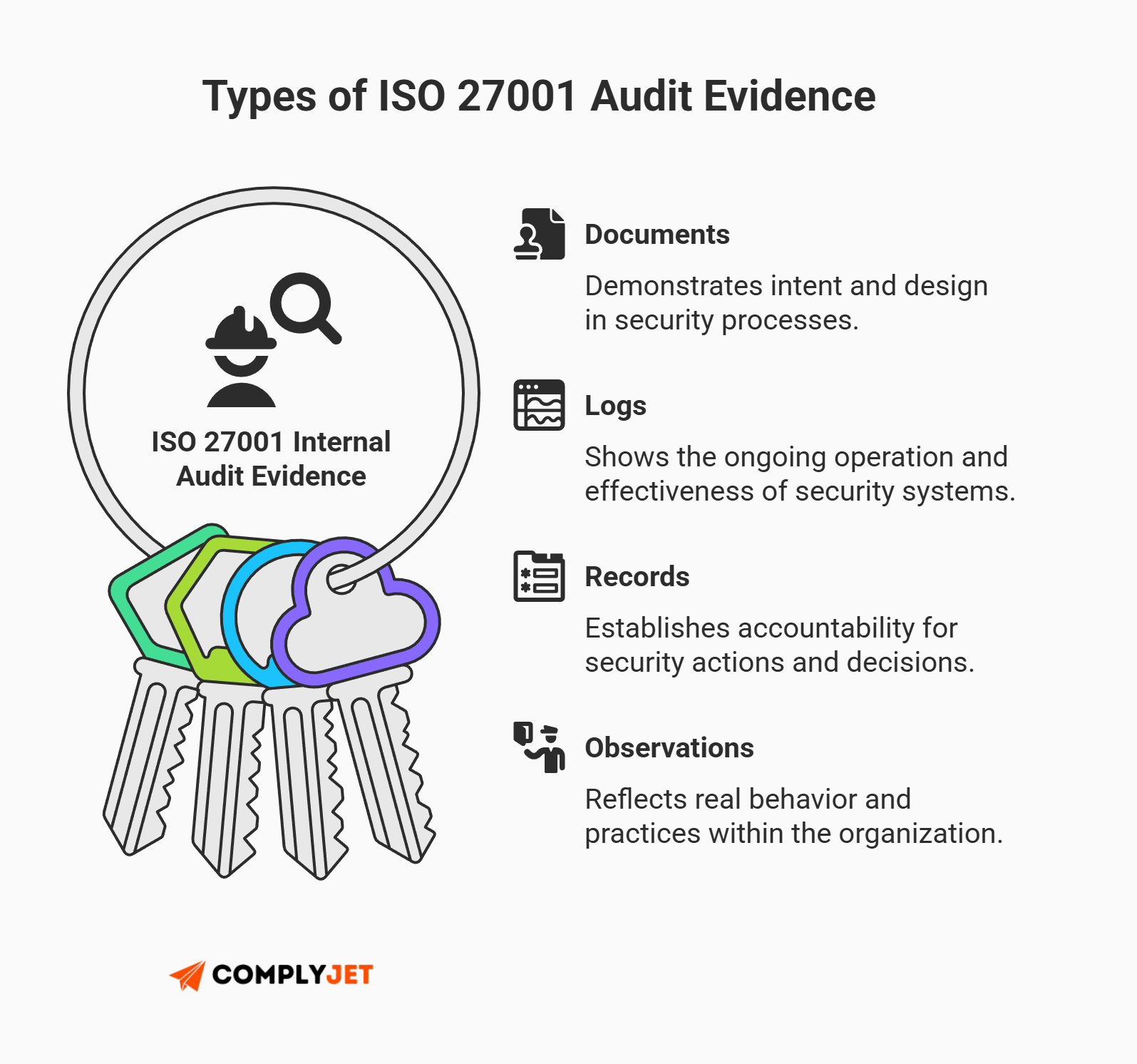
Auditors usually expect evidence to fall into four broad categories:
- Documents
These show intent and direction. Examples include approved ISMS documents, risk assessments, and previous internal audit records. - Logs
Logs demonstrate activity over time. This may include access logs, monitoring outputs, or security event records that show controls operating in practice. - Records
Records such as asset management logs allow auditors to trace system ownership, access responsibility, and control accountability during an ISO 27001 internal audit. - Observations
Observations confirm real behaviour. This includes how processes are actually followed, not just how they are written.
Evidence should be current, relevant, and clearly linked to the audit scope. Disorganised files, missing context, or verbal explanations without proof often create unnecessary follow-up. Clear, well-structured evidence reduces audit friction and makes internal reviews far less stressful.
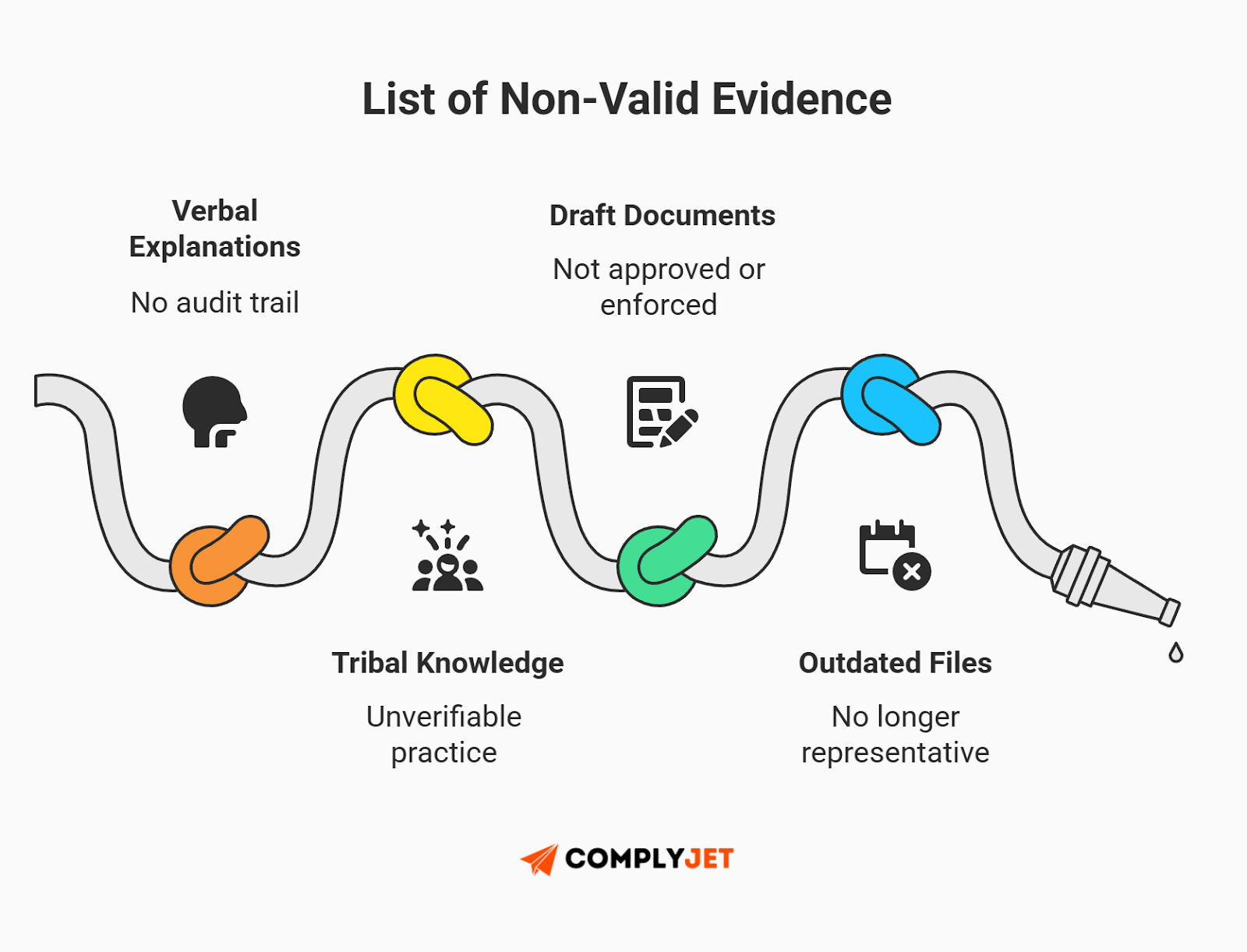
Founder Tip: Auditors would rather see a small set of clear, current records than dozens of screenshots with no context. Well-labelled logs and records often reduce audit questions more than "extra" evidence ever does.
Internal Audit Findings, Nonconformities, and Corrective Actions
Every ISO 27001 internal audit ends with findings. These findings highlight where your ISMS meets requirements and where it falls short. Not all findings carry the same weight, and understanding the difference matters for founders.
Findings are usually classified as major or minor nonconformities. Major issues indicate a serious breakdown, such as missing controls or processes that do not operate at all. Minor issues reflect gaps in consistency, documentation, or execution. Both need attention, but majors demand faster and more visible action.
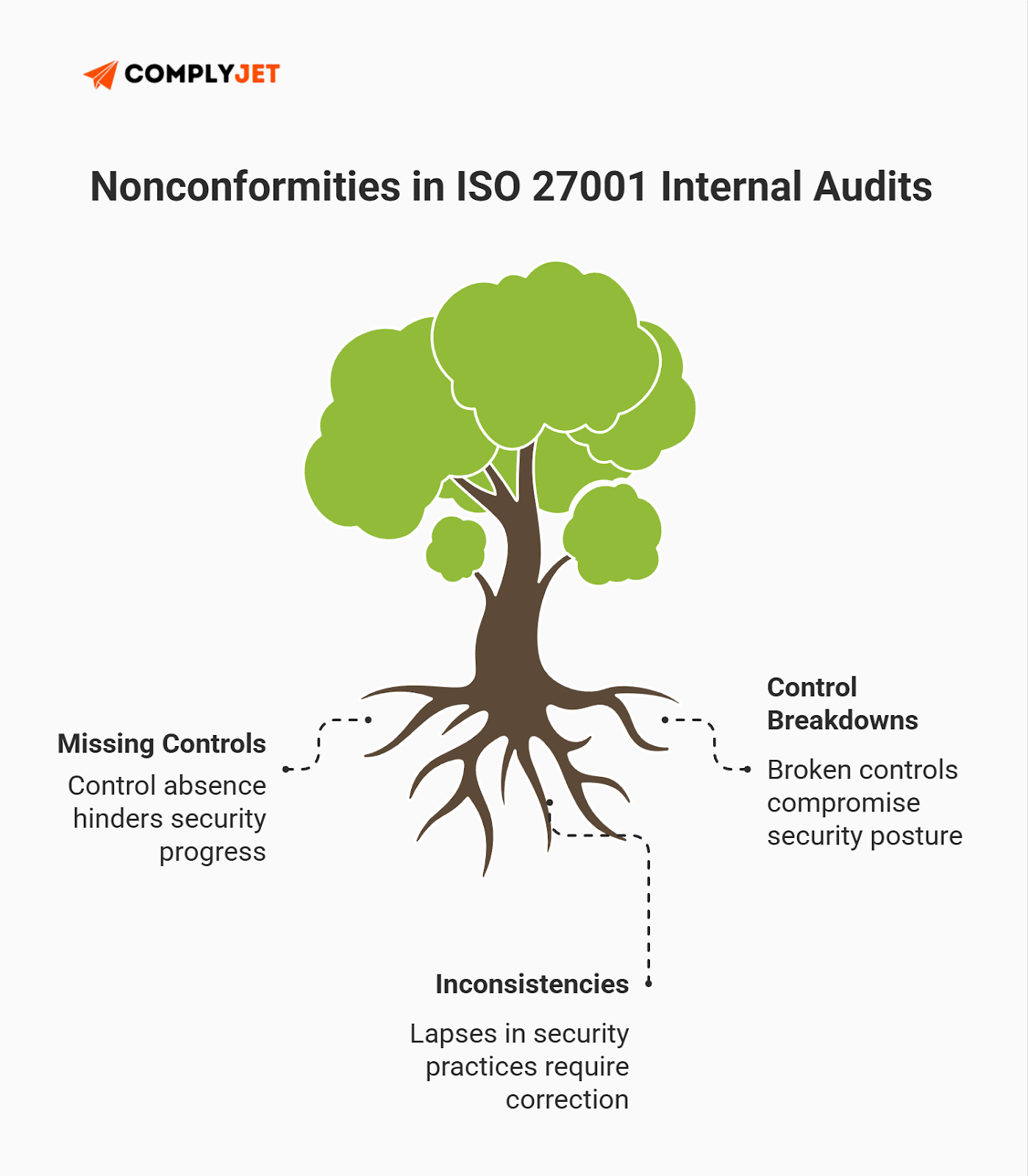
Once findings are identified, the focus should shift to root cause. This does not require complex analysis. Ask simple questions: why did this happen, and what allowed it to happen? Addressing symptoms alone often leads to repeat findings.
Finally, define and track corrective actions. Each action should have a clear owner, a realistic deadline, and measurable completion criteria. Tracking progress ensures findings are closed properly and demonstrates ongoing improvement during future audits.
How to Write an ISO 27001 Internal Audit Report
An ISO 27001 internal audit report does not need to be long or complex. Auditors expect it to be clear, factual, and easy to follow. Its purpose is to show what was audited, how the audit was carried out, and what the results were. Overengineering the report is a common founder mistake.
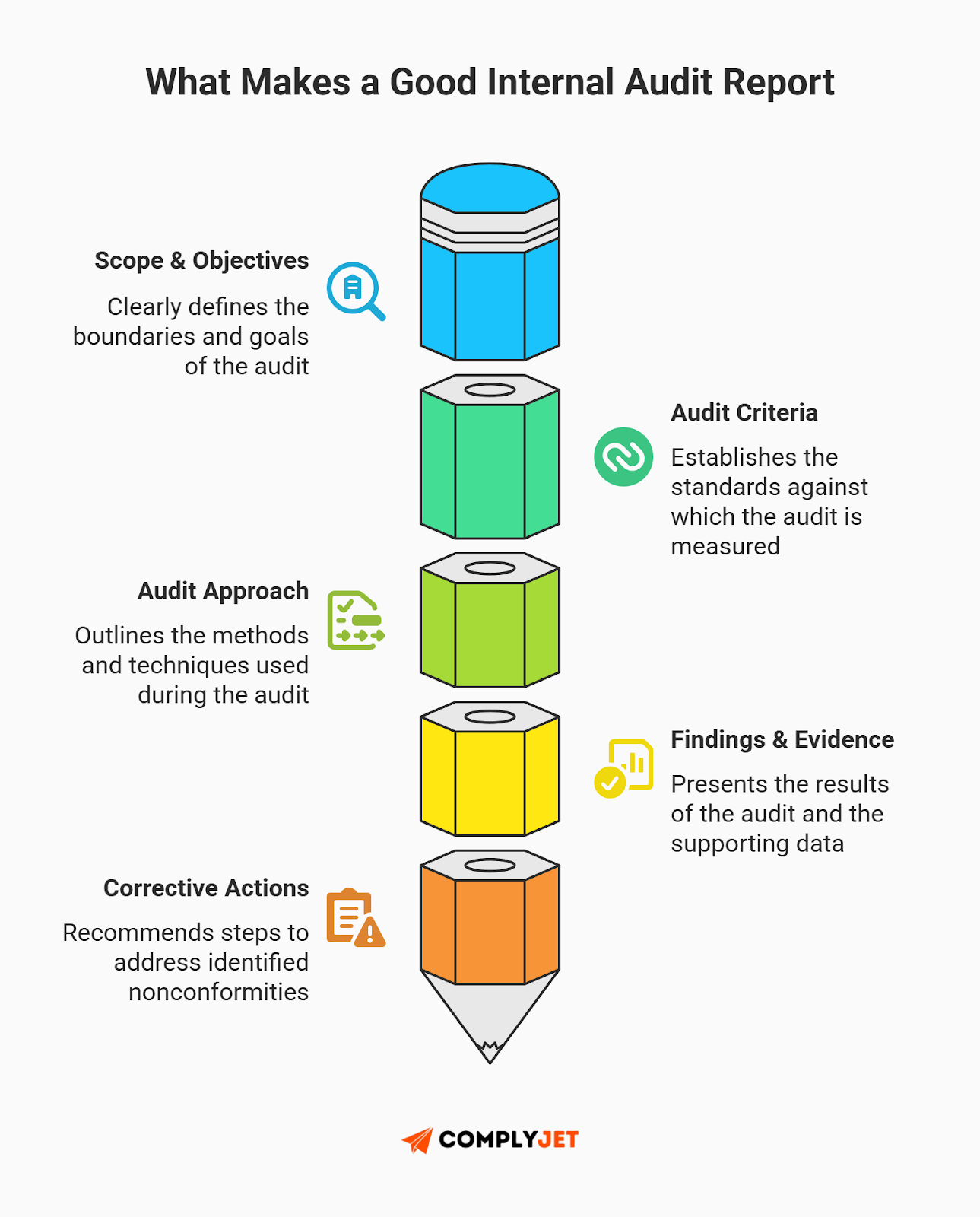
At a minimum, the report should include:
- Audit scope and objectives
What parts of the ISMS were audited and why. - Audit criteria
The ISO clauses, internal policies, and other references used to assess compliance. - Audit approach
A short description of how the audit was conducted, such as document review, interviews, and sampling. - Findings and nonconformities
Clear descriptions of major and minor findings, linked to supporting evidence. - Corrective actions (if applicable)
Actions planned or required to address identified gaps.
What auditors value most is traceability. They should be able to follow how conclusions were reached without interpretation. Excessive narrative, screenshots, or formatting add little value and often distract from the outcome.
Founder Tip: An internal audit with no findings is often a red flag, not a success. Auditors expect to see gaps and corrective actions. Identifying issues early almost always leads to a smoother external audit and fewer surprises later.
What Happens After an ISO 27001 Internal Audit
Management Review
After an ISO 27001 internal audit is completed, the results should be reviewed by management. This step ensures that leadership understands the findings, accepts the risks, and approves next actions. Management review also confirms that the audit outcomes align with business priorities, not just compliance needs.
Founder Tip: If you are deciding how formal your compliance processes need to be at your current stage, our guide on ISO 27001 for startups provides broader context beyond internal audits.
Follow-ups and Closure
All findings should move into follow-up. Corrective actions must be assigned owners, deadlines, and success criteria. Closure should include verification that fixes are effective, not just marked as done. This step prevents repeat findings in future audits.
Audit Frequency and Planning
An ISO 27001 internal audit must occur at planned intervals. Most organisations audit annually, with additional audits after major changes, incidents, or risk shifts. Regular scheduling keeps the ISMS aligned with reality.
FAQs: Founders' Most Asked Questions
When does an ISO 27001 internal audit for startups actually become necessary?
An ISO 27001 internal audit becomes necessary for startups once you claim ISO alignment, prepare for certification, or operate an active ISMS. It is required before certification audits and should also be triggered by major system changes, incidents, or significant risk updates.
How often should an ISO 27001 internal audit be conducted?
ISO 27001 requires internal audits at planned intervals. Most startups perform an ISO 27001 internal audit once per year, with additional audits after major system changes, security incidents, or significant risk updates that could affect the ISMS.
What documents are required for an ISO 27001 internal audit?
Required documents typically include the ISMS scope, Statement of Applicability, risk assessment outputs, risk treatment plan, and prior audit records. These documents provide the baseline for audit testing but must be supported by operational internal audit evidence.
What is considered internal audit evidence in ISO 27001?
Internal audit evidence includes documents, logs, records, and observations that show controls operating in practice. Examples include access logs, approval records, training completion data, and observed processes. Verbal explanations without proof are not considered valid evidence.
Who can perform an ISO 27001 internal audit internally?
An ISO 27001 internal audit can be performed by trained internal staff or external consultants. The key requirement is independence. Auditors should not audit their own work and must understand ISO 27001 audit principles and evidence-based assessment.
What are the main internal audit steps ISO 27001 requires?
The core internal audit steps for ISO 27001 certification include planning the audit, reviewing ISMS documents, collecting evidence, conducting interviews, reporting findings, and tracking corrective actions. Skipping steps or compressing them often weakens audit outcomes.
How long does an ISO 27001 internal audit usually take?
For most startups, an ISO 27001 internal audit takes one to three weeks end to end. The timeline depends on audit scope, evidence readiness, and resource availability. Narrow scopes and organised evidence significantly reduce audit duration.
Can a startup fail an ISO 27001 internal audit?
An ISO 27001 internal audit does not result in pass or fail. Instead, it identifies nonconformities and improvement areas. Findings are expected. What matters is whether corrective actions are defined, tracked, and resolved before external audits occur.
Common ISO 27001 Internal Audit Mistakes Startups Make
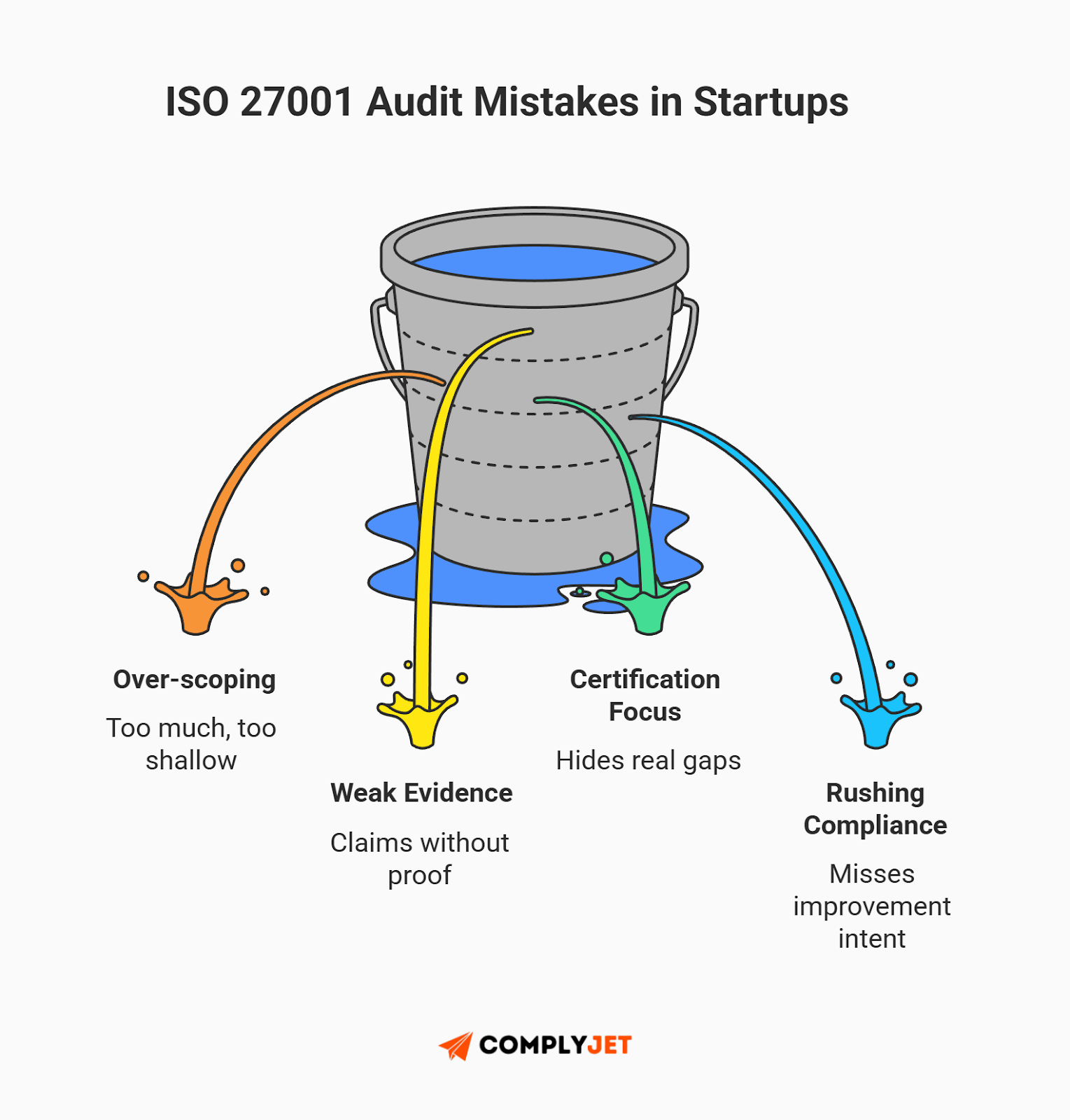
Over-scoping the Audit
Startups often try to audit every system, team, and control in a single internal audit. This usually leads to shallow reviews and missed risks. A narrow, risk-based scope produces stronger findings and more useful outcomes.
Weak or Incomplete Evidence
Another common issue is relying on verbal explanations or poorly organised files. Evidence must show how controls operate in practice. Missing context, outdated records, or inconsistent logs weaken audit conclusions and increase follow-up effort.
Treating the Audit Like Certification
Some founders approach the internal audit as a pass-or-fail event. This mindset discourages honest findings. The purpose of an ISO 27001 internal audit is to identify gaps early, not to appear perfect. Treating it as a learning tool leads to stronger long-term compliance.
Working with an external compliance partner can reduce guesswork and keep audit preparation focused, especially for lean teams. Experienced providers bring structure, independence, and a clear view of what certification bodies actually expect, which helps avoid rework and delays.
For young teams seeking that clarity without building everything in-house, ComplyJet supports startups through audit preparation and certification in a way that stays practical and proportionate to their stage. Book a demo now and talk to our founders to hasten your certification timeline.