.svg)

When startups begin preparing for SOC 2, ISO 27001, or other security certifications, the same names almost always come up first: Oneleet, Vanta, and Drata. They're often seen as the "safe" choices simply because they're the most recognizable. But does choosing the biggest name automatically mean you're choosing the right platform for your company?
Here's the direct answer.
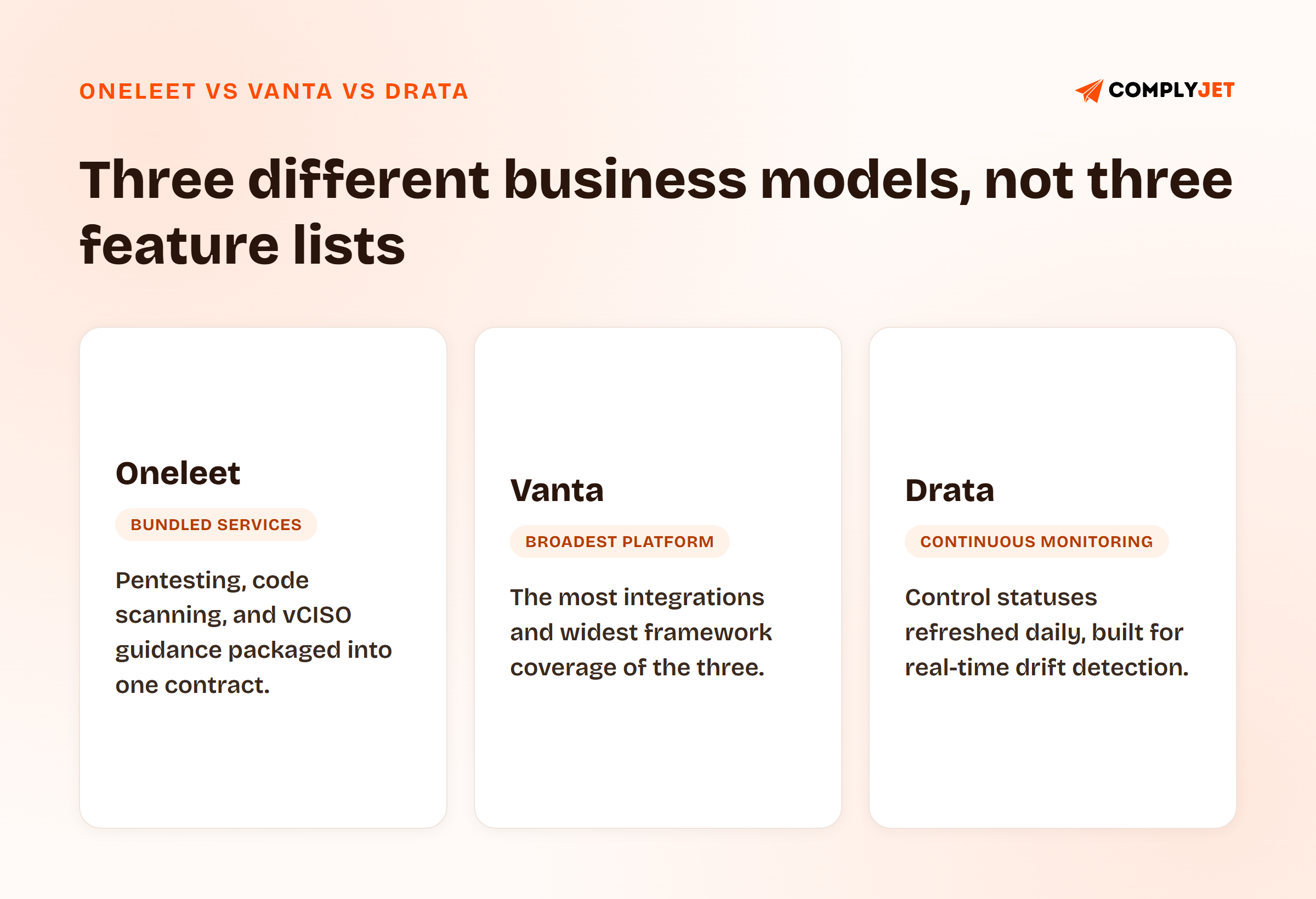
Oneleet bundles security services, pentesting, code scanning, and vCISO guidance, into the compliance platform itself, so you're buying one contract instead of stitching several vendors together. Vanta is the category's broadest default: the most integrations, the widest framework coverage, and the safest name to put in front of a board. Drata is the strongest pure-play automation platform of the three, built around continuous control monitoring rather than bundled services.
Quick answer
Oneleet = bundled security services (pentesting, code scanning, vCISO) in one contract. Vanta = the broadest integrations and framework coverage, the safest name for a board. Drata = the deepest continuous-monitoring layer of the three. Pick based on which of those three things you actually need most.
Each of these three is a genuine stronghold in its own lane, not a weaker also-ran propped up by marketing. The real choice isn't which platform has more features overall. It's which lane actually matches your use case: bundled security services, breadth and recognition, or continuous-monitoring depth. Get that one distinction right, and most of the rest of the decision falls into place on its own.
None of the three covers every part of compliance equally well on its own, and where one platform's approach to a specific requirement falls short, that's a gap in that platform's design, not yours to solve alone. It's worth knowing ComplyJet's guided process is built to cover exactly that kind of gap, alongside whichever of the three ends up fitting your use case best.
By the end of this, you'll know exactly which of the three fits your team, not just what each one does in isolation. Here's what's ahead:
- What actually separates these three at a structural level
- A side-by-side look at all three, not just two at a time
- Where Oneleet, Vanta, and Drata each win head-to-head
- What each platform actually costs you
- A decision framework for teams still stuck between all three
Oneleet vs Vanta vs Drata: What Actually Sets Them Apart
A feature-by-feature checklist is the wrong place to start here. The feature lists overlap more than you'd expect, since all three platforms automate the same basic work: evidence collection, control monitoring, policy management, audit prep. What actually separates Oneleet, Vanta, and Drata is the business model underneath the software, not any single feature.
Oneleet grew out of a pentesting and offensive-security background, and it shows in the product: security work is native, not an add-on. Vanta and Drata both grew as pure compliance-automation platforms first, integrations and evidence-collection engines that plug into your existing stack rather than replace parts of it. That origin story explains almost every difference you'll find further down this page.
Oneleet: Security Services Bundled Into Compliance
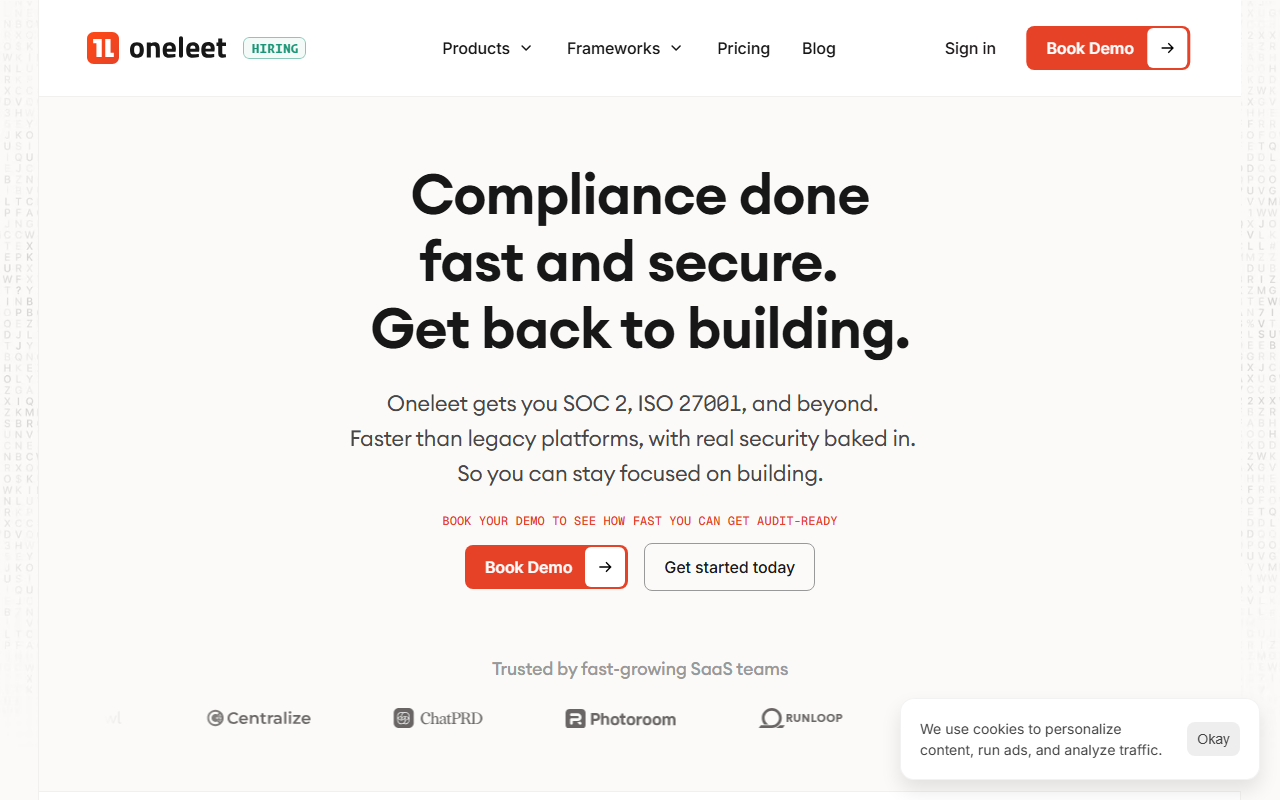
Screenshot captured from Oneleet's official website, for informational purposes only.
Oneleet packages penetration testing and vCISO (virtual CISO) guidance directly into its platform, rather than treating them as add-ons you source elsewhere. We support 25+ frameworks at ComplyJet and see this pattern across the market: teams choosing Oneleet are usually trying to avoid managing a pentest vendor, a vCISO consultant, and a compliance tool as three separate relationships.
That consolidation is the whole pitch. It's also why Oneleet's contract can look more expensive at first glance than a bare-bones compliance platform. It's rarely comparing the same scope of work.
Pros
- Bundles pentesting, code scanning, and vCISO guidance into one contract, useful for teams with no in-house security hire.
- Consolidated invoice can come out cheaper on total cost once you account for what you'd otherwise pay separate vendors.
- Removes the need to separately manage a pentest firm and a vCISO consultant during a first audit cycle.
Cons
- Smaller integration library and narrower framework breadth than Vanta or Drata.
- Continuous-monitoring depth doesn't match Drata's, since the architecture is built around bundling services first.
- Sticker price looks higher upfront, which can misread as more expensive without accounting for the bundled services.
Vanta: The Broadest Default, Built for Scale
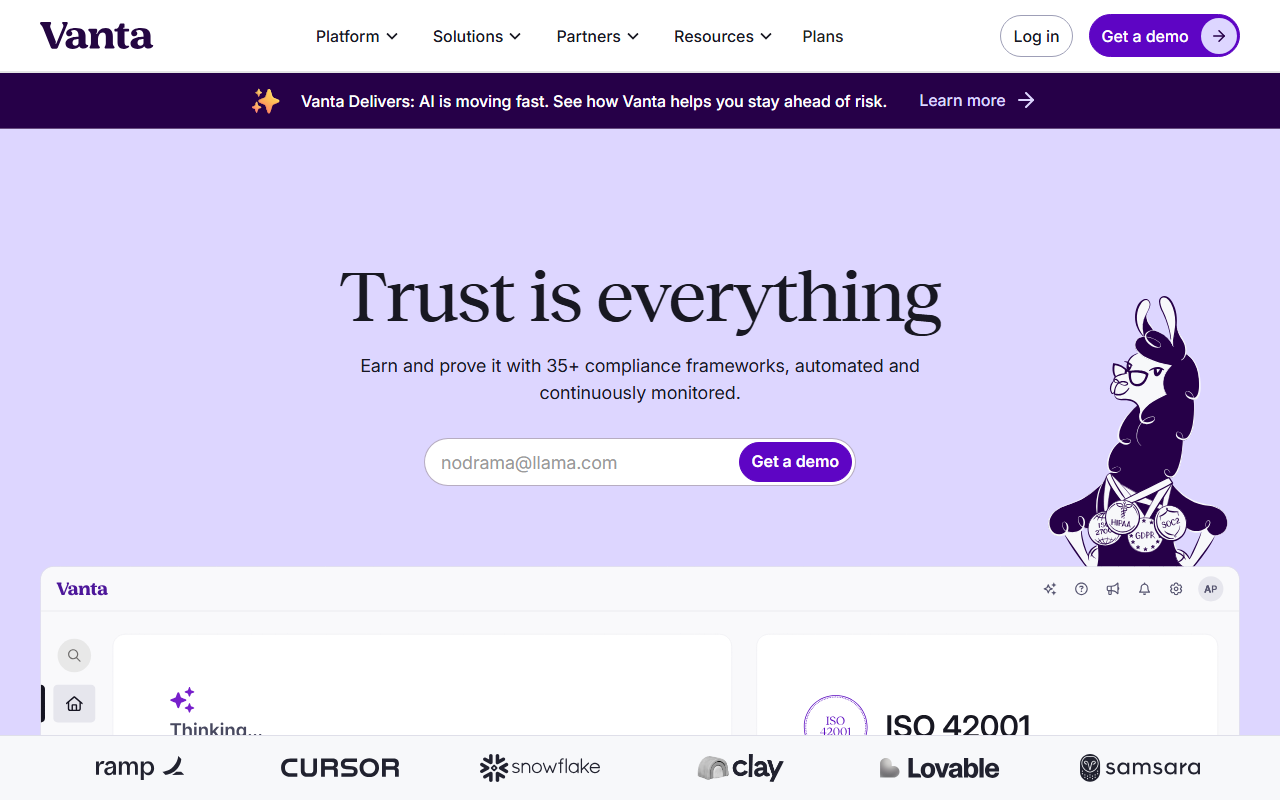
Screenshot captured from Vanta's official website, for informational purposes only.
Vanta is the category incumbent, and its integration library runs past 375 connections across cloud infrastructure, identity providers, HR systems, and version control. That breadth, plus the deepest bench of supported frameworks among the three, is why Vanta is usually the first name mentioned when someone asks "what does everyone else use."
Teams choose Vanta when they want the option everyone on their board has already heard of, and when they expect to add frameworks beyond their first one.
Pros
- Broadest integration library of the three, connecting to the widest range of existing tools.
- Widest framework coverage, useful if you expect to add certifications beyond your first one.
- Most-recognized name for a board or investor, the safest default in the category.
Cons
- Doesn't include pentesting or vCISO guidance, so those costs and vendor relationships sit outside the platform.
- Broader platform can mean a longer first-time setup and onboarding curve.
- Sticker price alone can look cheaper than Oneleet's until you add back the services it doesn't include.
Drata: Continuous Monitoring as the Core Product
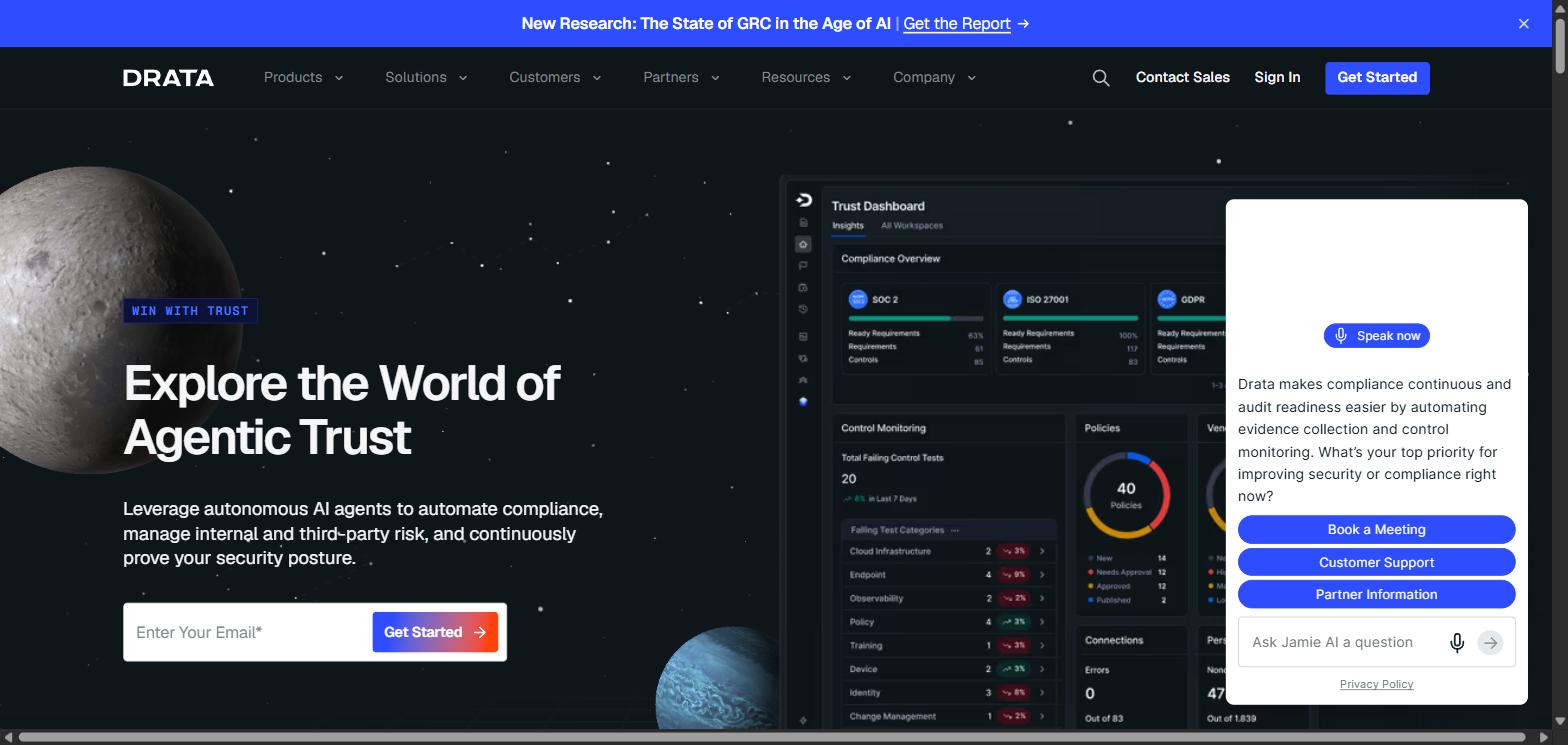
Screenshot captured from Drata's official website, for informational purposes only.
Drata's product story centers on automated, continuous control testing rather than point-in-time checks, with control statuses refreshed daily so drift gets caught before an auditor finds it. Teams that already have security tooling in place and just want the compliance layer automated tend to land here.
Pros
- Deepest continuous-monitoring layer of the three, with control statuses refreshed daily.
- Fits well for teams that already have security tooling in place, since it plugs in rather than asking you to consolidate anything.
- Wide framework coverage, close to Vanta's breadth.
Cons
- Doesn't include pentesting or vCISO support, so that's a separate vendor relationship either way.
- Value is diluted for teams with fewer existing integrations to monitor.
- Framework coverage, while wide, still trails Vanta's on total breadth.
Most teams lose time picking a platform, then discovering six months in that they still needed a separate pentest vendor or a security consultant nobody budgeted for. Read the business model first, the feature list second. — Upendra Varma, CTO at ComplyJet
Oneleet vs Vanta vs Drata at a Glance
Here's the side-by-side, all three platforms, one table, dimension by dimension:
| Dimension | Oneleet | Vanta | Drata |
|---|---|---|---|
| Pricing model | Bundled annual contract (services included) | Platform fee, services billed separately | Platform fee, services billed separately |
| Security services | Pentesting, code scanning, vCISO built in | Not included, sourced separately | Not included, sourced separately |
| Integration library | Smaller, focused set | Broadest of the three | Broad, close second to Vanta |
| Continuous monitoring | Included as part of the platform | Included, mature | Included, this is the product's core strength |
| Framework breadth | Solid coverage of common frameworks | Widest framework coverage | Wide coverage, close to Vanta |
| Best for | Teams that want one vendor for security + compliance | Teams that want the most-recognized, broadest option | Teams that already have security tooling and want deep monitoring |
Treat this as the starting map, not the whole decision. None of these dimensions decide the question alone, and a platform that wins on paper in one row can still be the wrong fit once you weigh how your team actually works.
Worth noting here too: where all three still leave a gap, mostly in turning platform output into an actual completed audit rather than just running software, that's the specific space ComplyJet's flat-fee, audit-partner-backed process is built to cover. The sections below go a level deeper on each pairing.
Oneleet vs Vanta, Summarized
The Oneleet vs Vanta question (also searched as vanta vs oneleet, same comparison either direction) comes down to bundling. Oneleet's pitch is fewer vendors: your pentest, your code scanning, and your compliance automation come from one contract. Vanta's pitch is breadth: more integrations, more frameworks, and a platform built to scale with you as you add certifications.
If you're a small team without in-house security expertise, Oneleet's bundle removes a vendor-management headache you'd otherwise be carrying on top of your first audit. If you're already running multiple frameworks or expect to soon, Vanta's breadth tends to matter more than the bundling, since you'll be extending the platform yourself either way.
| Platform | In one line | Best fit |
|---|---|---|
| Oneleet | Bundles pentesting, code scanning, and vCISO guidance into one contract. | Teams with no in-house security hire |
| Vanta | The broadest integrations and widest framework coverage of the two. | Teams targeting multiple frameworks |
For the full breakdown, pricing tiers, integration counts, and a trust center comparison, see our Oneleet vs Vanta guide. This piece intentionally doesn't rebuild that comparison; it exists to answer the three-way question this one is about.
Oneleet vs Drata, Summarized
Oneleet vs Drata (also phrased as drata vs oneleet) is a narrower question than Oneleet vs Vanta, because Drata and Oneleet are closer in scale. The real fork is continuous monitoring depth versus bundled services.
Drata's automated evidence collection runs closer to real-time than most platforms in this category, which matters if your controls change frequently or your team wants alerts the moment something drifts out of compliance. Oneleet's built-in pentesting still wins if you'd otherwise be sourcing a separate penetration-testing vendor every year, since that's a real line item Drata doesn't absorb.
| Platform | In one line | Best fit |
|---|---|---|
| Oneleet | Consolidates security services into one contract instead of a separate pentest vendor. | Teams that don't want to manage a separate pentest vendor |
| Drata | Runs the deepest continuous, real-time control monitoring of the two. | Teams that already have security tooling in place |
Neither platform is the objectively "more automated" one. Drata automates monitoring more continuously; Oneleet automates vendor consolidation. Pick based on which gap actually costs you money and time today, not which one sounds more advanced on a sales call.
Vanta vs Drata, Summarized
Vanta and Drata sit closest together of any pair in this comparison: both are pure-play compliance-automation platforms, both integrate broadly, and both compete hardest on onboarding experience and framework breadth rather than a structural difference like Oneleet's bundling.
If you're choosing between just these two, the decision usually comes down to integration fit with your existing stack and how each platform's guided setup feels for your team, not a fundamental capability gap. Neither one will leave you managing a separate pentest vendor by default, so that variable, which matters so much in the Oneleet comparisons above, mostly drops out here.
| Platform | In one line | Best fit |
|---|---|---|
| Vanta | Wins on integration breadth and framework coverage. | Teams targeting several certifications |
| Drata | Wins on continuous, real-time monitoring depth. | Teams that want the deepest monitoring layer |
For the full comparison, see our Vanta vs Drata guide.
Oneleet vs Vanta vs Drata: What Each Platform Actually Costs
Pricing structure is the first thing to understand here, before any dollar figure. Oneleet sells a bundled annual contract that folds in pentesting and vCISO support, so the sticker price looks higher until you account for what you'd otherwise pay two or three separate vendors. Vanta and Drata both price the platform itself, then bill security services, if you need them, as separate line items.
That structural difference is exactly why comparing sticker prices alone is misleading. Is Oneleet cheaper than Vanta or Drata? It depends entirely on whether you're already paying for pentesting and vCISO support elsewhere. Here's how the year-one totals tend to compare, including where ComplyJet lands as a benchmark:
| Platform | Platform / Software Fee | Bundled Services | Typical Time to Audit-Readiness | Estimated Year 1 Total |
|---|---|---|---|---|
| Oneleet | $15K–$30K | Pentesting + vCISO included | 4–6 weeks | $15K–$40K |
| Vanta | $10K–$25K | Billed separately | 6–10 weeks | $22K–$45K+ |
| Drata | $7.5K–$20K | Billed separately | 6–10 weeks | $20K–$45K+ |
| ComplyJet | $8K–$12K | Guided process + audit-partner network included | 7–14 days | $8K–$15K |
Source: figures as published in our own Oneleet pricing guide, which has the full framework-by-framework breakdown and negotiation guidance if you want to go deeper than the totals above.
Note
None of these four vendors publish a fixed public price list. Oneleet, Vanta, and Drata all quote custom deals based on company size, frameworks, and scope, so treat the ranges above as directional, not a guaranteed quote. ComplyJet's $8K–$12K is the one fixed, published figure in this table.
Oneleet vs Vanta SOC 2 Startup Fit: Where Does Drata Stand
First-time SOC 2 buyers ask a specific version of this question: the oneleet vs vanta soc 2 startup decision, usually framed as "which one do I trust with my first audit." Drata gets asked into the same conversation less often, but it deserves a seat at this table too.
Here's how it tends to break down by team shape:
- No in-house security hire: Oneleet's bundle reduces the number of vendors you have to manage during your first audit cycle, which matters when nobody on staff has done this before.
- Team wants the safest, most-recognized name for a board or investor: Vanta is the option almost everyone in the room has already heard of.
- Team already has security tooling and just needs the compliance layer: Drata's continuous monitoring slots in without asking you to replace anything.
All three of these platforms price around per-seat or tiered models that can climb as your team scales, which is worth factoring in before you sign, regardless of which one you pick.
ComplyJet
Flat per-company pricing, not per seat
If per-seat pricing uncertainty is what's giving you pause on Oneleet, Vanta, or Drata, ComplyJet's flat fee stays the same from a 5-person team to 40.
How to Actually Decide: Oneleet vs Vanta vs Drata
Skip the generic "it depends" advice. Here's the actual decision framework:
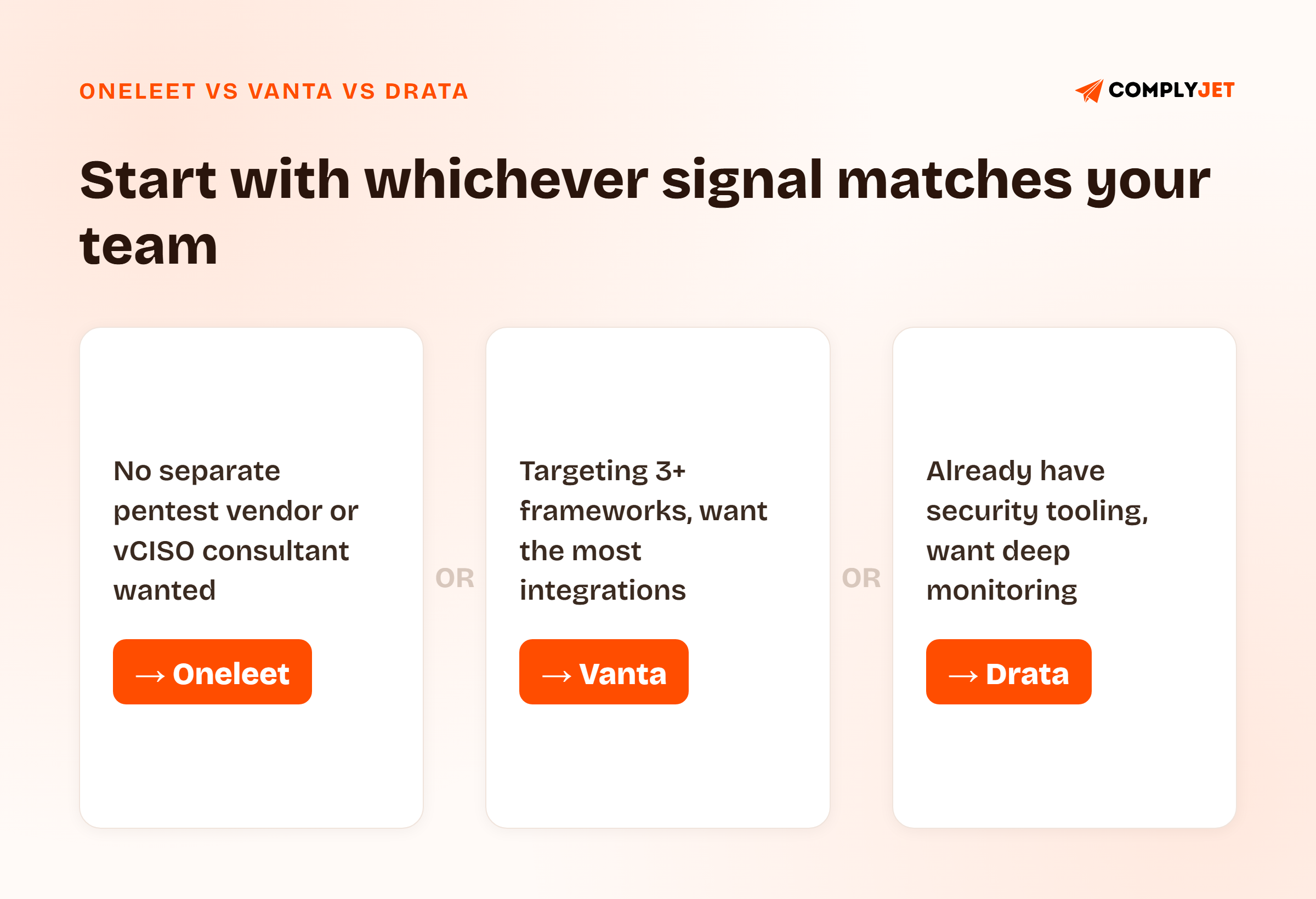
- Start with Oneleet if: you don't want to manage a separate pentest vendor or vCISO consultant, and you'd rather pay one bundled invoice than three separate ones.
- Start with Vanta if: you're targeting three or more frameworks, expect to add more over time, or need the most broadly recognized name for investor and customer due diligence.
- Start with Drata if: you already have pentesting and security tooling in place, and you specifically want the strongest continuous-monitoring layer without paying for services you don't need.
If two of these still feel equally true for your team, the tie usually breaks on integration fit: check each platform's integration list against your actual stack (cloud provider, HR system, ticketing tool) before deciding on reputation alone. A platform that's a perfect philosophical fit but doesn't talk to half your tools will cost you more in manual evidence-gathering than you saved on the contract.
It's also worth asking each vendor directly how they handle a scope change mid-contract, adding a framework, adding headcount, or dropping a bundled service you're not using. The answer to that question tells you more about long-term fit than any feature comparison will.
One more practical filter: ask each vendor for a reference customer at roughly your current headcount and stage, not their flagship enterprise logo. How Oneleet, Vanta, or Drata performed for a 200-person company tells you very little about how the same platform will feel for a 12-person team going through its first audit.
Pro tip
Sit in on a live demo of each platform's evidence-collection screen, not just the sales deck. That's where you'll actually see how much manual work is left after the "automation" runs, and it's usually where the three platforms look most different from each other.
Oneleet vs Vanta vs Drata: Common Mistakes to Avoid
- Comparing sticker price without accounting for bundled services. Oneleet's higher upfront number can still be the cheaper option once you add back a separate pentest and vCISO contract to Vanta or Drata's price.
- Assuming all three cover every framework equally well. Coverage breadth differs by framework, not just by platform; check your specific framework, not just the vendor's general marketing.
- Not checking auditor-network overlap before signing. Your chosen platform's relationship (or lack of one) with your preferred audit firm affects how smoothly evidence handoff actually goes, and a mismatch here can add weeks to your timeline.
- Treating integration count as the whole automation story. A longer integration list doesn't help if the three tools you actually use aren't on it, and a shorter, deeper list can outperform a broad, shallow one.
- Skipping the audit-experience question until after signing. Ask each vendor exactly how audit day works, who coordinates with your auditor, and what happens if a control fails, before you're locked into a contract.
- Ignoring how pricing scales with headcount. A quote that looks fine at 15 employees can look very different at 40, on any per-seat model, so ask for a projection at your expected headcount, not just today's.
- Signing before confirming what "bundled" actually includes. "Pentesting included" can mean very different scopes between vendors; get the exact deliverable in writing, not just the label.
Most of these mistakes share a root cause: comparing the three platforms as if they were interchangeable line items on a spreadsheet instead of three different operating models. A feature-by-feature checklist will tell you which platform has more checkboxes. It won't tell you which one actually removes work from your plate, and that's the question worth answering before you sign anything.
FAQs
Oneleet vs Vanta vs Drata: Which Is Better?
There's no single winner. Oneleet is better if you want security services bundled in and fewer vendors to manage. Vanta is better if you want the broadest, most-recognized platform. Drata is better if you already have security tooling and want the deepest continuous-monitoring layer. The "better" one is whichever matches your team's actual gaps, not a universal rank.
Is Oneleet Cheaper Than Vanta or Drata?
It depends on what you'd otherwise pay for pentesting and vCISO support separately. If you're already paying for those services elsewhere, Oneleet's bundle can come out cheaper on total cost of ownership. See the year-one comparison table above, or the full TCO breakdown for the framework-by-framework version.
Best Startup Compliance Platform: Oneleet vs Vanta vs Drata
For a first-time SOC 2 startup with no in-house security hire, Oneleet's bundled model tends to reduce vendor overhead the most. For a startup that wants the safest, most-recognized name for investors, Vanta usually wins that conversation. For a startup with existing security tooling, Drata fits without replacing anything you've already built.
Do Oneleet, Vanta, and Drata All Support the Same Frameworks?
No. All three cover the most common frameworks like SOC 2, ISO 27001, HIPAA, and GDPR, but coverage depth varies by platform and framework. Vanta and Drata generally support the widest range of frameworks; Oneleet's coverage is solid but narrower. Always confirm your specific framework against each vendor's current list before deciding.
Can I Switch Between These Platforms Later If I Choose Wrong?
You can, but it's not seamless. Evidence and control mappings are partially portable, not fully, so switching later means redoing some setup work rather than a clean migration. It's rarely worth switching mid-audit-cycle; if you're going to change platforms, do it between audit periods, not in the middle of one.
Does Oneleet's Bundled Pentesting Replace a Separate Penetration Test Vendor?
For most early-stage teams, yes, it covers what a standalone annual pentest engagement would. If your customers or auditors require a specific pentest scope or a named third-party firm, confirm Oneleet's bundled pentesting meets that exact requirement before assuming it's a full substitute.
How ComplyJet Approaches Compliance Differently
None of the three platforms above package a guided compliance process or an audit-partner network into the platform itself; you're still responsible for turning software output into an actual passed audit. ComplyJet builds that guidance and audit-partner support directly into its process, at a flat per-company price that doesn't move as your framework count or headcount grows.
ComplyJet
Get audit-ready in days, not months
Guided evidence collection and a vetted audit-partner network, at a flat per-company price, so you're not doing this alone.
Related Reading
- Oneleet vs Vanta: Who Really Won the SaaS Compliance Race, the exhaustive two-way breakdown this article doesn't repeat.
- Oneleet vs Delve, for readers also considering Delve.
- Vanta vs Drata 2025, the exhaustive Vanta/Drata breakdown.
- Oneleet Review, a standalone Oneleet deep-dive.
- Oneleet Pricing Exposed, full TCO numbers across Oneleet, Vanta, Drata, and ComplyJet.
- Oneleet Alternatives, for readers who conclude none of the three fit.