.svg)

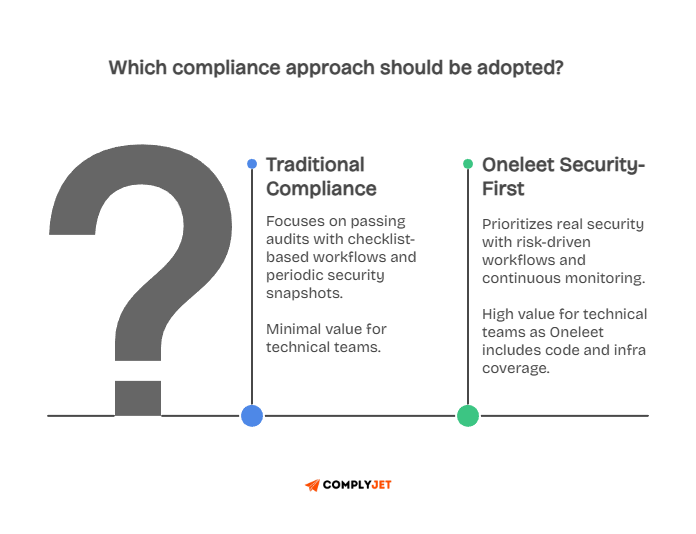
You have likely used a compliance tool that helped you pass an audit. The report looked clean. The buyer felt calm. But your real security posture stayed the same.
Most tools focus on audit-proof. They track screenshots, policies, and checklists. That helps you pass. It rarely helps you fix real risks. Breaches still happen.
IBM reports the average breach cost hit $4.44 million in 2025.
Many founders feel this gap, and it matters. That frustration is where this Oneleet review begins.
Oneleet claims to flip the script. It says security comes first and compliance follows. That sounds bold. It bundles testing, monitoring, and guidance into one flow. This idea attracts teams tired of paper security.
In this review, you will learn what Oneleet is, how Oneleet security works, what Oneleet reviews by real users say, and if it fits your budget in 2025.
You will also see where this works and where it does not. We will also note where simpler Oneleet alternatives can help you move faster.
Want to skip to a quick verdict? Talk to our experts!
Let's now begin by looking at what Oneleet actually is and how it positions itself in the compliance automation market.
What Is Oneleet?
Oneleet is a compliance automation platform built by ethical hackers. It's not your typical tool with checklists and templates. It helps startups and growing tech companies become SOC 2 or ISO 27001 compliant, but it does so by focusing on real security first.
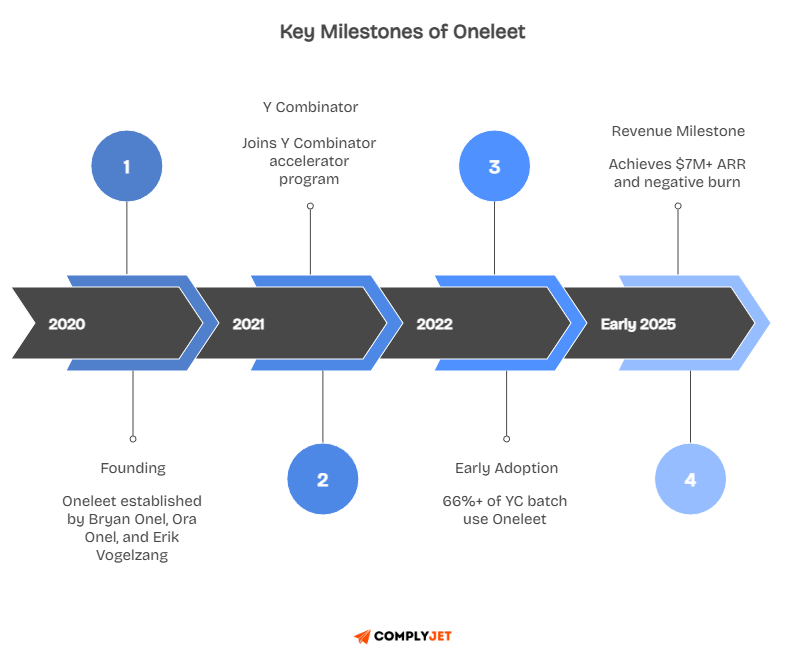
Oneleet started from a breach report. Bryan Onel wasn't a founder chasing a trend. He was a career penetration tester who spent over a decade breaking into Fortune 500 systems.
Along the way, he saw something frustrating. The companies with the best-looking compliance reports often had the worst real-world security. That's what pushed him to build Oneleet.
He teamed up with his wife, Ora and longtime friend Erik Vogelzang to do things differently. Together, they were trying to fix a broken loop. What looked compliant wasn't always secure. And what was secure often didn't check audit boxes. They wanted a system that fixed both at once.
Bryan's background shaped the platform. Instead of hiring lawyers or GRC pros to design controls, he and his team built it like hackers would defend a network.
Every feature in Oneleet reflects that thinking. It doesn't ask what the audit needs. It asks what real-world attackers might exploit. Then it builds defenses first.
The YC Signal and Oneleet Funding
Oneleet joined Y Combinator in 2022. Two-thirds of that batch now use it. That traction turned heads.
In 2025, Oneleet raised $33 million in Series A funding. The round was led by Dawn Capital, with participation from YC, Frank Slootman, and Arash Ferdowsi. These are security-savvy investors.
By the time the round closed, Oneleet had already crossed $9M in ARR. That’s rare. Most platforms raise before proving the model. This one was profitable early and gained strong traction in YC's own startup network.
The Core Bet: Fix Security, Compliance Follows
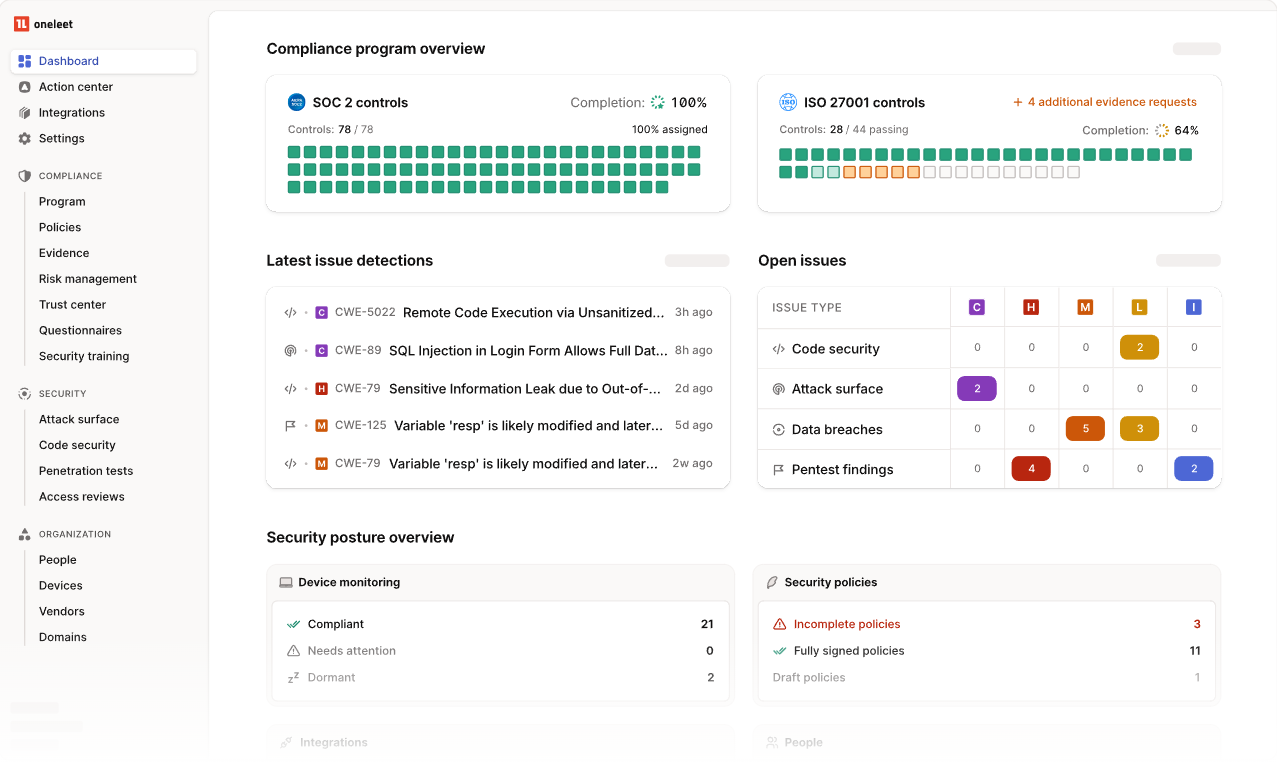
Oneleet doesn't treat SOC 2 or other frameworks as the goal. It treats them as side effects of strong security hygiene. You get code scanning, device monitoring, and risk tracking in the same dashboard where you manage controls.
The platform was built to flip what they call “compliance theater” into real defense. The result is not just a tool to pass the audit, but a system that gets your house in order before the auditor ever logs in.
Where Oneleet Fits in the Market
Most tools fall into two camps: GRC platforms that manage documents and evidence, and security platforms that manage infrastructure. Oneleet is a hybrid. It bridges both with automation, visibility, and built-in testing.
That means it works differently from platforms like Vanta, which go wide on integrations, or Delve, which focuses on AI speed. Oneleet's edge is depth. It's security-first, compliance-aligned, and hands-on in how it guides you.
Also read: OneLeet vs Delve: SOC 2 Pricing, Features, Reviews [2025]
Oneleet's design shows up fast in early onboarding. The controls feel like they're mapped to real-world security work, not just checklists.
In the next section, we'll dig deeper into those features and what the platform actually includes.
Oneleet Features: The Full Stack for Compliance & Real Security
When teams start a compliance project, they often believe it's only about checklists and forms. However, Oneleet offers a different perspective.
It combines everything into a single tool. It scans your code, tracks your devices, monitors for security breaches, and assists with audit processes.
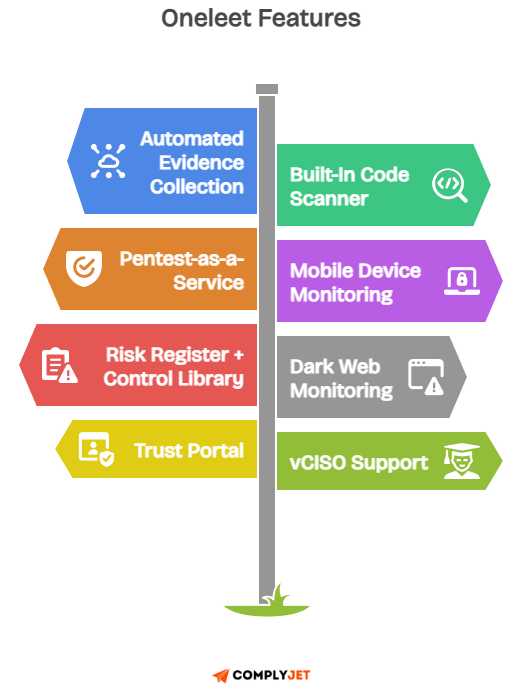
This tool is specifically designed for startups and small teams that want to strengthen their security while effectively preparing for audits.
Automated Evidence Collection
When you're going through a compliance audit, you usually need to prove that your systems are secure.

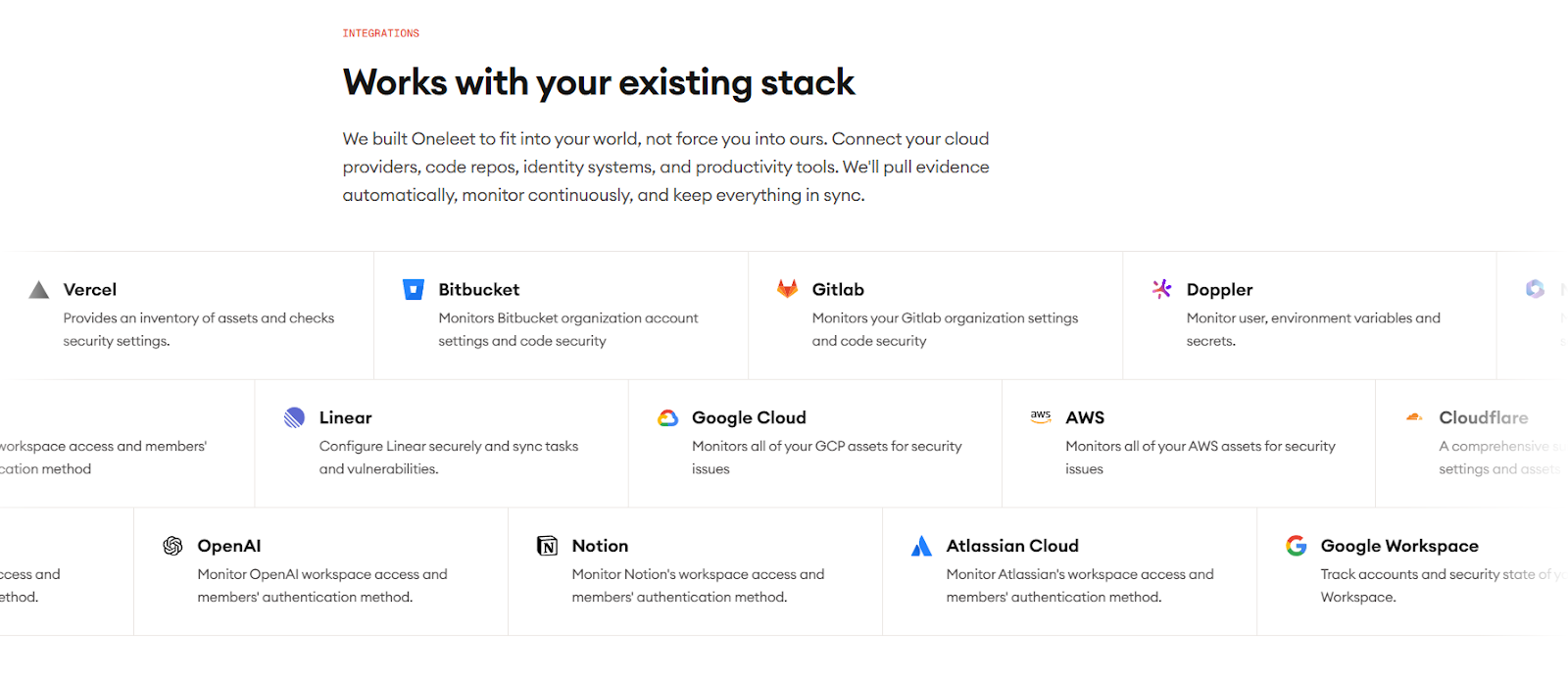
Most platforms ask you to collect screenshots, export settings, and write up explanations. That gets painful fast. Oneleet skips that by connecting directly to your tools.
You can link systems like AWS, Google Workspace, GitHub, Okta, and others. Once connected, Oneleet pulls settings and logs in the background. So if you've already enabled encryption or configured access logs, the platform records it as proof automatically.
This is important because many audits fall short due to either missing or outdated evidence.
With Oneleet, you can ensure that your proof remains up-to-date on a daily basis, rather than just during the audit cycle.
This approach streamlines the audit process while enhancing the overall reliability of your data.
Built-in Code Scanner
Security issues often begin inside the codebase. A small bug or outdated library can lead to data leaks. Most compliance tools don't touch code. Oneleet does. It includes a scanner that checks your GitHub or GitLab repos for risky patterns.
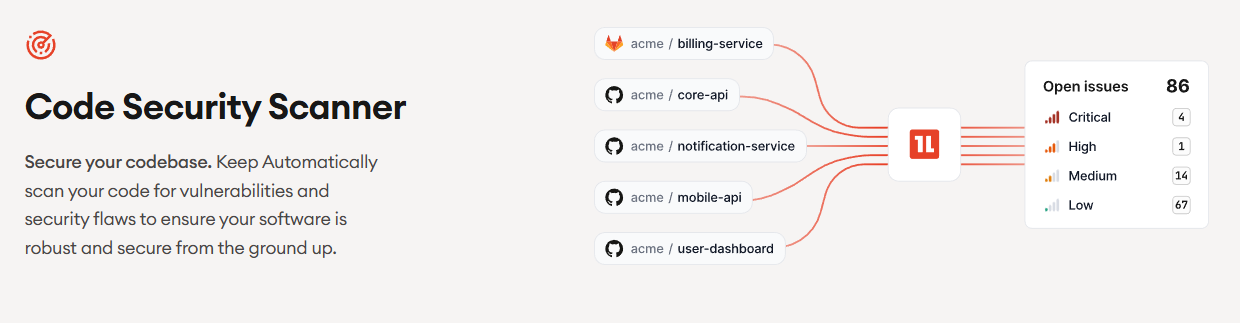
It looks for known vulnerabilities, dangerous dependencies, or missing security checks. You can customise it to reduce noise or ignore certain types of findings. Once a developer fixes an issue, Oneleet logs that fix as part of your compliance record.
This means your code runs by itself and becomes a part of your security story. The scanner helps you prevent issues instead of reacting later.
Pentest-as-a-Service (PtaaS)
Most teams either skip penetration testing or hire a firm once a year. But when security matters, you can't afford that gap. Oneleet includes real penetration tests inside the platform.
Their security experts hold rare certifications like OSWE, which means they've passed some of the hardest exams in cybersecurity.
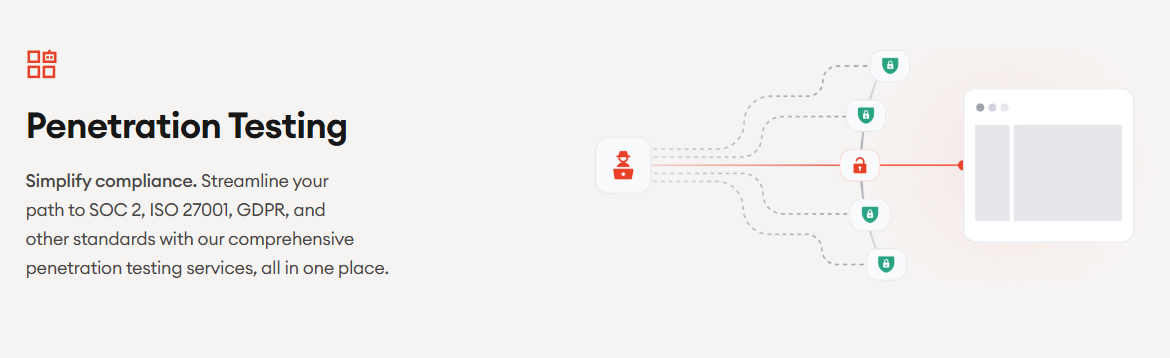
Instead of just running scripts, they look for real-world weaknesses. Think of it like hiring someone to break into your systems, but with your permission. When they find issues, you fix them. Oneleet retests right away and turns that entire flow into audit evidence.
This is helpful when you want to show enterprise clients that you're compliant as well as secure in practice.
Mobile Device Monitoring (MDM)
If someone on your team loses a laptop or forgets to turn on encryption, your compliance could be at risk.
Oneleet solves this with its built-in mobile device management (MDM). It tracks every team laptop and flags anything out of line, such as missing updates, no antivirus, or broken security settings.
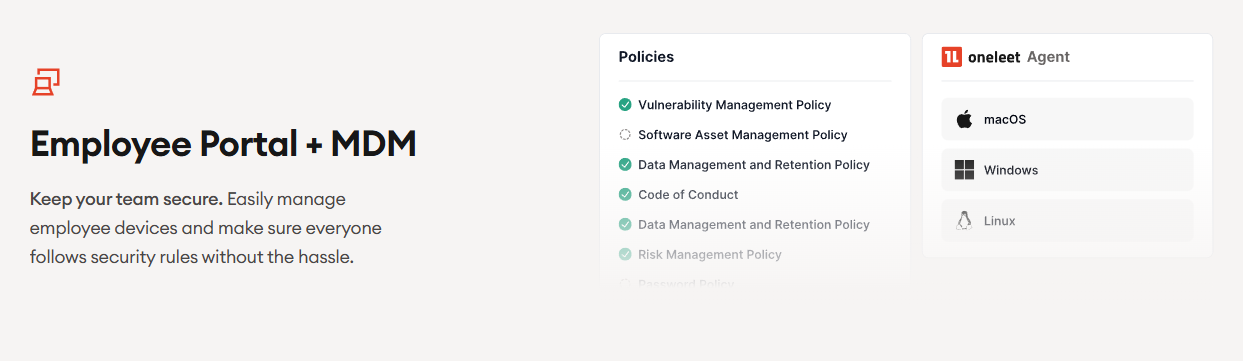
You don't have to check each machine manually. Oneleet does it for you in real time. So if one device turns off firewall protection or disables password rules in the background, you'll definitely know.
And more importantly, that fix becomes logged proof for your audit.
This saves time, avoids risk, and helps everyone stay compliant without the extra effort.
Risk Register + Control Library
Compliance isn't just about passing. It's about knowing where your weaknesses are.
Oneleet includes a dynamic risk register that helps you rank each issue by its business impact. It doesn't treat every item the same. You get smart priorities.
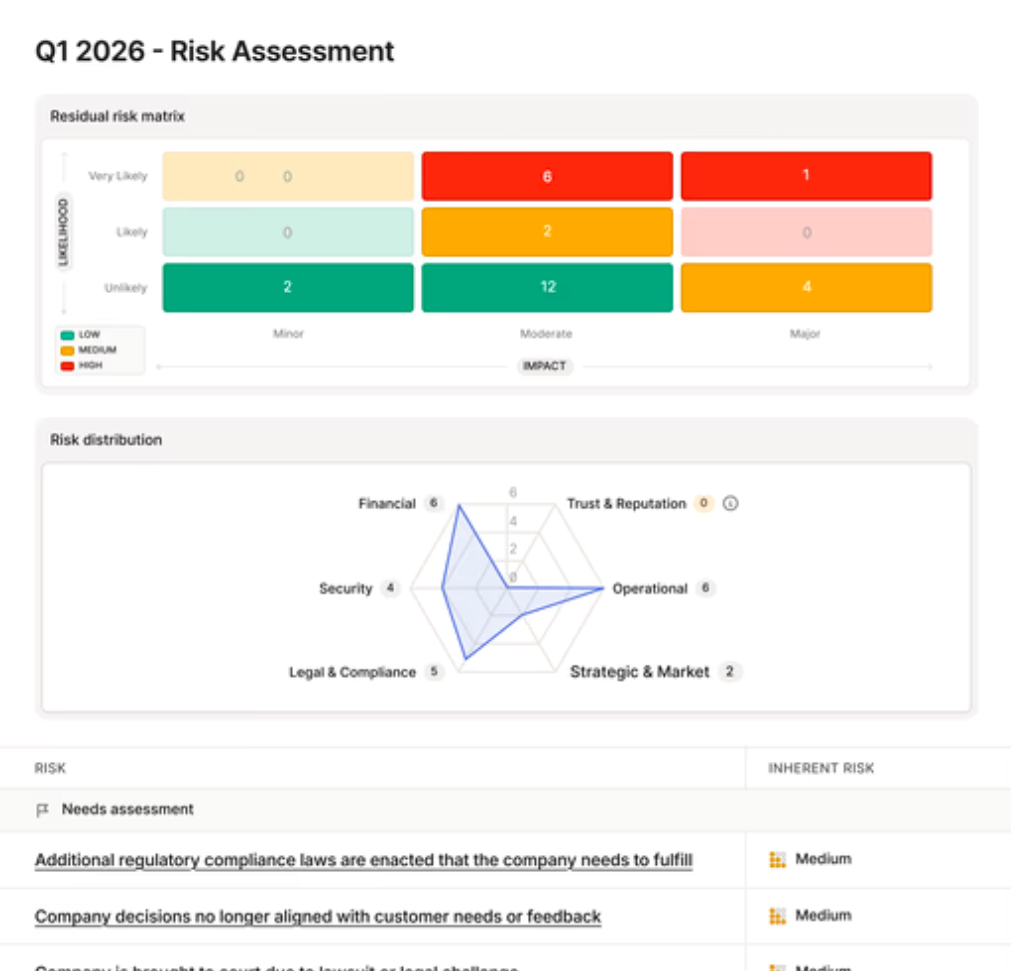
The control library is also shared across several frameworks.
Oneleet shows you that overlap, so you don't repeat work. Every fix has context, so you always know why it matters.
This keeps your team focused on what actually protects your company.
Dark Web Monitoring
Data leaks can start outside your company. Oneleet checks the dark web for stolen credentials, internal documents, or API keys tied to your business. If anything turns up, you get an alert.
For example, if a developer accidentally uploads a secret key to a public repository and someone uploads it to a breach forum, Oneleet will detect it. You'll know before a bad actor uses it.
This kind of visibility gives you a second layer of defence and lets you prove during audits that you're watching the right places for risks.
Trust Portal
Enterprise buyers now ask, "Can we see your audit report?" Oneleet answers this with a live trust center. It shows your security status, audit results, and control coverage in real time.
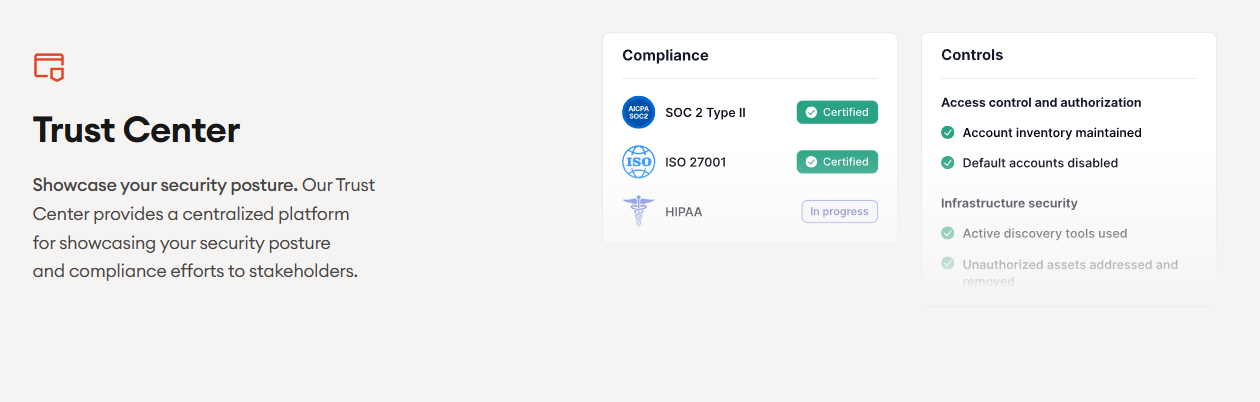
You decide what to share. You can give customers access to SOC 2 reports, while hiding ISO progress if needed. This builds trust during deals without extra paperwork.
It helps your team align internally and stay aligned as well. Sales, engineering, and security teams can all check one dashboard to see where things stand.
vCISO Guidance
Not every team has a full-time compliance expert. Oneleet gives you access to vCISOs (virtual Chief Information Security Officers) who have helped other companies get certified. These are experienced people and not chatbots or scripted support.
You can ask about frameworks, fix priorities, or anything related to audit prep. They'll help you break it down into steps that make sense. This kind of coaching helps if you're doing this for the first time or trying to avoid big mistakes.
Having expert help reduces stress and speeds things up. It also helps you explain to your team why security matters beyond just "getting certified."
Compliance Frameworks Supported by Oneleet
Oneleet gives you the structure to handle this ask. It supports most major frameworks used in early-stage and mid-market sales.
But there's one important thing to understand early. While Oneleet supports various frameworks, it helps you do them one at a time. It's less useful if you want to run three at once.
The Core Frameworks
Oneleet handles a wide mix of security and privacy frameworks. Each one comes with prebuilt controls, templates, and mapping. You can pick the one you need now and switch later.
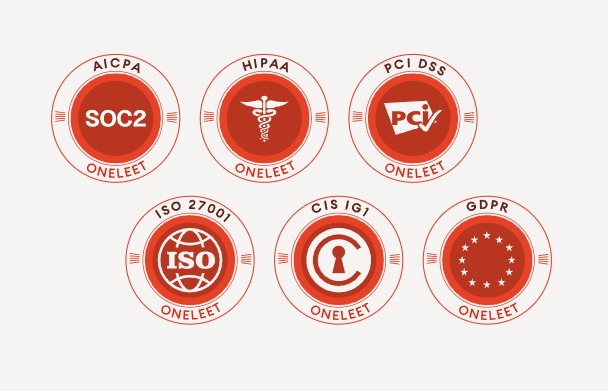
The full list includes:
- SOC 2 (Type 1 and Type 2)
- ISO 27001 certification
- HIPAA compliance (for healthcare data)
- GDPR compliance tools (for EU user privacy)
- PCI DSS (for handling payments)
- CIS IG1 (basic security controls for SMBs)
Each framework includes built-in policies, control explanations, and automation hooks. You're not starting from a blank page.
Frameworks Are Handled One at a Time
Here's the catch. Oneleet helps you implement one framework at a time. That means if you're working on SOC 2 now, your ISO 27001 work has to wait until SOC 2 is done.
This is different from tools like Vanta or Drata, which let you pursue more than one framework at once. That can be helpful for large teams with GRC staff, but it also adds noise for smaller teams. Oneleet's approach keeps the workflow clean.
For example, SOC 2 has 90+ control requirements. If you're also chasing ISO and HIPAA at the same time, it's easy to burn out your team. Oneleet keeps the focus narrow to help you move faster with fewer distractions.
Compliance Framework Overlap Is Still Mapped
Even though Oneleet handles frameworks one by one, it doesn't ignore the overlaps. Many controls, like access management or encryption, are shared between standards. Oneleet shows you these connections.
So when you finish SOC 2, many of those controls will carry over to ISO 27001 or HIPAA. You won't have to start from scratch again. This helps reduce effort across various frameworks, even if you complete them in sequence.
For example, enforcing MFA on employee devices applies to:
- SOC 2 CC6.1 (access control)
- ISO 27001 A.9.4 (user access management)
- HIPAA 164.312(d) (person or entity authentication)
Oneleet lets you see, fix, and reuse the work later.
Sequential May Actually Be a Good Thing
If your company is early-stage, doing too much at once is risky. You can waste time, overwhelm your team, or delay customer deals. Oneleet's framework sequencing is built for lean teams that need to get one audit done well before jumping to the next.
Think of it as a ladder. You finish an audit, get the report, and then reuse the work to climb into other frameworks that you might need later. It keeps the compliance motion structured and avoids over-scoping your work.
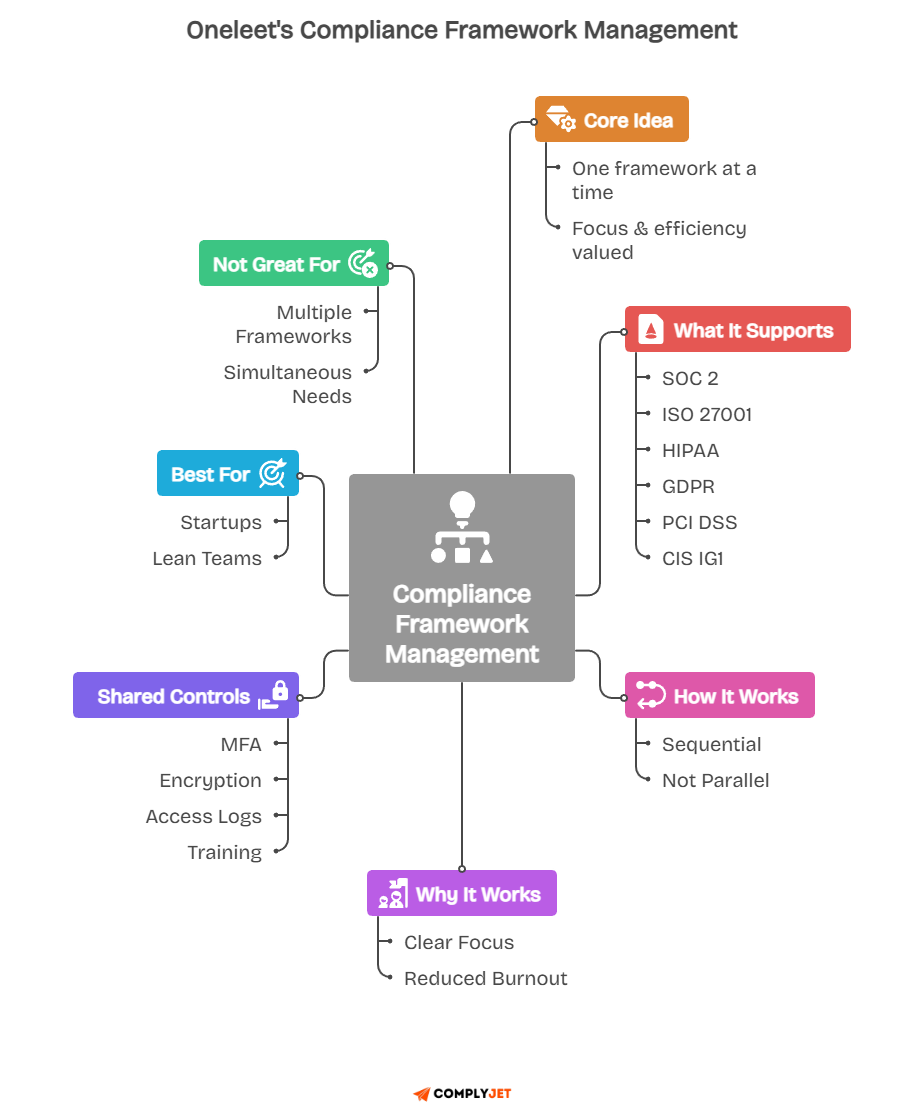
Oneleet's framework support is believed to be strong if you're focusing on one certification at a time. In the next section, we'll walk through how pricing works and what to expect if you're budgeting for security and compliance.
How much does Oneleet cost?
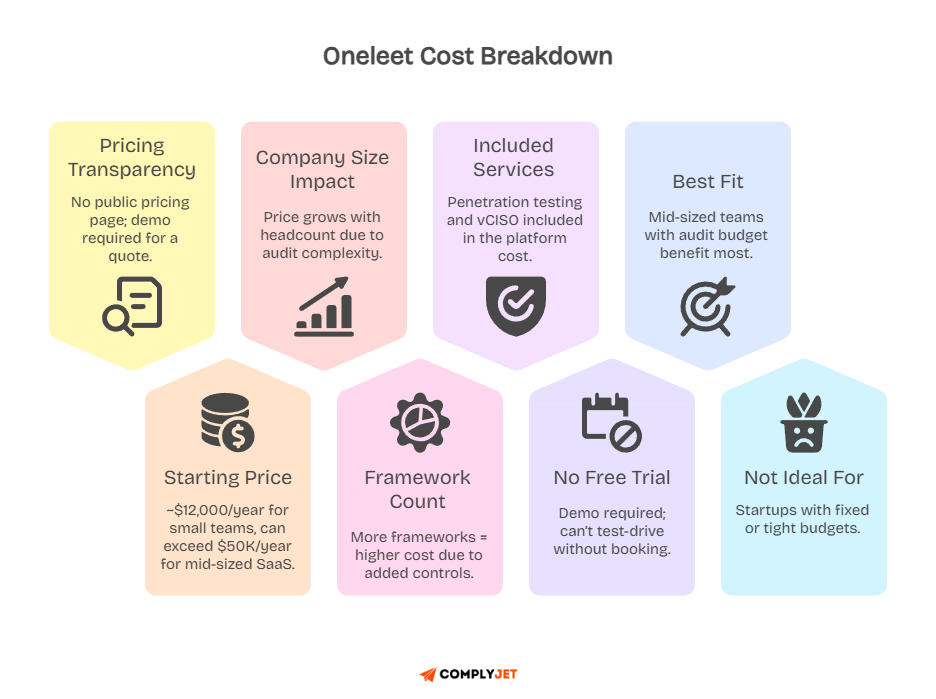
If you're evaluating compliance platforms, one of your first questions is likely about cost. But with Oneleet, there's no public pricing page. You'll need to book a demo to get a number that fits your setup.
That's because it builds custom plans based on how your team is structured, what frameworks you need, and how deep your security support should go. It's tailored, which helps larger teams but makes it harder to budget up front.
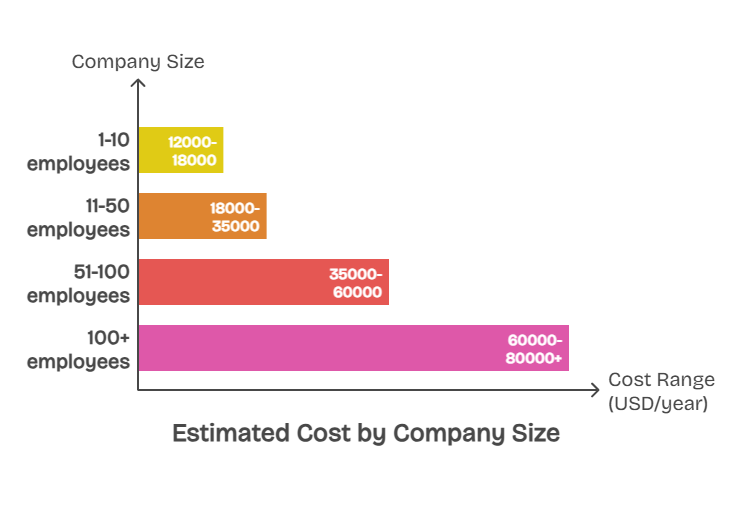
Based on customer reports and market analysis, Oneleet's pricing usually starts around $12,000 a year for small teams. For mid-sized SaaS companies with numerous frameworks, it can go beyond $50,000.
That price includes onboarding, setup, scanning tools, evidence automation, and audit prep. There's no free trial, even if you're committing upfront. That works fine if you already budgeted for a full compliance program.
But for early-stage teams, it may feel steep.
Pricing Depends on Your Company Profile
The size of your team plays a big role. A 10-person startup won't be charged like a 150-person growth-stage company. As your systems grow, so does the audit scope. Oneleet adjusts for that.
Then there's framework count. If you're doing SOC 2 only, you'll pay less than someone who wants to layer in HIPAA or ISO 27001. Each adds extra controls, tests, and compliance overhead.
To learn more about the detailed Oneleet pricing structure, read: Oneleet Pricing Plans 2026
Pen Testing & vCISO Time Is Included.
The total price also factors in built-in services. Most platforms charge separately for penetration testing. Oneleet includes it in the bundle. Their experts do the tests and help you fix issues before the auditor sees them.
The same goes for virtual CISO support. If you want hands-on guidance from a security advisor, that's baked in too. These extras increase the quote but remove the need for external vendors.
No Free Trial
You'll need to speak with their sales team to get access. Oneleet doesn't offer a self-serve signup. The process starts with a live demo. From there, you'll get a scoped proposal.
If you're used to buying tools with a credit card or starting with a trial, this may slow things down. But it's common in the compliance space, especially when expert services are bundled in.
Oneleet's pricing model works best if you're ready to invest in real compliance outcomes.
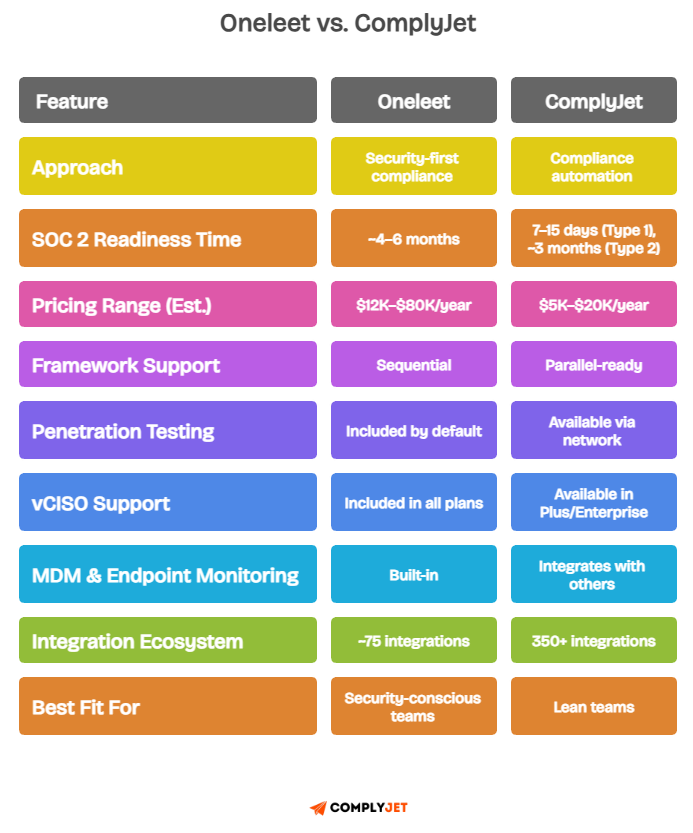
For early-stage teams with fixed or tight budgets, ComplyJet offers transparent pricing starting at $5K/year, with 7-day SOC 2 readiness.
Next, we'll break down what actual users say about Oneleet from G2 reviews to real-life onboarding stories. That'll help you decide if the price lines up with the experience.
What Real Customers Say about Oneleet
You can learn a lot about a compliance platform from its sales pitch. But the real test? What founders and security teams say once they've lived with it for a few months. That's where the truth comes out.
Oneleet reviews across G2, Reddit, and SoftwareFinder all lean in the same direction. The platform nails depth and support. But the tradeoff? You might lose some speed or simplicity if you're expecting plug-and-play.
Across G2, Oneleet scores a near-perfect 4.9 out of 5. That's rare in a category full of rushed tools. Most users talk about how it "actually improves our security" instead of just helping them pass an audit.
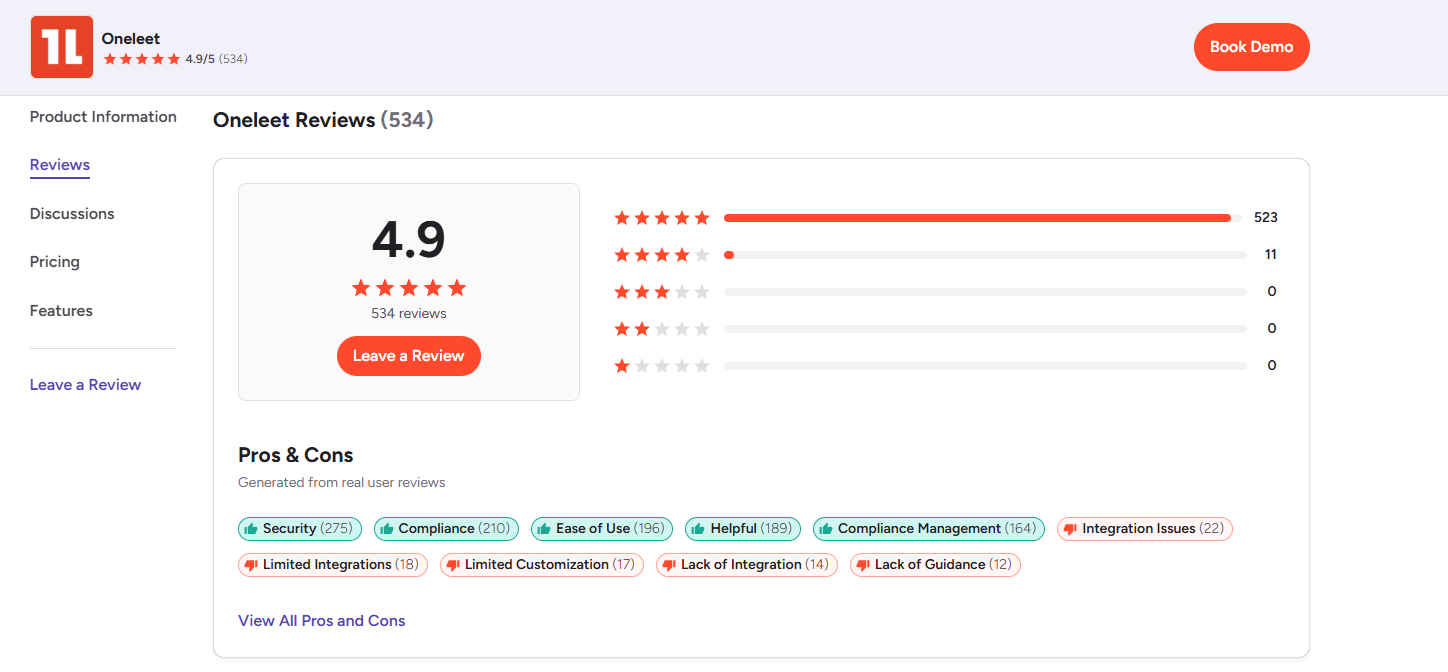
Most users find the platform efficient due to its pentesting feature and vCISO support, but the major issues seem to be pricing, missing integrations and bundled features where there is no use for half of it.
On SoftwareFinder, teams highlight how Oneleet makes the whole audit process feel less painful. Many call out the real-time dashboard as uncluttered and surprisingly easy to follow, which is rare for compliance software.
Even with great support, Oneleet isn't perfect, and the callout on the fewer integrations doesn't seem to stop.
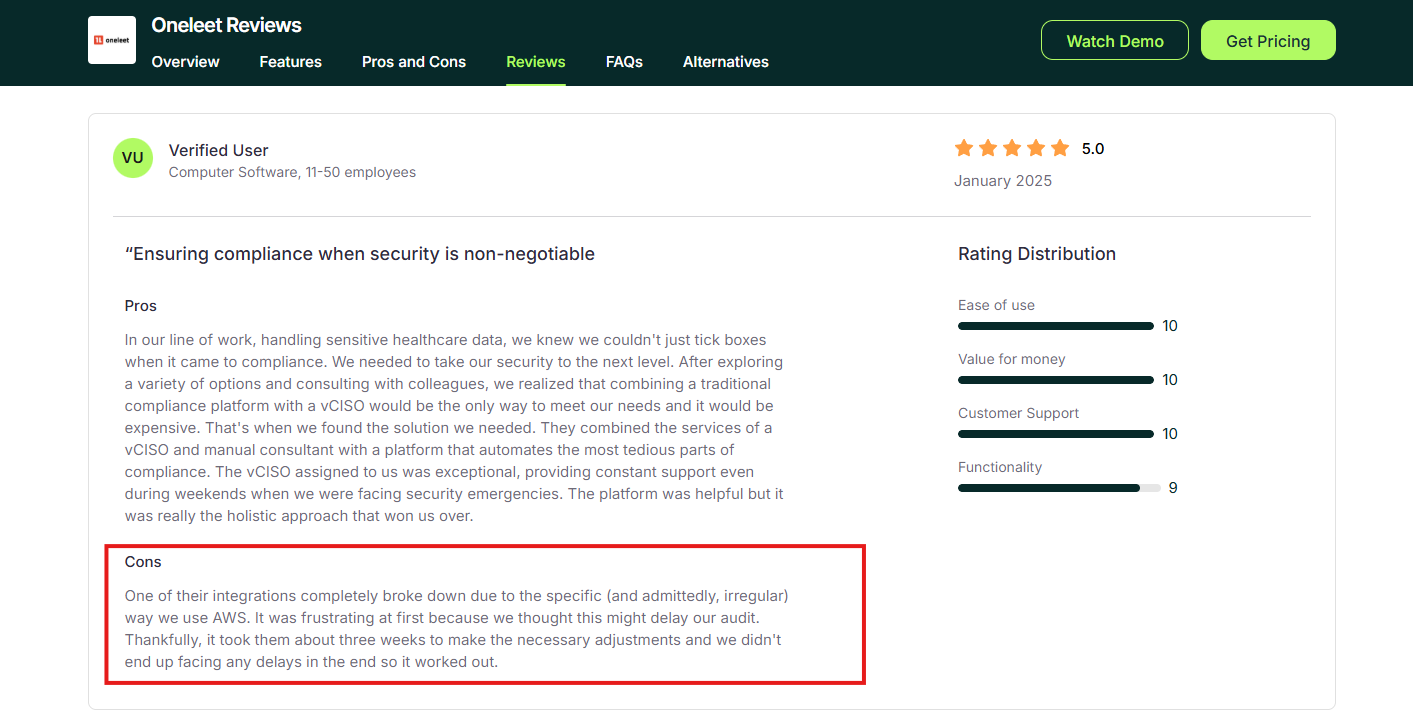
Another recurring issue is pricing opacity. That's a blocker if your budget is tight or you need stakeholder approval before meetings.
Lack of guidance or support after onboarding seems to be another issue that users complain about frequently.
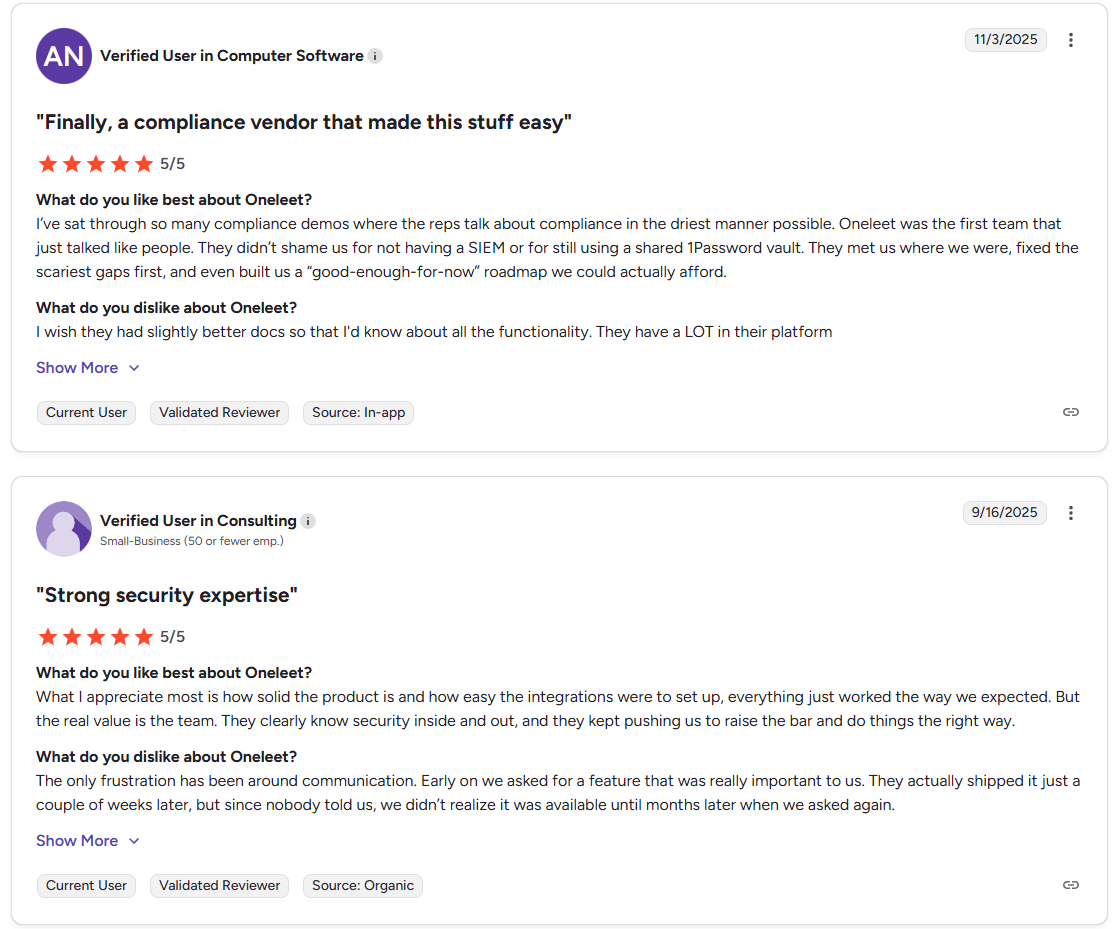
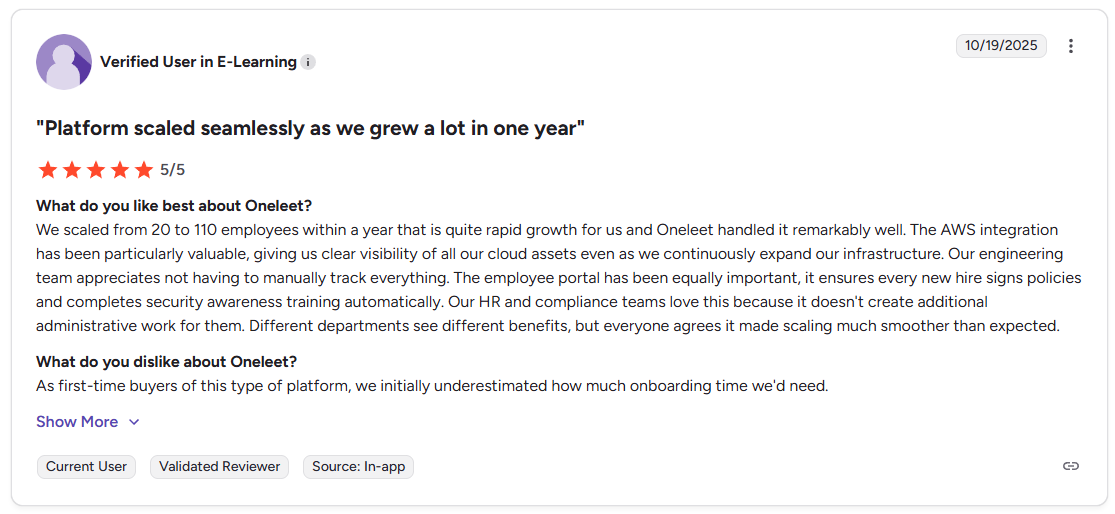
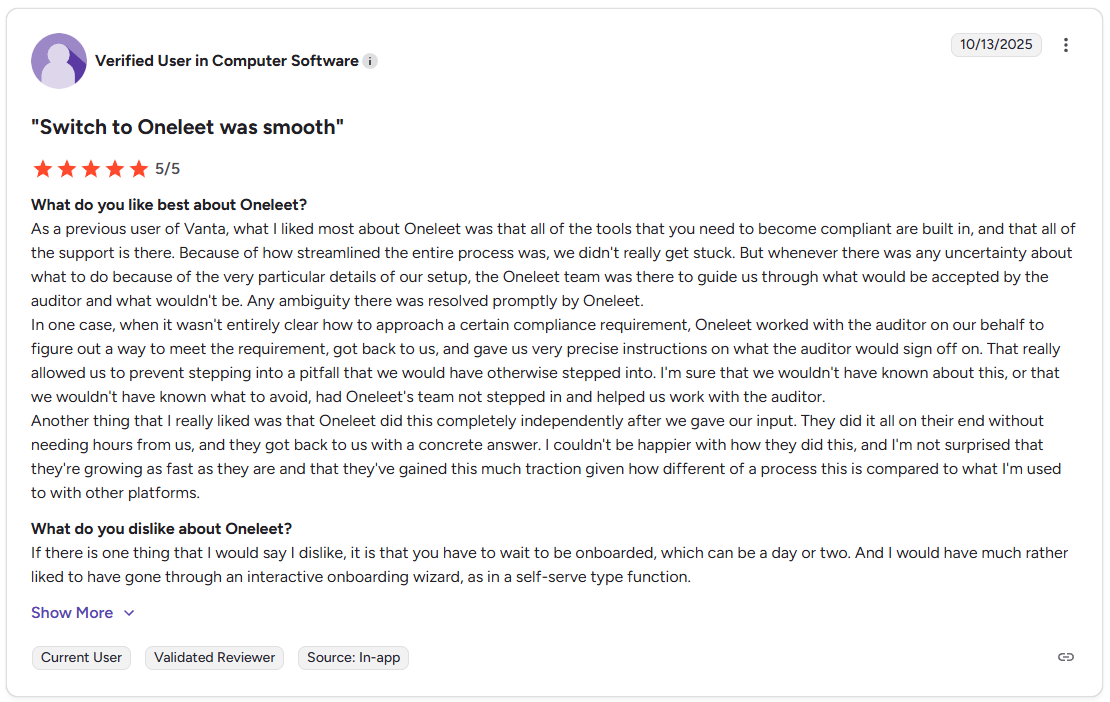
Slower onboarding also comes up. One reviewer said it took 2 -3 weeks to get fully set up. That's fine if you're building long-term security, but tough if a deal's stuck behind a fast SOC 2.
A Pattern Worth Noticing
Across all the Oneleet reviews mentioned here, you would've noticed the same pattern.
If your team has zero compliance experience, Oneleet carries you through. This is why many users describe it as "best for first-timers."
People praise how Oneleet turns fixes into audit evidence and how they are surprised by the number of features offered.
Every platform has tradeoffs. Oneleet reviews suggest that if you care about real security and want expert help, you'll be happy.
But if speed or budget is your priority, read: Oneleet Alternatives.
Now, let's provide a clear summary of what distinguishes Oneleet and discuss its limitations.
The Pros & Cons of Oneleet in 2026
Most compliance platforms offer a similar promise: get your certifications with less pain. What sets Oneleet apart is how it gets there. You don't just plug it in and export a report. It builds real security first.
That philosophy pays off in stronger evidence and fewer gaps. However, it also influences the platform's behaviour. It is slower to start, more manual in certain areas, and stricter in how frameworks are managed. Here's what to anticipate as you begin.
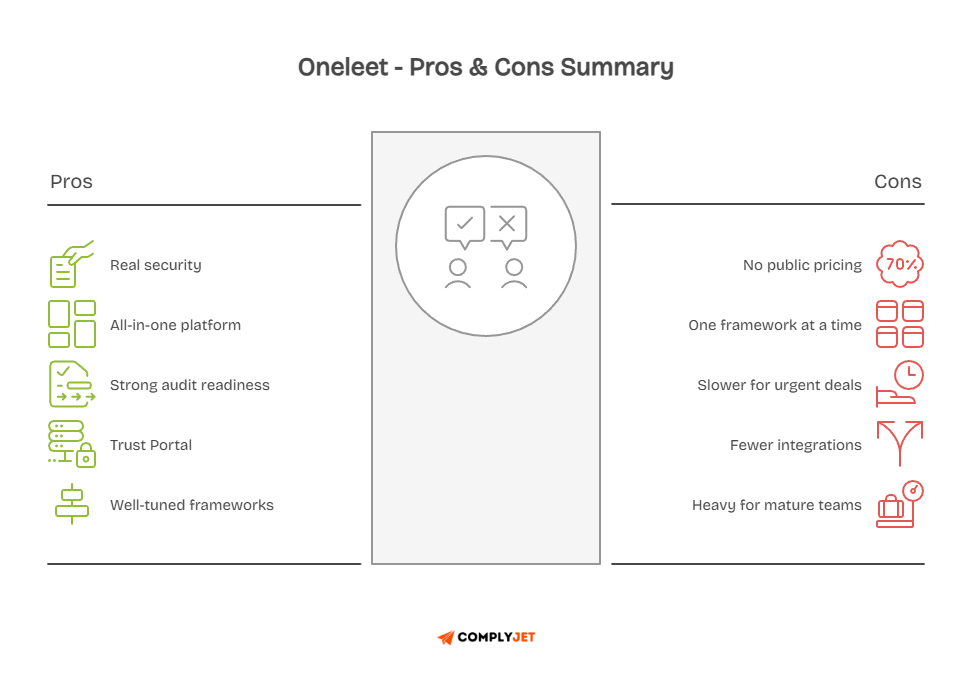
Pros: What Oneleet Gets Right
Oneleet's biggest strength is how seriously it takes security. The platform includes real penetration testers with OSWE credentials. These are rare. You get full security validation.
Another plus: you don't need to buy five tools. Oneleet bundles everything. Evidence tracking, code scans, MDM, pentesting, and risk scoring all live in one dashboard. That's one contract and one learning curve.
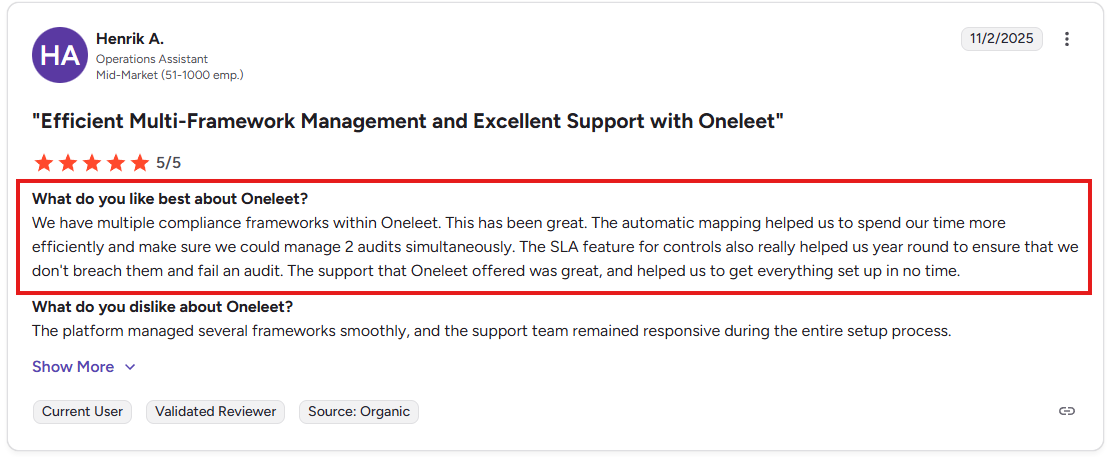
Oneleet's audit prep is hands-on but fast. Most teams become Type 2 audit-ready within 4 - 6 months. You get coaching and guided remediation, which is useful if this is your first compliance cycle.
The Trust Portal helps during sales. It's a live page that shows customers your real-time security posture. No more hunting for last year's PDFs buried in Drive.
It's especially helpful if you're working toward SOC 2, ISO 27001, or HIPAA. The platform is tuned for these use cases. The team knows the control mappings well and offers real-time advice.
Cons: Where Teams Hit Friction
Oneleet doesn't publish pricing. You'll need to book a demo to get a quote. For some teams, this makes early planning harder. It's not always clear what the total cost will be.
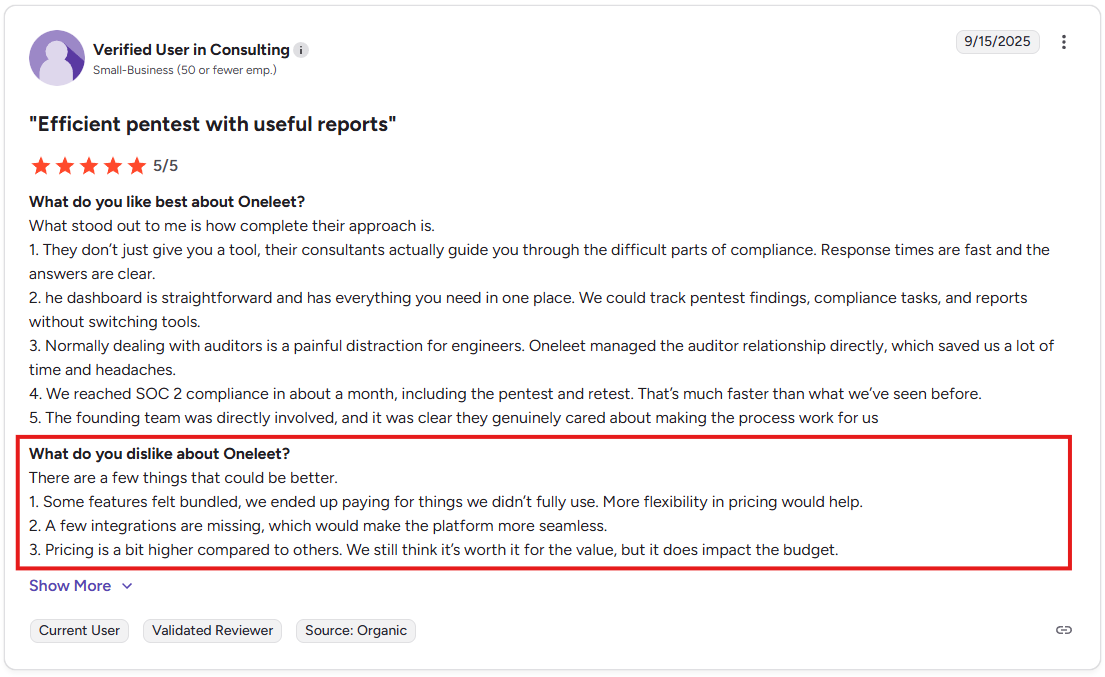
The platform only lets you work on one framework at a time. If you want to do SOC 2 and ISO 27001 in parallel, you'll need to wait. It's a tradeoff: more depth, less flexibility.
It also supports fewer integrations than other platforms. You get the major ones like AWS, GitHub and Okta, but some tools (like HubSpot or BambooHR) need manual evidence uploads.
Ramp-up is slower. If you need an attestation in 3 weeks to close a deal, Oneleet might not fit. The 4 - 6 month process is great for depth, but less ideal for urgent timelines.
The platform can also feel heavy if you already have a GRC team. Some advanced orgs prefer more control and less white-glove support. Oneleet's hand-holding can get in the way for folks who already know what they're doing.
When to Consider ComplyJet Instead
If you're looking for a faster ramp, clearer pricing, or support for multiple frameworks in parallel, Oneleet might not be your best bet.
ComplyJet often fills this gap. It automates the same controls, includes human support, and works well even if you're starting from zero.
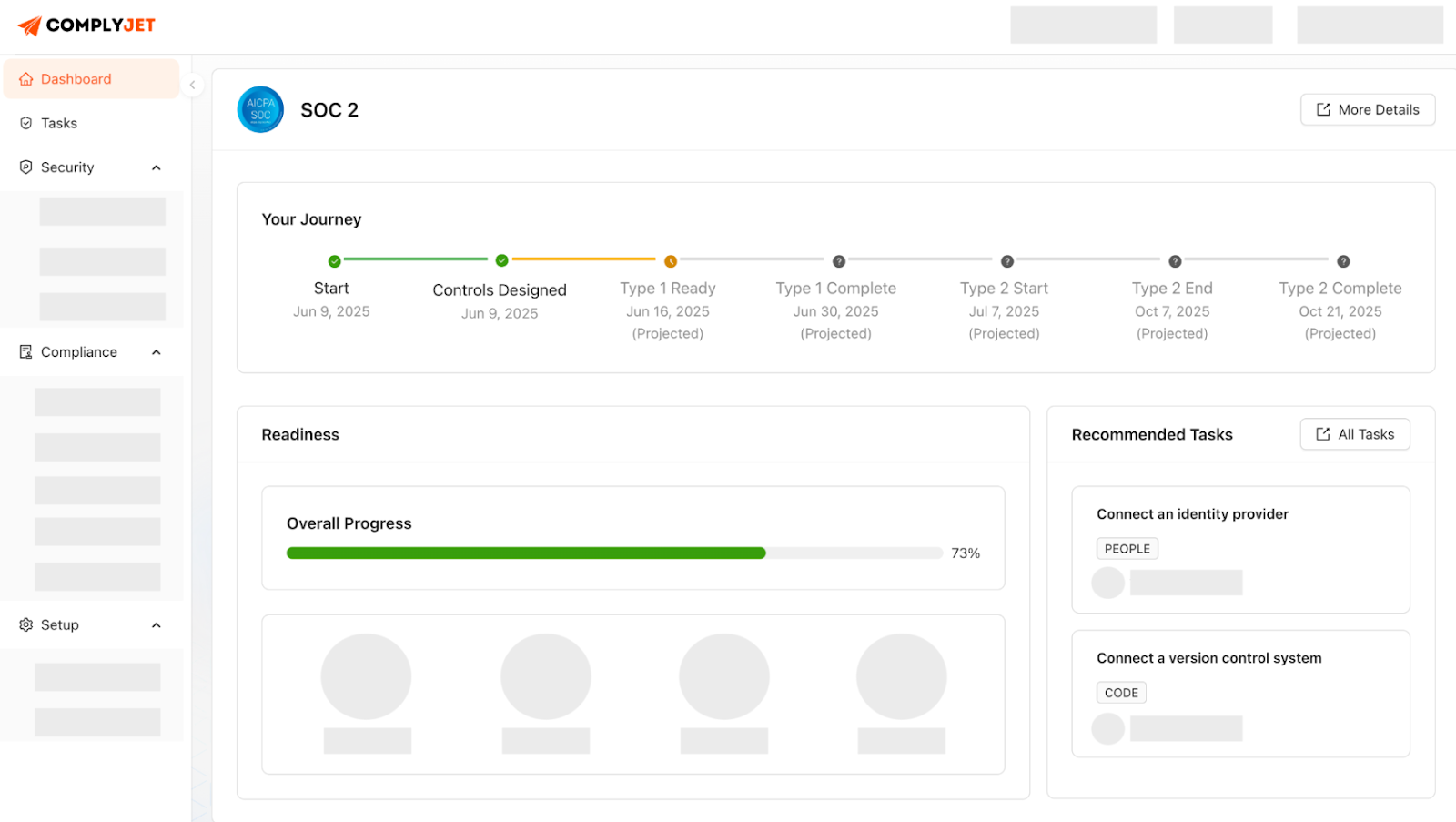
ComplyJet's known for faster Type 1 audits (7-15 days), transparent pricing below $8K, and lean-team workflows. It skips the manual delays while still offering support where it matters. Especially during audits.
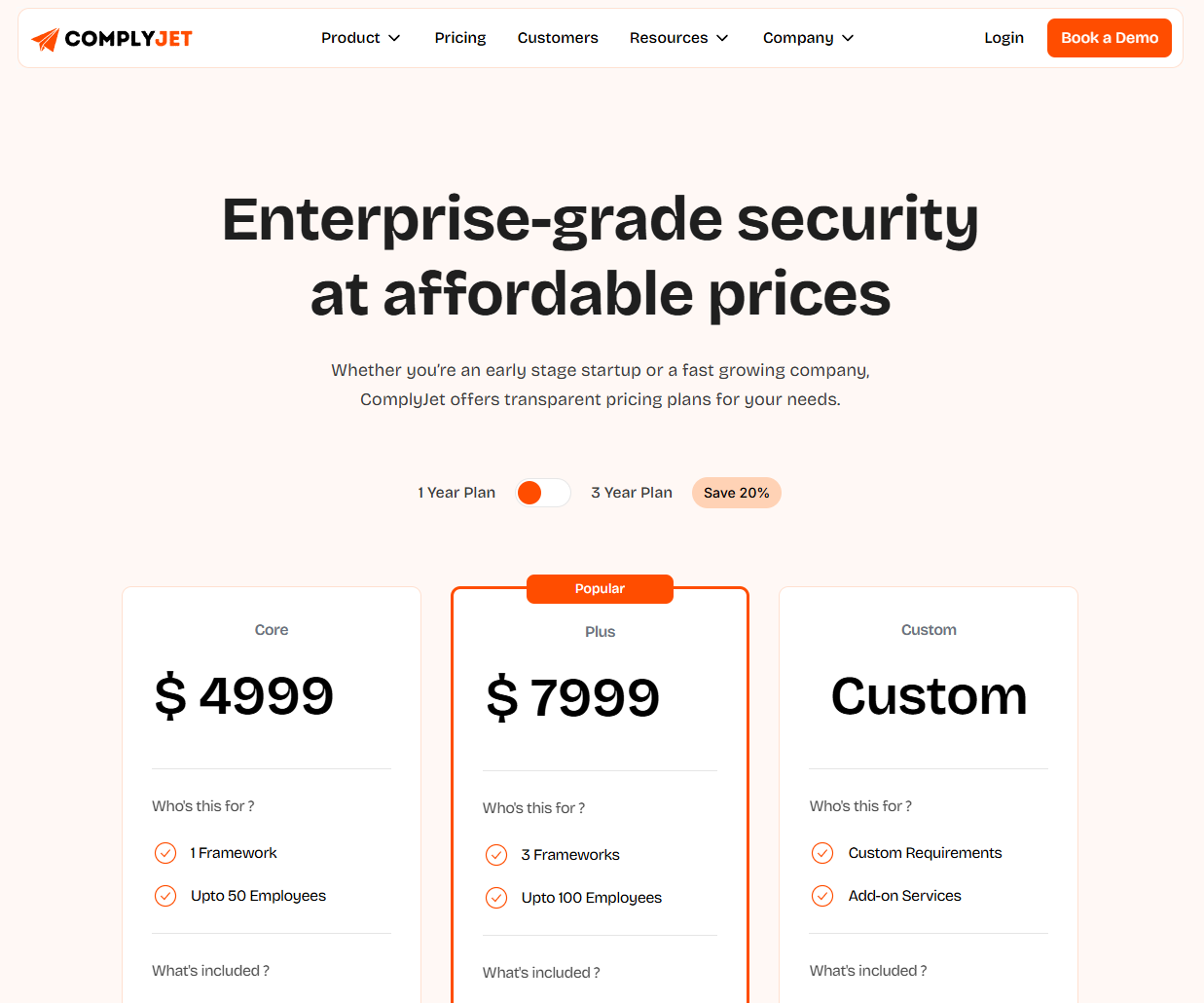
Oneleet is strong when security depth matters most. But if speed, price certainty, or parallel frameworks are your top needs, ComplyJet may be the better fit.
This tradeoff sets up the next section well.
Who Should (and Shouldn't) Choose Oneleet in 2025?
Choosing the right compliance platform depends on more than price. You want a setup that matches your team's maturity, urgency, and risk appetite.
Here's a quick summary to if Oneleet makes sense for you:
Oneleet works best for teams that treat security as infrastructure rather than mere paperwork for your auditor.
Frequently Asked Questions about Oneleet
Does Oneleet include penetration testing?
Yes. Oneleet includes manual penetration testing run by certified experts. This is real testing, not just automated scans when you fix findings. Oneleet retests and logs the result as audit evidence.
This reduces vendor juggling and saves time during audits.
What are the security features of Oneleet?
Oneleet combines several security tools into one platform. These include automated vulnerability scanning, code scanning, attack surface checks, device monitoring, and penetration testing.
Each security fix feeds directly into compliance evidence.
What do customers say about Oneleet support?
Most Oneleet user reviews praise support. Founders highlight fast replies and vCISO guidance. Usually, users say support feels like an extension of their team, not a ticket system.
This is one of Oneleet's strongest points.
Are there hidden costs with Oneleet?
There are no surprise line items, but pricing is custom. You need a demo to get a quote. Some founders see this as a downside when comparing tools quickly.
This shows up often in Oneleet user complaints.
Does Oneleet help with security questionnaires?
Yes. Oneleet helps answer security questionnaires using stored evidence and control data. It reduces repeat work, but it is not fully automated for every format.
It works best once your controls are mature.
Conclusion
When choosing your compliance tool, it's important to clearly identify your specific needs. If you require a quick certificate to finalize a deal, Oneleet may not be the right choice for you, as it is not intended for fast turnarounds or the lowest-cost quotes.
What Oneleet provides is depth: comprehensive security tools, thorough testing, and support from experts who understand your requirements. It serves as a complete security-focused compliance platform.
The differences between Oneleet and other platforms are clear in their approaches to evidence, fixes, and audits. However, there are significant trade-offs to consider.
Oneleet's pricing is not publicly available, the setup process requires considerable effort, and you cannot work on multiple frameworks at the same time. For some startups, these factors can make it difficult to justify the investment, particularly when time or budget constraints are a concern.
This is where platforms like ComplyJet come into play.
We still offer automation, control mapping, and evidence tracking, but they are quicker to set up, more cost-effective, and provide greater flexibility when managing multiple frameworks at the same time.