Related Articles
No items found.
.svg)

Most organizations struggle with ISO 27001 not because of the controls themselves, but because they don’t fully understand the domains behind them. The real challenge is not implementation; it is structure.
There is often confusion between domains, controls, and Annex A. Teams jump into writing policies or applying controls without understanding how everything fits together. As a result, implementation becomes scattered, audits become confusing, and controls end up misaligned with actual risks.
This lack of clarity leads to common problems such as poor implementation, delays in certification, and gaps that show up during audits. Instead of building a strong security system, organizations end up managing disconnected pieces.
This guide is not just another list of ISO 27001 domains. It is a clear and practical breakdown of what these domains actually mean and how they function in real-world implementation.
You will learn what each ISO 27001 domain represents, how domains connect to controls, and how to use them effectively while implementing your ISMS.
Struggling to structure your ISO 27001 implementation? See how teams map domains, controls, and risks in one place. Book a demo and simplify your compliance journey

ISO 27001 domains are structured categories used to organize information security controls within an organization. In simple terms, they act as buckets that group related security practices together so that implementation becomes more logical and manageable.
Instead of dealing with dozens of individual controls in isolation, domains provide a way to structure them into meaningful areas such as access control, asset management, or incident response. This grouping helps organizations understand where each control fits and how different security activities connect with each other.
The primary purpose of domains is to bring clarity and order to the implementation process. ISO 27001 is built on a risk-based approach, and domains make it easier to map risks to specific areas of security. Without this structure, organizations often struggle with scattered implementation and unclear ownership of controls.
It is important to address a common misconception here. Domains are not controls. They are simply categories. Controls are the actual measures taken to reduce risks, while domains provide the framework that organizes those measures.
The concept of domains has also evolved over time. In ISO 27001:2013, controls were grouped into 14 distinct domains. With ISO 27001:2022, this structure has been simplified into four broader control themes: Organizational, People, Physical, and Technological. The 2022 revision reduced the number of controls in Annex A from 114 to 93, reorganizing them into four sections: Organizational (37), People (8), Physical (14), and Technological (34), while adding 11 new controls covering areas such as threat intelligence and information security for cloud services.
ISO 27001 domains are not just theoretical categories. They play a practical role in implementation and ongoing management.
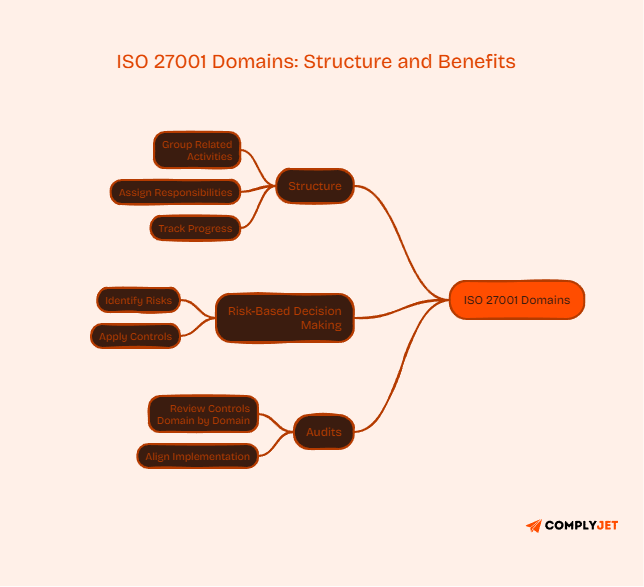
First, they provide structure to your ISMS. Without domains, managing controls becomes chaotic. Domains allow you to group related activities, assign responsibilities, and track progress more effectively.
Second, domains support risk-based decision making. ISO 27001 requires organizations to identify risks and apply appropriate controls. Domains help map these risks to specific areas of security, making the process more organized.
Third, domains simplify audits. Auditors often review controls domain by domain. If your implementation aligns with this structure, audits become smoother and more predictable.
A common mistake is jumping directly into control implementation without understanding domains. This leads to scattered efforts where controls exist but lack coherence. Teams struggle to explain their approach during audits because there is no structured framework behind it.
Understanding domains ensures that your implementation is not just compliant, but also logical and scalable.
ISO 27001:2013 defines 14 domains that together cover all critical aspects of information security within an organization. These domains are designed to ensure a comprehensive approach, addressing not just technical controls but also people, processes, and governance.
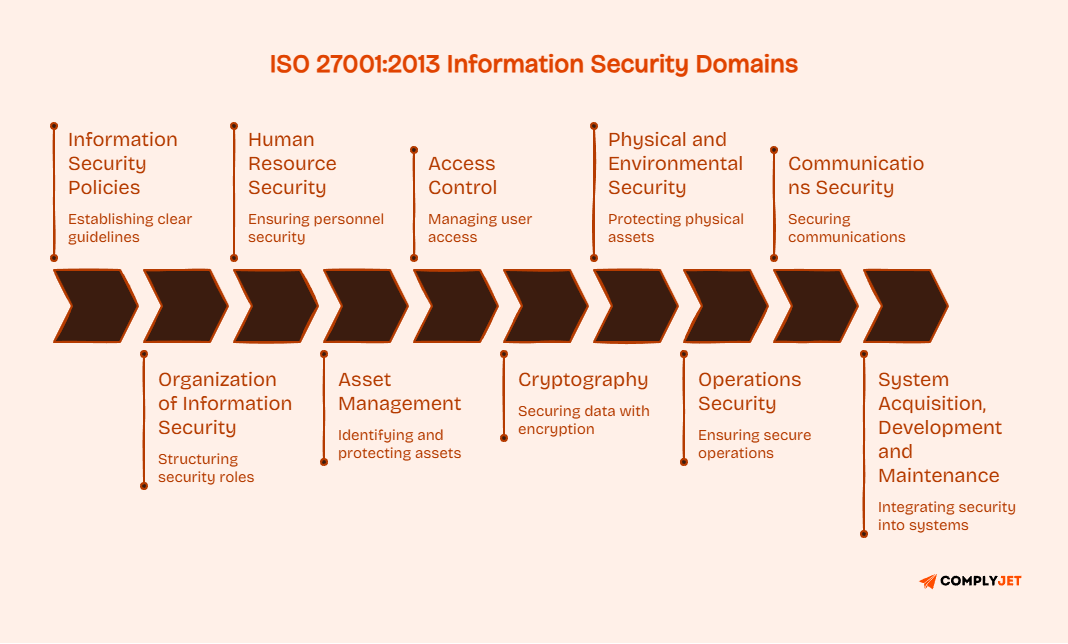
The 14 ISO 27001 domains include:
All these domains are mapped within Annex A of ISO 27001, which provides the full list of controls. Annex A shows how controls are distributed across domains, making it easier to select and implement them based on identified risks.
Understanding this overview sets the foundation for exploring each domain in detail.
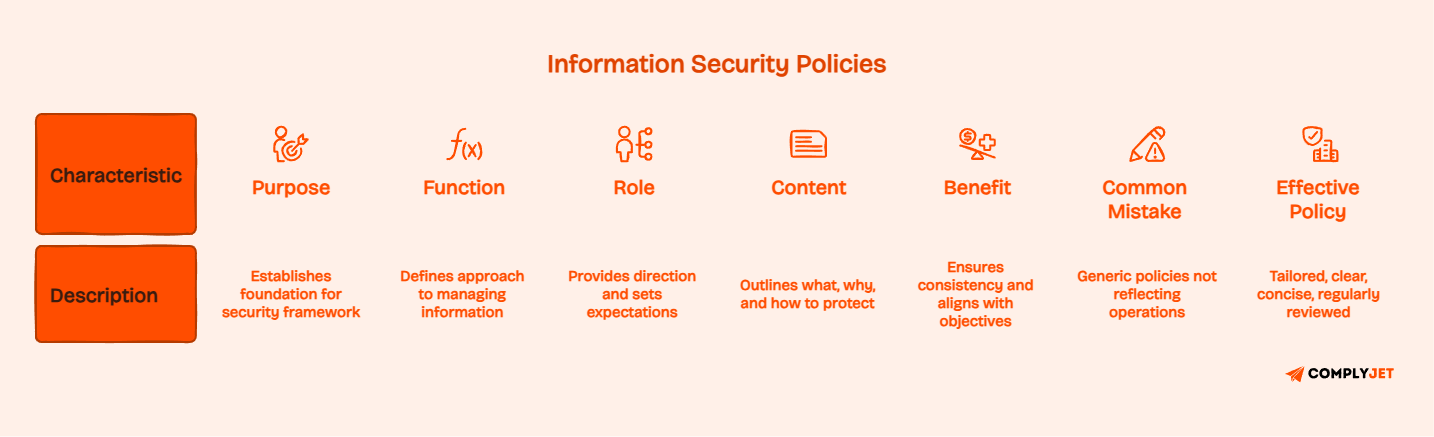
The Information Security Policies domain establishes the foundation for the entire information security framework. It defines the organization’s approach to managing and protecting information.
Policies provide direction and set expectations for employees, management, and stakeholders. They outline what needs to be protected, why it is important, and how it should be handled.
A well-defined policy framework ensures consistency across the organization. It aligns security practices with business objectives and regulatory requirements.
One of the most common mistakes in this domain is creating generic policies that do not reflect actual operations. Many organizations rely on templates without customization, resulting in documents that are disconnected from reality.
Effective policies should be tailored to the organization’s specific needs. They should be clear, concise, and regularly reviewed to ensure they remain relevant.
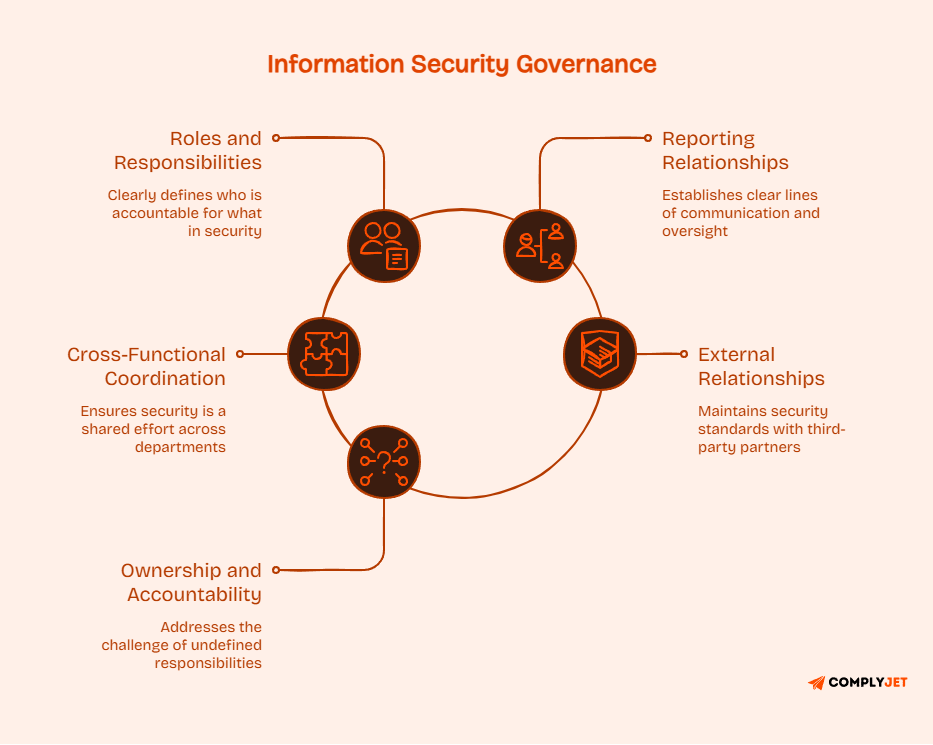
This domain focuses on establishing a governance structure for information security. It defines roles, responsibilities, and reporting relationships.
Security is not the responsibility of a single department. It requires coordination across multiple functions. This domain ensures that responsibilities are clearly defined and accountability is established.
It also addresses external relationships, such as partnerships and outsourcing. Organizations must ensure that security requirements are maintained even when working with third parties.
A common challenge is the lack of clear ownership. When responsibilities are not defined, security tasks are often neglected or inconsistently executed.
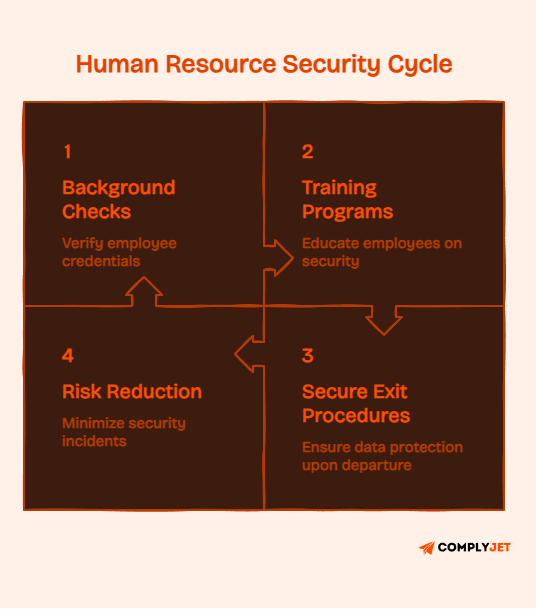
Human Resource Security addresses the risks associated with employees and contractors. It ensures that individuals understand their security responsibilities and act accordingly.
This domain covers three stages: before employment, during employment, and after employment. It includes background checks, training programs, and secure exit procedures.
Human error is one of the leading causes of security incidents. Phishing attacks, weak passwords, and accidental data exposure often originate from employees.
By implementing strong HR security practices, organizations can significantly reduce these risks.

Asset Management ensures that all information assets are identified, classified, and properly protected.
Assets include not only physical devices but also data, software, and intellectual property. Each asset should have a defined owner responsible for its protection.
Classification is a key aspect of this domain. Not all data requires the same level of protection. By classifying information, organizations can apply appropriate controls based on sensitivity.
Failure to maintain an accurate asset inventory is a common issue. Without visibility, organizations cannot effectively manage risks.

Access Control is one of the most critical domains in ISO 27001. It ensures that only authorized individuals can access information and systems.
This domain includes controls for user registration, authentication, authorization, and privilege management. It also addresses password policies and multi-factor authentication.
Poor access control is a major cause of data breaches. Unauthorized access can lead to data theft, system compromise, and regulatory violations.
Organizations must regularly review access rights and ensure that privileges are granted based on business needs.
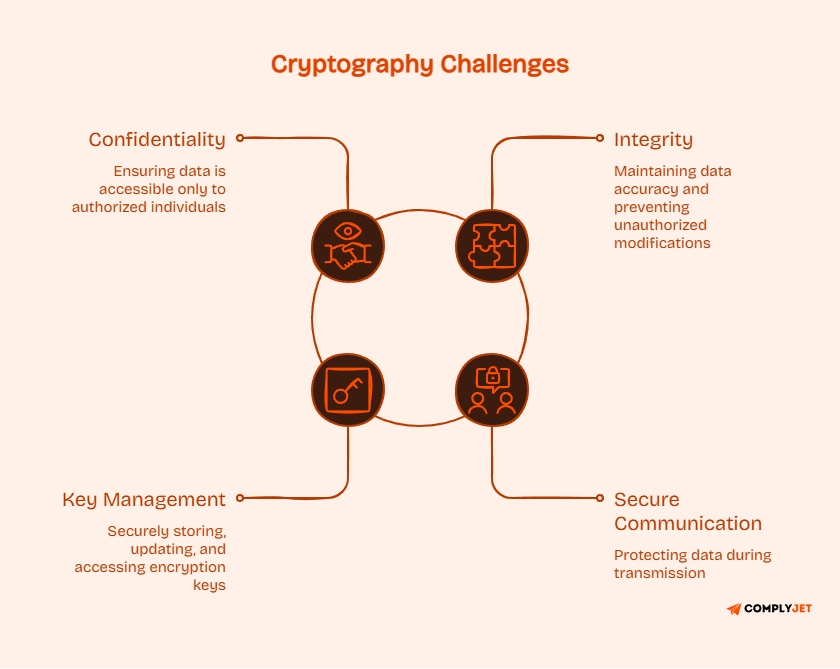
Cryptography focuses on protecting information through encryption. It ensures confidentiality and integrity of data, both at rest and in transit.
This domain includes policies for encryption, key management, and secure communication.
One of the biggest challenges is managing encryption keys. Weak key management practices can undermine even the strongest encryption algorithms.
Organizations must ensure that keys are securely stored, regularly updated, and accessible only to authorized individuals.

This domain addresses physical threats to information assets. It includes controls for secure facilities, equipment protection, and environmental safeguards.
Physical security is often overlooked in favor of digital controls. However, unauthorized physical access can lead to serious security breaches.
Controls in this domain include access restrictions, surveillance systems, and protection against environmental hazards such as fire or flooding.
Operations Security focuses on ensuring that day-to-day activities are conducted securely.
It includes change management, logging, monitoring, and malware protection. These controls help detect and prevent security incidents in real time.
This domain is critical because it deals with operational processes. Weaknesses here can lead to immediate vulnerabilities.
Organizations must ensure that changes are controlled, activities are monitored, and incidents are promptly addressed.
You can also read: ISO 27001 vs 27002: Roles, Differences Explained (2026)
Communications Security ensures that information is protected during transmission, whether it is shared internally within the organization or externally with third parties. This domain focuses on maintaining the confidentiality and integrity of data while it is in transit across networks.
It includes controls for network security, secure data transfer mechanisms, encryption protocols, and communication channel protection. Organizations must ensure that data is not intercepted, altered, or exposed during transmission.
With increasing reliance on digital communication, cloud platforms, and remote work environments, this domain plays a vital role in protecting sensitive information. Weak communication controls can lead to data breaches, making this domain critical for both security and compliance.
The 2025 Verizon DBIR reported that exploitation of vulnerabilities as an initial access vector grew by 34%, with edge devices and VPNs emerging as a particularly targeted communication layer surging nearly eightfold as an entry point, from 3% to 22% of breach cases. This makes robust communications security controls more important than ever.

This domain ensures that security is integrated into system development and maintenance processes from the very beginning, rather than being added as an afterthought. It emphasizes building secure systems by design.
It includes secure coding practices, system testing, code reviews, vulnerability assessments, and patch management. Organizations must also ensure that changes to systems are controlled and documented properly.
Adopting a secure development lifecycle is essential to prevent vulnerabilities from being introduced into systems. Without proper controls, even well-designed systems can become weak points, leading to security incidents and operational risks.
IBM's 2025 research found that 97% of breached organizations that experienced an AI-related security incident lacked proper AI access controls, and 63% had no AI governance policies in place — a stark reminder that emerging technologies must be secured at the development and acquisition stage, not after deployment.
Supplier Relationships focus on managing risks associated with third parties, including vendors, service providers, and outsourcing partners who may have access to sensitive information.
Organizations must ensure that vendors comply with defined security requirements through contracts, agreements, and regular performance reviews. Security expectations should be clearly documented and monitored continuously.
Third-party risks are a growing concern, as many data breaches originate from external partners rather than internal systems. Effective supplier management helps organizations extend their security controls beyond internal boundaries and maintain trust across the supply chain.
This domain ensures that security incidents are identified, reported, and managed effectively to minimize impact and prevent recurrence. It provides a structured approach to handling unexpected security events.
It includes incident detection, reporting mechanisms, response procedures, escalation paths, and recovery planning. Organizations must also document incidents and analyze them to identify root causes.
A strong incident management process helps minimize damage, reduce downtime, and improve overall resilience. It also ensures that lessons learned from incidents are used to strengthen future security measures and prevent similar occurrences.
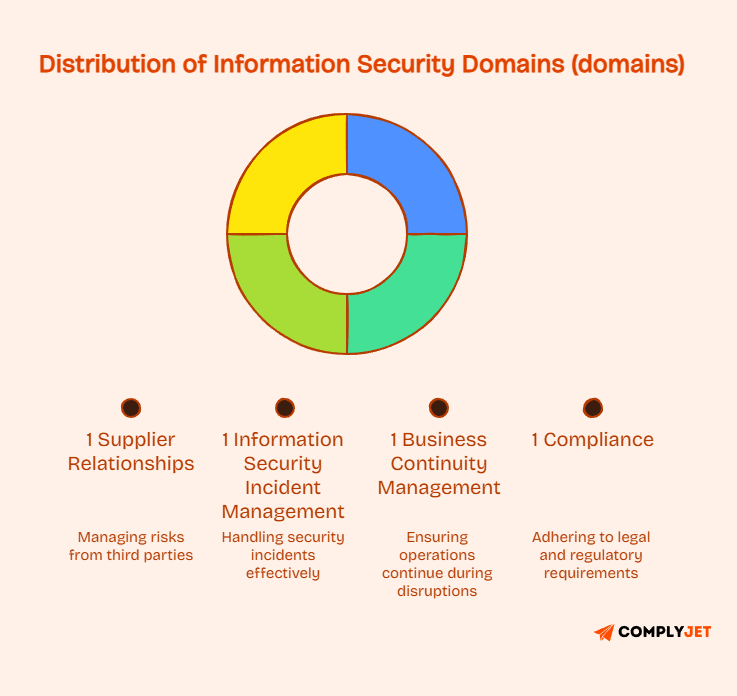
Business Continuity Management ensures that critical business operations can continue during disruptions such as cyberattacks, system failures, or natural disasters. It focuses on maintaining operational resilience.
It includes business impact analysis, disaster recovery planning, backup strategies, and regular testing of recovery procedures. Organizations must identify critical processes and ensure they can be restored within acceptable timeframes.
Being prepared for unexpected events is essential to avoid major operational losses. A strong continuity plan ensures that the organization can recover quickly while minimizing financial and reputational damage.
Compliance ensures that the organization adheres to all relevant legal, regulatory, and contractual requirements related to information security. It helps maintain trust and avoid legal complications.
This domain includes regular audits, internal reviews, policy enforcement, and alignment with data protection laws such as GDPR or other regional regulations. Organizations must also ensure proper documentation and evidence of compliance.
Non-compliance can result in financial penalties, legal consequences, and reputational damage. Maintaining strong compliance practices ensures that security efforts are aligned with external obligations and industry standards.
Still managing ISO 27001 domains manually? Automate policies, controls, and audits in one platform. Start your free trial today
You can also read: 12 Common ISO 27001 Implementation Mistakes to Avoid (2026)
ISO 27001 has evolved significantly with its 2022 update, especially in how controls are structured. One of the most notable changes is the shift from the traditional 14-domain structure in ISO 27001:2013 to a more streamlined framework of 4 broader control themes in ISO 27001:2022.
In the 2013 version, controls were grouped into 14 detailed domains such as Access Control, Asset Management, and Incident Management. While this structure provided depth, it could sometimes feel complex and overwhelming, particularly for organizations new to ISO 27001.
The 2022 revision simplifies this by reorganizing controls into four high-level categories:
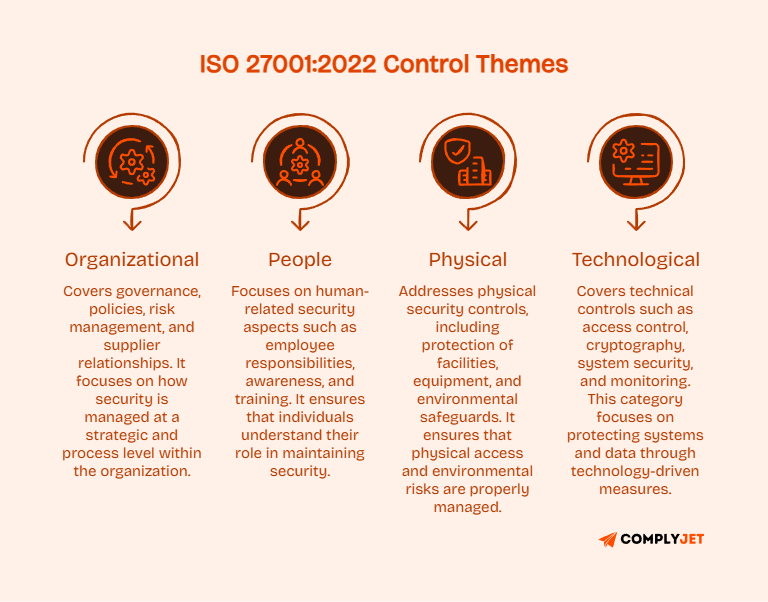
1. Organizational: Covers governance, policies, risk management, and supplier relationships. It focuses on how security is managed at a strategic and process level within the organization.
2. People: Focuses on human-related security aspects such as employee responsibilities, awareness, and training. It ensures that individuals understand their role in maintaining security.
3. Physical: Addresses physical security controls, including protection of facilities, equipment, and environmental safeguards. It ensures that physical access and environmental risks are properly managed.
4. Technological: Covers technical controls such as access control, cryptography, system security, and monitoring. This category focuses on protecting systems and data through technology-driven measures.
However, many organizations still refer to the 14-domain structure for better granularity. Understanding both models allows teams to bridge the gap between traditional implementation approaches and the updated standard, ensuring a smoother transition and stronger compliance.
The title was updated to "Information Security, Cybersecurity and Privacy Protection"; Clauses 4 to 10 underwent major updates; and the number of Annex A controls was reduced from 114 to 93 through consolidation and simplification, while 11 new controls were added covering areas such as threat intelligence, cloud services, and ICT readiness for business continuity.
Using ISO 27001 domains effectively can turn a complex implementation into a structured and manageable process. Instead of treating the standard as a checklist, domains help you approach implementation in a logical, step-by-step manner.
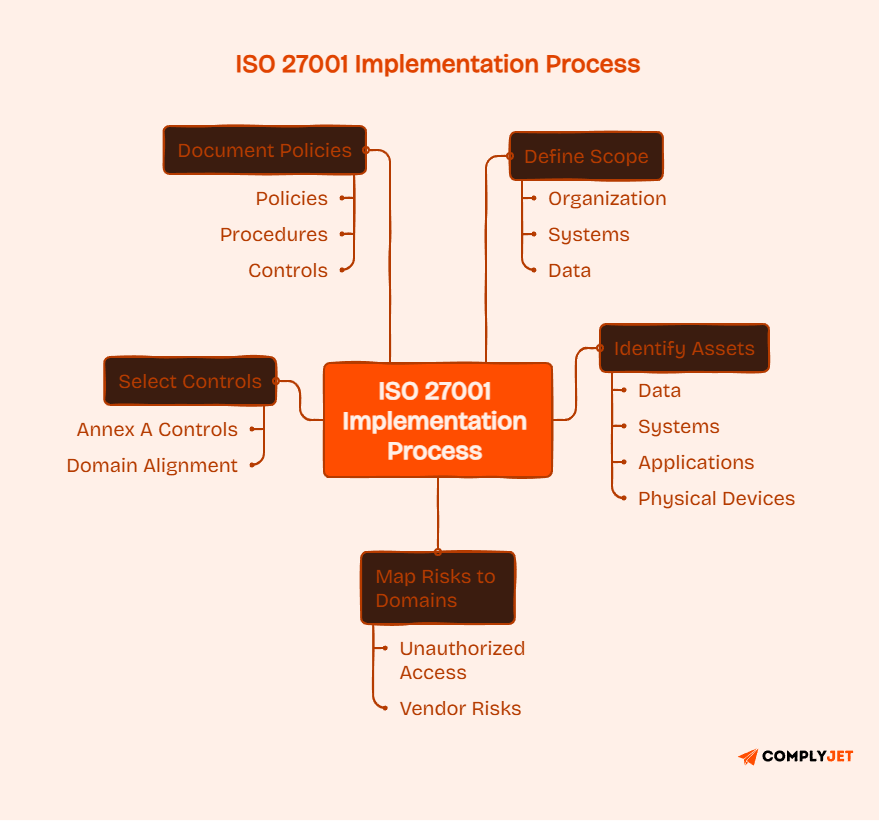
The first step is to clearly define the scope of your Information Security Management System (ISMS). This includes identifying which parts of the organization, systems, and data will be covered. Domains help ensure that your scope is not too broad or too narrow by giving you a structured lens to evaluate all areas of security.
Once the scope is defined, the next step is to identify all information assets within that scope. This includes data, systems, applications, and physical devices. Domains like Asset Management and Access Control help you categorize these assets and understand their importance in the overall security framework.
After identifying assets, conduct a risk assessment to determine potential threats and vulnerabilities. Domains play a key role here by helping you map risks to specific areas. For example, risks related to unauthorized access align with the Access Control domain, while vendor-related risks fall under Supplier Relationships. This structured mapping ensures no critical area is overlooked.
Based on the identified risks, select appropriate controls from Annex A. Domains make this process easier by guiding you toward relevant controls within each category. Instead of randomly selecting controls, you can align them directly with the domains where risks exist, ensuring a more focused and effective implementation.
Finally, document your policies, procedures, and controls in a way that reflects actual operations. Domains help organize this documentation, making it easier to manage and present during audits. Well-structured documentation also improves clarity across teams and ensures consistency in execution.
When domains are used correctly, implementation becomes more aligned with business needs, easier to manage, and more audit-ready.
Don’t let domain confusion slow your certification, Track risks, controls, and audits in real time. Book a demo or start your free trial
Understanding ISO 27001 domains is essential for effective implementation, yet many organizations misinterpret their role, leading to inefficiencies and audit challenges. These mistakes often result in a compliance-driven approach rather than a risk-driven security system.
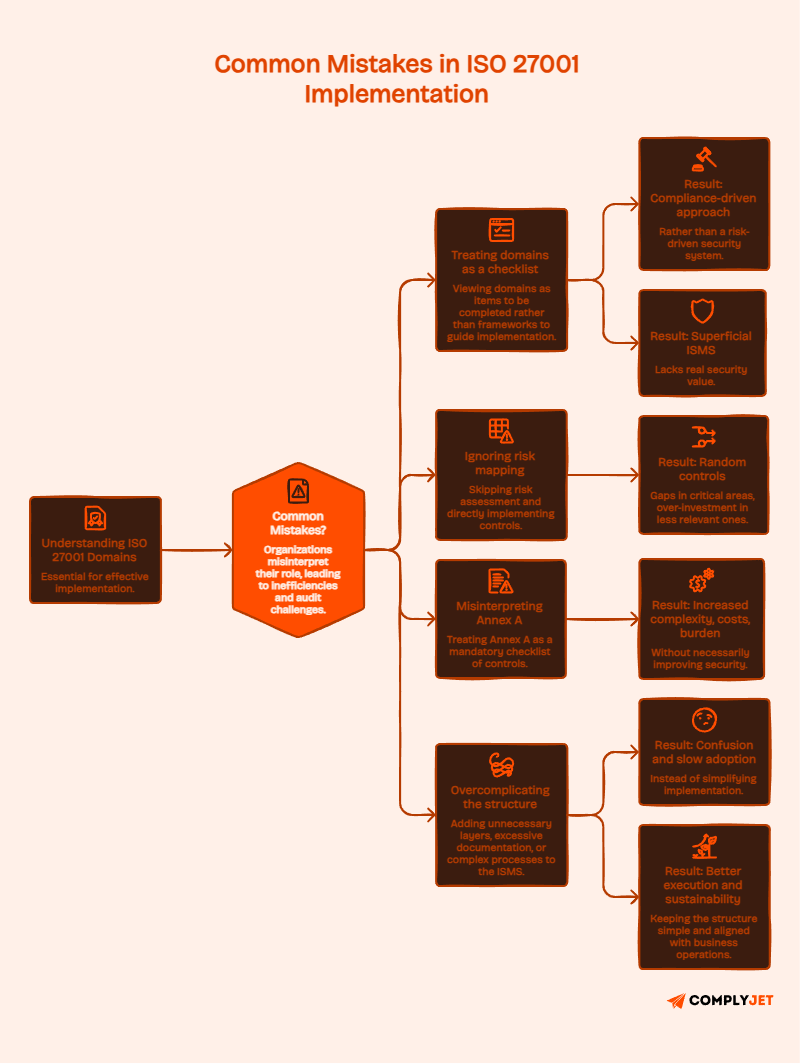
1. Treating domains as a checklist: One of the most common mistakes is viewing domains as items to be completed rather than frameworks to guide implementation. Organizations often try to “cover” each domain without understanding its purpose. This leads to a box-ticking approach where controls are implemented for the sake of compliance rather than actual risk mitigation. As a result, the ISMS becomes superficial and lacks real security value.
2. Ignoring risk mapping: ISO 27001 is fundamentally based on risk assessment, yet many teams skip this step and directly implement controls. Domains are meant to help map risks to specific areas of security. When this mapping is ignored, controls are applied randomly, leading to gaps in critical areas while over-investing in less relevant ones. This weakens the effectiveness of the entire security framework.
3. Misinterpreting Annex A: Another major issue is treating Annex A as a mandatory checklist of controls. In reality, Annex A is a reference framework designed to support control selection based on identified risks. Implementing all controls without justification increases complexity, costs, and operational burden, without necessarily improving security.
4. Overcomplicating the structure: Many organizations over-engineer their ISMS by adding unnecessary layers, excessive documentation, or complex processes. Instead of simplifying implementation, this creates confusion and slows down adoption. ISO 27001 domains are meant to bring clarity, not complexity. Keeping the structure simple and aligned with business operations ensures better execution and long-term sustainability.
Avoiding these mistakes helps organizations use domains as intended as a structured, risk-driven framework that supports effective and scalable information security management.
Mastering ISO 27001 domains is not about memorizing categories but about using them effectively to build a structured, risk-driven security system. Organizations that follow best practices can simplify implementation, improve audit readiness, and create long-term security value.
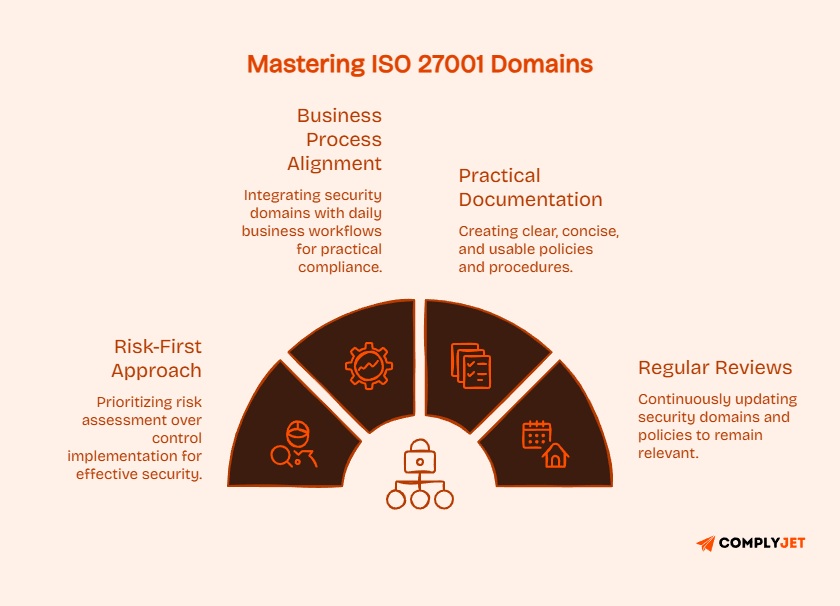
1. Focus on a risk-first approach: The most important practice is to always start with risk assessment rather than controls. ISO 27001 is designed to address real business risks, not to implement controls blindly. Domains should be used to map identified risks to the right areas of security. This ensures that every control you implement has a clear purpose and directly contributes to reducing risk.
2. Align with business processes: Security should not operate in isolation. Domains must be aligned with actual business workflows and operations. For example, access control should reflect how employees use systems daily, and supplier security should match how vendors are managed. When domains are integrated into business processes, implementation becomes more practical, and compliance becomes easier to maintain.
3. Keep documentation practical: Overly complex documentation is one of the biggest barriers to effective ISO 27001 implementation. Policies and procedures should be clear, concise, and relevant to real operations. Domains can help structure documentation logically, but the focus should always be on usability. If employees cannot understand or follow the documentation, it will not be effective.
4. Conduct regular reviews and updates: Information security is not static. Risks evolve, technologies change, and business processes grow. Regular reviews ensure that domains, controls, and policies remain relevant and effective. This includes periodic audits, risk reassessments, and updates to documentation. Continuous improvement is key to maintaining a strong and compliant ISMS.
By following these best practices, organizations can move beyond basic compliance and use ISO 27001 domains as a strategic tool to build a resilient and scalable information security framework.
The ISO 27001 certification market is being shaped by emerging trends including cloud security adoption, AI-enabled monitoring, and integration with cybersecurity management platforms all of which make continuous review of your ISMS essential to remaining effective and compliant.
ISO 27001 domains play a crucial role in simplifying what is often perceived as a complex standard. Instead of viewing ISO 27001 as a long list of requirements, domains provide a structured way to break it down into manageable and meaningful sections. They bring clarity to implementation by organizing controls into logical areas such as access, operations, and compliance.
When organizations truly understand domains, the complexity of ISO 27001 reduces significantly. It becomes easier to map risks, select relevant controls, and build a system that aligns with real business needs. Rather than implementing controls blindly, teams can take a more strategic and focused approach, ensuring that every effort contributes to strengthening security.
Domains also form the foundation of a strong Information Security Management System (ISMS). They ensure that all aspects of security—people, processes, and technology—are covered in a balanced and structured way. This not only improves audit readiness but also creates a system that is sustainable and scalable over time.
Ultimately, ISO 27001 is not just about achieving certification. It is about building a resilient security framework that evolves with your organization. Domains provide the structure needed to make that possible.
Ready to simplify ISO 27001 implementation? Manage domains, controls, and audits in one place. Start your free trial today.
ISO 27001 domains are categories that group related security controls. They help organize implementation and make it easier to manage different aspects of information security.
ISO 27001:2013 has 14 domains. In ISO 27001:2022, controls are reorganized into 4 broader categories instead of domains.
No, domains are categories, while controls are specific actions taken to reduce risks. Domains provide structure; controls provide execution.
Controls were reorganized into four categories: Organizational, People, Physical, and Technological, making the framework simpler and more flexible.
Domains provide structure, help map risks to controls, and make implementation, documentation, and audits more organized and efficient.



© 2026 ComplyJet. All rights reserved.

