Related Articles
No items found.
.svg)

Many ISO 27001 projects fail or get delayed due to avoidable mistakes during implementation. Organizations often underestimate the effort required, leading to poor planning, weak risk assessments, and gaps in execution.
ISO 27001 compliance is essential for strengthening information security, building customer trust, and meeting regulatory expectations. It shows that your organization follows a structured approach to protecting sensitive data. However, success requires more than documentation. It demands proper implementation and continuous improvement.
There are several common pitfalls in ISO 27001 compliance, such as unclear scope, lack of leadership involvement, and misaligned controls. These mistakes can slow down progress and increase costs.
In this guide, you will learn the most common pitfalls and actionable ways to avoid them for a smoother certification journey.
Book a demo to see how you can simplify ISO 27001 compliance and avoid costly mistakes.
ISO 27001 compliance refers to adhering to the international standard for managing information security. Developed by the International Organization for Standardization (ISO), it provides a structured framework for protecting sensitive data and reducing security risks.
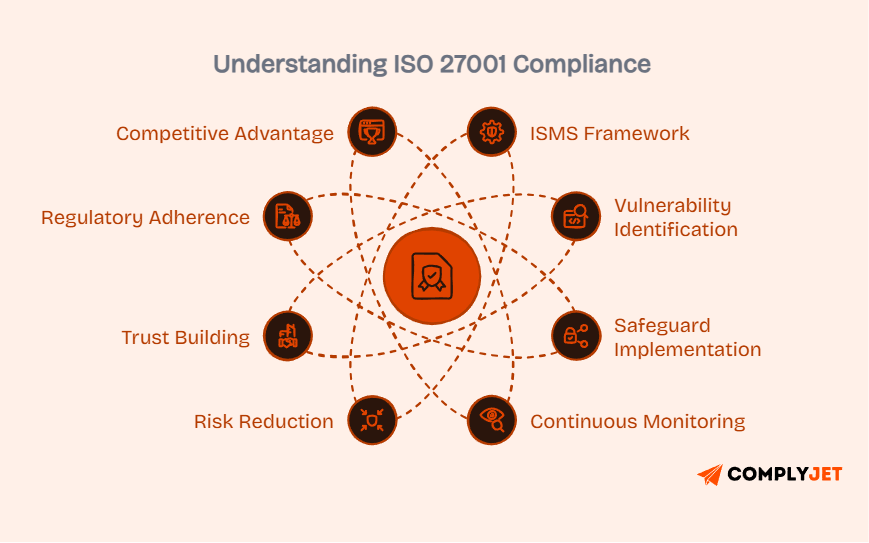
At its core, ISO 27001 is built around an Information Security Management System (ISMS). An ISMS is a systematic approach that includes policies, processes, and controls designed to manage information security risks effectively.
It focuses on identifying vulnerabilities, implementing appropriate safeguards, and continuously monitoring and improving security practices.
Organizations adopt ISO 27001 to strengthen their security posture, build trust with customers, and meet contractual or regulatory requirements.
It is widely used by SaaS companies, fintech firms, healthcare providers, and enterprises that handle sensitive data. Achieving compliance also helps businesses gain a competitive advantage and improve operational efficiency.
ISO 27001 is part of a broader compliance landscape that includes frameworks such as SOC 2, NIST, and GDPR. While each framework has its own focus, ISO 27001 stands out for its comprehensive and risk-based approach to information security management.
You can also read - ISO 27001 vs 27002: Roles, Differences Explained (2026)
Many ISO 27001 implementations fail or face delays due to a mix of strategic and operational gaps. While the framework is well-defined, execution often breaks down because organizations underestimate the level of planning and coordination required.
Some of the most common failure reasons include:
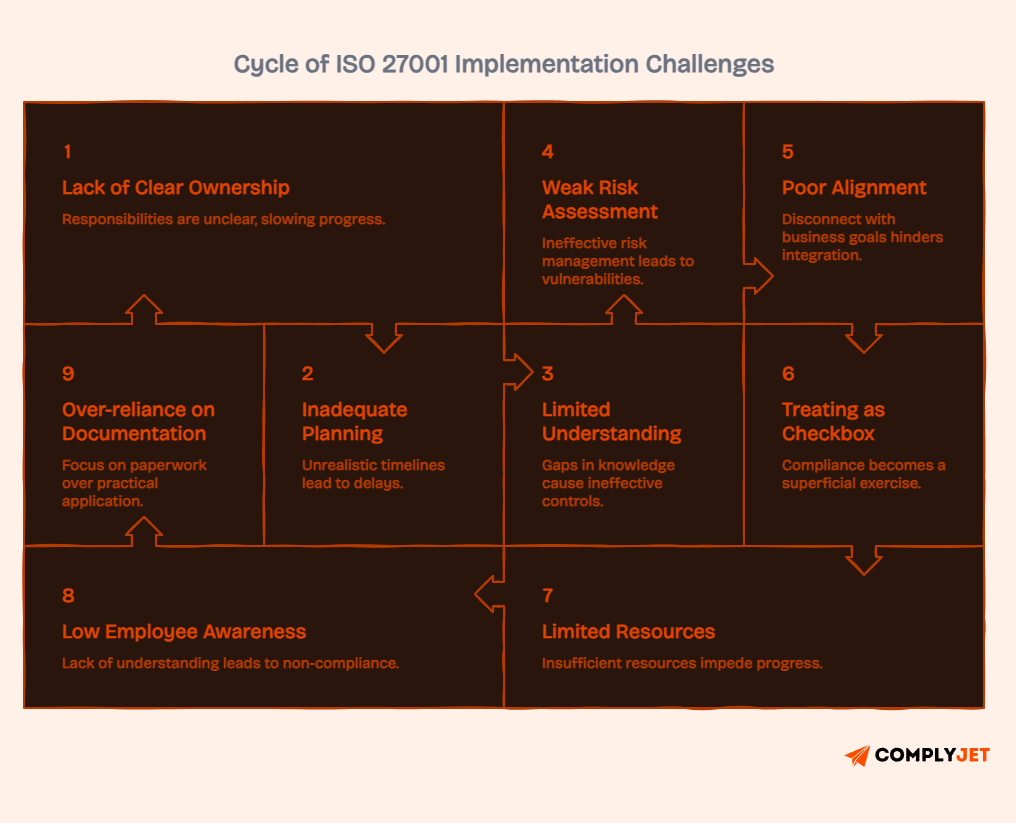
When there is no dedicated leadership, responsibilities become unclear and progress slows down. Many organizations also start implementation without fully understanding the framework, which leads to gaps in risk management and ineffective controls.
Another major issue is treating ISO 27001 as a checkbox exercise rather than a strategic initiative. This creates processes that do not integrate with business operations, making compliance difficult to sustain.
Limited resources, low employee awareness, and over-reliance on documentation further increase the chances of failure. These challenges highlight why many projects struggle before reaching certification.
Understanding these issues sets the stage for identifying the common pitfalls in ISO 27001 compliance and avoiding costly mistakes during implementation.
Achieving ISO 27001 compliance is not just about following a checklist. It requires a structured approach, cross-functional collaboration, and continuous improvement. However, many organizations struggle due to recurring mistakes that delay certification or weaken security outcomes.
Below are the most common pitfalls in ISO 27001 compliance and why they matter.
One of the biggest reasons ISO 27001 projects fail is the absence of strong leadership involvement. Without executive buy-in, compliance initiatives often lack direction, funding, and authority.
Leadership plays a critical role in setting priorities, allocating resources, and driving accountability. When top management is not engaged, teams may treat compliance as a low-priority task, leading to delays and incomplete implementation.
Many organizations approach ISO 27001 as a box-ticking exercise focused only on achieving certification. This mindset leads to superficial compliance, where controls are implemented only for audit purposes rather than real security improvement.
As a result, the organization remains vulnerable to threats despite being “compliant.” ISO 27001 should be treated as a long-term security strategy, not a one-time goal.
Risk assessment is the foundation of ISO 27001, yet it is often poorly executed. Organizations may fail to identify all relevant assets, threats, and vulnerabilities, or they may not prioritize risks effectively.
A weak risk assessment leads to inappropriate controls and leaves critical gaps in security. Without a robust process, the entire ISMS becomes ineffective.
Documentation is a key requirement of ISO 27001, but many organizations either under-document or create documentation that does not reflect actual practices. Missing policies, unclear procedures, and lack of audit evidence can lead to non-conformities during certification audits.
On the other hand, excessive documentation without implementation creates confusion and inefficiency.
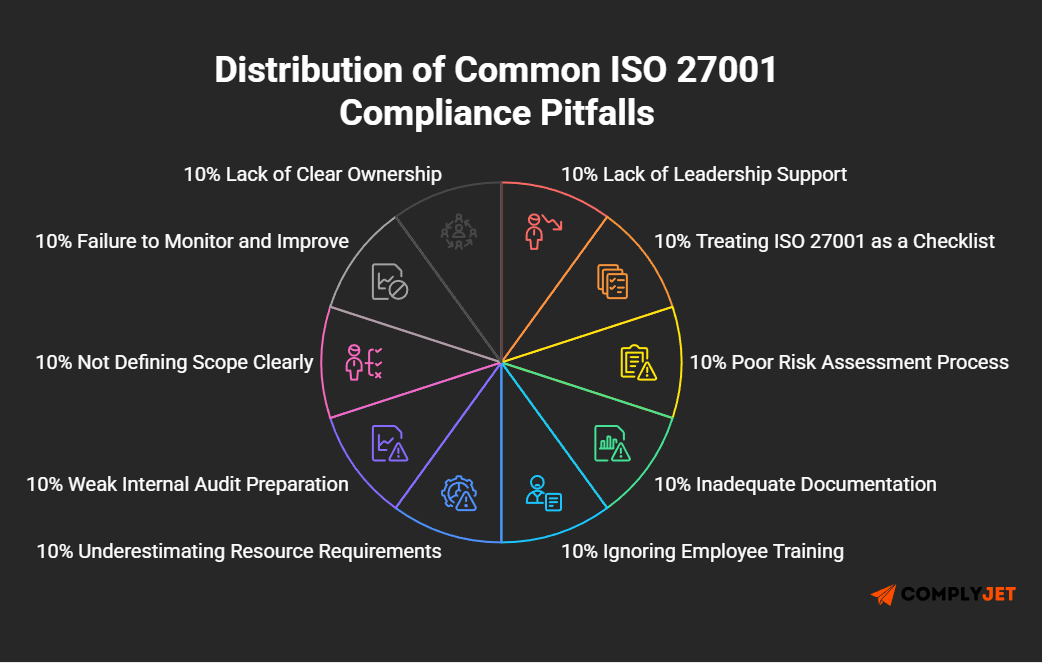
Employees are often the weakest link in information security. Without proper training and awareness programs, staff may unknowingly violate security policies or fall victim to phishing attacks.
ISO 27001 requires organizations to ensure that employees understand their roles in maintaining security. Ignoring this aspect significantly increases the risk of human error and compliance failure.
ISO 27001 implementation requires time, skilled personnel, and the right tools. Many organizations underestimate these requirements and attempt to manage compliance alongside existing workloads.
This leads to delays, burnout, and incomplete implementation. Proper resource planning is essential to ensure that the project stays on track and achieves its objectives.
Internal audits are designed to identify issues before external certification audits. However, many organizations either skip internal audits or treat them as a formality. This results in undetected gaps and major non-conformities during the final audit.
A strong internal audit process helps ensure readiness and improves the chances of successful certification.
Defining the scope of the Information Security Management System is a critical step, yet it is often overlooked. A scope that is too broad increases complexity and resource requirements, while a scope that is too narrow may exclude critical assets and risks.
An unclear scope creates confusion during implementation and audits, leading to inefficiencies and potential failures.
ISO 27001 is based on a continuous improvement model. However, many organizations fail to monitor performance, review controls, or update their ISMS after initial implementation. This leads to outdated practices and increased vulnerability to new threats.
Continuous monitoring and improvement are essential to maintaining compliance and ensuring long-term security.
Without a dedicated compliance owner or team, ISO 27001 initiatives often suffer from fragmented responsibilities. Tasks may be delayed or overlooked, and accountability becomes unclear.
Assigning clear ownership ensures that there is a single point of responsibility for driving the project, coordinating teams, and maintaining compliance over time.
Start your free trial with ComplyJet to track gaps, manage evidence, and move toward ISO 27001 certification with a clear workflow.
While understanding the common pitfalls in ISO 27001 compliance is important, organizations also face practical implementation challenges that directly contribute to these mistakes.
These ISO 27001 implementation challenges often stem from internal limitations, operational complexity, and resistance to change.
Some of the most common challenges include:
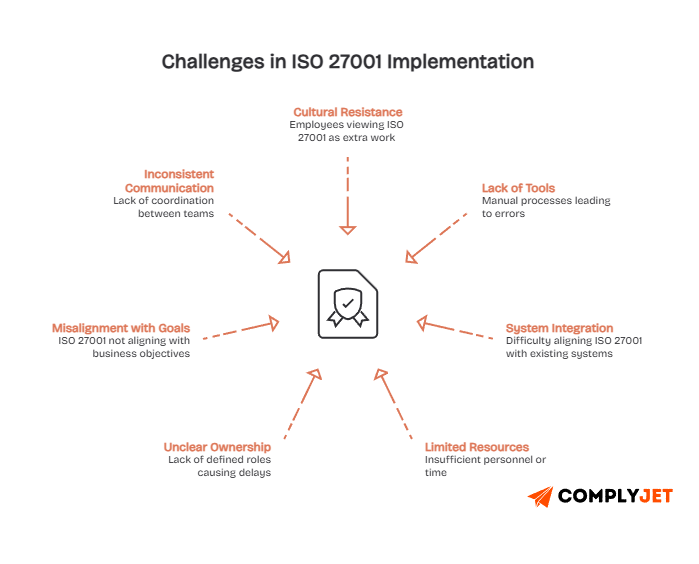
Cultural resistance within teams: Employees may see ISO 27001 as extra work rather than a business priority. This leads to poor adoption of policies and ties directly to pitfalls like ignoring employee training and a lack of leadership support.
Lack of proper tools and automation: Manual processes for risk assessment and documentation increase errors and inefficiencies. This challenge is closely linked to inadequate documentation, weak internal audits, and failure to monitor and improve.
Integration with existing systems: Aligning ISO 27001 controls with current workflows and legacy systems can be difficult. This often results in misaligned controls, unclear scope, and treating compliance as a checklist.
Limited resources and expertise: Organizations may lack skilled personnel or sufficient time to implement controls effectively. This contributes to poor risk assessment, underestimating resource requirements, and weak implementation.
Unclear ownership and accountability: Without defined roles, tasks get delayed or missed. This challenge directly maps to the pitfall of lack of clear ownership and slows down overall progress.
Misalignment with business goals: When ISO 27001 is not aligned with organizational objectives, it becomes a disconnected activity. This reinforces the pitfall of treating compliance as a mere formality rather than a strategic initiative.
Inconsistent communication across teams: Lack of coordination between departments creates confusion and implementation gaps, leading to weak execution and audit issues.
By identifying these ISO 27001 implementation challenges and mapping them to common pitfalls, organizations can take a more proactive and structured approach to achieving successful compliance.
According to Infosecurity Magazine, 95% of data breaches involve human error.
Understanding these ISO 27001 audit mistakes can help ensure a smoother certification process and reduce the risk of non-conformities.
Some of the most common audit failures include:
Tip: A well-prepared organization focuses on continuous documentation, regular internal audits, and employee readiness to avoid common ISO 27001 audit mistakes and ensure a smooth certification process.
Avoiding common pitfalls in ISO 27001 compliance requires a structured and proactive approach. Instead of reacting to issues during audits, organizations should focus on building a strong foundation from the beginning.
The following step-by-step approach can help ensure a smoother and more successful implementation.
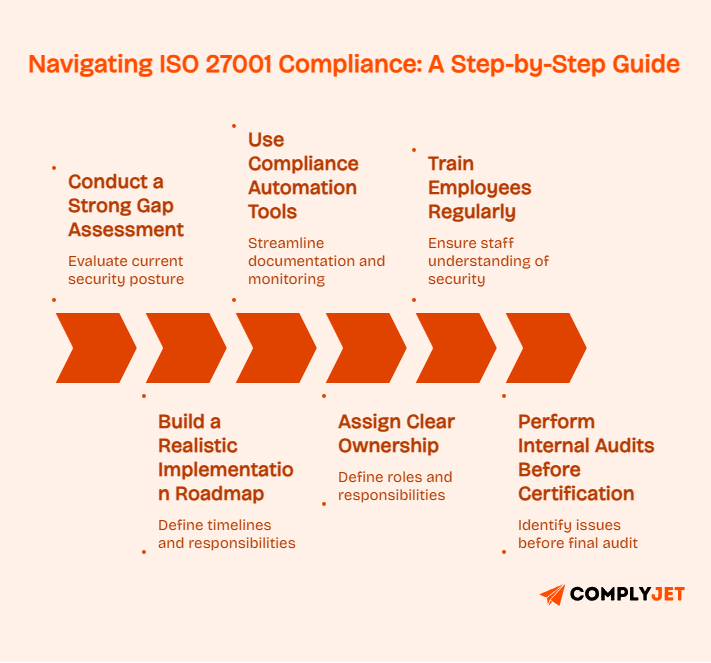
Start by evaluating your current security posture against ISO 27001 requirements. A detailed gap assessment helps identify missing controls, weak processes, and areas that need immediate attention. This step provides clarity on where you stand and what needs to be improved.
Based on the gap assessment, create a clear and achievable roadmap. Define timelines, milestones, and responsibilities for each phase of implementation. Avoid overly aggressive deadlines, as they often lead to rushed work and compliance gaps.
Manual processes can slow down implementation and increase the risk of errors. Using compliance automation tools helps streamline documentation, risk assessments, and monitoring. These tools also improve accuracy and ensure that your organization stays audit-ready at all times.
Define roles and responsibilities across teams to ensure accountability. Assign a dedicated compliance owner or team to manage the ISMS. Clear ownership prevents confusion, ensures consistent progress, and helps maintain long-term compliance.
Employee awareness is critical for effective implementation. Conduct regular training sessions to ensure that staff understand security policies, risks, and their responsibilities. Well-informed employees reduce the chances of human error and strengthen overall security.
Internal audits help identify issues before the final certification audit. Regularly review controls, processes, and documentation to ensure they meet ISO 27001 standards. Addressing gaps early improves audit readiness and reduces the risk of non-conformities.
By following this structured approach, organizations can avoid common ISO 27001 compliance pitfalls, improve efficiency, and achieve certification with greater confidence.
According to deloitte reduction in breach costs with ISO 27001 controls is upto 48%.
Use this quick checklist to assess whether your organization is on the right track or at risk of common ISO 27001 compliance pitfalls:
As of 2024, over 2.1 million organizations worldwide held at least one ISO certification, reflecting a 7.8% year-on-year increase. Approximately 65% of IT service providers obtained ISO 27001 certification by 2024 to mitigate cyber risks.
Avoiding common pitfalls in ISO 27001 compliance offers significant advantages beyond just achieving certification.
Organizations that take a proactive and structured approach can streamline their compliance journey and build long-term value.
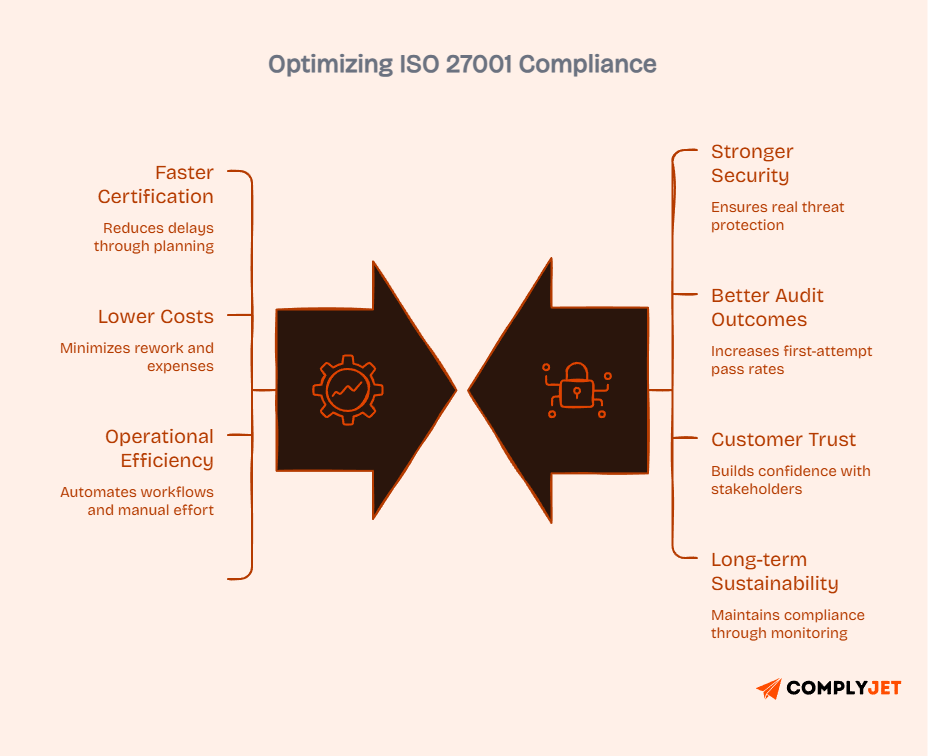
Key benefits include:
Implementing ISO 27001 can be complex, but the right tools and resources can significantly simplify the process and help organizations avoid common pitfalls.
Instead of relying on manual processes, businesses are increasingly adopting specialized solutions to streamline compliance efforts and improve efficiency.
There are several types of tools that support ISO 27001 implementation:
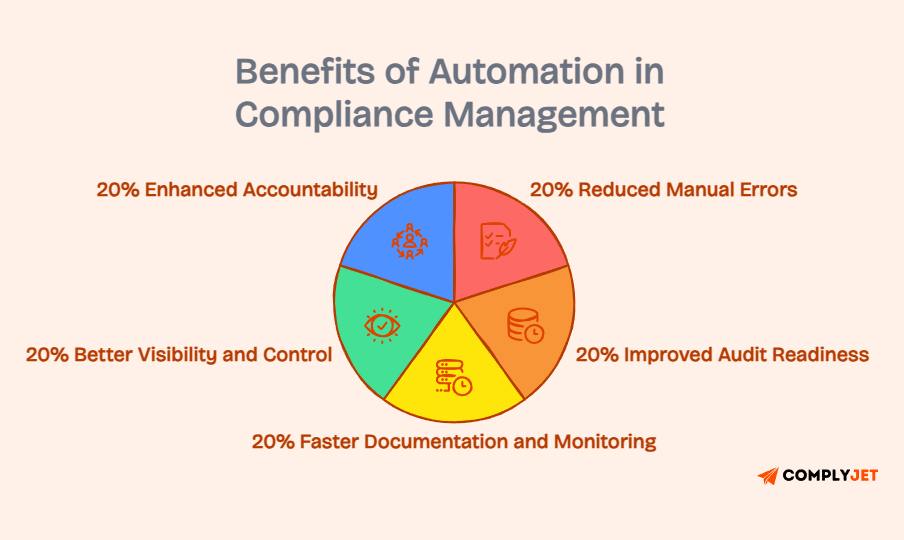
Automation standardizes processes and minimizes human intervention, reducing the chances of mistakes in documentation and risk management.
Tools maintain real-time records, logs, and evidence, making it easier to demonstrate compliance during audits.
Centralized platforms speed up policy creation, updates, and continuous monitoring of controls.
Dashboards and reporting features provide clear insights into compliance status and potential gaps.
Clearly assigned tasks and tracking systems ensure better ownership and responsibility across teams.
Starting ISO 27001 compliance at the right time can significantly impact the success of your implementation. Ideally, organizations should begin early, especially when building systems and processes, rather than waiting until compliance becomes urgent.
For early-stage companies, starting ISO 27001 helps establish strong security foundations from the beginning. It ensures that policies, controls, and risk management practices are built into operations as the business grows.
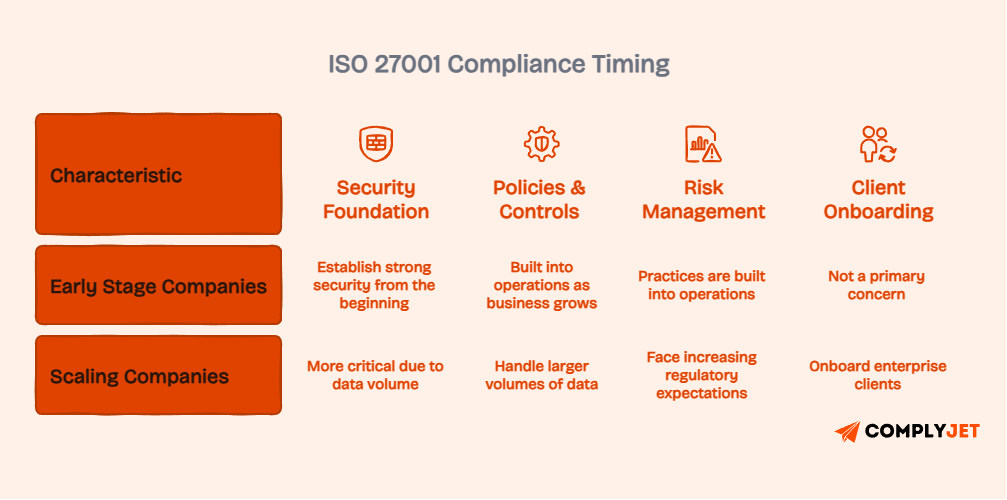
For scaling companies, implementation becomes more critical as they handle larger volumes of data, onboard enterprise clients, and face increasing regulatory expectations.
Some clear signs that your organization is ready to start ISO 27001 compliance include:
Starting early offers several advantages. It reduces the need for major changes later, lowers implementation costs, and shortens certification timelines. In contrast, delaying compliance often leads to rushed efforts, higher costs, and increased risk of failure.
By beginning at the right stage, organizations can avoid many common ISO 27001 compliance pitfalls, such as poor planning, misaligned controls, and last-minute audit issues. Early adoption ensures a smoother, more strategic, and sustainable compliance journey.
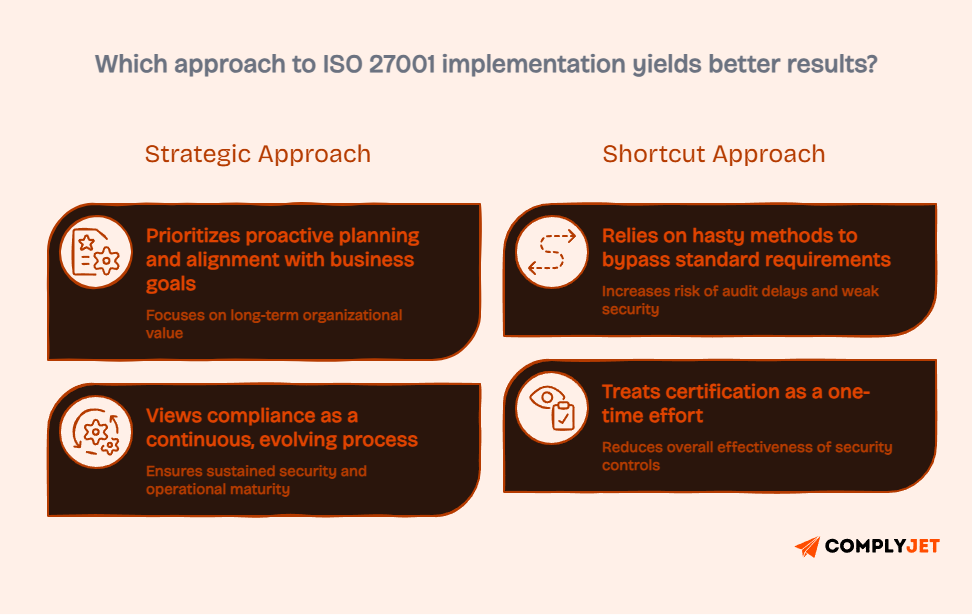
ISO 27001 compliance can deliver strong security and business value when implemented correctly. However, common pitfalls such as lack of leadership support, poor risk assessment, unclear scope, and weak documentation can delay certification and reduce effectiveness.
Success depends on proactive planning, clear ownership, and a solid understanding of ISO 27001 requirements. Organizations that follow a structured approach and align compliance with business goals are more likely to achieve long-term results.
It is important to view ISO 27001 as a continuous process rather than a one-time effort. Focusing on strategy instead of shortcuts ensures stronger security and smoother audits.
Start your ISO 27001 compliance journey the right way with the right tools and approach.
With global certifications nearly doubling in 2024 and data breach costs hitting record highs at $4.88 million per incident, the cost of getting ISO 27001 wrong has never been higher.
CTA: Book a demo to simplify your compliance process and avoid common pitfalls from the start.
The most common mistakes include a lack of leadership support, poor risk assessment, unclear scope definition, inadequate documentation, and ignoring employee training. Many organizations also treat ISO 27001 as a checklist instead of focusing on real security improvements.
ISO 27001 implementation often fails due to poor planning, lack of ownership, and limited understanding of requirements. Misalignment with business goals and insufficient resources also contribute to delays and incomplete implementation.
To prepare effectively, ensure your documentation is complete and up to date, maintain audit-ready evidence such as logs and reports, and conduct regular internal audits. Training employees and running mock audits can also improve readiness.
The implementation timeline typically ranges from 6 to 12 months, depending on the organization's size, existing security maturity, and available resources. Organizations with strong planning and tools can achieve certification faster.
ISO 27001 can be complex, especially for organizations new to compliance. However, with a structured approach, proper planning, and the right tools, it becomes manageable and highly beneficial for long-term security and trust.
© 2026 ComplyJet. All rights reserved.