Related Articles
No items found.
.svg)

If you still picture GRC as a windowless room full of people checking boxes and saying "no" to everything fun, you're missing the biggest gold rush in tech.
By 2026, the landscape has flipped. GRC careers have quietly become the ultimate cheat code for anyone who wants a fast track to the C-suite without spending ten years in a SOC basement. Why? Because we've moved past the era of just 'staying legal.' In a world where AI agents are making million-dollar decisions, and cybercrime is a $12 trillion problem, GRC is the brain of the operation, not just the brakes.
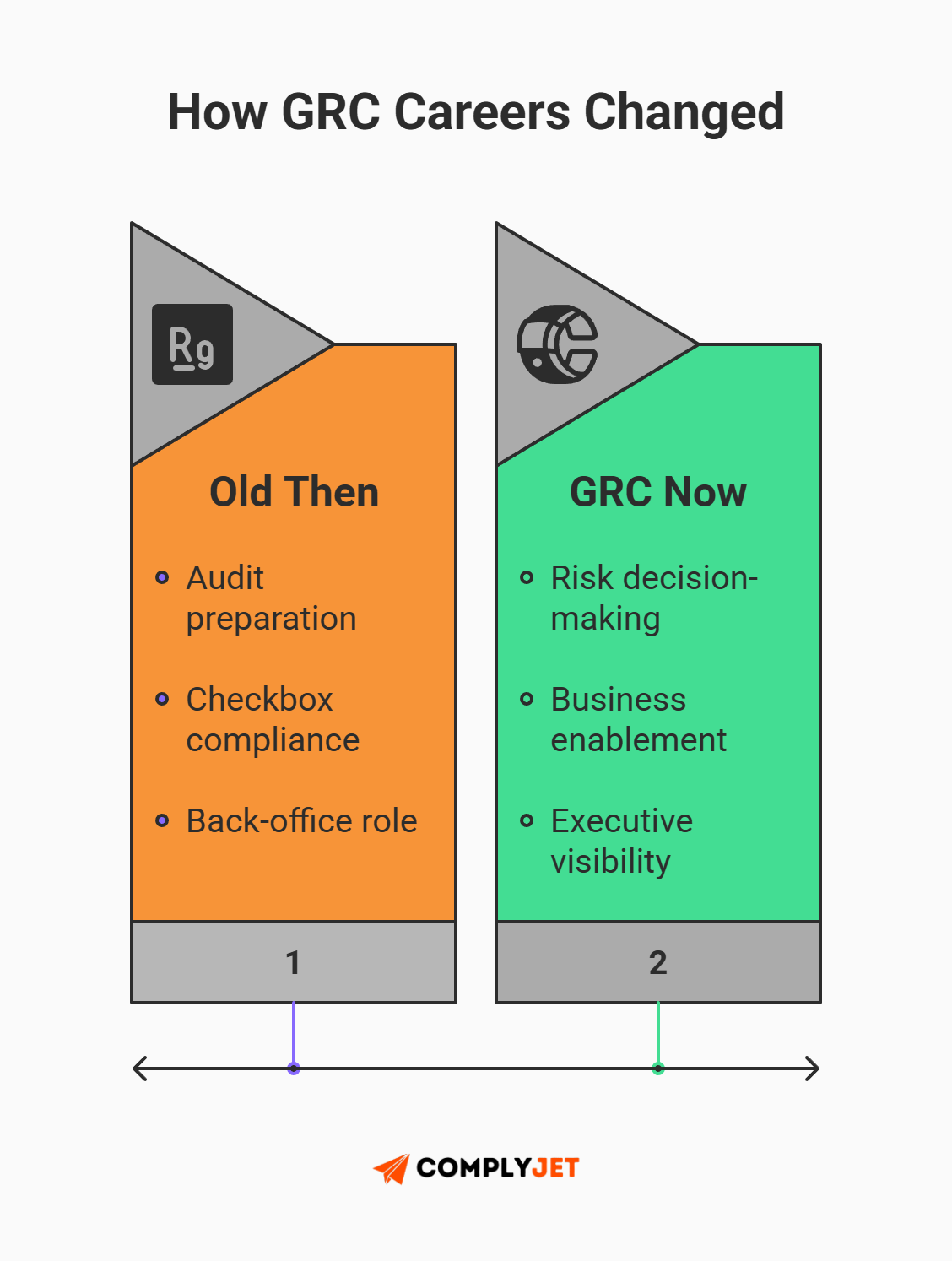
The old administrative layer has been dismantled. It's been replaced by a 'Cyber GRC' model that sits right at the center of the executive agenda. For founders and leaders, the shift is clear: we've moved from 'checkbox compliance' to 'strategic resilience.'
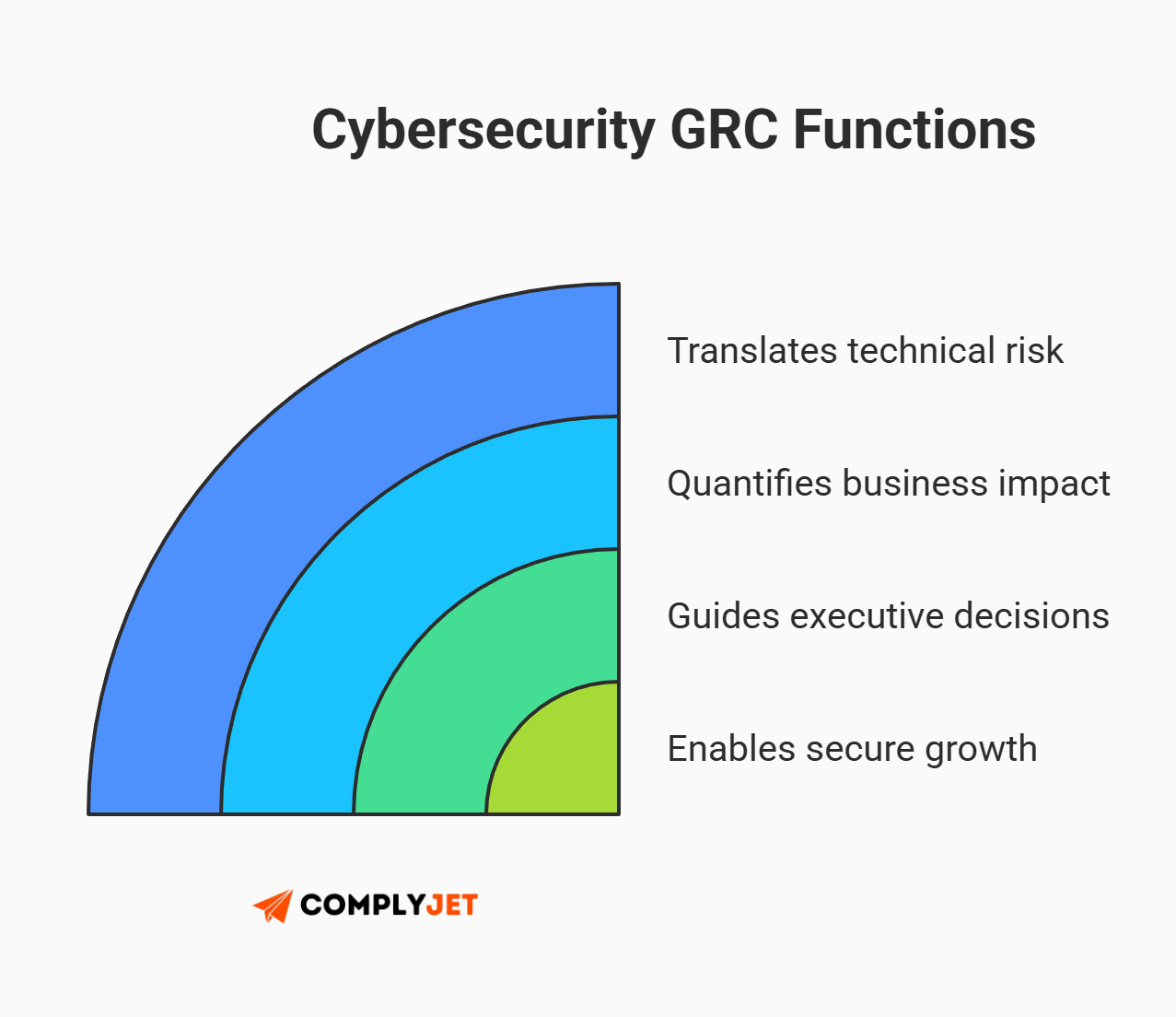
This means GRC careers aren't just linear crawls anymore; they are multidimensional roles for people who can speak fluent "Engineer," "Lawyer," and "CEO" all in the same meeting. Building the right GRC skills in 2026 isn't about memorizing SOC frameworks; it's about becoming a decision-making security expert who helps the business move faster - securely.
The 2026 Reality Check: A GRC Architect designs Zero-Trust frameworks to secure modular digital ecosystems.
Let's talk numbers - because the "compliance tax" of the past has officially turned into the "resilience dividend" of the future.
The valuation of GRC (Governance, Risk, and Compliance) expertise in the US is on an absolute tear. If you look at the data, the demand for GRC hasn't just grown; it has exploded. Search interest for specialized roles like GRC Analysts and Virtual CISOs (vCISOs) has spiked by 1000% over the last five years. This isn't just hype; it's cold, hard math. With reports projecting cybercrime to cost the global economy $12.2 trillion annually by 2031, companies have realized that a single oversight is more expensive than an entire department of experts.
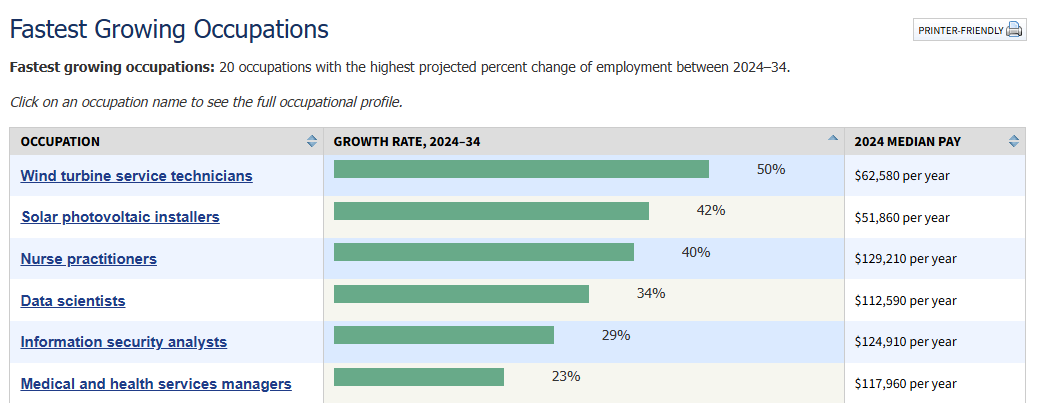
Source: U.S. Bureau of Labor Statistics
Organizations are no longer spending on GRC tools because they have to; they are investing in revenue-protecting and infrastructure-stabilizing roles. In 2026, companies care less about simply "being compliant" and more about being resilient, with proper avenues for risk management.
This shift has turned the traditional GRC career path from a back-office function into a front-line strategic necessity. To ride this wave, you need a specific set of GRC skills - moving beyond manual spreadsheets into the world of AI governance and automated risk quantification.
The following salary ranges reflect the strategic prioritization of GRC leadership across the U.S. market. Note that these figures are general aggregations and often represent "Total Compensation," including bonuses and equity, which have become standard for senior GRC careers.
The Sector Premium: While general tech roles are seeing modest 1.6% to 3.5% increases, GRC careers integrated with AI and data analytics are gaining up to 5.1% annually. Reports show that in high-stakes sectors like U.S. payments and fintech, salary spikes have hit 15% as firms prioritize profitability and stability over unbridled, unsecure expansion.
If you're looking at GRC career paths, you must stop thinking of a vertical ladder and start thinking of a multidimensional map. Because the field now touches everything from cloud infrastructure to legal ethics, your GRC career path depends entirely on whether you want to be the person building the guardrails or the one steering the ship.
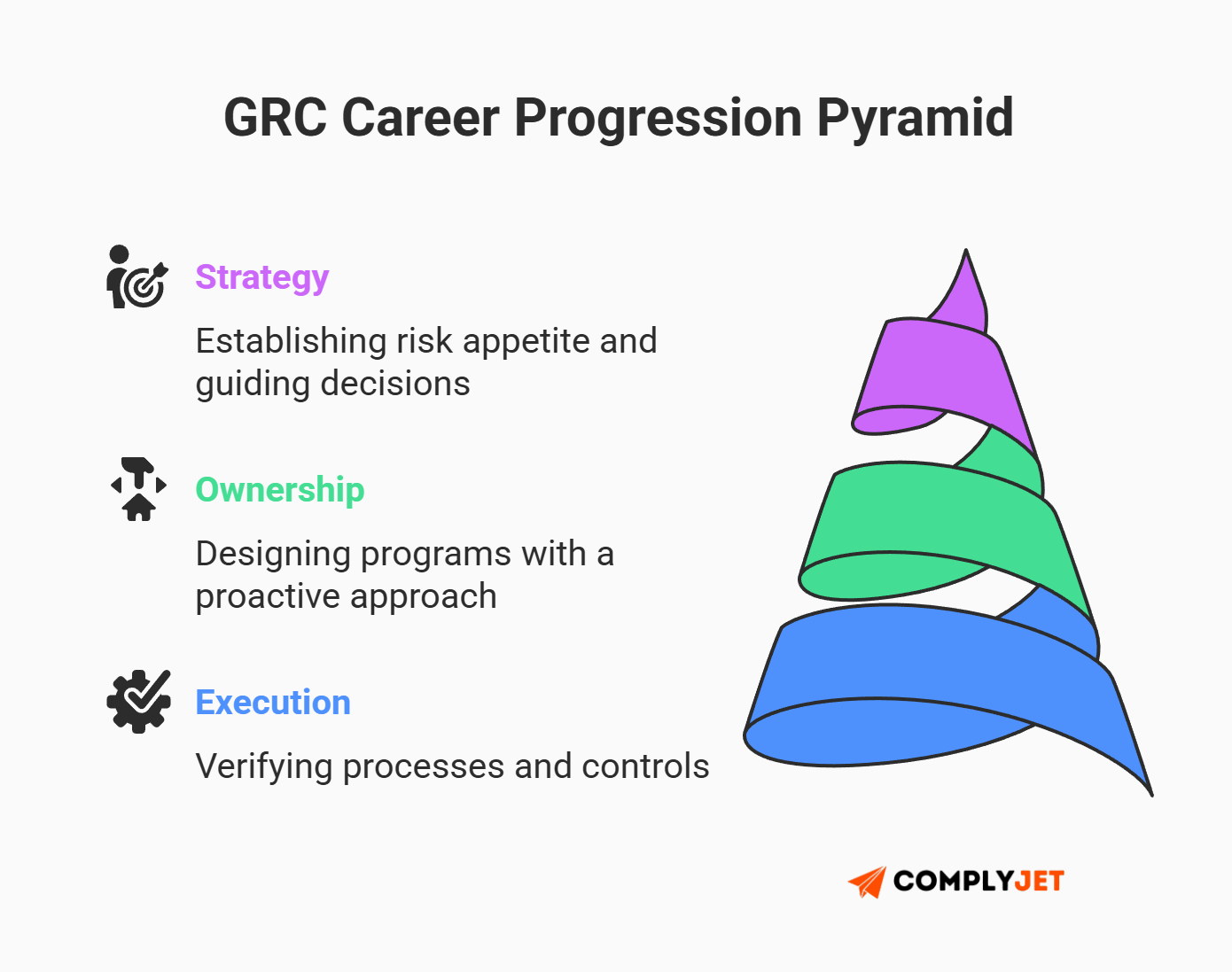
In 2026, GRC professionals live in the messy middle - the essential translators between engineers who speak in code, leadership who speaks in ROI, and auditors who speak in frameworks. Here is how the levels break down today:
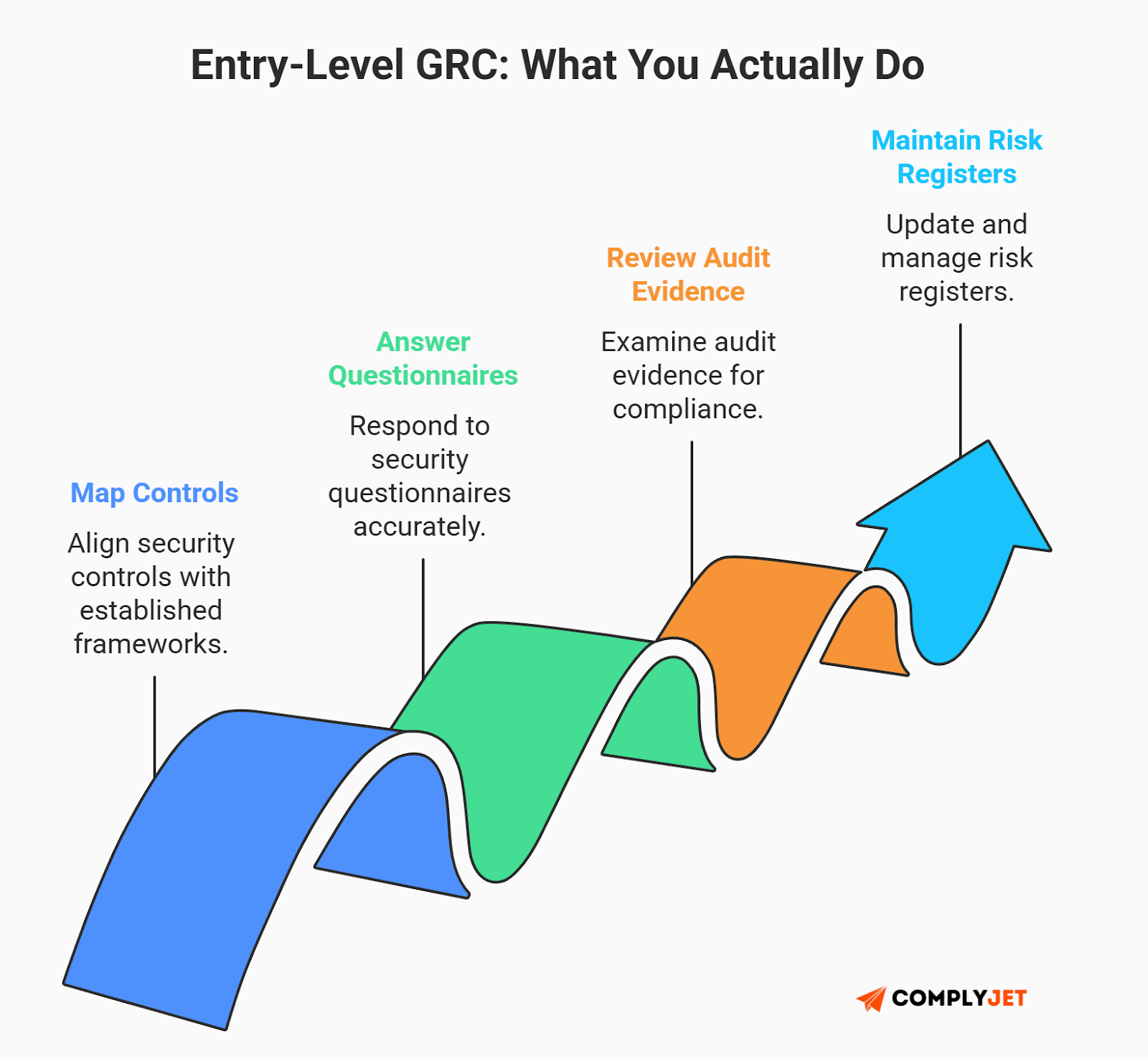
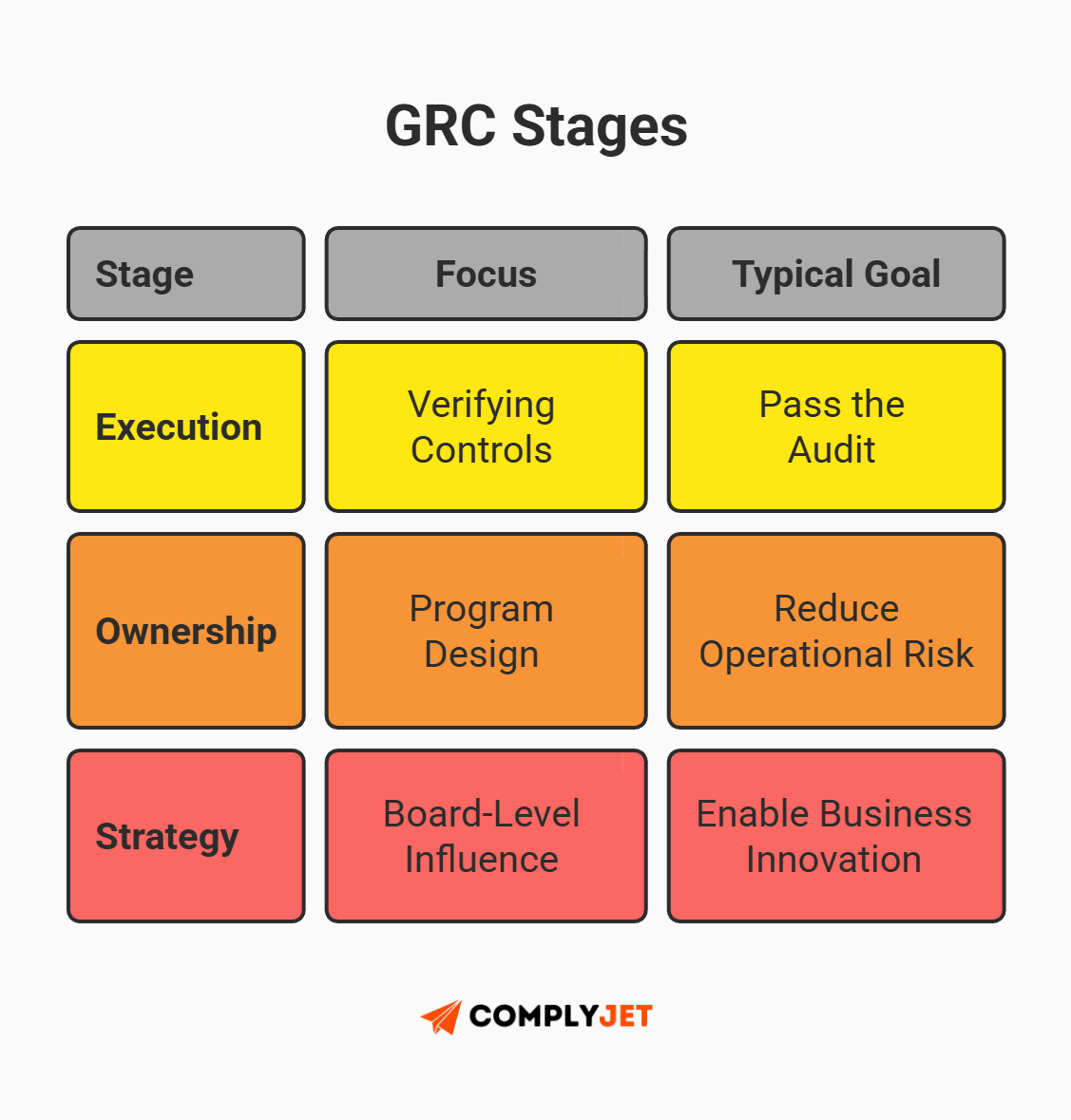
At this stage of a career in GRC, your job is to learn how risk and compliance actually function in the wild. You aren't just filing paperwork; you are verifying that the company's promises match its reality.
When it comes to cybersecurity careers in GRC, mid-level roles move away from checking boxes and toward owning entire programs. This is where specialized AI governance becomes a massive differentiator.
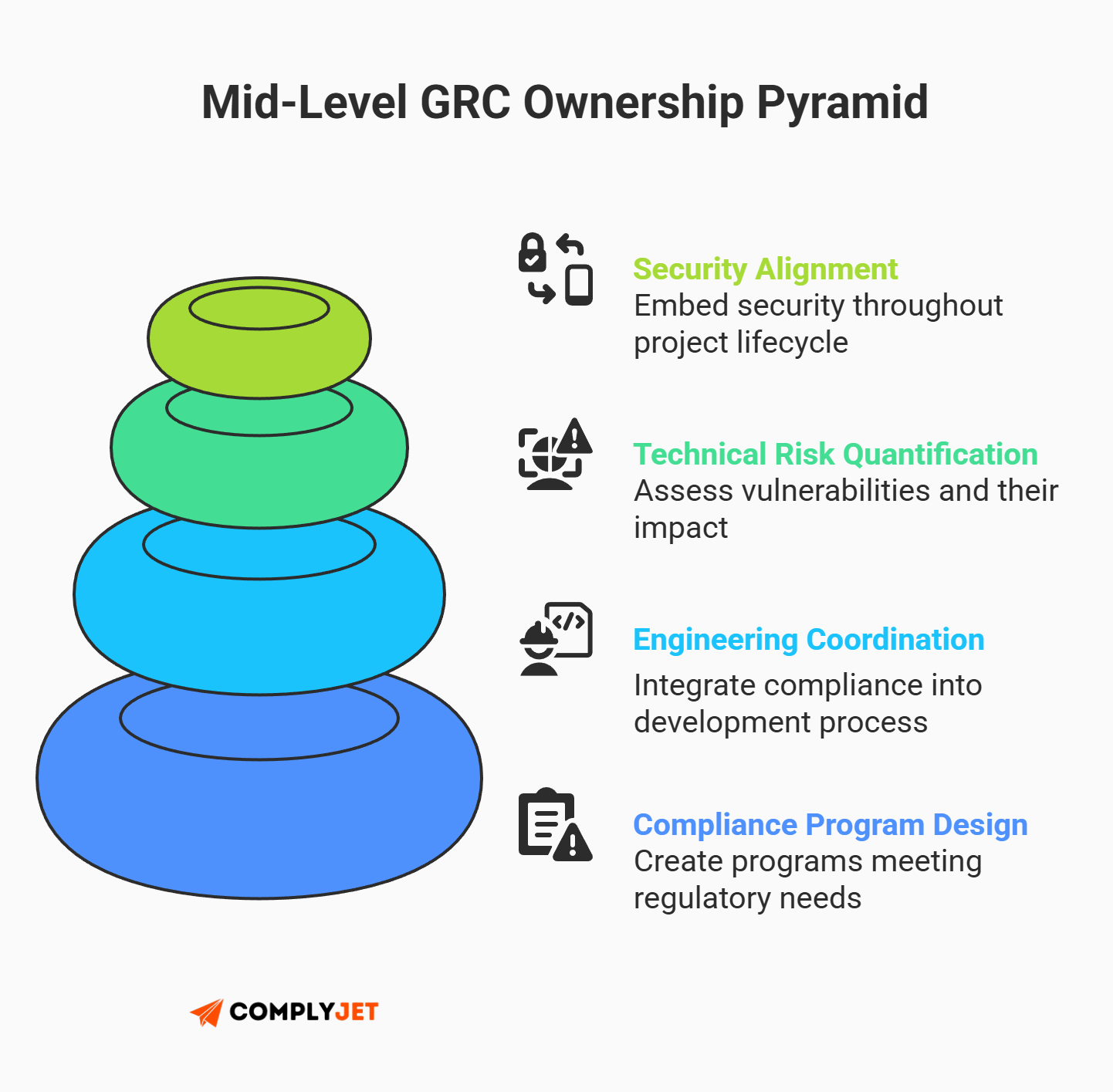
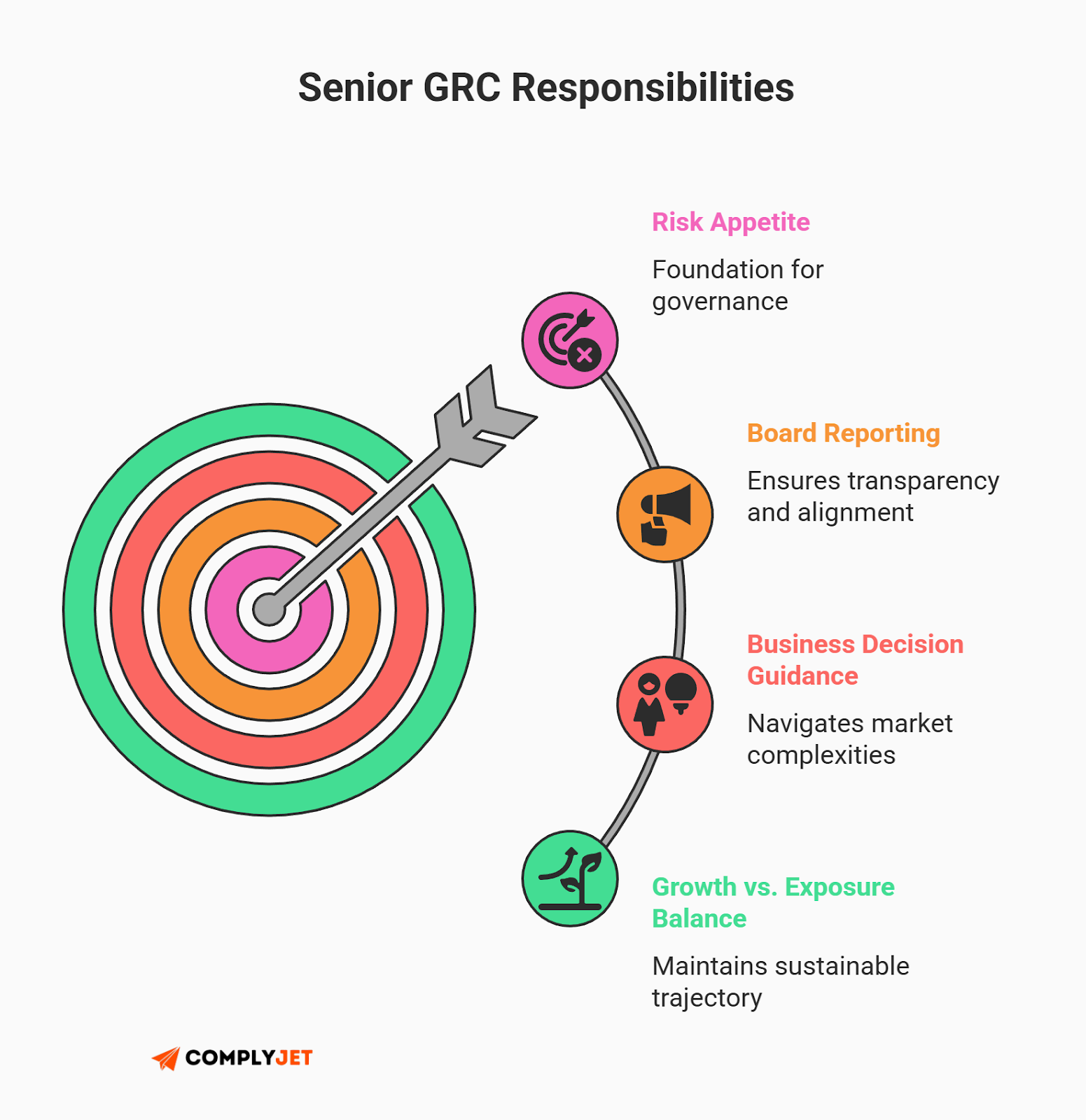
At this level, you've probably stopped managing tasks and started managing influence.
In 2026, it is undeniable that AI has moved beyond just drafting emails; with some reports claiming that by 2030, as much as 49% of all compliance tasks may be handled completely via AI and automation.
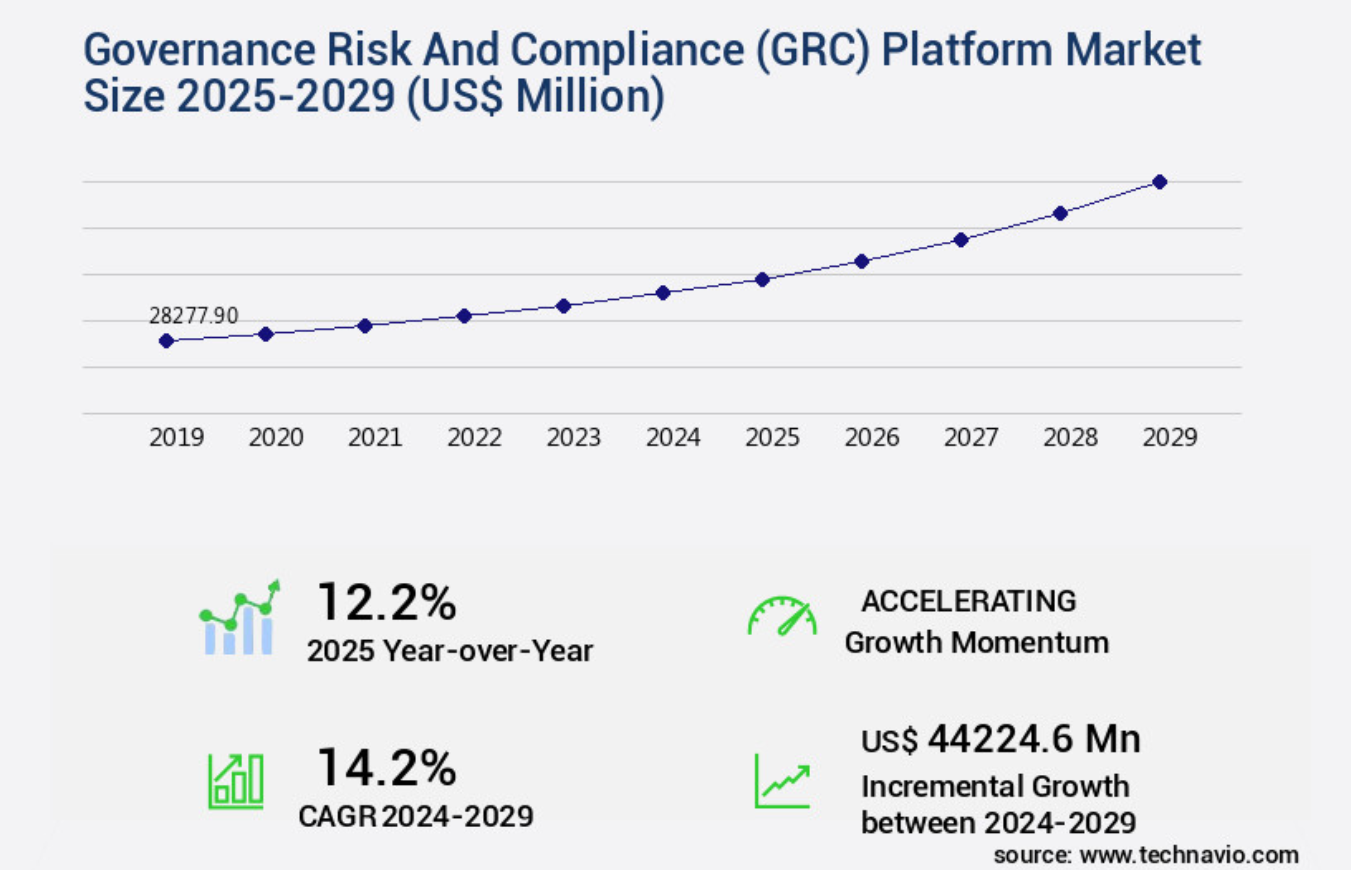
The era of passive generation is over. Agentic AI - autonomous systems that execute multi-step workflows - has arrived. We are no longer governing "output"; we are governing autonomous behavior. With the AI governance market hitting a 36% CAGR, the stakes for enterprise oversight have never been higher.
Curious what 'Agentic GRC' looks like in practice? See how ComplyJet is propelling automation to the forefront of compliance. (Tip: It's a great talking point for your next interview).
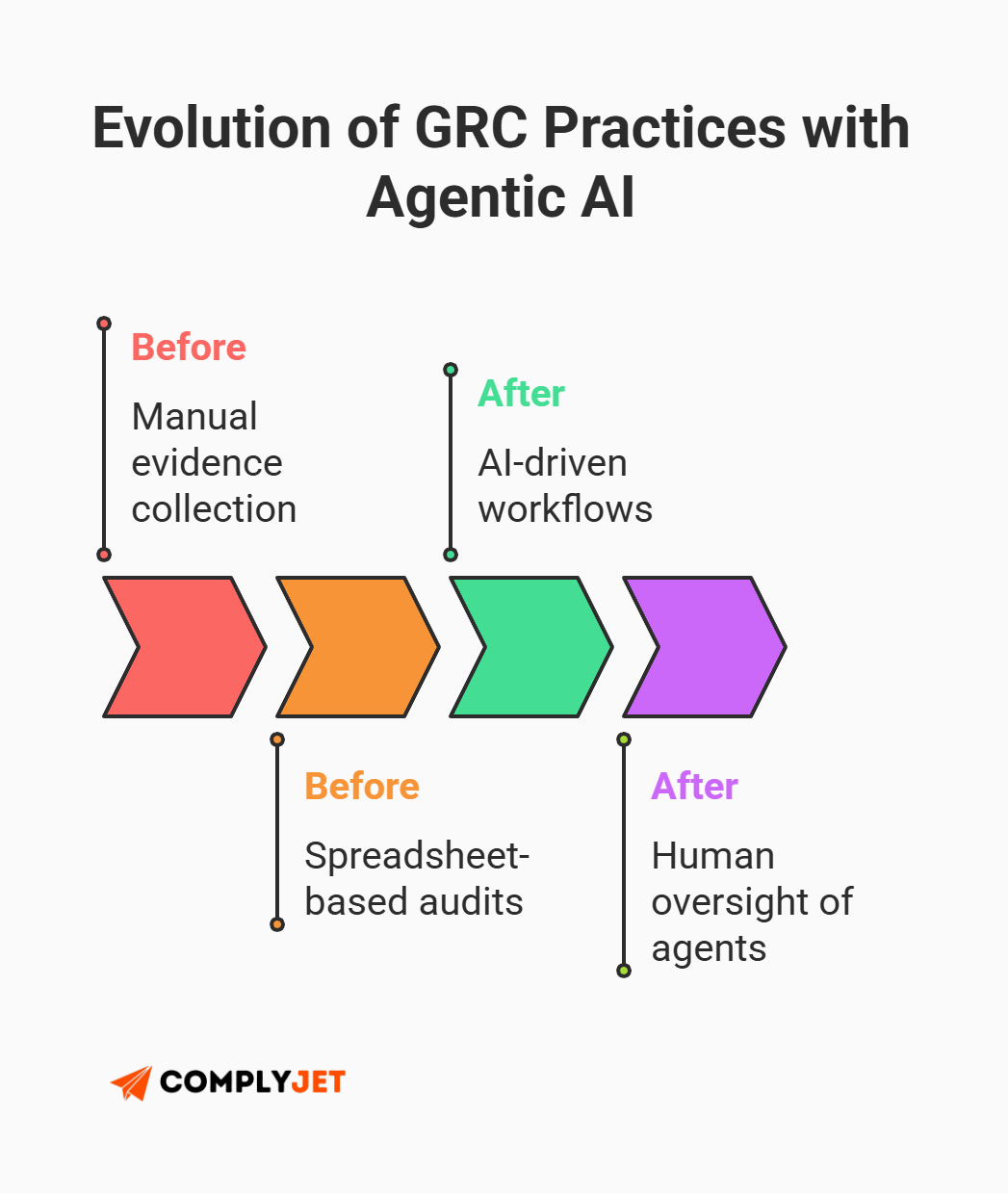
Emerging roles like AI Governance Specialists and Privacy Engineers are the new architects of trust. They implement the "guardrails" for self-correcting systems. Statistically, professionals mastering these tools earn a 56% wage premium over those lagging behind. To ride this wave, you need a specific set of GRC skills moving beyond manual spreadsheets into the world of AI governance and automated risk quantification. For teams looking to bridge this gap quickly, modern solutions like those found in our Oneleet compliance offerings guide are rapidly becoming the industry standard.
The mantra for 2026: AI won't replace you, but a professional using AI will. It is a Humans + AI power equation. Organizations crave human judgment to steer digital agents. Adapt now or risk obsolescence in an automated world.
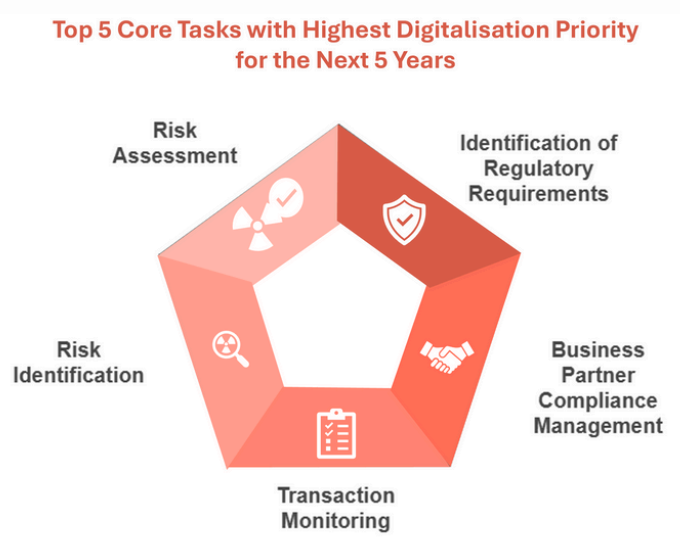
Source: BOC Group
The rise of AI governance has birthed a new certification must-have: ISO 42001. As organizations scramble to comply with the EU AI Act and NIST frameworks, professionals who master this standard are the ones winning the most lucrative GRC careers. Unlike ISO 27001, the new standard is about more than just security - it's about "Responsible AI," focusing on:
In 2026, the most successful GRC pros aren't fighting the bots; they are orchestrating them.
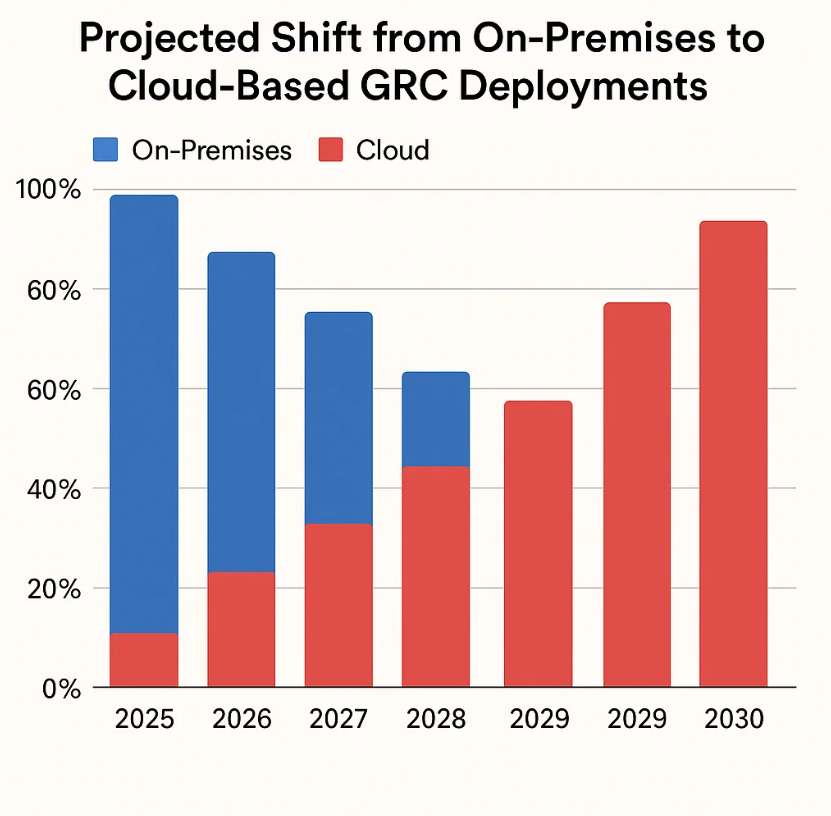
Cloud sprawl is the silent killer of traditional compliance. By 2026, reactive, point-in-time assessments are dead. If you are pursuing a career in GRC, mastering Cloud GRC is no longer optional - it's the baseline. Transitioning into these GRC roles now requires understanding how a single misconfiguration in AWS, Azure, or GCP can ripple across your entire risk profile.
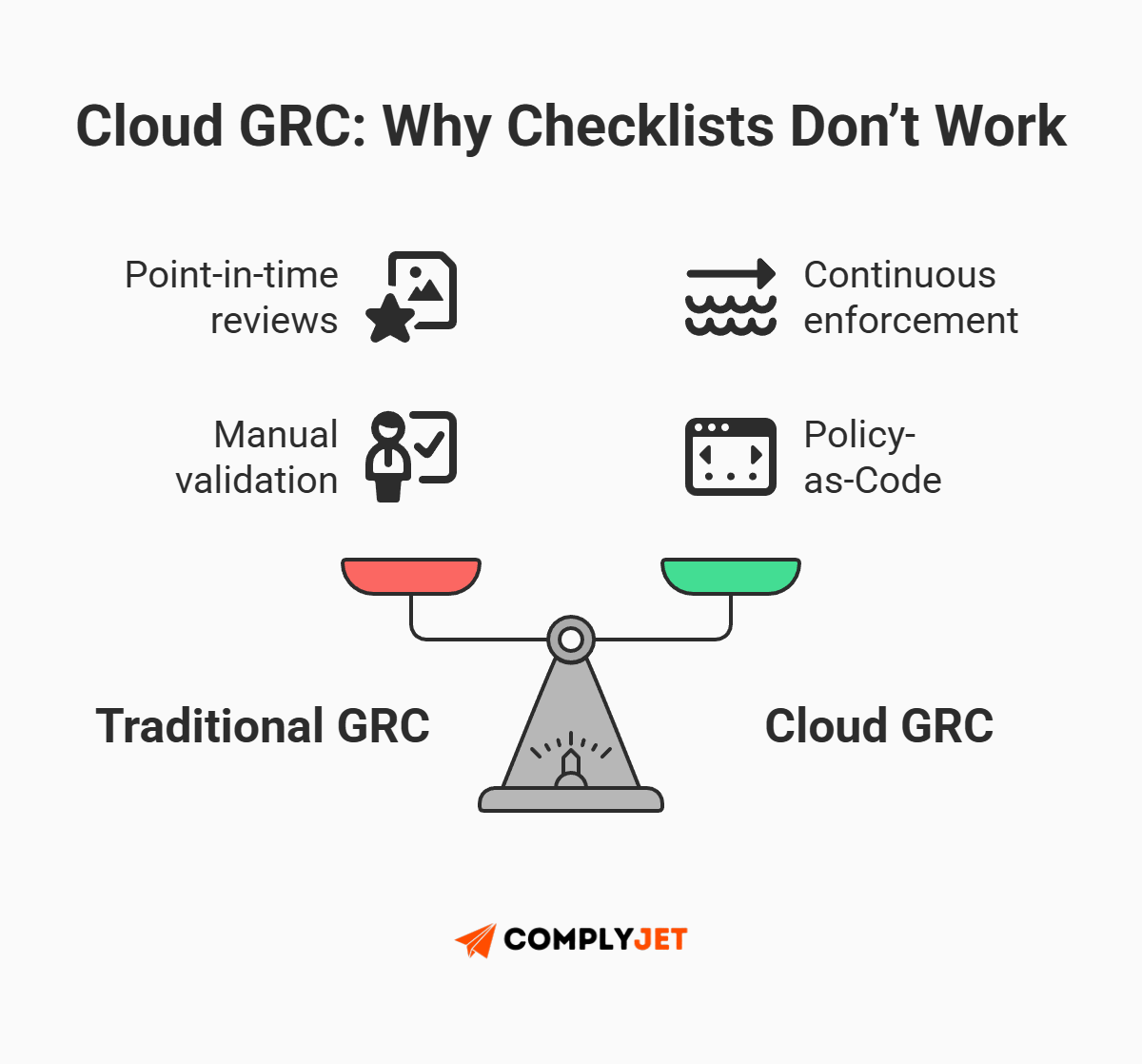
The shift is from manual checklists to Policy-as-Code (PaC). In a modern cybersecurity GRC environment, compliance is codified and enforced automatically. You aren't just checking if a bucket is public; you're governing the code that prevents it from ever becoming public in the first place.
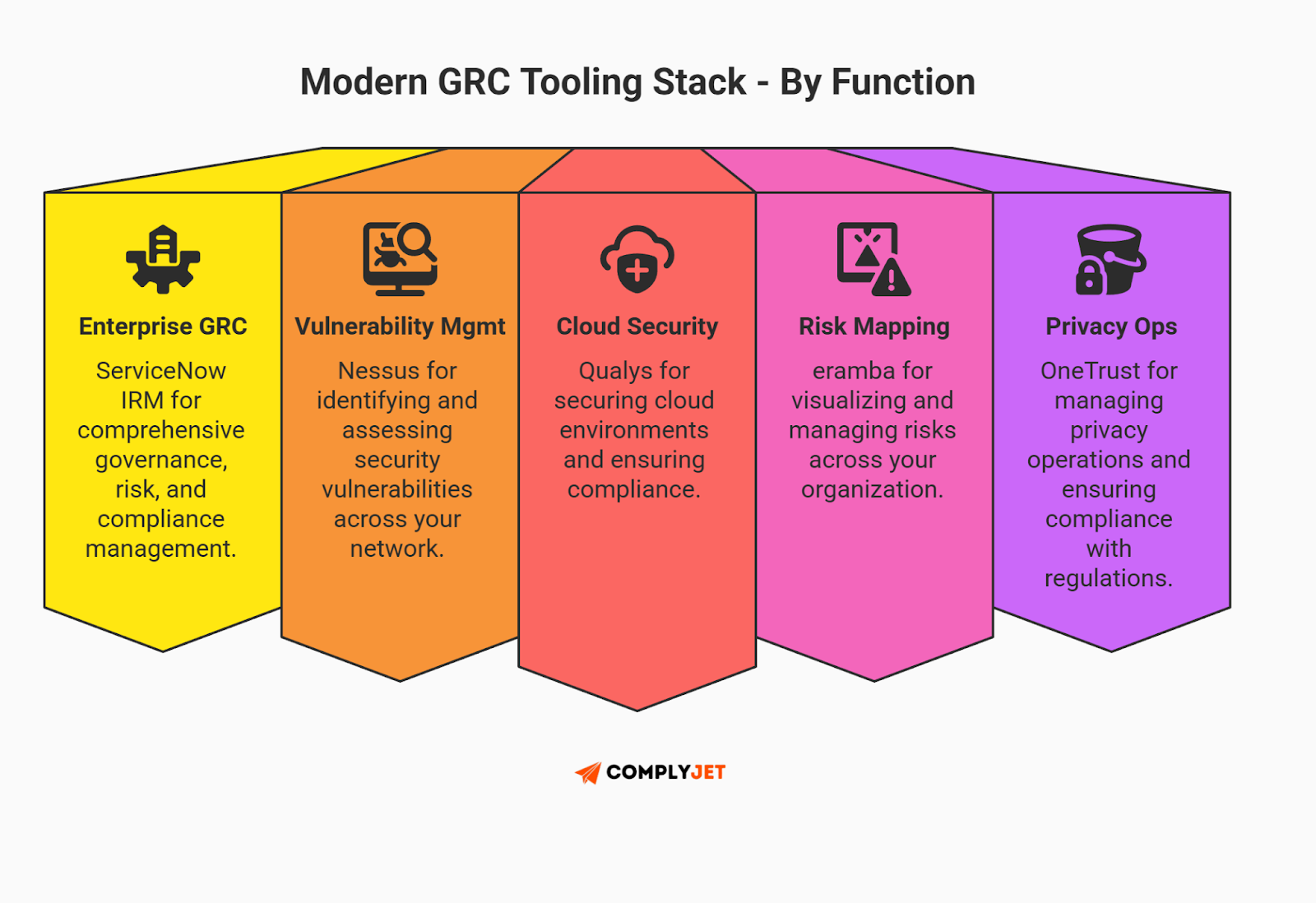
To stay ahead in terms of GRC careers, your toolkit needs to evolve:
In short: if you can't govern the cloud, you can't govern the business.
There is no single doorway into a GRC career. In 2026, companies care less about a linear background and more about your ability to bridge the gap between technical reality and business risk.
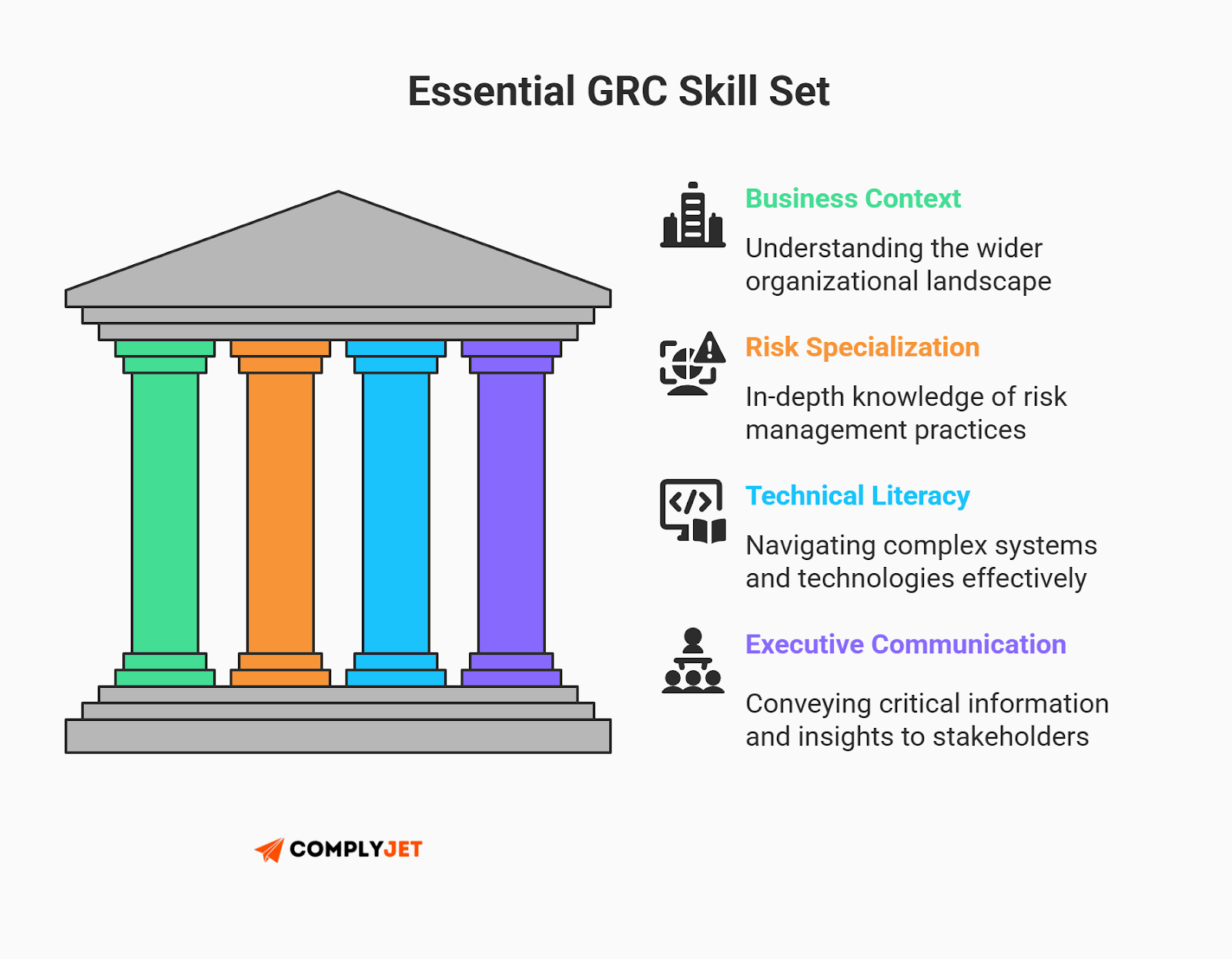
To succeed in careers in GRC, you need to develop a "T-shaped" skill set: broad business context with deep expertise in specific risk domains.
Need to practice? Check out ComplyJet's ISO 27001 Internal Audit Checklist. Use it to simulate your first mock audit and build your portfolio."
If you are pivoting to GRC careers from another field, your existing experience is likely a goldmine for cybersecurity GRC roles. Use this map to rebrand your current profile:
While experience is king, GRC certifications act as the "HR filter" bypass. In 2026, the strategic path is to stack them based on your career goals:
But at the end of the day, regardless of if you are a lawyer, a project manager, or an IT support specialist, the GRC career path is built on how well you can translate complex systems into strategic decisions.
Scaling your expertise in 2026 requires more than just collecting badges. The most successful professionals in GRC careers utilize the 70-20-10 model - a strategy that balances hands-on grit with social learning and formal education. This approach ensures you aren't just "book smart" but are actually capable of solving the high-stakes problems that define modern risk management careers.
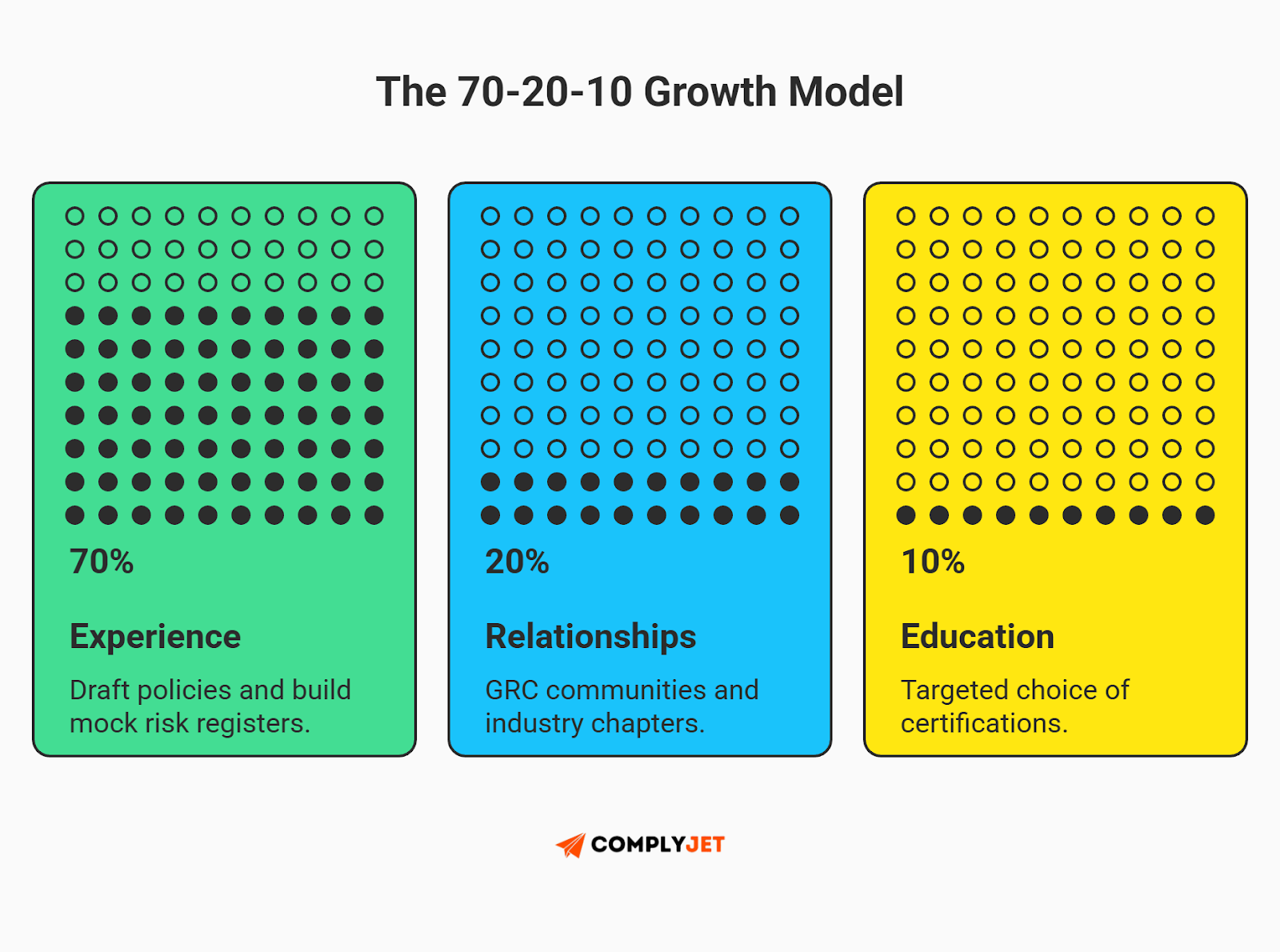
This is where you build your professional portfolio. Don't wait for a job title; start drafting sample security policies, creating mock risk registers using tools like Eramba, or simulating a vendor security assessment for a fictional SaaS product.
Success in a governance risk compliance career is often about who you can call when a new regulation drops. Engage with GRC-specific Slack groups, join the "GRC subreddit" communities, and attend local ISACA or IAPP chapters to hear how veterans handle real-world audit friction.
Use this for targeted, strategic certifications like the CISA, CRISC, or the new ISO 42001. Formal education should be the "anchor" that validates the 90% of practical knowledge you've already built.
By following this ratio, you avoid the ‘certification trap' - where you have the paper but none of the "battle scars" that recruiters look for. In the competitive world of GRC careers, your ability to point to a project you've actually managed is what will ultimately land you the offer.
Breaking into the world of Governance, Risk, and Compliance often leads to more questions than answers because the field moves so fast. These answers will help you get around the common hurdles of GRC careers:
Source: Securify
Yes, in the sense that you aren't usually writing code or triaging malware, but it requires deep technical judgment. To succeed in cybersecurity GRC, you must understand the "how" of a system to evaluate if the controls in place actually reduce risk or are just theater.
Absolutely. Legal professionals are currently some of the most sought-after candidates for AI governance and Privacy roles. Your existing framework fluency and ability to interpret complex regulations like the EU AI Act make you a natural fit for high-level GRC roles.
It refers to the shift from manual tools to autonomous AI systems that can reason, plan, and execute compliance workflows with minimal oversight. For those in careers in GRC, this means moving from performing the work to auditing the AI agents that handle the heavy lifting.
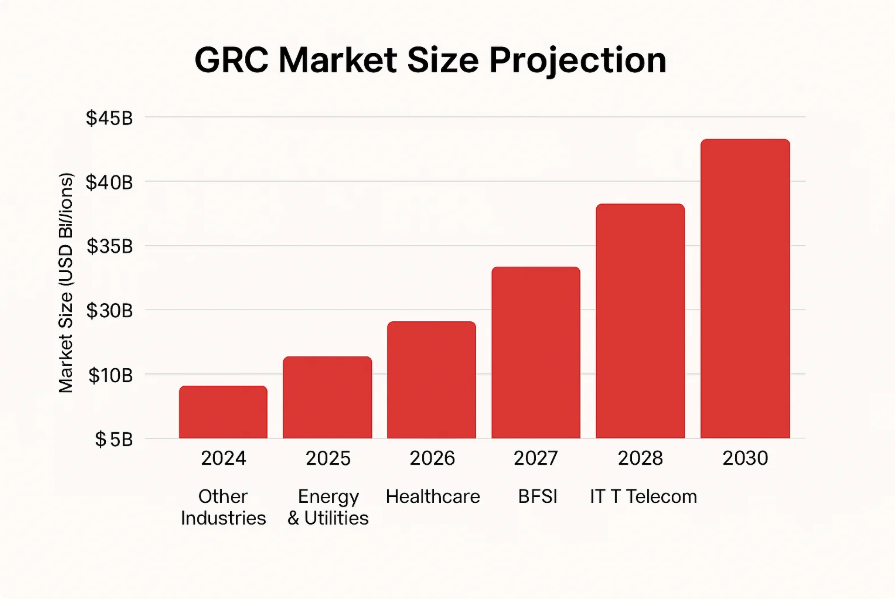
Source: Technavio
Virtual CISOs (vCISOs) and AI Governance Specialists are at the top of the food chain, with reports suggesting total compensation packages often exceeding $483,000 in the U.S. These roles reward the rare combination of compliance skills and executive-level strategic influence.
Source: Securify
For entry-level candidates (0-3 years), start with CompTIA Security+ to build your baseline or become an ISO 27001 Lead Implementer. These credentials signal to recruiters that you have the foundational knowledge to contribute to risk management careers immediately.
No, you don't need to be a software engineer. However, a working knowledge of "Cloud GRC" and the ability to spot misconfigurations in AWS, Azure, or GCP is essential if you want to stay relevant in a cloud-first market.
If you've made it this far, you realize that GRC careers in 2026 are no longer the "boring" back-office path they once were. They are the high-stakes, high-reward nerve center of the modern enterprise. I know it can feel overwhelming to keep up with AI agents, shifting cloud stacks, and a mountain of new regulations. But remember: nobody has it all figured out on day one.
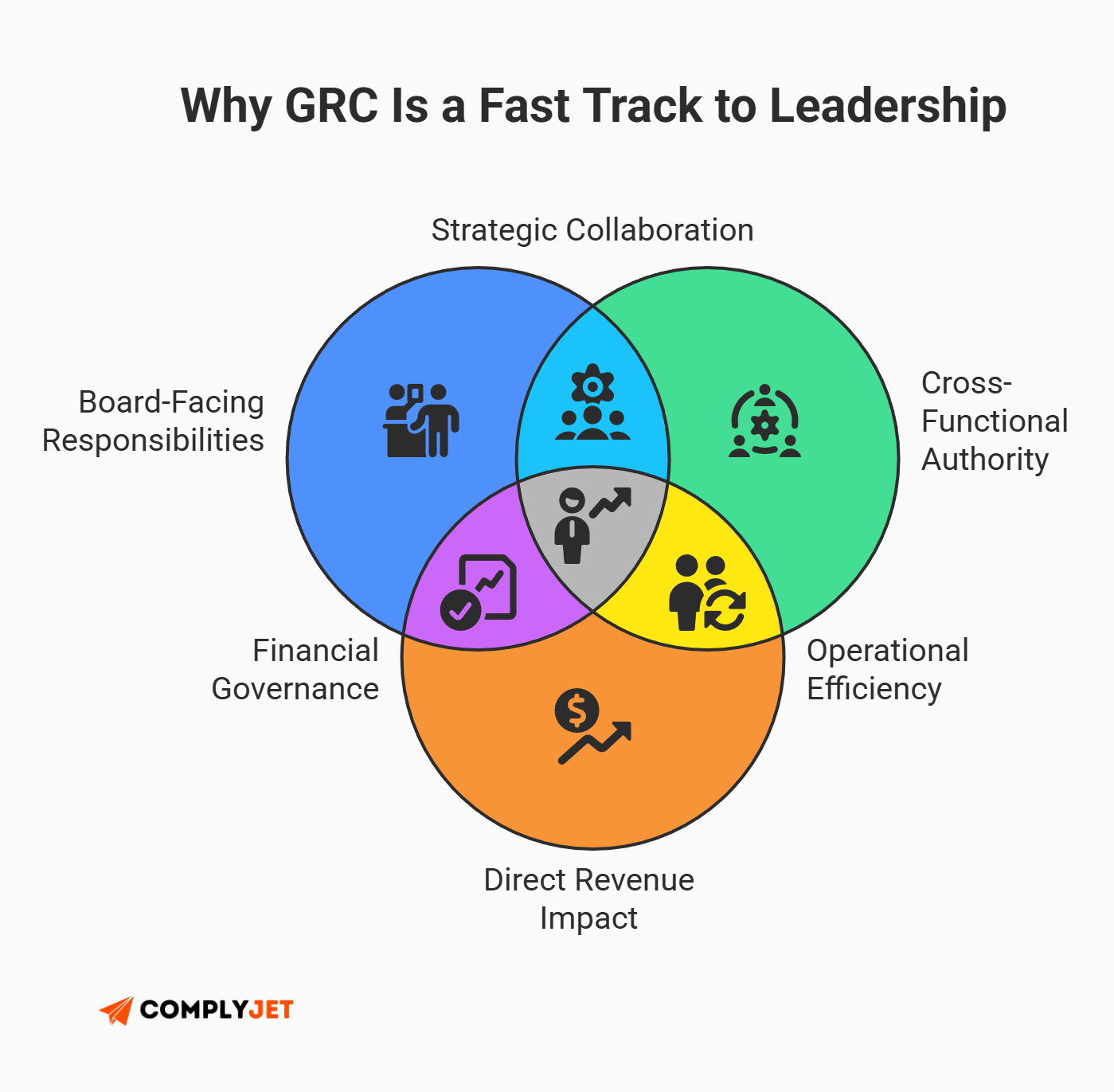
The beauty of GRC careers is that they reward the curious. Whether you're pivoting from law or coming up through IT, your unique perspective is actually your biggest asset. This field isn't about saying "no" anymore; it's about having the GRC skills to say "yes" safely. Your GRC career path starts the moment you stop reading about frameworks and start applying them to real-world problems.
How to start your journey today:
The C-suite is waiting for people who can bridge the gap between technical risk and business reality. In the world of GRC careers, that person could easily be you.
Compliance theatre overwhelming you? Get free access to ComplyJet's compliance help docs and learn the basics of practical compliance, directly from industry veterans.



© 2026 ComplyJet. All rights reserved.

