.svg)

You’re a federal contractor or government IT security team, and your FISMA compliance program is currently living in spreadsheets, shared drives, and an eMASS instance nobody fully understands. The audit window is coming. The SSP is 200 pages of manual work. The POA&M is three versions behind.
I’ve reviewed the 6 best FISMA compliance software platforms in 2026, tools that handle the full RMF lifecycle: NIST 800-53 control mapping, SSP generation, POA&M tracking, and continuous monitoring. This isn’t a list of “supports FISMA” checkboxes. These are platforms that actually automate the work.
Whether you’re a SaaS company chasing your first federal ATO, a defense contractor managing CMMC alongside FISMA, or a government agency looking for a modern alternative to eMASS, there’s a tool here that fits.
Here’s what I’ll cover: a quick comparison table, honest reviews of each platform, and a buying guide for picking the right one based on where you are in your authorization journey.
Why Meeting FISMA Requirements is Harder Than Most Teams Expect
Key insight
The phrase “we’re NIST 800-53 aligned” does a lot of heavy lifting in federal contracting. It sounds like compliance. It
The phrase “we’re NIST 800-53 aligned” does a lot of heavy lifting in federal contracting. It sounds like compliance. It isn’t.
FISMA compliance requires something more specific: a documented, defensible authorization to operate (ATO) based on a complete System Security Plan, a managed Plan of Action and Milestones, and ongoing continuous monitoring (ConMon). The SSP alone can run hundreds of pages. Writing it manually typically takes 4 to 6 months. And that’s before you get to the part where you have to keep it current.
The FISMA compliance requirements don’t stop at the ATO boundary, either. Unlike a point-in-time audit, FISMA demands continuous monitoring. You’re expected to assess controls on an ongoing basis, track remediation in your POA&M, and report to the agency’s ISSO regularly. That’s not a compliance project. It’s a compliance program.
The right FISMA software changes this from a documentation marathon into a managed workflow. It automates control implementation statements, keeps your POA&M current, and generates audit-ready reports on demand. That’s what separates the tools below from a GRC platform that just has “FISMA” ticked off in its framework list.
How We Picked the Best FISMA Compliance Software
I evaluated each platform against five criteria:
- Full RMF lifecycle coverage: Does it handle system categorization, control selection, A&A documentation, and ConMon, or just one part of the process?
- NIST 800-53 depth: Does it go beyond a checklist to automate control implementation statements and evidence collection for Rev. 5 controls?
- Documentation automation: Can it generate SSPs, POA&Ms, and OSCAL-formatted outputs without significant manual effort?
- Federal authorization: Is the platform itself FedRAMP authorized? For government agencies, this isn’t optional.
- Real user reviews: I weighted reviews from federal and DIB buyers specifically, not just general GRC users.
Quick Comparison Table
| Tool | Best for | Pricing | Standout feature |
|---|---|---|---|
| Xacta | Federal agencies & large contractors | Contact | FedRAMP High authorized; OSCAL-native |
| Paramify | SaaS companies pursuing federal ATO | $25k–$125k/year | One-click SSP + OSCAL documentation |
| Hyperproof | Multi-framework compliance teams | Contact | 140+ frameworks, 200+ integrations, FedRAMP Moderate |
| Ignyte | Defense contractors (DIB/CMMC+FISMA) | Contact | Built by former DoD assessors |
| Archer | Large enterprises & federal agencies | Contact | Gartner MQ Leader; enterprise RMF modules |
| ZenGRC | Mid-market organizations | ~$30k–$72k+/year | Federal edition; unlimited users |
The 6 best FISMA compliance software platforms in 2026
1. Xacta
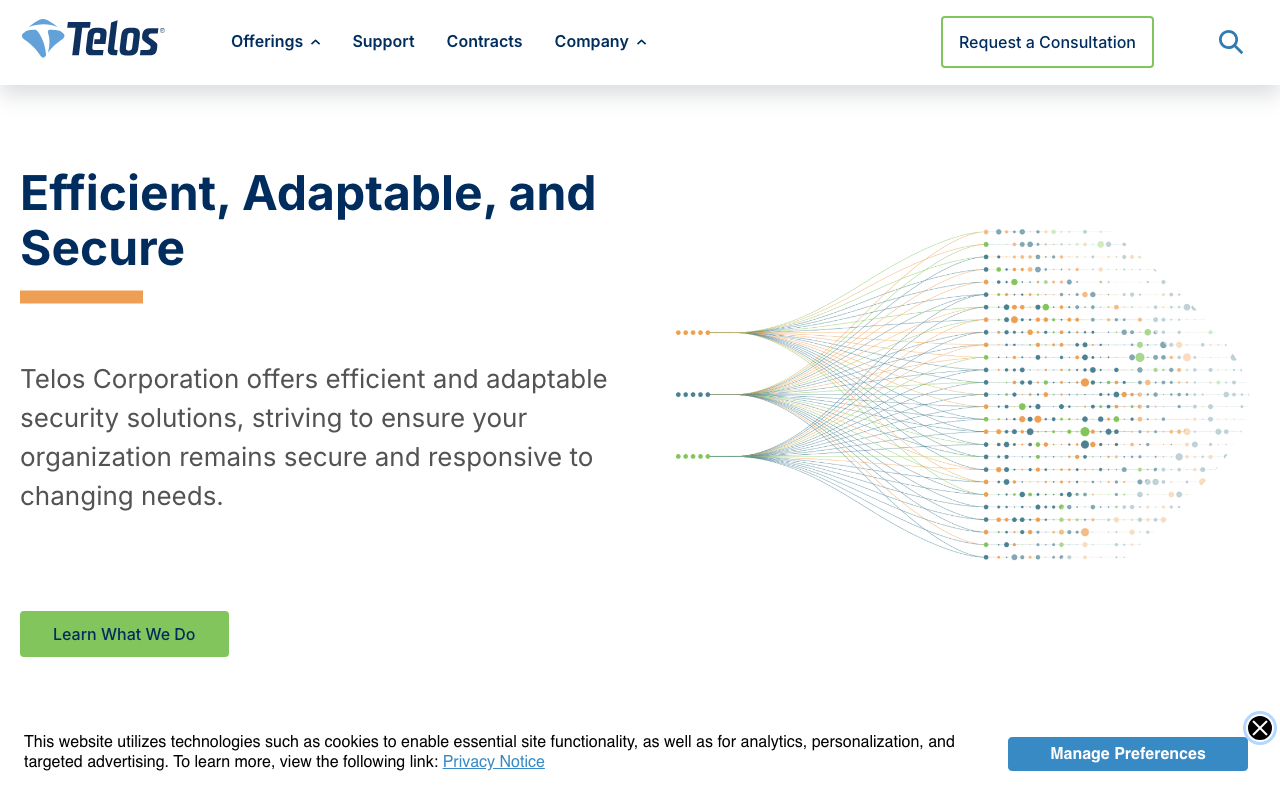
Xacta by Telos Corporation is the most federally proven platform on this list. It has been deployed inside U.S. government agencies for over a decade, and it shows: the feature set is built around the NIST Risk Management Framework from the ground up, not retrofitted onto a commercial GRC product.
The headline capability is Xacta.ai, which drafts control implementation statements automatically. What used to take security teams 4 to 6 months of manual writing can be done in effectively zero days. That claim sounds like marketing, but it is grounded in the reality of how much text a full NIST 800-53 Rev. 5 SSP requires. Xacta also supports OSCAL, the machine-readable compliance documentation standard, which matters increasingly as agencies move toward automation in their authorization workflows.
Xacta has achieved FedRAMP High authorization, one of the strictest levels available. If your agency or program office requires that the compliance tool itself be authorized, Xacta is one of a very small number of options at that level.
The main tradeoff is transparency: no public pricing, no public user reviews on G2 or Capterra, and an enterprise-only model that means you’re committing before you fully know what you’re paying. The UI has also been noted as less modern than newer platforms, though recent releases have addressed this.
“
This is a solid product that I have been using for over 10 years. Xacta has grown into other products but has stayed true to the functionality it has provided for years.
★★★★☆Verified Reviewer· Government
Via Gartner Peer Insights ↗Key features:
- Xacta.ai: AI-generated control implementation statements (SSP writing reduced from months to days)
- Xacta 360: continuous monitoring and threat-informed risk management
- Xacta.io: automated control testing and security assessment
- Full NIST RMF workflow: system categorization through ConMon
- OSCAL support for machine-readable compliance documentation
- Assessment & Authorization workflow automation
- POA&M management and remediation tracking
Pros of Xacta
- FedRAMP High authorized, one of very few GRC platforms at this level
- Purpose-built for FISMA, NIST 800-53 Rev. 5, FedRAMP, and DoD RMF
- OSCAL-native, which future-proofs your documentation
- 10+ years of federal deployment history
Cons of Xacta
- No public pricing; enterprise-only model
- No publicly available user reviews to benchmark satisfaction
- UI can feel dated compared to modern compliance platforms
Pricing: Contact for pricing Best for: Federal agencies and large defense contractors who need a proven, FedRAMP High authorized platform for managing the full FISMA and RMF lifecycle
2. Paramify
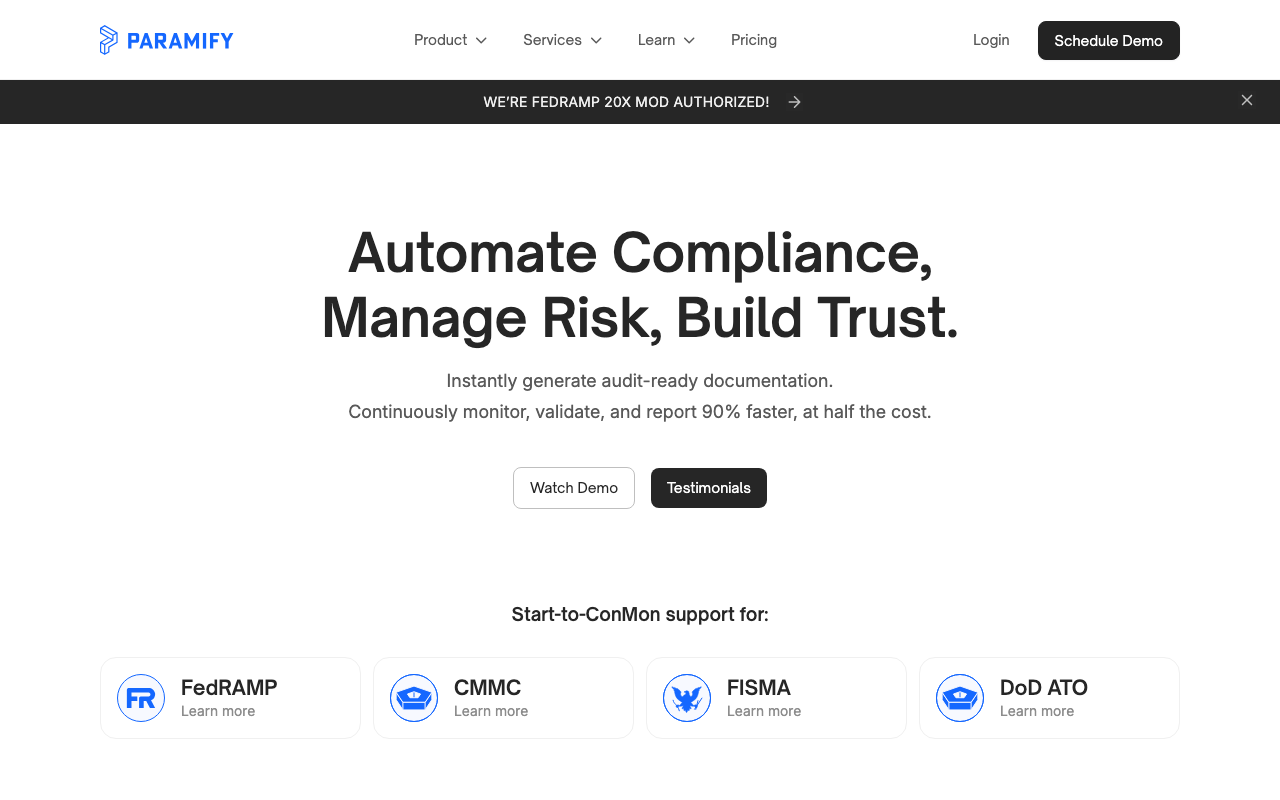
Paramify is the newest platform on this list, and it’s moving fast. The company raised a $12M Series A and has built its entire product around one problem: federal authorization documentation is too slow and too manual. It solves this by treating OSCAL as the foundation, not an export format.
The core workflow is straightforward. You define your system architecture and control environment once. Paramify’s OSCAL-based engine uses that single source of truth to generate your SSP, populate your POA&M, and produce continuous monitoring deliverables automatically. What used to require a dedicated compliance writer for months now takes a fraction of the time.
Paramify is also the most transparent on pricing in this category, which matters. FISMA and FedRAMP ATO packages run $25,000 to $60,000 per year depending on impact level (Low, Moderate, or High). Add ConMon deliverables and you’re looking at $55,000 to $125,000 per year for the full package. Not cheap, but far cheaper than the consultant-hours alternative, and you know exactly what you’re paying before you sign.
The honest limitation is that Paramify is a younger platform with fewer enterprise-scale deployments to point to. If you’re a large agency that needs something with 20 years of federal pedigree, Xacta or Archer may be more defensible internally. If you’re a SaaS company chasing your first ATO and need to move fast, Paramify is probably the right call.
“
Paramify delivered on the promise of making the process of updating compliance information and generating audit artifacts easier.
★★★★★Lindsay J.· E-Learning
Via Capterra ↗Key features:
- One-click SSP generation with auto-populated control implementation statements
- OSCAL-based single source of truth (update once, all documents update)
- POA&M dashboard with deadline tracking and Jira/ServiceNow integration
- ConMon deliverables: monthly POA&M, deviation requests, inventory reconciliation
- Gap assessment with real-time SPRS scoring
- FedRAMP 20x Moderate automation support
Pros of Paramify
- Most transparent pricing in the category (published tiers on the website)
- OSCAL-native from the ground up, not an afterthought
- Jira and ServiceNow integrations for remediation tracking
- Modern UI; faster to deploy than legacy platforms
Cons of Paramify
- Younger platform with fewer large-agency case studies
- FISMA High impact-level packages can get expensive
- Smaller team than established enterprise competitors
Pricing: ATO package: $25,000–$60,000/year | ATO + ConMon: $55,000–$125,000/year (scales by impact level) Best for: SaaS companies and defense contractors pursuing a first federal ATO who need to automate documentation-heavy FISMA and FedRAMP work quickly
3. Hyperproof
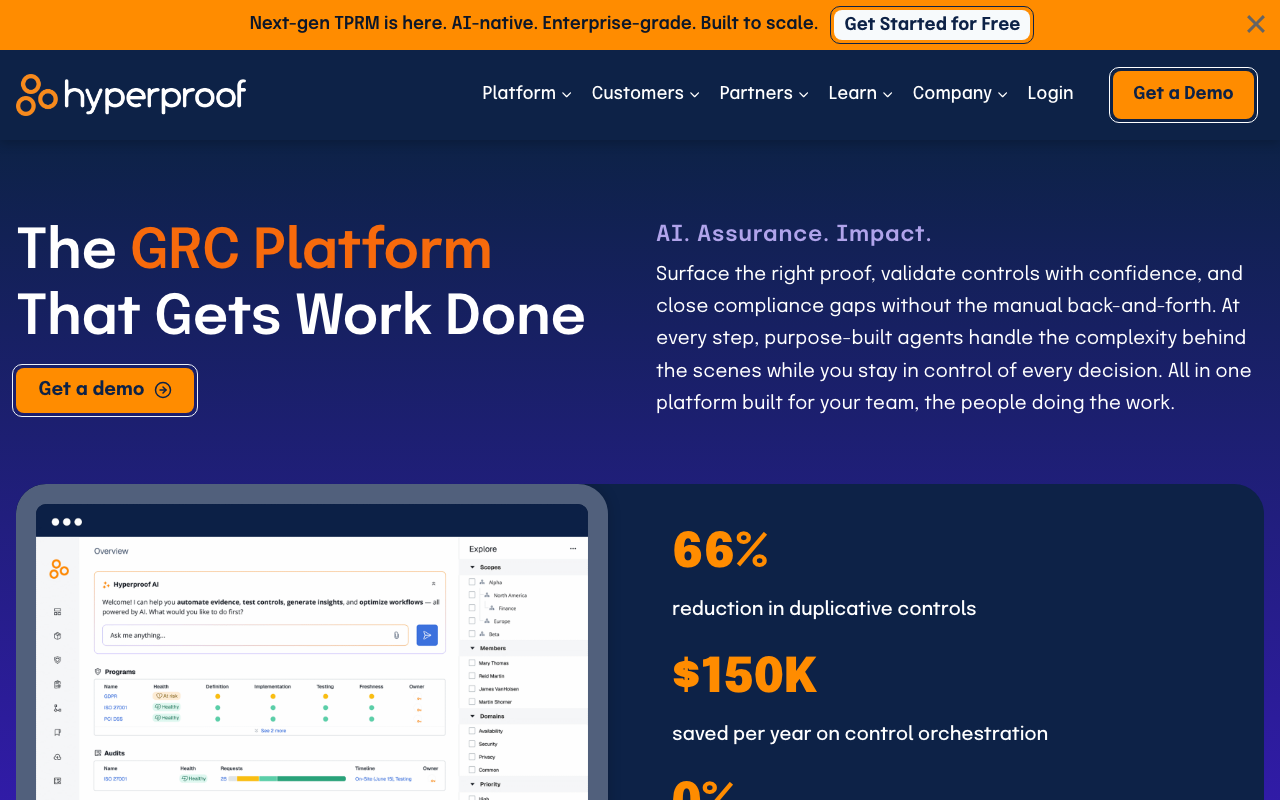
Hyperproof is the best-reviewed platform on this list: 4.5/5 across 213 reviews. It is not a FISMA-specific tool, but that is not necessarily a disadvantage. If your organization is managing FISMA alongside SOC 2, HIPAA, ISO 27001, or other frameworks, Hyperproof’s multi-framework architecture is genuinely useful.
The platform ships with 140+ pre-built frameworks including NIST 800-53 and FedRAMP, and connects to 200+ integrations from AWS and Azure to CrowdStrike and Okta. Evidence collection is largely automated: controls pull in evidence from your existing tools rather than requiring manual uploads. The audit portal lets external auditors collaborate directly in the platform with limited-permission access, which speeds up the review process significantly.
For government-specific use, Hyperproof offers a dedicated Hyperproof Gov environment that is FedRAMP Moderate authorized. This matters if the compliance platform itself needs to sit inside a FedRAMP boundary. You can read a more detailed breakdown in our Hyperproof review.
The main limitation: pricing is not public, and FISMA support is part of a broader platform rather than a purpose-built FISMA workflow. If NIST 800-53 documentation and RMF-specific automation are your primary need, Xacta or Paramify offer more depth in that specific area.
“
The ability to map controls and reuse evidence reduces duplication and helps streamline audit preparation.
★★★★★Tyler M.· Accounting
Via Capterra ↗Key features:
- 140+ pre-built frameworks including NIST 800-53, FedRAMP, CMMC, and FISMA
- 200+ integrations with AWS, Azure, Okta, Jira, CrowdStrike, ServiceNow, and more
- AI-powered control automation and continuous evidence collection
- Real-time gap detection and continuous compliance monitoring
- Hyperproof Gov: FedRAMP Moderate authorized environment
- Secure auditor collaboration portal
- Third-party risk management with AI-assisted vendor assessments
Pros of Hyperproof
- Strongest review base in this category (4.5/5 across 213 reviews)
- FedRAMP Moderate authorized via Hyperproof Gov
- Best multi-framework coverage if you’re managing FISMA plus other frameworks
- 200+ integrations means evidence collection is largely automated
Cons of Hyperproof
- No public pricing
- Not purpose-built for FISMA; RMF-specific features are less deep than Xacta or Paramify
- Learning curve noted by some reviewers for new users
Pricing: Contact for pricing Best for: Organizations managing FISMA alongside multiple other frameworks who want a unified compliance operations platform with strong integration coverage
4. Ignyte Assurance Platform
Ignyte does something none of the other platforms on this list do: it includes expert consulting from former DoD assessors as part of the product, not as an add-on service.
The platform is designed specifically for defense contractors and cloud service providers in the DIB (Defense Industrial Base). The team behind it came from the government side of compliance assessments, which shapes the product in concrete ways. The control cross-mapping engine uses NLP and ML to map across 25+ frameworks simultaneously, so a CMMC plus FISMA program doesn’t mean duplicating work across two systems.
For organizations handling Controlled Unclassified Information (CUI), Ignyte covers the NIST 800-171 and CMMC requirements that typically sit alongside FISMA obligations. The STIGs library and IT asset discovery are baked in, which matters for the DoD-specific audit workflows most defense contractors navigate.
The honest limitation: Ignyte is a smaller platform with fewer public reviews than Hyperproof or ZenGRC. Pricing is opaque, and the platform is clearly optimized for the DIB and federal contractor audience. If your compliance needs are primarily commercial with FISMA as one obligation, the fit is less clear.
Key features:
- NLP/ML-based control cross-mapping across 25+ frameworks
- FISMA and FedRAMP A&A documentation and workflow management
- IT asset discovery with automated network inventory collection
- Expert consulting from former DoD assessors (included, not an add-on)
- STIGs library and audit support dashboards
- Purpose-built for DIB organizations handling CUI
Pros:
- Only platform with DoD assessor expertise built directly into the product
- Strong cross-framework mapping: map controls once across CMMC, FISMA, and NIST 800-171
- Purpose-built for defense and federal contractor workflows
Cons:
- Fewer public reviews than larger GRC platforms
- Pricing not disclosed; requires a conversation to get a number
- Less suited to commercial-only organizations
Pricing: Contact for pricing Best for: Defense industrial base (DIB) contractors pursuing CMMC and FISMA simultaneously who want DoD assessor expertise baked into the platform
5. Archer
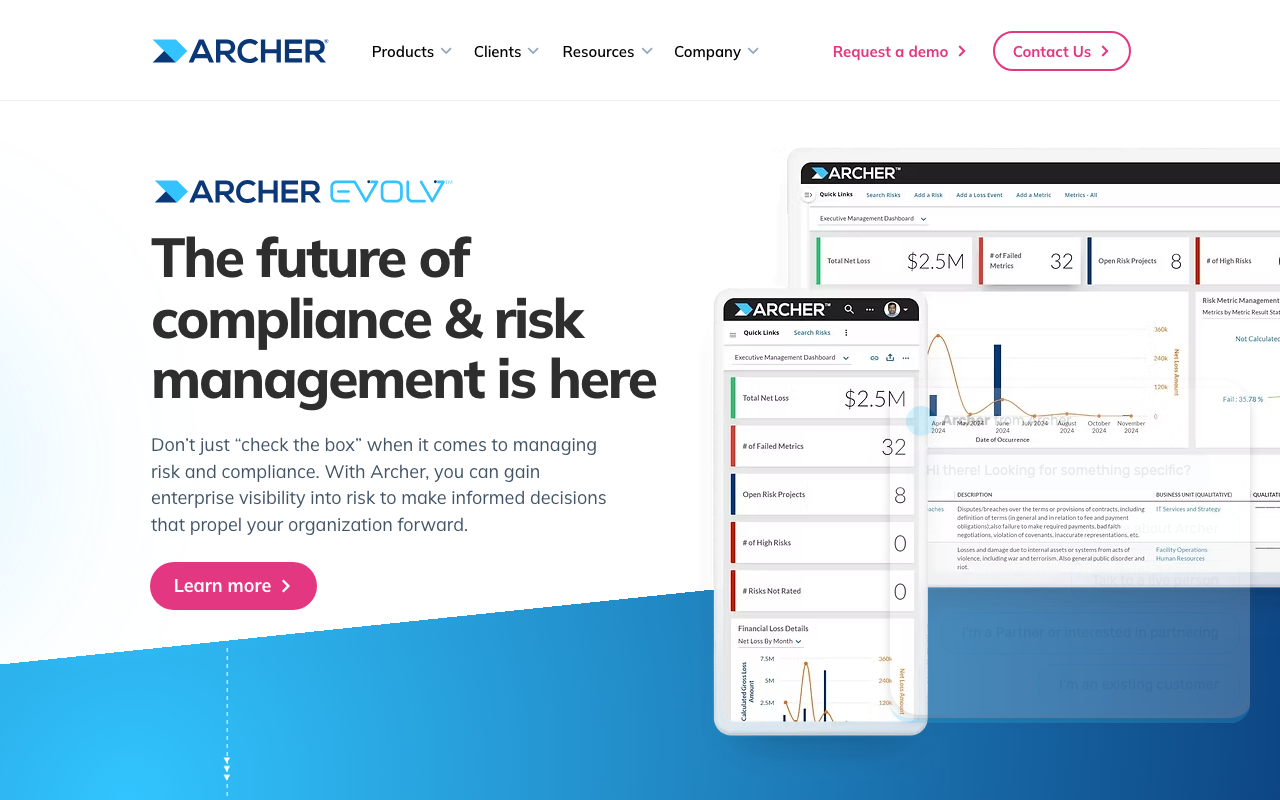
Archer (formerly RSA Archer) is the enterprise standard in federal GRC. It has been deployed across U.S. federal agencies for two decades, holds Gartner Magic Quadrant Leader status, and ships with purpose-built public sector modules for FISMA, OMB reporting, Assessment and Authorization, and continuous monitoring.
The key word is enterprise. Archer is not a tool you deploy in a week and run with a small security team. It is a platform you configure over months, typically with dedicated implementation resources, to build a unified risk program spanning IT risk, operational risk, third-party risk, and audit management. For large agencies with complex, multi-domain programs, that depth is a feature. For most contractors, it is overkill.
The honest tradeoff: Archer rates 3.8/5 from 17 reviews, which is low compared to modern platforms. The consistent feedback is that it requires significant internal expertise to configure and maintain. If you have that resource investment available and need the breadth of an enterprise risk platform, Archer is defensible. If you need a small team to be operational in 30 days, look elsewhere.
“
RSA Archer is a powerful tool from a GRC perspective. It met our needs for building out a Vendor Risk Management program, allowing full control and customized workflow builds.
★★★★☆Verified User· Enterprise
Via G2 ↗Key features:
- FISMA and OMB compliance modules: POA&M management, A&A, and continuous monitoring
- Archer Evolv Compliance: AI-powered regulatory change monitoring
- Assessment and Authorization system of record for personnel, components, and org tiers
- Unified platform covering IT risk, operational risk, third-party risk, audit, and resilience
- POA&M management with organizational accountability workflows
- 48+ country operations with multi-language support
Pros of Archer
- Gartner Magic Quadrant Leader for GRC
- Purpose-built public sector modules for FISMA and OMB
- Most comprehensive enterprise-level GRC coverage on this list
Cons of Archer
- 3.8/5 from 17 reviews, below average satisfaction vs. modern tools
- Significant implementation investment required; not self-service
- Heavy and complex to configure; typically requires dedicated Archer expertise
Pricing: Contact for pricing (enterprise licensing; large government contracts typical) Best for: Large federal agencies and enterprises with complex multi-domain GRC programs and the budget and resources to implement an enterprise platform
6. ZenGRC
ZenGRC by RiskOptics is a solid mid-market GRC platform with something most tools in this category don’t offer: published pricing, unlimited user licensing, and a dedicated Federal ZenGRC edition built for government agencies and contractors.
The platform’s AI assistant, GRACI, handles analyst-level work including program scoping, control design, and audit structure generation. For teams that don’t have a dedicated GRC analyst, this reduces the barrier to getting started. The unlimited user model also matters in federal environments, where large teams may need platform access without per-seat costs adding up.
At 4.4/5 from 104 reviews, ZenGRC has a solid review base, and users consistently highlight the ease of mapping controls across multiple frameworks from a single dashboard. The honest limitation: FISMA isn’t prominently featured on ZenGRC’s main marketing site, and some users have called out reporting capabilities as thin compared to purpose-built platforms.
“
I can map risks, controls, and policies all in one dashboard. ZenGRC enabled our team to be more proactive rather than reactive in tracking compliance issues.
★★★★★Tim A.· Pharmaceuticals
Via Capterra ↗Key features:
- GRACI AI assistant: program scoping, control design, and audit structure generation
- Federal ZenGRC: dedicated edition for government agencies and contractors
- Multi-framework compliance management including FISMA, NIST 800-53, and FedRAMP
- Unlimited user licensing (no per-seat pricing)
- Third-party and vendor risk management with automated questionnaires
- Business intelligence portal with custom dashboards and risk heatmaps
- External audit portal with limited-permission access for auditors
Pros of ZenGRC
- Most transparent pricing in this tier (~$30k–$72k+/year, published)
- Unlimited users, no per-seat pricing surprises
- Federal ZenGRC edition purpose-built for government contexts
- Solid review base: 4.4/5 from 104 reviews
Cons of ZenGRC
- FISMA is not a headline framework on the main site; less purpose-built than Xacta or Paramify
- Reporting capabilities noted as limited by some users
- Active users capped at 5 on lower tiers despite unlimited collaborators
Pricing: Start-Up: ~$30,000/year | Professional: ~$30,000–$42,000/year | Enterprise: ~$72,000+/year Best for: Mid-market organizations or federal contractors who want a capable GRC platform with predictable pricing and no per-seat surprises
How to Choose FISMA Compliance Software
FISMA tool selection is different from picking commercial compliance software in one important way: the stakes around documentation quality and authorization status are higher. A SOC 2 auditor who finds evidence gaps can usually work with you. An agency ISSO who finds your SSP doesn’t reflect your actual system architecture can pause your entire ATO. Here’s how to cut through the noise.
Do you need a purpose-built federal tool or a general GRC platform?
If FISMA is your primary compliance obligation, go purpose-built. Xacta, Paramify, and Ignyte are all built around the RMF workflow. The documentation automation is deeper, the NIST 800-53 control libraries are more complete, and the federal-specific features (OSCAL export, FedRAMP packages, DoD RMF) are first-class.
If FISMA is one of several frameworks you’re managing, a general GRC platform like Hyperproof or ZenGRC makes more sense. You get FISMA support plus the ability to run SOC 2, HIPAA, ISO 27001, and more from a single platform. The question to ask yourself: “Is FISMA our primary compliance obligation, or one of several?”
What stage is your authorization at?
Where you are in the authorization journey changes which tool matters most.
Pre-ATO or first authorization: the bottleneck is documentation. Paramify and Ignyte are built for this. Get your SSP and initial POA&M in order fast, then decide on a long-term ConMon platform.
Post-ATO, continuous monitoring: Xacta and Hyperproof shine here. Both are built for ongoing control testing, evidence collection, and ConMon deliverable generation.
Enterprise program management: if you’re managing FISMA across multiple systems and need it integrated with broader risk, audit, and vendor management functions, Archer or ZenGRC handle the program-level view.
Does Your Government Compliance Software Need FedRAMP Authorization?
This is often the first question a government agency ISSO will ask: where does your compliance data live, and is that environment authorized?
If the answer matters, your shortlist is short. Xacta is FedRAMP High authorized. Hyperproof Gov is FedRAMP Moderate authorized. For most other platforms on this list, check their current authorization status directly with the vendor before committing.
NIST 800-53 Compliance Software: Coverage vs. Automation
Every platform on this list claims NIST 800-53 support. What varies dramatically is whether the platform automates control implementation statements or just gives you a checklist to fill in manually.
The most useful question to ask in any vendor demo: “Can your platform auto-generate draft control implementation statements for NIST 800-53 Rev. 5 controls?” If the answer involves exporting a template and filling it in yourself, that is not automation. Xacta and Paramify both have genuine answers to this question. Others vary.
Pricing Models for Federal Compliance Software
Most platforms here don’t publish pricing. The two that do, Paramify and ZenGRC, give you a useful anchor.
Paramify’s FISMA packages run $25,000 to $125,000 per year depending on impact level and whether ConMon is included. ZenGRC runs $30,000 to $72,000+ per year depending on tier. If a vendor won’t give you a ballpark in the first conversation, that’s worth noting.
Also factor in implementation costs. Legacy platforms like Archer typically require significant implementation services on top of licensing. Newer platforms like Paramify and Ignyte tend to include more onboarding support in the base price. Total cost of ownership, not just licensing, is what matters.
Frequently Asked Questions
What is FISMA compliance?
FISMA (the Federal Information Security Modernization Act) is a U.S. federal law that requires federal agencies and their contractors to implement a risk-based information security program. In practice, it means implementing security controls from NIST 800-53, documenting them in a System Security Plan, obtaining an Authorization to Operate (ATO), and maintaining continuous monitoring. FISMA applies to any organization that processes, stores, or transmits federal information on behalf of a federal agency.
Who does FISMA apply to?
Federal agencies are required to comply by law. Beyond that, FISMA applies to any contractor, cloud service provider, or third party that handles federal information systems or data on behalf of an agency. If you’re selling software to the federal government and your system touches agency data, FISMA requirements apply to your environment.
What Are the Core FISMA Compliance Requirements?
The core FISMA compliance requirements follow the NIST Risk Management Framework. The main steps: categorize your system using FIPS 199 (Low, Moderate, or High impact), select and implement NIST 800-53 controls based on that categorization, document them in a System Security Plan, conduct a security assessment, obtain an ATO from the authorizing official, and maintain continuous monitoring with regular POA&M updates. Most FISMA software automates the SSP, POA&M, and ConMon steps specifically, since those are the most documentation-intensive.
What’s the difference between FISMA and FedRAMP?
FISMA governs federal agencies managing their own internal systems. FedRAMP governs cloud service providers (CSPs) that want to sell cloud services to federal agencies. A FedRAMP authorization is essentially a pre-vetted FISMA authorization for a specific cloud product, which agencies can reuse rather than conducting their own full assessment. If you’re a SaaS company selling to federal agencies, FedRAMP is the path. If you’re an agency managing internal systems, FISMA is the framework directly.
How long does FISMA compliance take?
Obtaining an initial ATO typically takes 6 to 18 months, depending on your system’s impact level (Low is faster, High takes longer), the completeness of your documentation, and the agency’s authorization queue. Using automation software like Paramify or Xacta can compress the documentation phase significantly. The ongoing ConMon obligation is perpetual: FISMA doesn’t end at the ATO.
What is NIST 800-53 and how does it relate to FISMA?
NIST SP 800-53 is the control catalog that FISMA mandates agencies use. It defines over 1,000 security and privacy controls organized into 20 control families, covering everything from Access Control to System and Communications Protection.
FISMA tells you that you need to implement controls. NIST 800-53 tells you which ones, based on your impact level. When evaluating NIST 800-53 compliance software, you want a platform that maps those controls to real evidence requirements and automates the documentation, not just a framework checklist.
Final Thoughts
The six tools above cover almost every FISMA buyer profile. If you’re a federal agency or large defense contractor needing the deepest federal pedigree, Xacta. If you’re a SaaS company chasing a first ATO and want clear pricing and fast documentation, Paramify. If you’re managing FISMA alongside a broader compliance program, Hyperproof or ZenGRC give you the multi-framework coverage to do it from one platform.
The thing that matters most in any FISMA program isn’t which tool you choose. It’s whether the tool helps you keep your SSP accurate, your POA&M current, and your continuous monitoring evidence in order. Pick the one that makes those three things less manual.
If your primary compliance goals are commercial frameworks like SOC 2 or ISO 27001, the tooling landscape looks quite different, and there are purpose-built platforms for both worth evaluating separately.