.svg)

The rude awakening for SaaS entrepreneurs. One day, everything moves quickly. The next day, a customer requests SOC 2 documentation. Panic set in. Spreadsheets multiply. Notifications for Security and SaaS compliance requirements are exploding. And then the maze begins. That's where this Delve vs Drata comparison appears, promising peace amidst the chaos. But, here's the thing.
By the end of this Delve vs Drata comparison guide, you'll understand the difference. Delve and Drata make many promises that sound like magic. However, the truth is more nuanced.
One compliance automation tool provides more control. The other SaaS compliance software provides faster service at a higher cost. These minor differences affect your daily life in your SaaS startup.
Make the wrong decision, and complying will be a perpetual headache. You can make the right decision after reading this Delve vs Drata comparison. Because with the right platform, audits will be a more relaxed experience afterwards.
Before proceeding, let’s take a glance at the new trends of SaaS compliance standards in 2026, for utmost clarity and better decision-making:
- Instead of yearly audits, continuous compliance relies on real-time monitoring systems.
- AI-driven risk detection allows for better security decisions.
- The global expansion of privacy laws increases international data requirements.
- Multi-framework mapping eliminates redundancy across standards.
- Buyers prefer live trust centers during enterprise sales evaluations.
We look beyond surface-level differences to pricing realities. Create friction at a level of automation. Actual use cases. Unseen limits. Everything that decision makers wished they knew sooner. If you want to know the truth about Delve vs Drata and are looking for the ideal solution for SaaS compliance and data retention, you've come to the right place.
Stop losing deals because of missed compliance. In weeks rather than months, you'll be audit-ready for SOC 2, ISO 27001, and HIPAA. Make security your primary sales advantage. Start our free trial today!
Delve vs Drata: The Hidden Context of Compliance Comparison
Now that you know what this Delve vs Drata comparison blog post is about, let's get to the twist that most bloggers don't reveal. Delve and Drata are addressing two distinct problems. On the surface, it appears that they are in the same compliance lane. However, if you dig deeper, you'll discover that this isn't true.
You will learn from this Delve vs Drata guide that one tool is intended to combat technical debt in weak cloud configurations. It is intended to detect potential issues in configuration and security that may arise in the future.
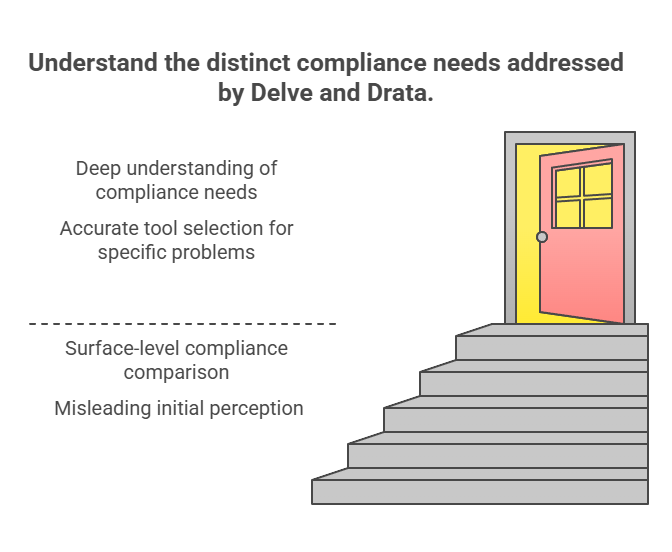
The other tool is intended to alleviate the administrative burden that comes with multiple framework audits. Its purpose is to collect and preserve evidence. One tool protects the engine room, while the other oversees the paperwork factory.
If you don't understand these contexts, the decision will fail immediately. So let’s start with busting the myths and grasping the fundamentals in this Delve vs Drata comparison.
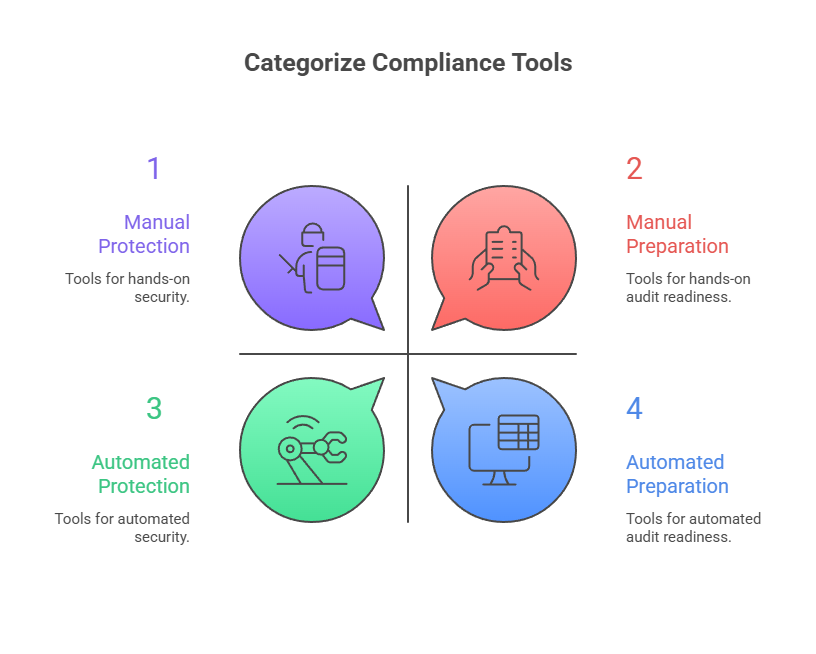
Delve vs Drata: SaaS Compliance Categories
The majority of people combine both of these tools into a single, convenient box. This is a fallacy. But you will not be confused anymore since this Delve vs Drata comparison will break down each and everything into bits and pieces.
So, what is Delve?
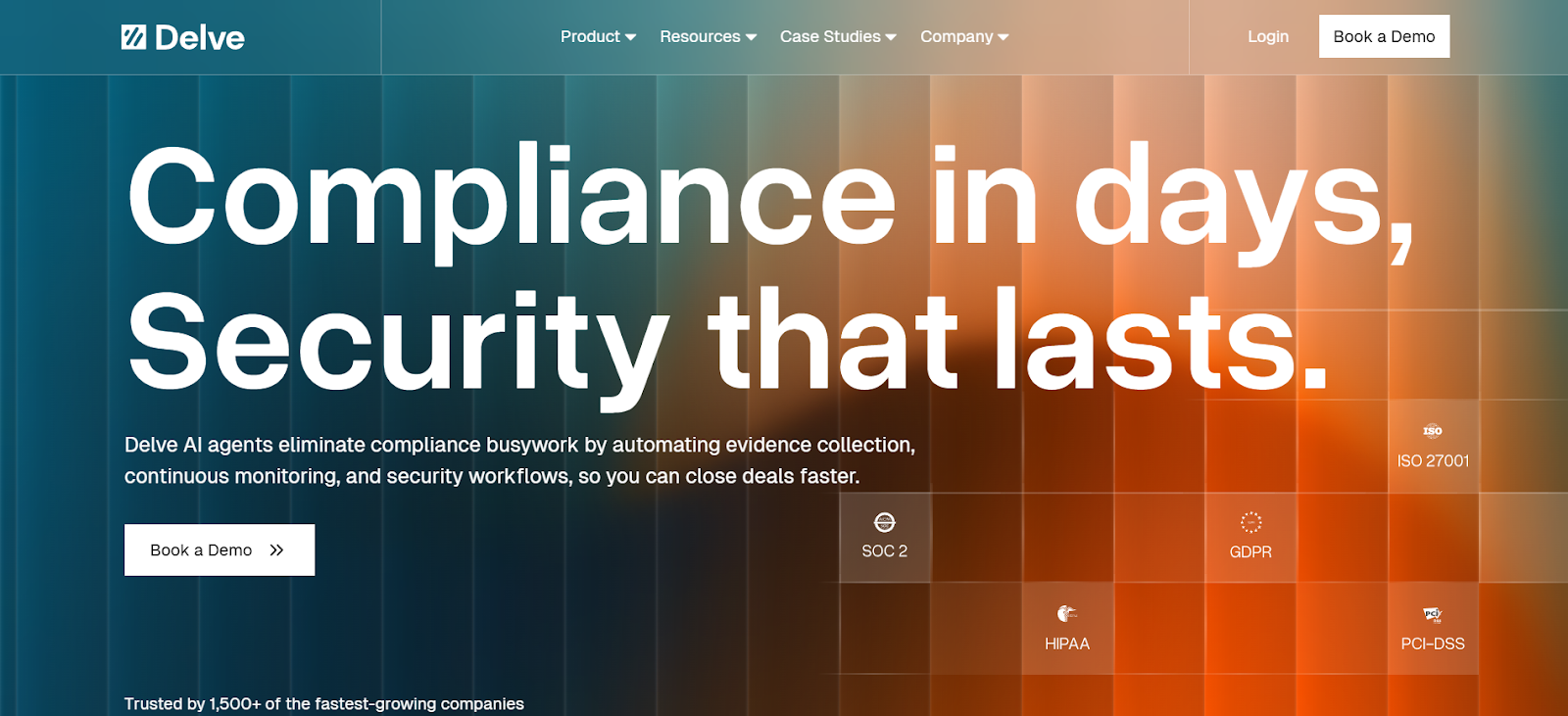
Delve Compliance is an automated compliance software that works as a security engine for the cloud edge. It detects threats and prioritizes what needs to be resolved.
And what is Drata?
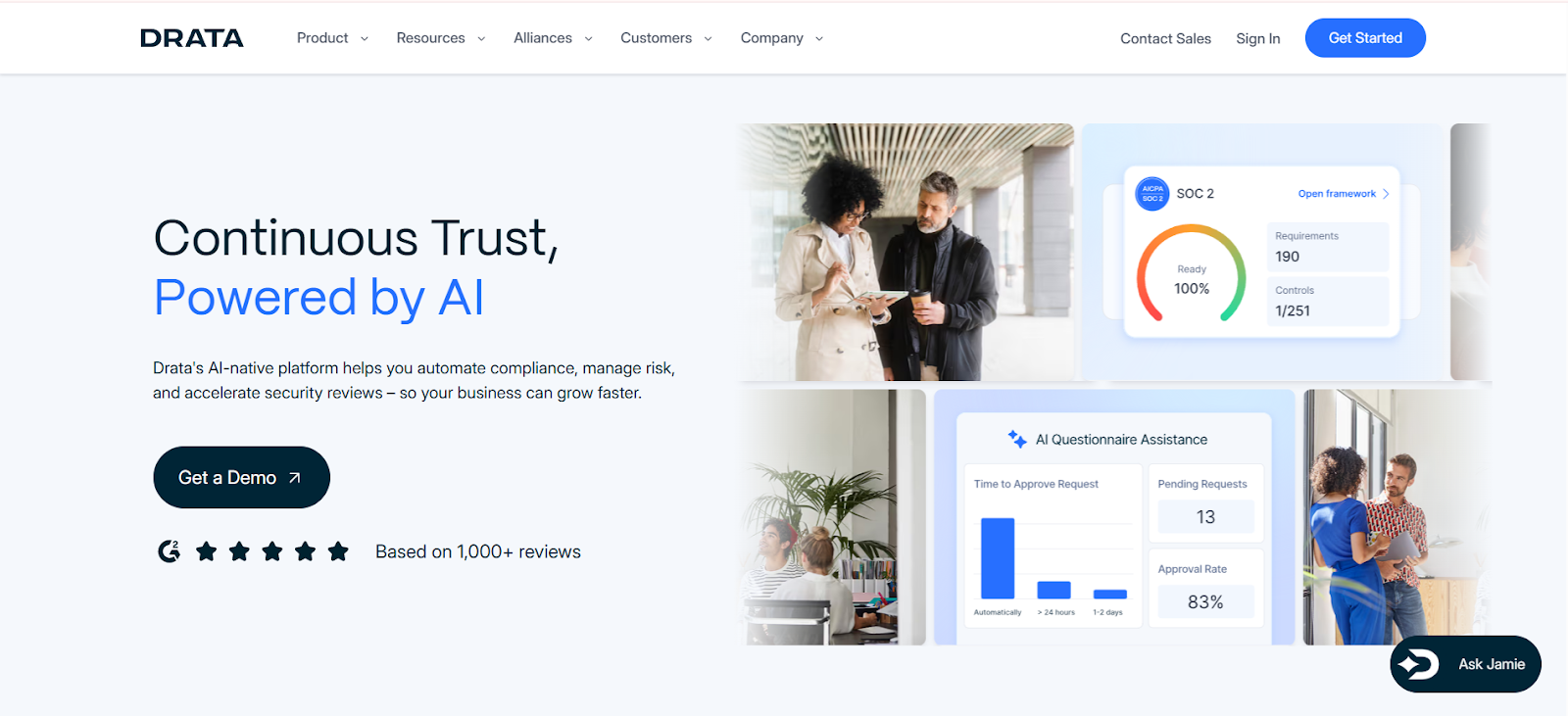
Drata is a compliance control centre. It serves as the source of truth for auditors. One is used to protect quietly. The other is used to prepare loudly.
Delve vs Drata: Real Buyer's Dilemma
The conversation does not start with features. It starts with pain. Yes, it’s a lot of information to compare. But save this Delve vs Drata comparison for clarity now, as well as the future.
When do people buy Delve?
What if engineers are drowning in alerts and checks? The Delve compliance AI becomes a lifeline.
And what is Drata used for?
What if the business requires SOC 2 to win deals? Drata compliance has suddenly become mission-critical.
The wisest course of action is always to address the most pressing issue.
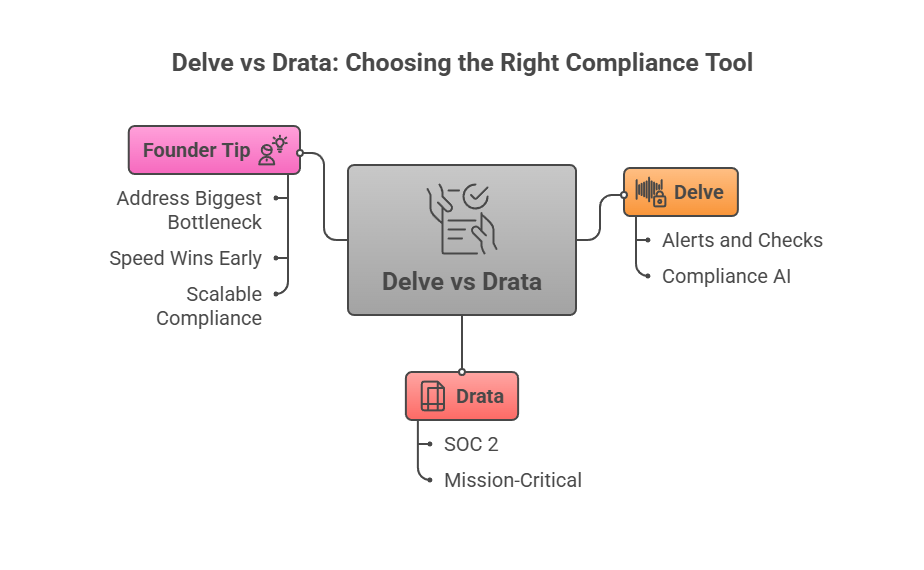
Founder Tip: Choose the tool that will address your biggest bottleneck today, not tomorrow. Speed wins early, and scalable compliance saves you from painful rework later.
Delve vs Drata Overview: The Market Position Duel
Market Position Duel: Here's the initial showdown of Delve vs Drata comparison, which most sources describe but few explain clearly.
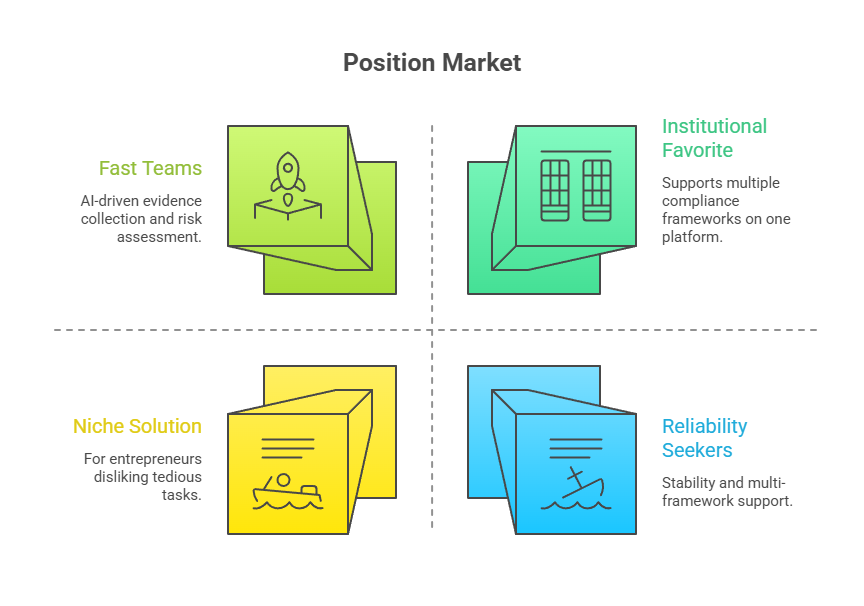
So, what does Delve do? Delve AI compliance emerges as the AI-first disruptor. It appeals to entrepreneurs who dislike tedious compliance tasks. The promise is bold indeed. Plug it in. AI collects evidence. AI assesses risk. AI reduces months of work into a matter of days. Fast teams adore this. Speed becomes a marketing hook.
And, what does Drata do? Drata exists in a vastly different world. It is the institutional favorite. Big SaaS companies rely on them because they support multiple frameworks in one place. Consider SOC 2, HIPAA, ISO, and GDPR operating in tandem on a single platform. Stability is essential here. This is the path that reliability-seeking teams take.
Ideal Buyer Profile: Here comes the twist in this Delve vs Drata comparison!
Startups, particularly early-stage ones, rarely hire compliance experts. They chose Delve AI compliance automation because it functions as a virtual security engineer, running tests in the background while the founder works on the product's growth.
Scale-ups, on the other hand, exist in a new world in which security teams want to be in control, complete with detailed reporting and policy management. That's where Drata comes in, providing the visibility that CISOs require.
Delve vs Drata: Architecture and Technology Stack Fit
Here's the truth: many teams must learn the hard way! But this comparison of Delve vs Drata will save a lot of time. An AI compliance automation tool is only useful if it is a good match for your stack. When it isn't, automation quickly fails. Engineers return to collecting evidence manually. That is integration friction, which can quickly become a time sink.
Delve vs Drata: The Hidden Engine
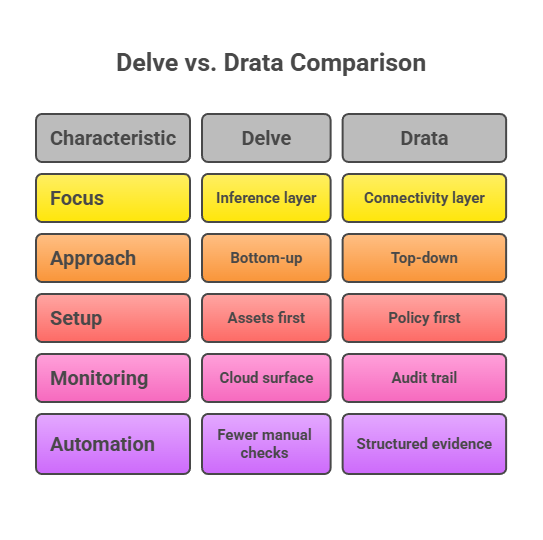
Delve's automated security compliance is a powerful inference layer. It examines infrastructure signals and security data to identify potential issues. Engineers expect fewer manual checks and faster results. Delve's tool is constantly monitoring the cloud surface, detecting issues first.
Drata focuses on the connectivity layer. It integrates HR tools, cloud services, and ticketing systems into a single audit trail. Evidence is fed into a single dashboard, which auditors can quickly review. It's all very structured.
Delve vs Drata: The Implementation Heavy Lift
The setup style also has an impact on the storyline. In Delve, assets come first. It scans the cloud infrastructure immediately and identifies risks within hours. It is a bottom-up approach that enables startups to secure systems before any policy work begins.
Drata does things differently. Policy comes first. Teams establish policies and procedures first, followed by compliance objectives. Then, tools and evidence are linked to policies. It's a top-down model ideal for long-term governance.
Delve vs Drata: SaaS Compliance Dashboard
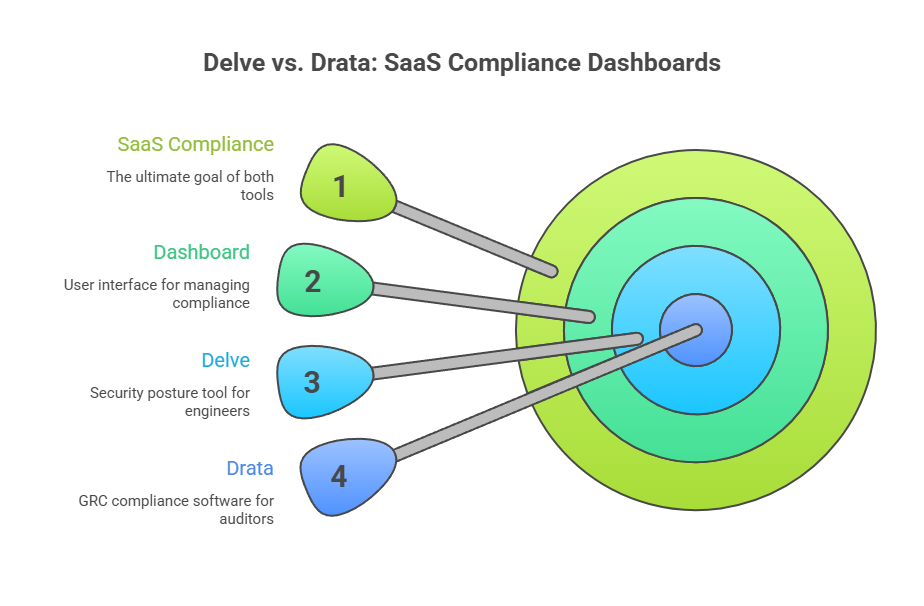
Let’s get one thing straight. The dashboard plays an important role in user friendliness for any SaaS compliance tool. It helps you plan and organize your next steps and make decisions quickly. So, it must contain well-organized data and everything necessary. Another thing to consider is that it should not be overwhelming, filled with unnecessary data, to avoid clutter. So now, let’s take a look at the dashboards and talk about the core focuses of Delve vs Drata.
Delve vs Drata: The Fundamentals
Opening this dashboard reveals that Delve is a security posture tool. It is structured around a single question. Is it possible to breach this system? It scans and monitors cloud systems for vulnerabilities. It shows the actual attack paths. It's designed for engineers and is intended to prevent breaches from occurring in the first place.
Drata's story is different. This GRC compliance software is a control status tool. It explains what policies pass and fail, as well as what auditors need to prove. It's well organized and understandable. Each checkbox represents a step closer to compliance.
Delve vs Drata: Audit Readiness versus Hardened Defense
At this point, the strategy begins to diverge dramatically. Delve has its own method of automating the find and fix cycle. Risks are identified, and systems are strengthened day after day. Compliance relies heavily on robust infrastructure.
Drata functions similarly to a time machine for compliance. Evidence is generated instantly. Months of effort are compressed into a few quick clicks.
Delve vs Drata: False Positive Problem
Security alerts can be draining on any team. Delve uses smart filtering to cut through this noise. It filters out vulnerabilities that attackers cannot exploit in a real-world runtime environment. Engineers only have to be concerned about real danger.
Drata's alerts are policy violations. Sometimes these alerts appear even when systems are technically secure. It protects audit standards while also increasing administrative noise.
Delve vs Drata: Features
Here, the two tools take a slightly different path. This Delve vs Drata comparison will provide you with clarity that no other can!
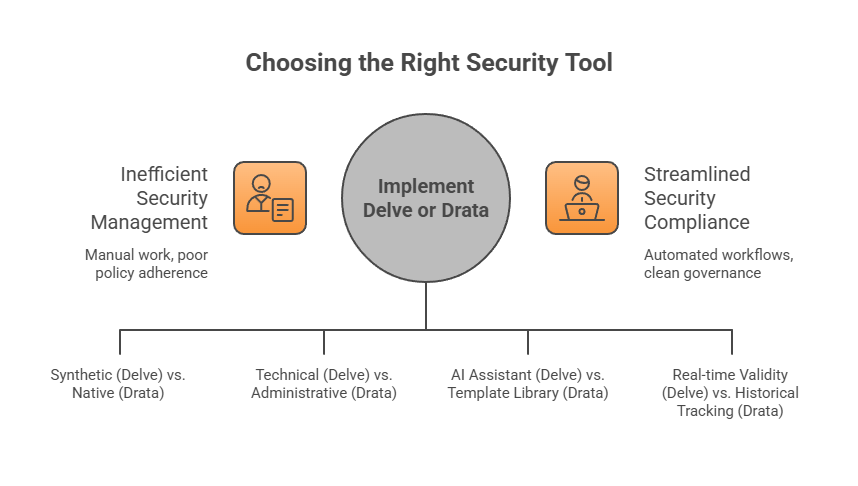
Founder Tip: First and foremost, the tool must match your stack. This is because if it doesn't, the automation fails, and you end up doing manual work.
Delve vs Drata: Pricing
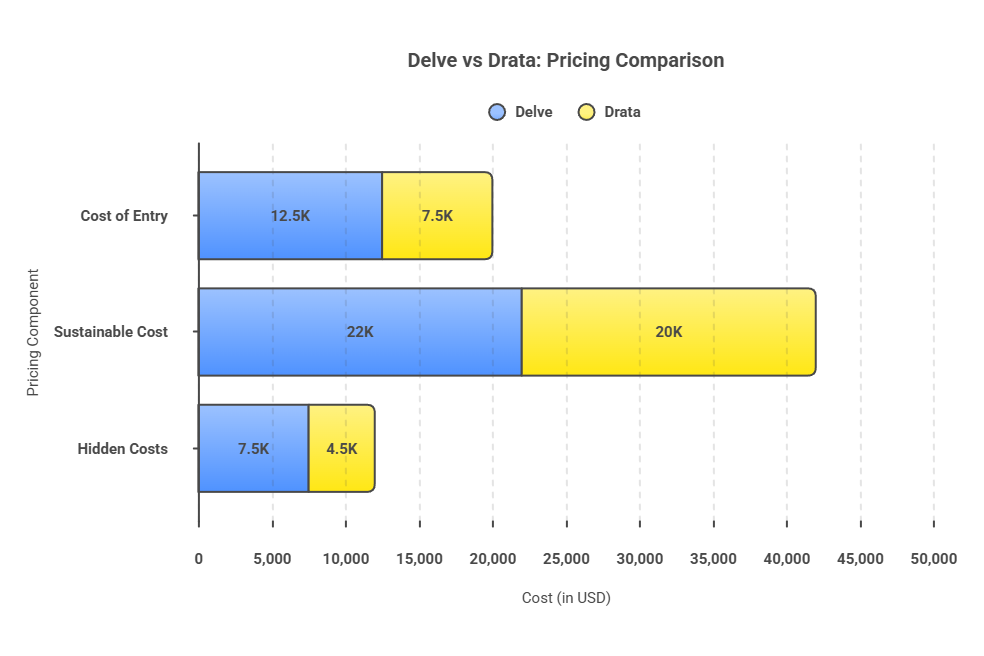
Here's the financial twist that most buyers discover too late. Delve and Drata have fundamentally different product pricing philosophies. One is designed for institutional scale, while the other is intended for rapid startup. Both companies use a demo wall, which requires you to schedule a call to view their pricing. However, pricing trends in the SaaS landscape have been established for 2025 and 2026. So, let’s clarify the pricing structure in this Delve vs Drata comparison.
Let’s understand the pricing structure of Delve vs Drata.
Delve vs Drata: Hidden Costs
As a buyer, you'll discover something unexpected too late. Compliance tools rarely disclose their hidden costs. The hidden cost is something you discover after you've purchased the product. New tools and frameworks can build up over time. Delve and Drata have very different hidden costs. Understanding these hidden costs from this Delve vs Drata guide can help you save a lot of money early.
Delve: The Technical Specialist Cost
The Delve cost plan is heavily invested in cloud security perimeters. It scans the infrastructure and identifies real technical threats. However, there are human aspects of compliance that exist outside the system. This can include things like employee training and background checks. Many organizations add additional tools that cost between $5,000 and $10,000. The security engine is strong, but audit preparation may require a few extra tools.
Drata: Governance Expansion Cost
In the Drata pricing structure, the cost increases are unique. The platform starts smoothly with a single standard, such as SOC 2. However, the cost rises quickly as more standards are added. This means that HIPAA, ISO 27001, and other standards may require additional annual fees. As the level of compliance rises, so does the cost.
Why pay more for bloated tools? Get enterprise-grade security at a fraction of the cost with clear pricing and no hidden fees. Scale compliance without exceeding your budget. See our startup-friendly pricing structure here.
Delve vs Drata: Engineering Workflow
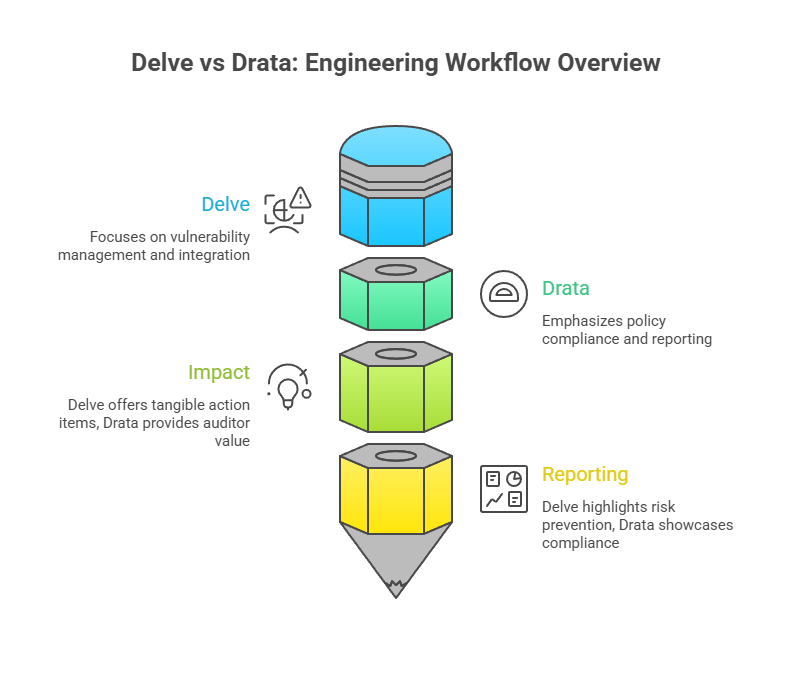
By now, you must be wondering what about the maintenance, workflow streamlining, management, and ease of use of these SaaS compliance tools. Don’t worry, this Delve vs Drata comparison has got your back!
Delve vs Drata: Impact, Integrations versus Policies
Another distinction that engineers will notice is the impact of Delve. Vulnerabilities are converted into action items, which can be completed quickly using tools like Jira. Engineers will value the workflow because it is tangible and achievable.
Drata focuses on policy compliance. Engineers may be warned about unsigned policies or missing training records. This is beneficial to auditors but may be considered unnecessary by engineers.
Delve vs Drata: Reporting Focus, Risk Versus Revenue
Decisions are also influenced by the type of reporting used. Delve assists in the identification of exploitable risks, demonstrating how addressing vulnerabilities can prevent costly breaches. The conversation is always security-related.
Compliance reporting is a critical component of Drata. This includes monitoring certification and framework readiness. These reports can also help salespeople close deals by demonstrating trust.
Delve vs Drata: Trust Center Strategy
The trust center is the heart of SaaS compliance automation platforms. The trust center shows the credibility, dependability, and reliability of compliance management tools. That’s why it’s an important inclusion in this Delve vs Drata comparison.
Delve vs Drata: Trust Center Strategy
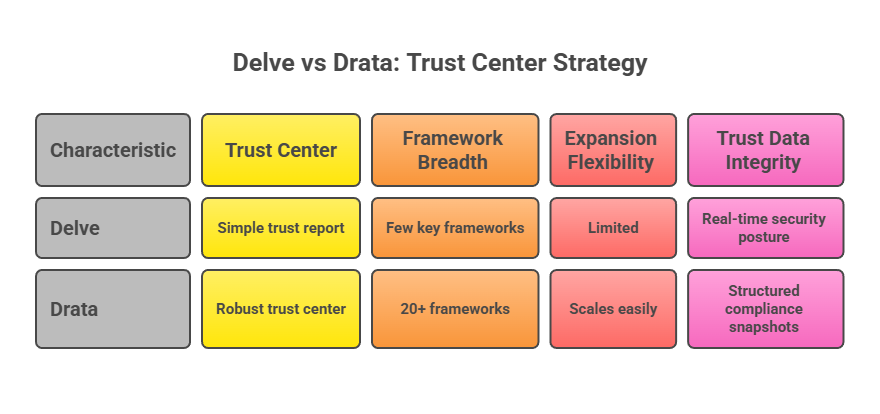
At this point, credibility is evident. Buyers want proof before signing on the dotted line. The Delve Trust Center provides a simple solution by including a streamlined trust report as part of its platform. Startups want to demonstrate their security posture as simply as possible. Delve's solution is quick and effective. Startups can easily prove their security posture.
Drata trust center provides a more robust trust center for larger businesses with higher sales pipelines. Many businesses integrate with SafeBase to manage security reviews. NDAs, documents, and responses are processed in a seamless manner. The sales team moves faster. Buyers have increased confidence.
Delve vs Drata: Framework Breadth
Delve and Drata differ significantly in terms of framework breadth. Delve focuses on a few key frameworks, including Delve SOC 2 compliance and ISO 27001. This is because Delve focuses on providing a high level of automation for these critical security controls, particularly in areas where most startups operate.
Drata GRC, on the other hand, supports 20 or more frameworks, including NIST, PCI DSS, and HIPAA. This is because many businesses, particularly those entering regulated markets, benefit greatly from Drata's broad scope. Platform changes do not limit growth.
Delve vs Drata: Expansion Flexibility
Delve and Drata differ significantly in terms of expansion flexibility. Delve is limited in the sense that if a company suddenly requires a certification that is not part of Delve's essential frameworks, teams may have to manually manage parts of the process. As a result, automation becomes less prevalent.
In contrast, Drata scales differently. This is because adding frameworks is simply adding more controls to the same system.
Delve vs Drata: Trust Data Integrity
The final difference is in the data itself. Delve's trust report may display real-time security posture and, in some cases, actual vulnerability data. This is important for tech-savvy buyers.
The Drata trust center product provides structured compliance snapshots. It showcases certification status and policy coverage. The message is clear and organized for procurement purposes.
Founder Tip: Don't just compare starting prices; calculate your costs after 12 months. The true winner is the tool that remains affordable as your compliance requirements expand.
Delve vs Drata: SaaS Compliance Frameworks
Compliance appears simple until the frameworks add up. That's when the real game starts. Delve and Drata take two different approaches to dealing with this chaos. One route focuses on speed and first place. The other option involves long-term control. Understanding this dichotomy may save you time, money, and headaches in the long run. So let’s get clarified about each compliance management tool’s frameworks in this Delve vs Drata comparison.
Delve vs Drata: The Idea Behind
Delve: Targeted AI Challenger
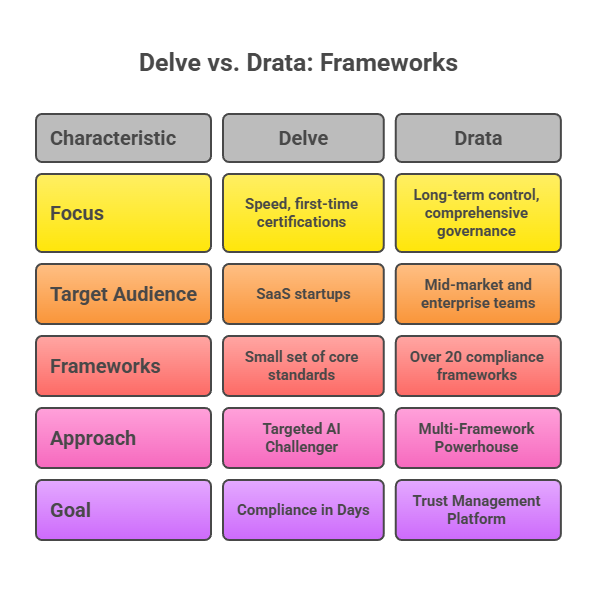
Delve is a "Compliance in Days" high-speed solution that focuses on a small set of core standards that are critical for SaaS startups. The AI solution is designed for quick "first-time" certifications, rather than a broad range of organizational governance.
Drata, The Multi-Platform Powerhouse
Drata agent is designed for mid-market and enterprise teams that require a comprehensive, long-term governance strategy that includes over 20 compliance frameworks. Drata is a 'Trust Management Platform' that integrates all of your disparate requirements into a single platform, making it the 'institutional standard.'
Delve vs Drata: The SaaS Compliance Frameworks Marketed
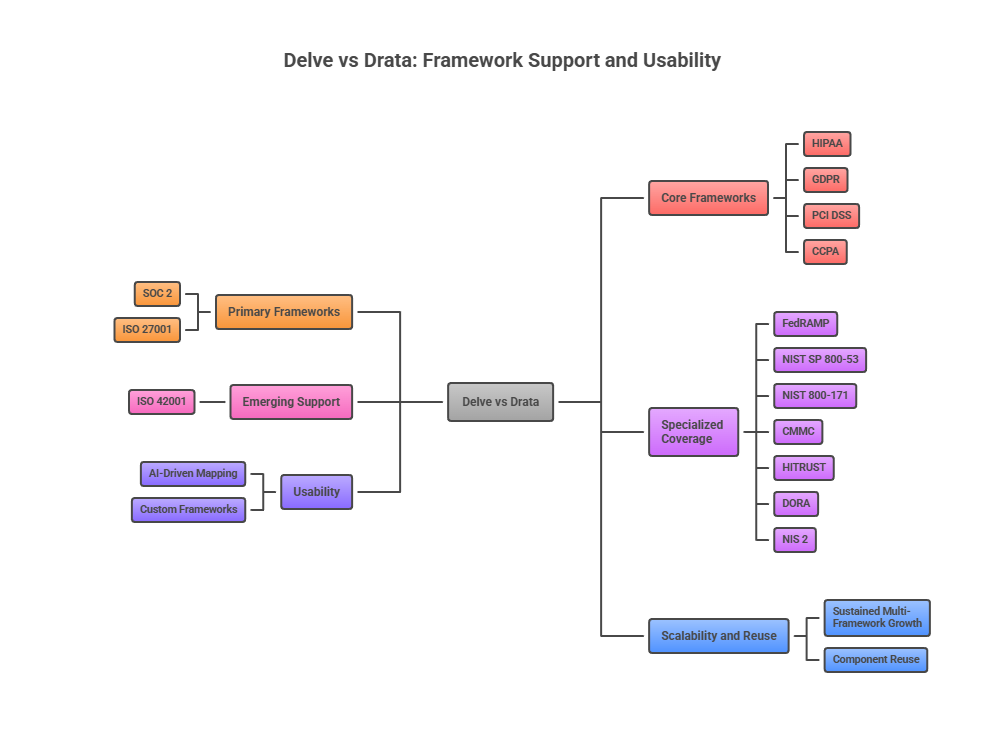
Delve's Primary frameworks: Primary frameworks include SOC 2 (Types I and II) and ISO 27001.
Drata's Core Frameworks: Core frameworks include SOC 2, ISO 27001, HIPAA, GDPR, PCI DSS, and CCPA.
Delve vs Drata: Framework Support and Coverage
Delve's Emerging support: GDPR, HIPAA, PCI DSS, and ISO 42001 (AI Risk Management) are emerging support standards.
Drata's Specialized Coverage: Specialized coverage includes FedRAMP, NIST SP 800 53, NIST 800 171, CMMC, HITRUST, DORA, and NIS 2.
Delve vs Drata: Usability
Delve's Flexibility: Includes AI-driven mapping for Custom Compliance Requirements, though the framework library is smaller (6 10) than Drata's.
Drata's Customization: To avoid unnecessary effort, create your own 'Custom Frameworks' and map your internal controls to your requirements.
Delve vs Drata: Framework Scalability and Reuse
Delve's Scalability: Though Delve provides some overlap in control management, users have stated that working with a new certification can feel like starting over due to a less-than-optimal design for sustained multi-framework growth.
Drata's Reuseability: Drata allows users to reuse components across multiple standards, making it much easier to add a second or third framework.
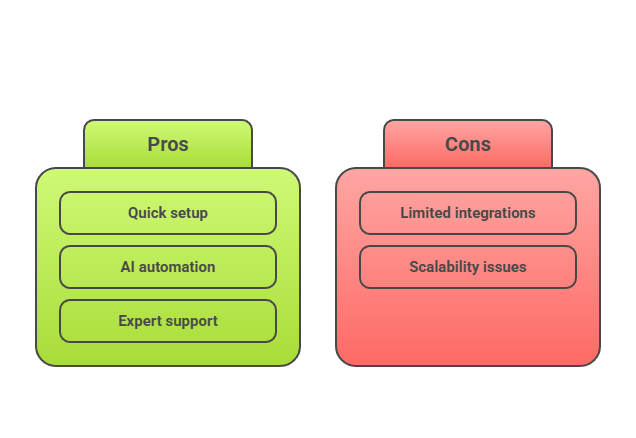
Pros and Cons: Delve vs Drata
If you are a founder who is experienced with SaaS compliance management tools, it's easy to choose between Delve and Drata until you consider the advantages and disadvantages that are not clearly mentioned anywhere. So, this Delve vs Drata comparison will help you figure out the best option.
Speed or scale? Simple or deep? One excels in one area while failing in another. Understanding the pros and cons ahead of time can help you avoid costly mistakes and choose a platform that is appropriate for your growth stage.
Delve Pros and Cons
Drata Pros and Cons
Delve vs Drata: Deciding Factors
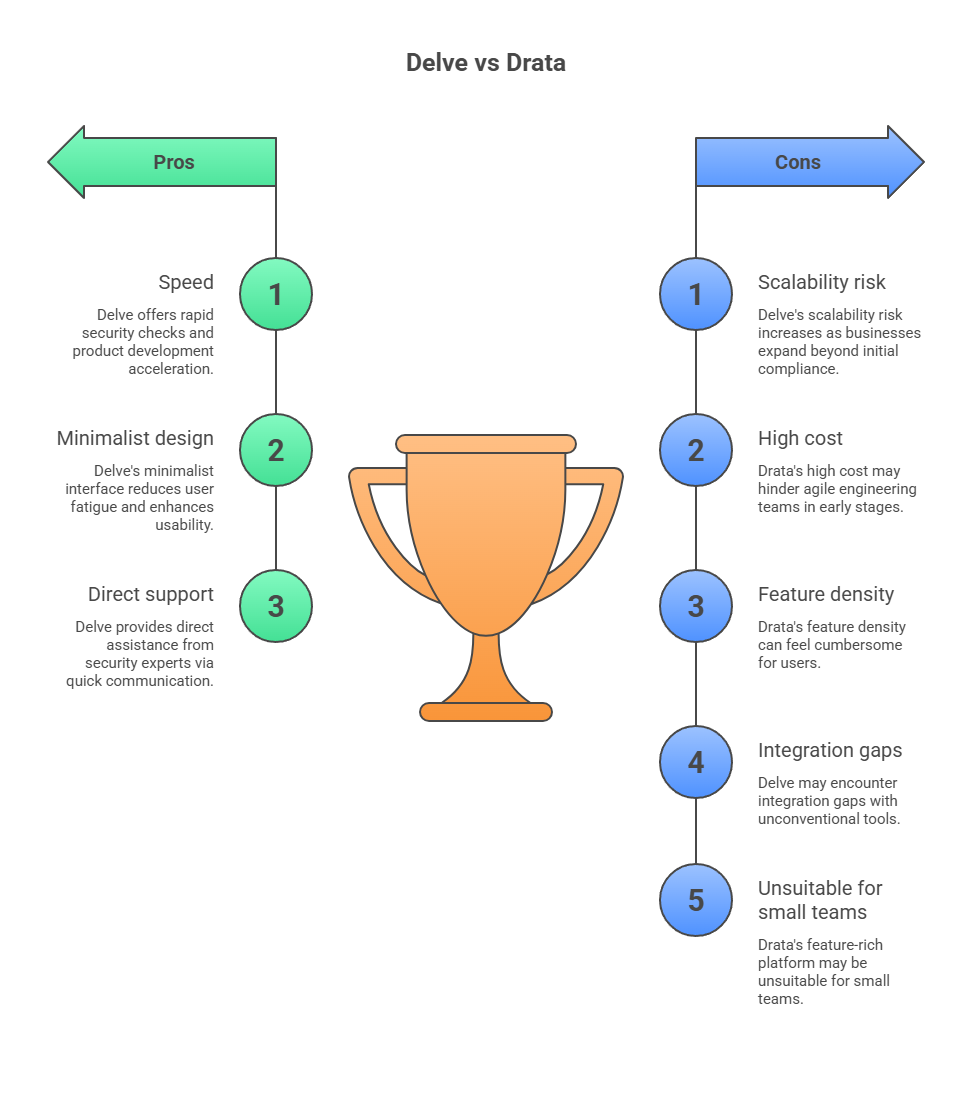
So, let's start with the first fork in the road. When we choose Delve, we are essentially betting on speed. We're moving quickly, automating security checks, and resuming product development with our engineers. That's a great feeling for a startup looking to grow quickly.
When we go with Drata, we are essentially laying the groundwork for institutional stability. We want to scale our compliance efforts in the coming years, and we need a solid foundation for that. The choice is straightforward: speed or structure.
Delve vs Drata: The Risk Factor
Each platform selection entails some risk, and Delve's risk grows as businesses expand beyond their initial compliance systems.
Drata, on the other hand, faces the risk of incurring a high cost for a governance engine, which could stymie agile engineering teams in their early stages.
Delve vs Drata: The Support Experience
Finally, the support experience influences the user experience; for example, Delve users prefer direct assistance from security experts via quick communication channels.
Drata provides customer success managers, which is a significant benefit to enterprise organizations.
Delve vs Drata: Usability and Interface Feel
The interface and design also convey a different story. Delve's interface and design have been praised for their minimalist dashboards. The teams are no longer tired of the interface and design.
Drata has a greater feature density. The interface contains a variety of tools and settings. It may feel cumbersome to users. However, as compliance programs evolve, feature density may become more important.
Delve vs Drata: Feature Depth Balance
The final trade-off is related to feature depth. Delve may encounter integration gaps, particularly if teams use unconventional tools. It is possible that evidence will need to be manually uploaded.
Drata, on the other hand, is accused of having a feature-rich platform that is unsuitable, particularly for small teams.
Founder Tip: Choose a tool based on how easily you can add the next framework without starting from scratch, not how many frameworks it supports.
Delve vs Drata: What's better than both, and why?
Delve alternatives and Drata alternatives are many! But there’s something unique SaaS founders across the globe are loving.
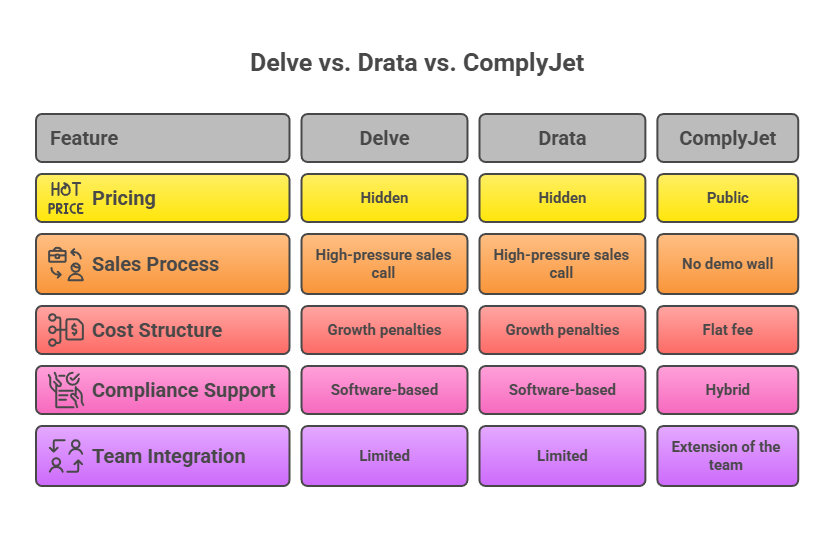
Here is a shocker: The majority of founders love. Most compliance platforms hide pricing behind lengthy sales calls. Not ComplyJet. We broke the rule. We make our pricing public. No demo wall is required. No high-pressure sales call is required. You can instantly compare price and value. This degree of transparency is unusual in the world of compliance. For cash-strapped startups, this builds trust quickly. So let’s learn about the better option in this Delve vs Drata guide.
Predictable Costs Without Growth Penalties
Budgets can easily spiral out of control as the number of frameworks increases. ComplyJet solves this issue with a flat fee structure. There are no unexpected fees for adding additional standards like HIPAA and ISO after the company has started with SOC 2. There are no growth penalties.
Compliance Help That Actually Does the Work
Software is not always effective in addressing compliance issues. ComplyJet employs human compliance managers to help guide the entire process. This means engineers can concentrate solely on developing their product without worrying about paperwork.
The Hybrid Advantage
ComplyJet's automated system and human experts fill knowledge gaps for any team. With automated security checks and a human strategy, the platform functions as an extension of the team. Compliance is no longer a burden; it is a system that works for you.
Compliance is no longer a burden; it is a system that works for you.
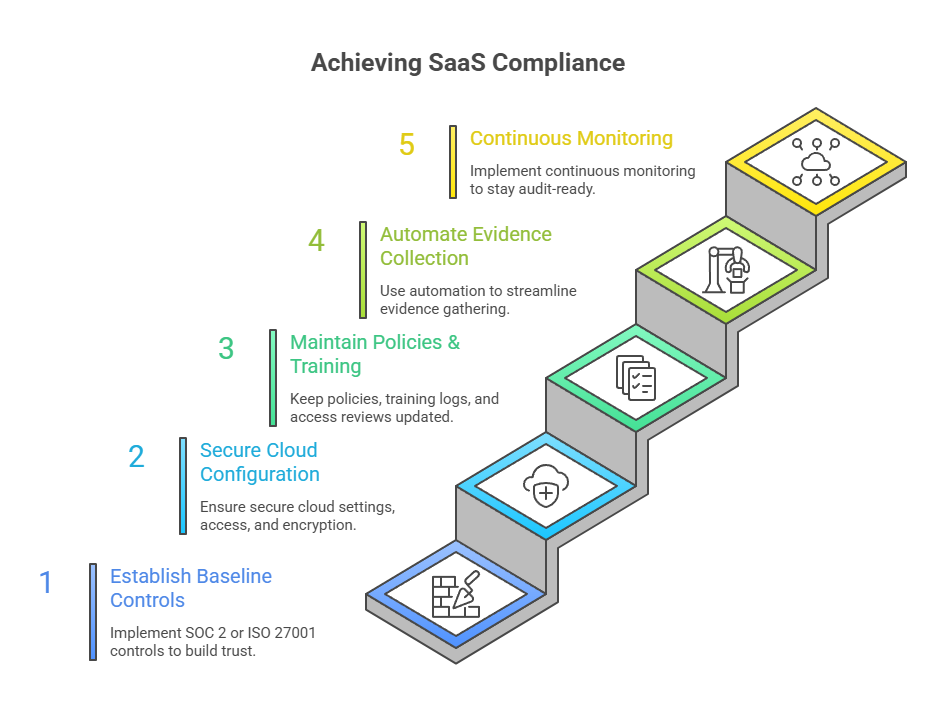
Delve vs Drata: SaaS Compliance Checklist 2026
- Begin with SOC 2 or ISO 27001 Baseline Controls for Trust.
- Secure cloud configuration, access control, and encryption for all systems.
- Keep all policies, training logs, and employee access reviews up to date.
- Automate evidence collection to reduce stress and delays during audits.
- Conduct continuous monitoring to avoid drift and ensure that you are always audit-ready.
Delve vs Drata: FAQs
Has anyone attempted SOC 2 with Delve? How was it?
This is what most teams notice first. Delve can help a company prepare for SOC 2 Type 1 in less than two weeks. Its AI automation makes this possible by quickly gathering and mapping evidence across cloud systems. Initially, the process runs smoothly.
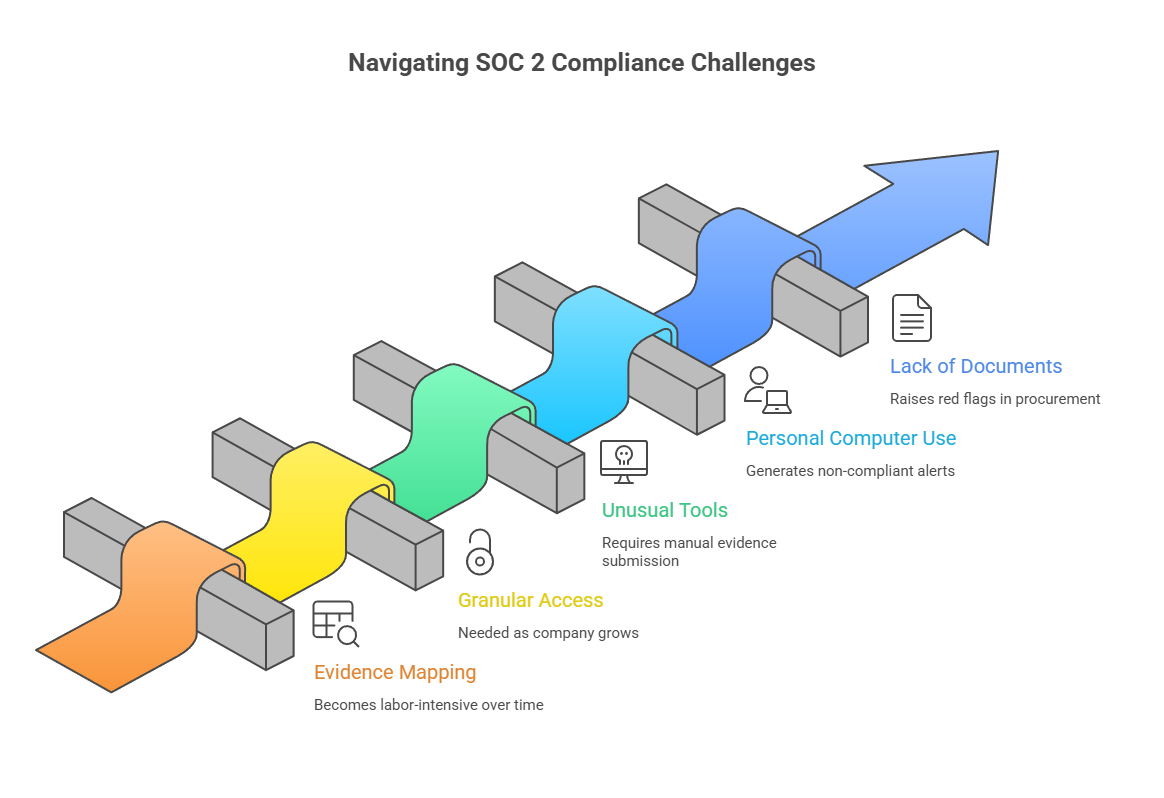
However, things change slightly during SOC 2 Type 2 audits. With long observation periods, evidence collection is an ongoing process. Some teams have reported that evidence mapping may become more labor-intensive during this time.
The process remains effective; however, it requires more attention over time.
What is the pass rate for the Delve SOC 2 audit?
Many people want to know the pass rates. The simple truth is that auditors award certifications, not software platforms. Delve focuses on automated evidence validation. Before the audit review, reports show that 98% of the evidence was verified. This is done in advance to avoid last-minute control failures.
Delve problems? What are these?
Delve's clean interface is intuitive and simple to use, making it a pleasure to develop with. However, as a company grows, so do its requirements, which may necessitate more granular access controls per role. Another issue that can arise is when a company uses unusual tools or has an outdated SaaS application. In this case, a company may submit manual evidence, such as screenshots.
How much do you pay for Drata as a small business?
Startups for smaller businesses typically start at $7,500 to $15,000 per year for a single framework, such as SOC 2. However, the cost may vary depending on whether you need to include additional standards like ISO 27001 or HIPAA. Additional frameworks may increase the cost, depending on the scope of your compliance.
I was asked to install Drata on my work laptop; what data does it actually collect?
Some employees may be concerned when asked to install the Drata tool on their company laptops. The tool gathers basic security information about a device. It collects information such as the device's operating system version, encryption status, antivirus software installed, serial number, and screen lock. It doesn't collect data like files, messages, browser history, webcams, or keystrokes.
Is Drata agent reliable for my personal computer?
When performing compliance monitoring on a personal computer, noise may be generated. This is because certain personal applications and settings may produce non-compliant alerts. Such alerts can confuse audit logs and force administrators to investigate unnecessary issues. Some organizations use company-managed devices to increase the reliability of compliance monitoring.
How does the lack of compliance documents affect your SaaS B2B business?
This is a harsh reality that many business owners discover the hard way. Without a SOC 2 report, the deal will immediately raise red flags during the procurement process. What should have been a simple approval procedure becomes a lengthy security questionnaire. Some of these questionnaires contain over 200 questions. Legal teams will slow down the process while security teams assess the risk. The transaction will take an additional three to six months to close. In fact, the transaction may not even close. A missing compliance document is more than just paperwork. It is about raising doubts.
What level of security compliance and standards should a Fortune 500 enterprise SaaS app aim for?
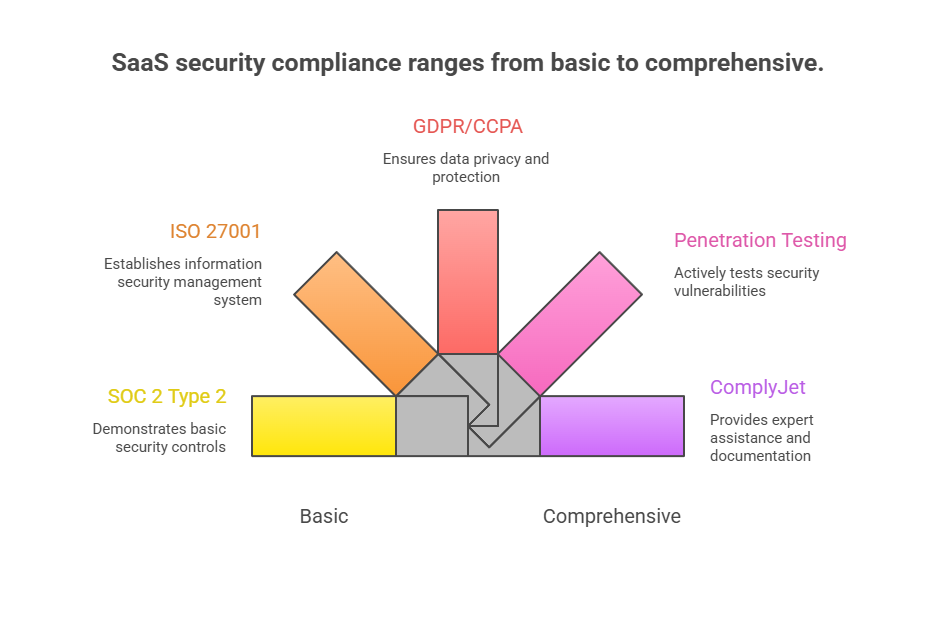
In most cases, simply meeting the bare minimum is insufficient to demonstrate compliance. The majority of the Fortune 500 will require SOC 2 Type 2, ISO 27001, and GDPR/CCPA compliance. However, the list of requirements is not always as simple. Many will also require penetration test results and a vulnerability disclosure procedure. This is because they need to know that the company is not only compliant but has also tested its compliance.
What are the compliance challenges that SaaS companies face when scaling up?
Scaling up creates a new challenge. This is called control drift. This is where security controls change after the audit is completed. Large organizations' legal teams want to be monitored. They also want compliance clauses in contracts. This is because failure of controls during a contract can have serious consequences.
What data does Delve and Drata collect?
Both tools collect various types of data. Delve collects data from cloud infrastructure, scanning the services provided by AWS, GCP, and Azure, whereas Drata collects data from endpoint security, scanning employee devices for disk encryption, operating systems, lock policies, and so on.
What are some alternatives to Drata and Delve for security compliance?
Some organizations choose to investigate alternatives such as ComplyJet. The primary distinction is transparent public pricing. Teams may review pricing without having to schedule a sales call. In addition, compliance experts will assist the teams with documentation and audit preparation. This means that the compliance process is managed, not simply automated.
What is the most effective ISO 27001 tool for startups with a limited budget?
Startups with limited budgets frequently compare the total cost of ownership. Some tools include software, experts, and everything you need, eliminating the need to hire costly experts. In most cases, all-inclusive tools are a better option for achieving ISO 27001 certification with no unexpected cost increases.
Delve vs Drata: Final Verdict, The "Ideal Pick" Matrix.
Then comes the moment of truth for every SaaS team. In the Delve vs Drata guide, after weighing the features, pricing plans, and level of automation for each platform, one simple question remains. Which platform is ideal for your company? The answer depends on how your company operates. This is important to note because it clarifies things. Now that you have gone through the Drata vs Delve comparison, let’s have the final clarity.
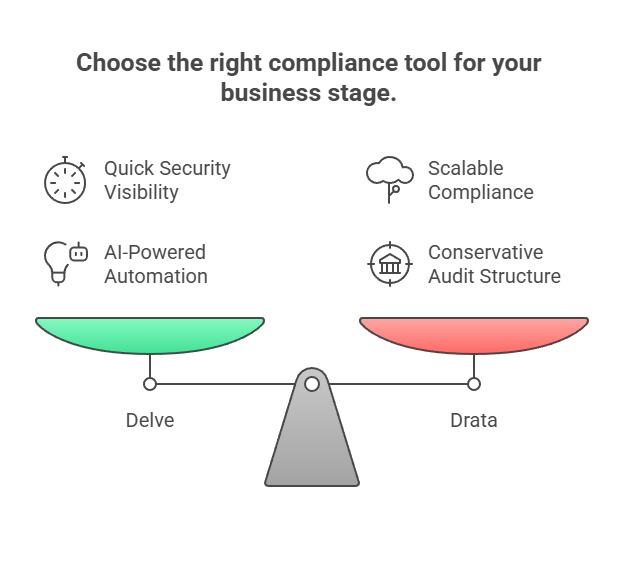
When Delve is the Best Option: Speed is critical for early-stage startups. Delve is ideal for developer-led teams that require quick security analysis without having to go through tedious administrative procedures. This allows developers to quickly identify potential threats and resolve them before they become actual threats.
When Drata Is a Better Fit: As a larger SaaS organization, you face a unique set of challenges. You must deal with multiple frameworks, auditors, and stakeholders at once. This is where Drata shines. This is where Drata's governance tools can transform into a centralized platform for enterprise-wide compliance management.
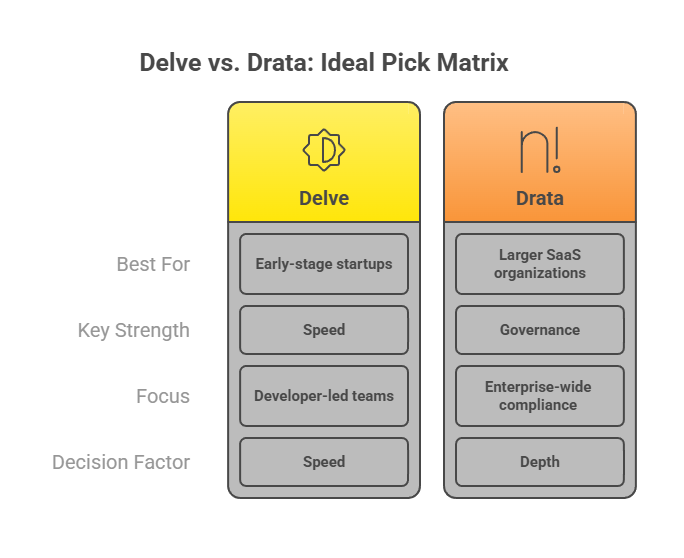
Delve vs Drata, A Practical Decision Matrix: At its most fundamental level, the decision boils down to speed versus depth. Delve excels at delivering security insights quickly and aligning developer workflows. Drate specializes in delivering structured compliance programs for large-scale audits and enterprise procurement.
The smartest decision is based on your organization's maturity level. We hope that this Delve vs Drata comparison will help you make a better decision.
Tired of the endless checklists? Allow experts to handle policies, audits, and evidence while you focus on building. Genuine support. Real results. There will be no stress. Book a demo today!