Related Articles
No items found.
.svg)

If a single compliance decision could impact your biggest deal, would you risk choosing the wrong one?
That is the reality for companies deciding between HITRUST and SOC 2. The wrong choice can delay deals, increase costs, or limit your ability to work with enterprise and healthcare clients. Yet most teams still rely on unclear comparisons when making this call.
HITRUST and SOC 2 both strengthen your security posture, but they are built for different goals. One offers flexibility, the other brings deeper standardization. Choosing the right one depends on your industry, growth stage, and customer expectations.
In this guide, you will get a clear breakdown of differences, costs, timelines, and real use cases so you can make the right decision with confidence.
IBM's 2025 Cost of a Data Breach Report put the global average cost of a breach at $4.44 million, with the majority of incidents involving customers' personal data
Want expert guidance tailored to your business? Book a demo and get clarity on the best compliance path for you.
SOC 2, short for System and Organization Controls 2, is a widely recognized compliance framework that evaluates how well a company protects customer data. It focuses on internal controls related to security, availability, and data handling practices.
Instead of being a rigid checklist, SOC 2 allows organizations to design controls based on their specific systems and risks.
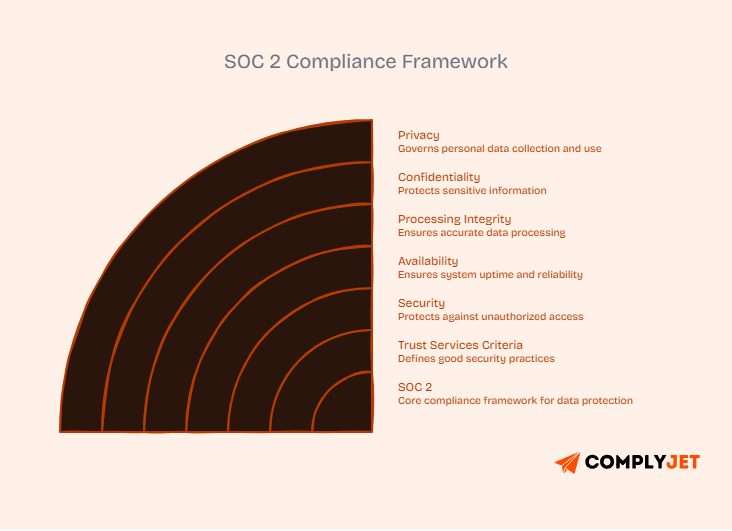
SOC 2 was developed by the American Institute of Certified Public Accountants (AICPA). It is based on five Trust Services Criteria that define what good security practices look like. These include Security, which ensures systems are protected against unauthorized access.
Availability, which focuses on system uptime and reliability. Processing Integrity, which ensures data is processed accurately; Confidentiality, which protects sensitive information; and Privacy, which governs how personal data is collected and used.
There are two types of SOC 2 reports. SOC 2 Type I evaluates whether your controls are properly designed at a specific point in time. SOC 2 Type II goes deeper and assesses how effectively those controls operate over a period, usually three to six months.
Most companies aim for Type II because it provides stronger proof of consistent security practices.
SOC 2 is ideal for SaaS companies, cloud providers, and technology businesses that handle customer data. It is especially important for companies selling to enterprise clients, as many organizations require SOC 2 reports before signing contracts.
While it is not legally mandatory, it has become a standard expectation in industries like fintech, SaaS, and IT services.
If your business relies on trust and handles sensitive customer information, SOC 2 is often the first step toward building credibility and winning larger deals.
You can also read - SOC 2 News [Updated May 2026]
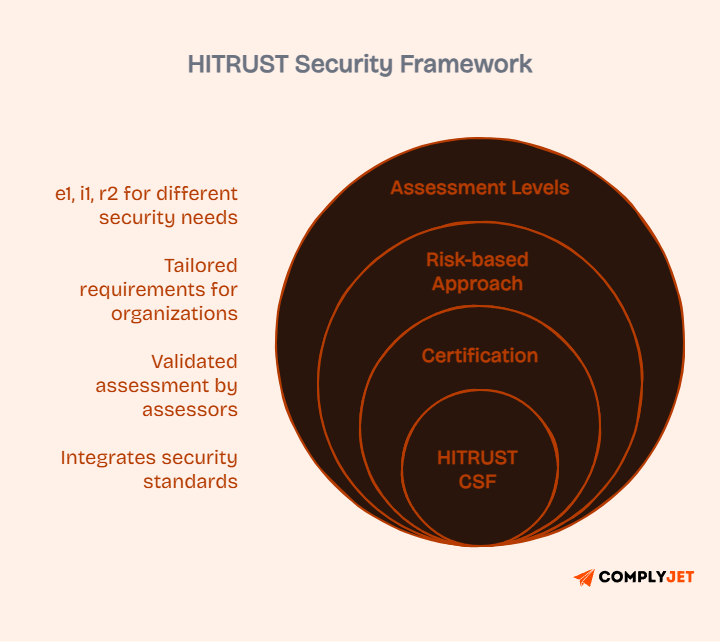
HITRUST is a certifiable security framework designed to help organizations manage risk and protect sensitive data in a structured way. It is widely recognized for its rigor and is often used by companies that must meet strict regulatory and client security requirements.
At its core is the HITRUST CSF, or Common Security Framework. It combines multiple standards into one unified system, making compliance more efficient and scalable.
HITRUST is especially important in healthcare due to its alignment with HIPAA requirements. For organizations operating in regulated environments, it often becomes a requirement rather than a choice.
Organizations with a HITRUST certification reported an incident rate of just 0.59% in 2024, meaning 99.41% remained breach-free. This rate down from 0.64% in 2023 now covers all HITRUST certifications (e1, i1, and r2), not just the r2, proving that HITRUST's entire portfolio delivers measurable risk reduction.
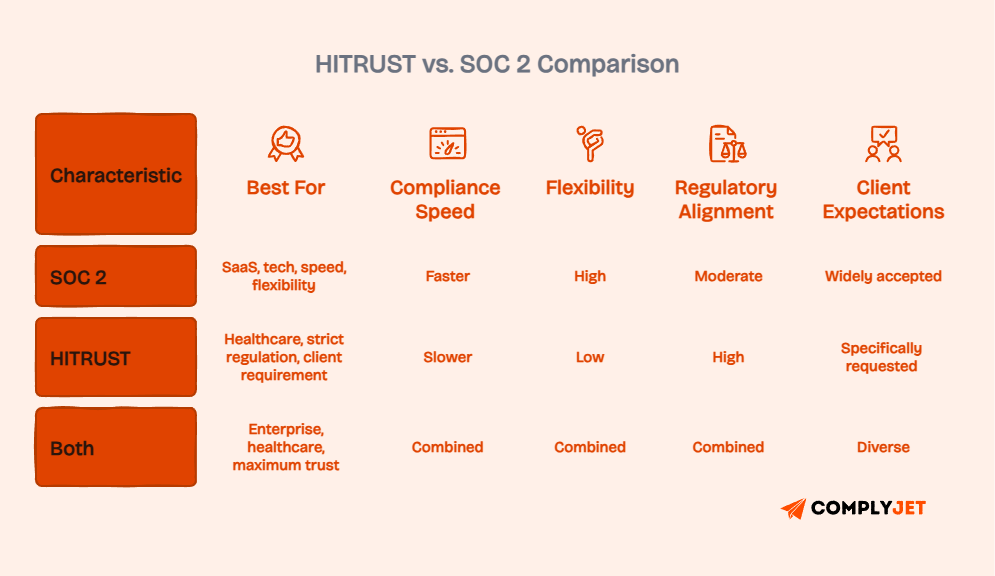
Choosing between HITRUST and SOC 2 becomes easier when you look at them side by side. While both frameworks focus on data security, they differ significantly in structure, rigor, and use cases.
In simple terms, SOC 2 offers flexibility and faster implementation, making it a strong choice for growing SaaS companies. HITRUST, on the other hand, provides a more rigorous and standardized approach, which is often required in regulated sectors like healthcare.
If you are aiming for speed and adaptability, SOC 2 is usually the starting point. If your business demands deeper compliance and regulatory alignment, HITRUST becomes the stronger option.
Despite their differences, HITRUST and SOC 2 share several core similarities. Both are designed to help organizations strengthen security practices and build trust with customers.
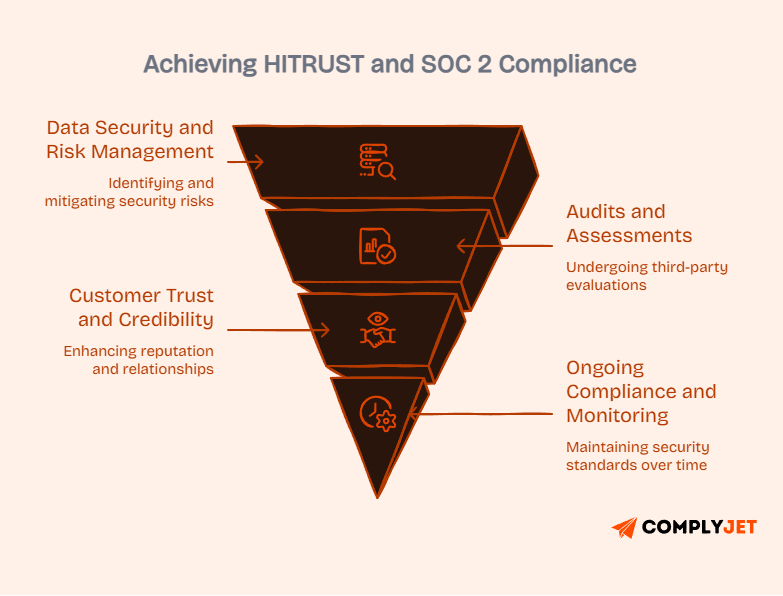
Focus on data security and risk management: Both frameworks require organizations to identify risks, implement security controls, and protect sensitive customer data from breaches and unauthorized access.
Require audits or assessments: Organizations must undergo third-party evaluations to validate their controls. HITRUST involves a validated assessment, while SOC 2 requires an independent auditor’s report.
Improve customer trust and credibility: Achieving HITRUST certification or SOC 2 compliance signals that your organization takes security seriously, which can accelerate sales and strengthen client relationships.
Ongoing compliance and monitoring: Neither framework is a one-time effort. Organizations must continuously monitor controls, update policies, and undergo periodic reassessments to maintain compliance.
Start your free trial today and simplify your compliance journey without the guesswork.
Cost is one of the biggest factors when choosing between HITRUST and SOC 2. While both require investment, the total cost can vary significantly based on scope, tools, and internal readiness.
SOC 2 is generally more affordable and flexible, making it a common starting point for growing companies.
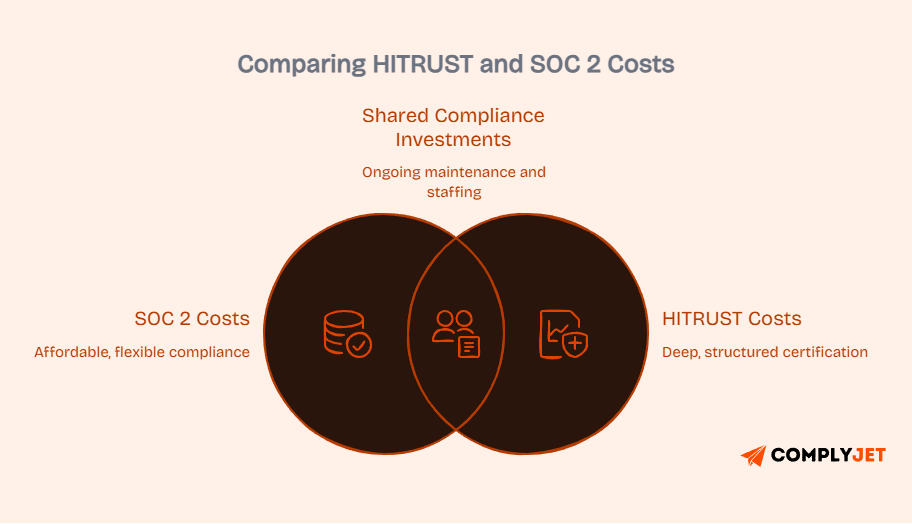
HITRUST is more expensive due to its depth, structure, and certification process.
HITRUST states its CSF is informed by more than 60 underlying standards and frameworks.
The time required to achieve compliance is another major factor when choosing between HITRUST and SOC 2. While SOC 2 can be completed relatively quickly, HITRUST requires a longer and more structured process.
SOC 2 is faster and more flexible, making it ideal for companies that need to demonstrate compliance quickly. HITRUST takes longer due to its depth and certification requirements, but it provides a higher level of assurance for regulated industries.
Understanding the pros and cons of HITRUST and SOC 2 helps you make a more informed decision based on your business goals, budget, and industry requirements.
SOC 2 is ideal if you need a faster and more flexible way to demonstrate security, especially when targeting enterprise clients in the tech space. It allows you to scale compliance without a heavy upfront investment.
HITRUST is better suited for organizations that need deep assurance and operate in regulated industries like healthcare. While it requires more time and cost, it provides stronger credibility and meets strict compliance expectations.
In simple terms, SOC 2 prioritizes speed and adaptability, while HITRUST focuses on rigor and standardization.
You can also read - How Much Does HITRUST Certification Cost Really? A Clear Breakdown
Choosing between HITRUST and SOC 2 depends on your business model, industry requirements, and growth goals. There is no one-size-fits-all answer. The right choice comes down to what your customers expect and how quickly you need to demonstrate compliance.
SOC 2 is often the best starting point for companies that need speed and flexibility.
You are a SaaS or tech company: SOC 2 is widely accepted across SaaS, fintech, and cloud-based businesses. It helps you build trust with enterprise clients without overcomplicating compliance.
You need faster compliance: If you are working with tight sales timelines or need to close deals quickly, SOC 2 Type I or Type II can be achieved in a shorter time frame.
You want flexibility: SOC 2 allows you to design controls based on your systems and operations. This makes it easier to scale compliance as your business grows.
HITRUST is the right choice when you need deeper assurance and operate in regulated environments.
You operate in healthcare: HITRUST is strongly aligned with HIPAA and is often expected by healthcare organizations and partners handling sensitive patient data.
You need strict regulatory alignment: If your business must meet multiple compliance frameworks, HITRUST simplifies this by mapping controls across standards like NIST and ISO.
Clients require HITRUST certification: Many enterprise and healthcare clients specifically ask for HITRUST certification as a prerequisite for doing business.
In some cases, organizations benefit from combining both frameworks.
You serve enterprise or healthcare clients: Having both SOC 2 and HITRUST strengthens your security posture and helps meet diverse client expectations.
You want maximum trust and marketability: SOC 2 helps you move fast and close deals, while HITRUST adds an additional layer of credibility. Together, they position your company as highly secure and compliant.
Book a demo to see how you can achieve SOC 2 or HITRUST faster with the right strategy.
Yes, organizations can pursue SOC 2 and HITRUST together, and many do when they need to meet diverse customer and regulatory expectations.
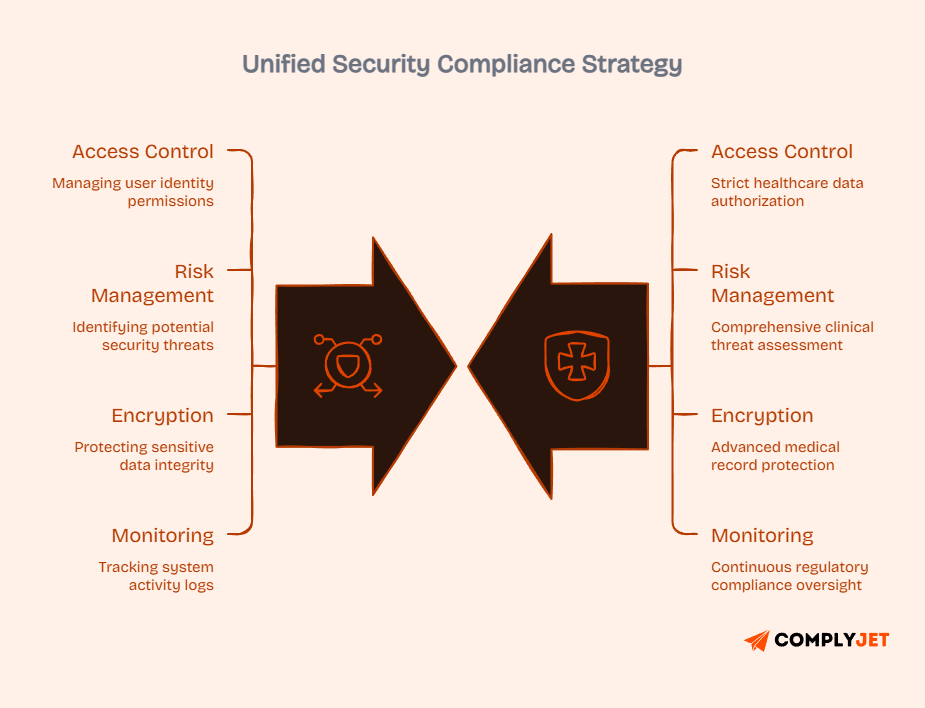
There is significant overlap between SOC 2 and HITRUST, especially in areas like access control, risk management, encryption, and monitoring. Many of the controls implemented for SOC 2 can be reused or mapped to HITRUST requirements, reducing duplicate effort.
Combining both frameworks strengthens your security posture and increases credibility. SOC 2 helps you move faster and close deals with enterprise clients, while HITRUST provides deeper assurance for regulated industries like healthcare. Together, they signal a higher level of maturity and commitment to security.
Most companies start with SOC 2 because it is faster and more flexible. Once controls are in place, they expand those controls to meet HITRUST requirements. This approach reduces implementation time and makes the transition smoother.
While pursuing both frameworks increases cost and effort, the benefits often outweigh the investment. Dual compliance can unlock larger deals, meet stricter client requirements, and reduce friction in sales cycles. For companies targeting enterprise and healthcare markets, the combined value of SOC 2 and HITRUST often justifies the additional cost.
Many organizations start with SOC 2 and later move to HITRUST as their compliance needs grow. This approach allows companies to build a strong security foundation first, then expand into a more rigorous and standardized framework.
SOC 2 is faster, more flexible, and easier to implement. It helps companies establish core security controls, build trust with customers, and close deals without heavy upfront investment. Once these controls are in place, transitioning to HITRUST becomes more manageable.
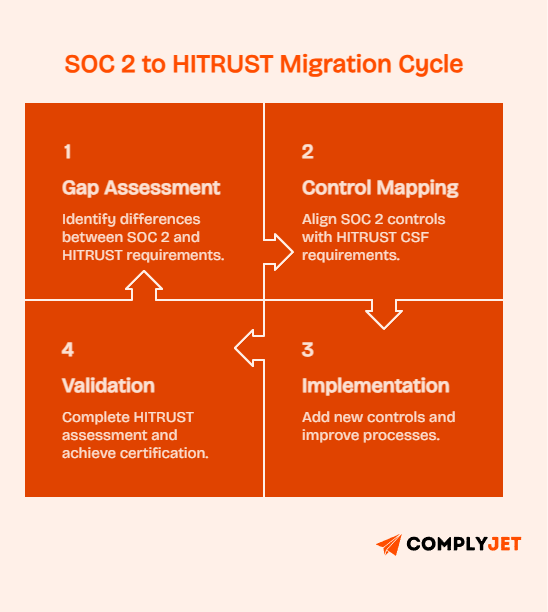
The transition typically takes 6 to 12 months, depending on your existing maturity. Organizations with strong SOC 2 controls can move faster. To speed up the process, invest in compliance tools, assign dedicated resources, and ensure leadership support.
In practice, SOC 2 acts as a stepping stone, while HITRUST represents a more advanced stage of compliance maturity.
Choosing between HITRUST and SOC 2 is not just a compliance decision. It directly impacts your sales, operations, and long-term growth. Many organizations make avoidable mistakes that lead to delays, higher costs, or failed audits.
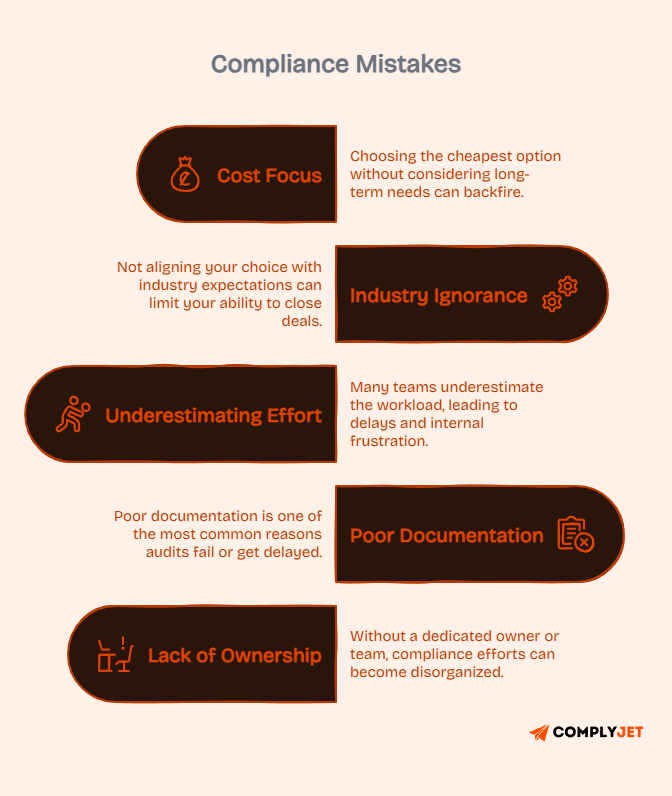
Common mistakes to avoid:
Avoiding these mistakes can save time, reduce costs, and make your compliance journey much smoother.
You can also refer to - Best SOC 2 Compliance Software in 2026: 10 Tools Tested & Compared
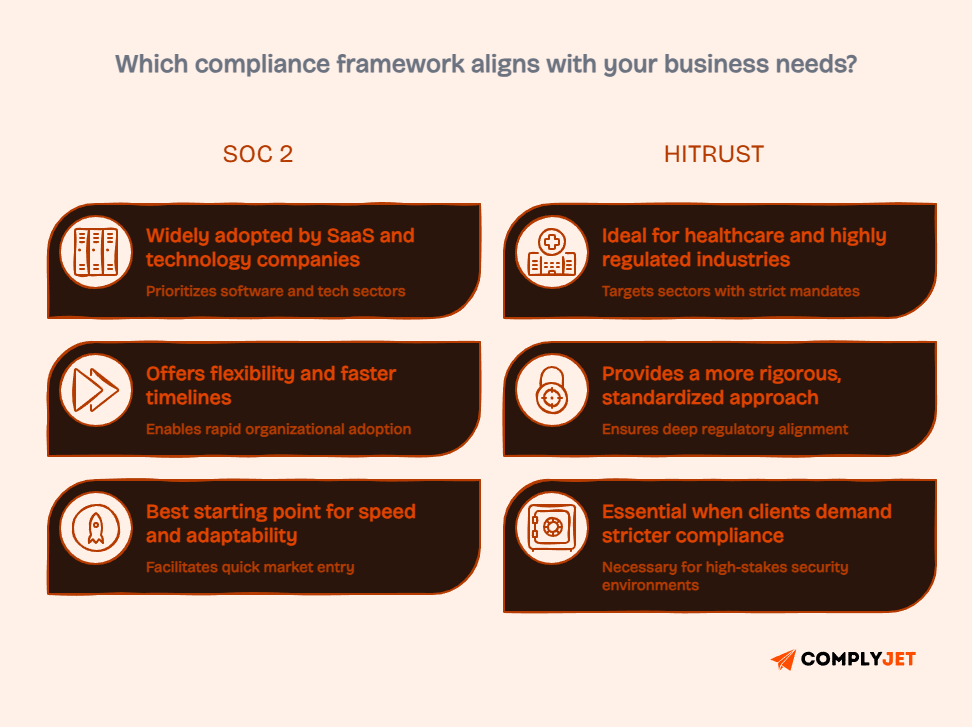
HITRUST and SOC 2 both help organizations strengthen data security, but they serve different purposes. SOC 2 offers flexibility, faster timelines, and is widely adopted by SaaS and technology companies. HITRUST provides a more rigorous, standardized approach with strong regulatory alignment, making it ideal for healthcare and highly regulated industries.
The right choice depends on your business goals, industry requirements, and customer expectations. If you need speed and adaptability, SOC 2 is often the best starting point. If your clients demand stricter compliance or you operate in regulated sectors, HITRUST becomes essential. In some cases, combining both frameworks can unlock more opportunities and build stronger trust.
The key is to align your compliance strategy with where your business is today and where it is headed.
If you are planning your next step, now is the time to evaluate your requirements, assess your readiness, and move forward with a clear compliance roadmap.
Not sure where to start? Book a demo and get a clear roadmap tailored to your compliance goals.
The main difference is that HITRUST is a certifiable framework with standardized controls, while SOC 2 is an auditor’s attestation based on flexible criteria.
It depends on your needs. HITRUST is more rigorous and suited for regulated industries like healthcare, while SOC 2 is faster and more flexible for SaaS and tech companies.
No, SOC 2 cannot fully replace HITRUST, especially in healthcare. Many organizations start with SOC 2 but later adopt HITRUST to meet stricter requirements.
HITRUST certification typically takes 6 to 12 months or longer, depending on your organization’s size, existing controls, and readiness.
SOC 2 is not mandatory for healthcare, but it can still be useful. However, HITRUST is often preferred or required due to its alignment with healthcare regulations.
© 2026 ComplyJet. All rights reserved.